


Imagine trying on a new outfit without stepping into a store, collaborating with a colleague who appears as a lifelike hologram in your living room, or walking through a building that hasn't been built yet. This isn't science fiction; it's the present-day reality powered by a technological revolution quietly weaving itself into the fabric of our daily lives. Extended Reality (XR), an umbrella term encompassing Virtual Reality (VR), Augmented Reality (AR), and Mixed Reality (MR), is breaking free from the confines of gaming and entertainment to solve real-world problems, enhance human capabilities, and create experiences previously confined to our imaginations. The line between the digital and the physical is blurring, and the implications are nothing short of profound.
The Surgeon's New Scapel: Precision and Practice in Healthcare
The stakes don't get much higher than in an operating room, and XR is proving to be a game-changer in medicine. One of the most powerful extended reality examples in real life is surgical planning and training. Surgeons can now don a headset and step into a hyper-realistic, 3D model of their patient's specific anatomy, reconstructed from CT or MRI scans. They can practice a complex procedure, navigate around critical nerves and blood vessels, and perfect their approach long before making a single incision. This rehearsal reduces operating time, minimizes risk, and leads to better patient outcomes.
Beyond the operating theater, AR is assisting medical professionals in real-time. Through smart glasses or a tablet, a surgeon can have vital patient data, ultrasound imagery, or anatomical guides superimposed directly onto their field of view during a procedure. This eliminates the need to look away at a monitor, maintaining focus and context. Furthermore, VR is revolutionizing medical education, allowing students to dissect virtual cadavers an infinite number of times and experience rare clinical scenarios from a first-person perspective. It's also a powerful tool for patient rehabilitation, turning painful and repetitive physical therapy exercises for stroke victims or those with mobility issues into engaging VR games that promote recovery and track progress with precision.
Building Tomorrow, Today: The Blueprint of Architecture and Construction
The architecture, engineering, and construction (AEC) industry is being fundamentally reshaped by XR. Gone are the days of clients struggling to interpret complex 2D blueprints. Now, architects and developers use VR to create fully immersive walkthroughs of unbuilt structures. A client can put on a headset and literally walk through their future home, office, or factory, experiencing the scale, sightlines, and spatial relationships long before the foundation is poured. This allows for informed feedback and design changes at a stage where they are far less costly to implement.
On the construction site, AR is enhancing safety and efficiency. Workers wearing AR helmets or using tablets can see digital building information models (BIM) overlaid onto the physical construction. This can highlight the planned path for electrical wiring behind a wall, show where a support beam should be placed, or warn of potential clashes between different systems (e.g., plumbing and electrical). This "X-ray vision" reduces errors, prevents rework, and ensures projects are built exactly to specification. For remote collaboration, an expert engineer located across the globe can see what an on-site worker sees through a live feed and annotate their reality with arrows, notes, and diagrams to guide them through a complex repair or installation.
Retail Reimagined: The Future of Shopping is Experiential
The retail sector has been quick to adopt XR to bridge the gap between online convenience and in-store experience. One of the most relatable extended reality examples in real life is virtual try-on. Using the camera on a smartphone or through in-store kiosks, customers can see how a pair of glasses, a watch, or even a full makeup look will appear on their own face in real-time. For furniture and home decor, AR apps allow users to place true-to-scale 3D models of sofas, tables, and lamps into their actual living space. You can see how that new armchair fits with your existing decor and whether it's the right size for the corner of your room, drastically reducing purchase uncertainty and the rate of returns.
Virtual showrooms represent the next evolution. Instead of browsing a 2D website, customers can enter a branded VR environment where they can explore entire product lines, customize items to their liking, and interact with products in a curated, immersive setting. This creates a memorable brand experience that transcends the limitations of physical retail space and geography, allowing a small artisanal brand to create a breathtaking virtual store that rivals the flagship stores of global giants.
The Classroom Without Walls: Immersive and Inclusive Education
Education is being transformed from a passive activity into an active, experiential journey. Imagine a history class where students can virtually visit ancient Rome, walking through the Forum and witnessing historical events unfold around them. A biology lesson becomes an adventure inside the human bloodstream, with students navigating past red and white blood cells. These immersive experiences boost engagement, improve knowledge retention, and foster a deeper emotional connection to the subject matter.
XR also democratizes education by providing access to experiences that would be too expensive, dangerous, or logistically impossible otherwise. A student in a remote village can conduct complex chemistry experiments with virtual lab equipment. Medical students from around the world can gather in a virtual operating room to observe a rare surgical procedure from the best vantage point. Furthermore, soft skills training is being revolutionized; aspiring public speakers can practice presentations in front of a virtual audience, and corporate employees can navigate difficult conversation simulations in a safe, consequence-free environment, receiving instant feedback on their performance.
Remote Collaboration and the Virtual Workspace
The global shift to remote work exposed the limitations of video conferencing—a grid of faces on a screen often lacks the nuance and spontaneity of in-person interaction. XR is building the next-generation digital workplace. Teams distributed across the globe can meet in a persistent virtual office. Instead of video avatars, they are represented by realistic or stylized avatars that can gesture, make eye contact, and share body language. They can gather around a virtual whiteboard, manipulate 3D models of a new product design together, or review architectural plans as if they were standing around the same physical table.
This sense of "presence" is the key differentiator. In a MR meeting, a hologram of a colleague can appear in your physical space, and you can both work on a digital prototype that is anchored to your real desk. This technology is invaluable for global companies, enabling engineers, designers, and marketers to collaborate on complex projects as intuitively as if they were in the same room, saving immense amounts of time and travel costs while fostering a stronger, more cohesive team culture.
Maintenance, Repair, and the Empowered Field Worker
In industrial and manufacturing settings, XR is a powerful tool for efficiency and expertise distribution. A field technician tasked with repairing a complex, unfamiliar piece of machinery can use AR glasses to receive remote expert guidance. The expert, viewing what the technician sees through a live camera feed, can overlay digital arrows, annotations, and instructions directly onto the equipment, effectively giving the technician "supervision" to complete the task correctly the first time. This reduces downtime, minimizes the need to fly experts to remote locations, and empowers less experienced workers to perform complex tasks.
Furthermore, digital work instructions are replacing bulky paper manuals. A worker on an assembly line can see the next steps, torque specifications, and safety warnings displayed contextually in their field of view, keeping their hands free and their attention focused on the task. This improves accuracy, enhances safety compliance, and speeds up training for new employees.
Beyond the Horizon: The Future is a Blended Reality
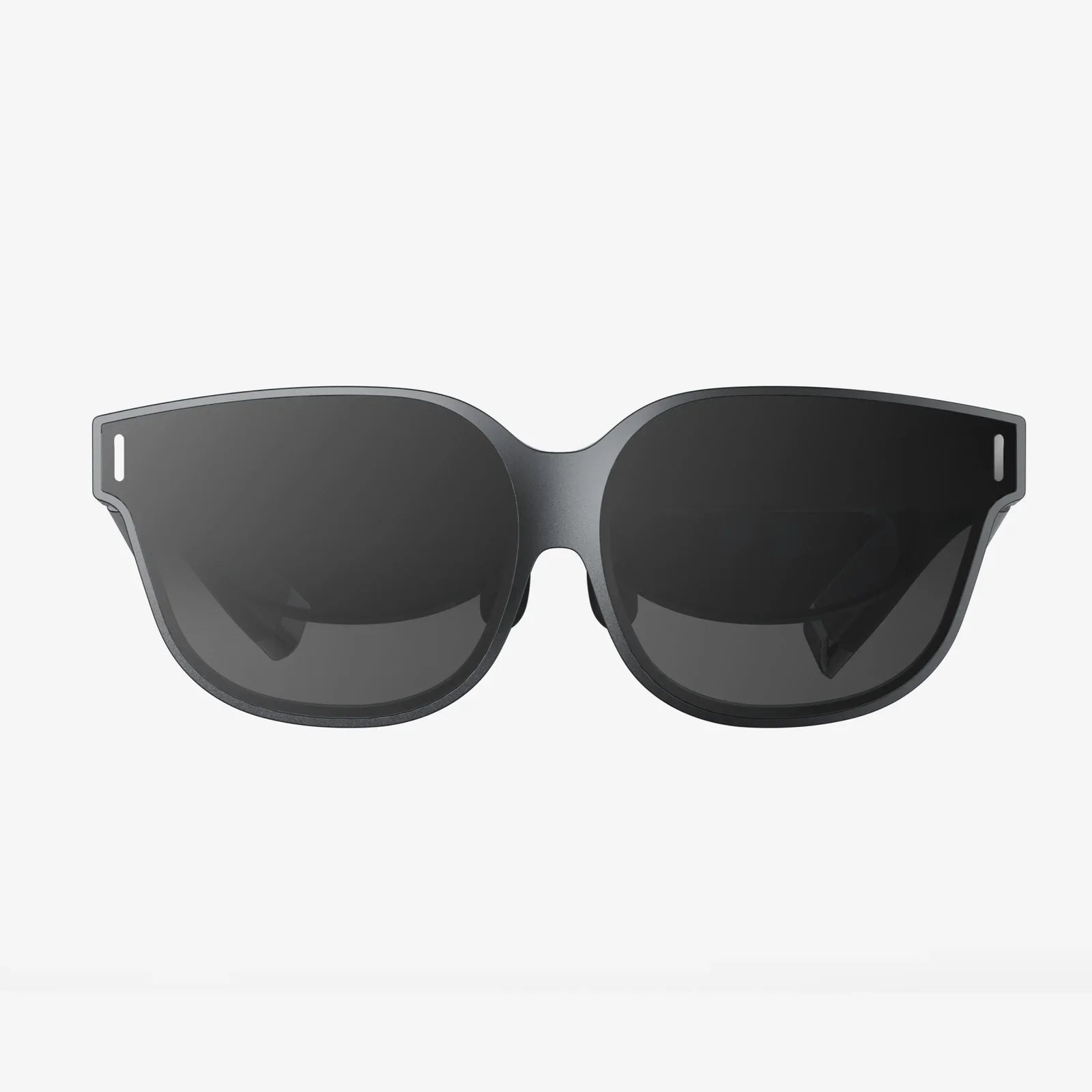
The evolution of XR is moving towards even more seamless integration. The future points to lightweight, socially acceptable eyewear that will eventually replace smartphones, overlaying a persistent digital layer onto our perception of the world. This spatial computing environment will provide contextual information, navigation, and communication in ways we are only beginning to imagine. The potential applications are boundless: from AR navigation lines guiding you through an airport to virtual art installations in public parks and interactive learning experiences at historical sites.
The true power of extended reality lies not in its ability to help us escape our world, but in its profound capacity to enhance it. It is augmenting our senses, democratizing expertise, and breaking down the barriers of physical distance and material cost. From the surgeon gaining x-ray vision to the student walking with dinosaurs, these extended reality examples in real life are not isolated novelties; they are the early tremors of a seismic shift in how we work, learn, heal, and connect. The revolution is already here, and it’s waiting for you to put on the headset, pick up your device, and see the invisible layer of digital magic that is starting to change everything.
Share:
How Much Is The Average VR Headset: A 2024 Price & Value Breakdown
Glasses Connected to Phone: The Invisible Revolution in Wearable Tech