


Imagine a history student not just reading about ancient Rome, but walking through its bustling forums, hearing the chatter of its citizens, and looking up at the towering, newly-completed Colosseum. Envision a medical student practicing a complex surgical procedure not on a cadaver, but on a hyper-realistic, beating digital heart, able to make mistakes without consequence. Picture a mechanic trainee, thousands of miles from a multi-million dollar jet engine, peering inside its machinery, guided by floating holographic arrows and instructions. This is not a glimpse into a distant sci-fi future; this is the transformative power of extended reality learning, happening today. It’s a pedagogical earthquake that is shattering the walls of the traditional classroom and redefining the very essence of experiential education.
Demystifying the Extended Universe: Understanding XR's Spectrum
Before diving into its applications, it's crucial to understand what constitutes extended reality. XR is not a single technology but an umbrella term encompassing a spectrum of immersive technologies that blend the physical and virtual worlds.
Virtual Reality (VR): Total Immersion
Virtual Reality is the most immersive end of the spectrum. Using a head-mounted display (HMD) that completely occludes the user's view of the real world, VR transports learners into a fully digital, computer-generated environment. This environment can be a realistic simulation of a real-world place, a fantastical world, or an abstract representation of data. Keyboards and mice are replaced with motion-tracked controllers, and often full body tracking, allowing users to interact with the virtual world naturally—picking up objects, manipulating controls, or gesturing. The primary goal of VR is to induce a sense of presence—the undeniable feeling of "being there," which is the catalyst for its profound impact on learning retention and emotional engagement.
Augmented Reality (AR): Enhancing the Real World
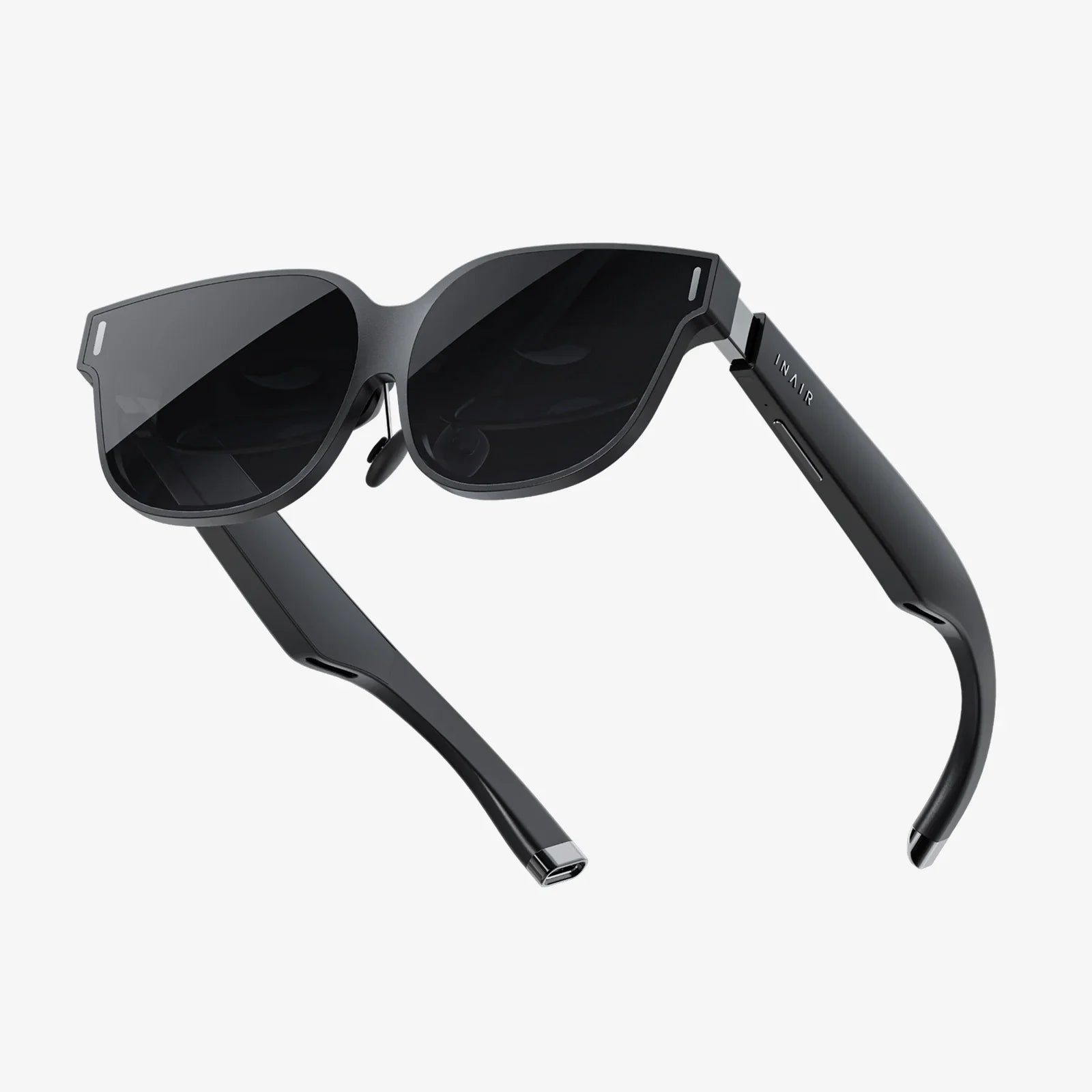
If VR replaces reality, Augmented Reality enhances it. AR overlays digital information—images, text, 3D models, animations—onto the user's view of the physical world through a device. This device can be a smartphone or tablet screen, or more advanced optical see-through glasses. A learner can point their device at a machine and see internal parts labeled and animated, or study a human anatomy app that projects a beating heart onto their desk. AR bridges the gap between abstract information and its real-world context, providing just-in-time knowledge that is directly relevant to the task at hand.
Mixed Reality (MR): The Best of Both Worlds
Mixed Reality sits between VR and AR, representing the most advanced and interactive frontier. MR not only overlays digital objects onto the real world but also allows those objects to interact with the physical environment in real-time. Using advanced sensors and cameras, MR devices understand the geometry of the space around them. This means a digital character can sit on a real-world couch, or a virtual engine block can be placed on a real workbench, and a learner can walk around it, examining it from every angle. The digital and physical coexist and interact, creating a seamless and highly interactive learning experience.
The Transformative Impact: Why XR is a Pedagogical Game-Changer
The move towards extended reality learning is not driven by a mere fascination with new technology. It is a fundamental shift supported by established learning science, offering concrete advantages over traditional methods.
Unparalleled Experiential Learning
For centuries, educators have championed the principle of "learning by doing." XR is the ultimate manifestation of this principle. It provides hands-on experience in a safe, controlled, and repeatable environment. A welder can practice intricate techniques without risk of injury or wasting materials. A chemistry student can experiment with volatile compounds without the danger of an explosion. This safe failure space is invaluable for building competence and confidence.
Supercharging Engagement and Motivation
XR learning is inherently engaging. The novelty and wonder of immersive experiences trigger dopamine release, making learning more enjoyable and memorable. This "wow" factor can be a powerful tool for combating learner apathy and re-engaging students who have struggled with traditional, passive learning methods. Gamification elements—such as earning badges for completing modules, climbing leaderboards, or solving interactive puzzles—further leverage our innate desires for achievement and play.
The Retention Revolution: Remembering by Experiencing
Studies in cognitive science consistently show that we remember far more of what we do and experience compared to what we read or hear. This is known as the "cone of experience" or the "learning pyramid." XR leverages spatial memory and emotional connection, creating strong neural pathways. The act of physically performing a task in VR, or manipulating a 3D model in AR, creates a much richer and more durable memory trace than reading a manual or watching a video.
Democratizing Access and Scaling Expertise
XR has the power to level the educational playing field. A student in a remote village with limited resources can take a virtual field trip to the Louvre or the Great Barrier Reef. A hospital in a rural area can use AR guides to help less-experienced staff perform complex procedures, guided by a remote expert whose annotations appear in their field of view. This allows for the scaling of high-quality, expert-led training across vast geographical and socioeconomic divides, making elite training accessible to all.
XR in Action: Real-World Applications Across Industries
The theoretical benefits of extended reality learning are compelling, but its real power is revealed in its practical applications, which are already transforming numerous sectors.
Corporate Training and Workforce Development
The corporate world has been one of the earliest and most enthusiastic adopters of XR learning due to its clear return on investment (ROI). Companies are using VR to train employees in high-stakes scenarios:
- Soft Skills Training: VR simulations place managers in difficult conversations with virtual employees, allowing them to practice empathy, de-escalation, and feedback delivery in a realistic but consequence-free environment.
- Technical and Safety Training: From drilling rigs to factory floors, employees can learn to operate heavy machinery, practice emergency shutdown procedures, and navigate hazardous situations without ever setting foot on a live site, drastically reducing risk and downtime.
- Onboarding and Process Training: AR smart glasses can guide warehouse workers through complex picking and packing processes, displaying the most efficient routes and highlighting items on shelves, leading to fewer errors and faster training times.
Medical and Healthcare Education
Perhaps no field stands to benefit more from XR than healthcare, where the cost of error is extraordinarily high and access to cadavers and real-life practice is limited.
- Surgical Simulation: Surgeons can rehearse complex operations on patient-specific 3D models generated from CT or MRI scans, planning their approach and anticipating complications.
- Anatomy Education: Medical students can explore the human body in stunning, interactive 3D, peeling back layers of muscle, tissue, and bone, gaining an understanding far superior to static textbook diagrams.
- Patient Rehabilitation and Therapy: VR is being used for physical therapy, turning repetitive exercises into engaging games, and for exposure therapy, helping patients overcome phobias like fear of heights or social anxiety in a controlled setting.
Formal Education (K-12 and Higher Ed)
Classrooms are becoming portals to other worlds and times. History lessons are transformed into immersive time-travel experiences. Biology students can step inside a cell to witness photosynthesis firsthand. Astronomy classes can take a journey through the solar system. Literature students can explore the settings of the novels they are reading. This contextual, experiential learning makes abstract concepts tangible and unforgettable, fostering a deeper love for learning.
Navigating the Challenges: Barriers to Widespread Adoption
Despite its immense potential, the path to ubiquitous extended reality learning is not without significant obstacles.
Technological and Financial Hurdles
The cost of high-quality XR hardware and the development of custom, high-fidelity software can be prohibitive for many institutions. While smartphone-based AR has lowered the barrier to entry, enterprise-grade VR/MR headsets and the computers needed to run them represent a substantial investment. Furthermore, issues like simulator sickness (cybersickness), device comfort for extended wear, and limited battery life are still technological challenges being actively addressed.
Content Development and Pedagogical Integration
Creating effective XR learning content requires a unique blend of subject matter expertise, instructional design, and 3D development skills. It's not enough to simply port old PowerPoint slides into a virtual space; content must be designed from the ground up to be interactive and immersive. Perhaps the biggest challenge is integrating XR meaningfully into existing curricula and workflows, ensuring it complements rather than replaces other valuable teaching methods.
Privacy, Ethics, and the Human Element
XR devices, especially those with eye-tracking and biometric sensors, collect vast amounts of sensitive data about user behavior, attention, and physiological responses. Robust data privacy and security frameworks are essential. Ethically, there are questions about the potential for hyper-realistic simulations to cause psychological stress or trauma. Finally, there is the irreplaceable value of human connection. XR must be used to enhance, not replace, the mentorship and social learning that happens between teachers and students and among peers.
The Future Horizon: Where Extended Reality Learning is Headed
The current state of XR learning is impressive, but it is merely the foundation for a far more integrated and powerful future. We are moving towards a world where the lines between learning and doing, between the classroom and the field, will blur into invisibility.
The next evolution will be driven by the convergence of XR with other transformative technologies. Artificial Intelligence will create dynamic, responsive learning environments that adapt in real-time to a student's performance, providing personalized guidance. The Internet of Things will connect virtual simulations to real-world data and machinery, allowing a trainee to manipulate a virtual control panel that actually operates a real piece of equipment remotely. Haptic feedback technology will evolve to provide a true sense of touch, letting a dental student feel the resistance of virtual gum tissue or a geologist feel the texture of a virtual rock sample.
We are steadily advancing towards the concept of the "digital twin"—a perfect virtual replica of a physical object, system, or even an entire city. Learners will be able to experiment, test theories, and train on these digital twins, seeing the immediate and accurate consequences of their actions without any real-world risk. Furthermore, the development of more socially-connected XR platforms will enable collaborative learning at a distance, where students and instructors from around the globe can meet, interact, and build knowledge together within a shared virtual space as if they were in the same room.
The journey of extended reality learning is just beginning. It promises a future where knowledge is not something to be passively consumed, but a world to be actively explored, experienced, and understood on a deeper, more human level than ever before. The classroom of the future has no walls, its textbooks have no pages, and its limits are bound only by our collective imagination.
Share:
Multi Screen Glasses: The Ultimate Guide to Reducing Digital Eye Strain
Wired VR Headset for PC: The Ultimate Immersive Experience