


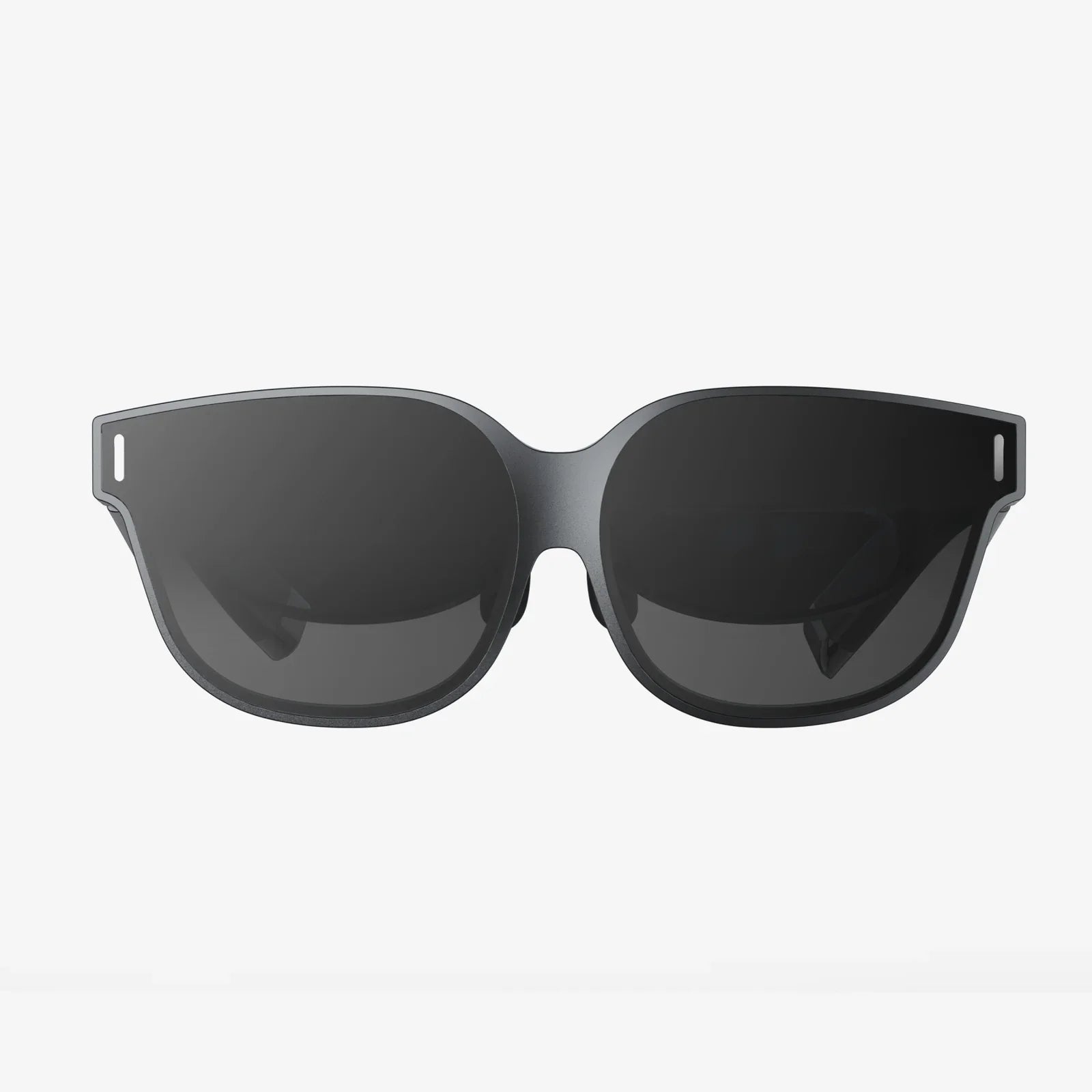
Imagine a world where the digital and the physical are not separate realms but a single, seamless continuum, where you can learn, work, create, and connect in ways previously confined to science fiction. This is the promise of extended reality, a technological revolution quietly unfolding around us, poised to fundamentally alter the human experience. To understand its trajectory is to glimpse the future itself.
The Foundational Trio: Defining the Core Technologies
To fully grasp the extended reality meaning, we must first deconstruct its primary components. XR is not a single technology but an umbrella term encompassing a spectrum of immersive technologies that blend the virtual and real worlds. This spectrum is primarily anchored by three distinct but interrelated fields.
Virtual Reality (VR): Total Immersion
At one end of the spectrum lies Virtual Reality (VR). VR's core principle is immersion. It transports the user into a completely computer-generated, digital environment, effectively replacing their physical surroundings. This is typically achieved through a head-mounted display (HMD) that blocks out the external world, paired with motion-tracking sensors and handheld controllers. The goal of VR is to create a convincing sense of presence—the psychological phenomenon where the user's brain accepts the digital world as real, even if only temporarily.
This total immersion makes VR exceptionally powerful for applications that require complete focus or the simulation of environments that are inaccessible, expensive, or dangerous to replicate in the real world. From pilots training in flight simulators to surgeons practicing complex procedures on virtual patients, VR offers a safe and controlled sandbox for high-stakes learning.
Augmented Reality (AR): Digital Overlays on the Physical World
Occupying the middle ground is Augmented Reality (AR). Unlike VR, AR does not seek to replace the real world but to augment it. It superimposes digital information—images, text, 3D models, or animations—onto the user's view of their immediate physical environment. The magic of AR lies in its context-awareness; the digital content is anchored to and interacts with real-world objects and spaces.
Many people first experienced AR through smartphone applications that used the device's camera to display digital creatures on their living room floor or show how a new piece of furniture might look in their space. More advanced AR is delivered through transparent glasses or lenses, allowing for hands-free interaction. This technology is revolutionizing fields like manufacturing, where assembly line workers can see digital instructions overlaid on the machinery they are repairing, or in navigation, where arrows can be projected onto the street to guide you to your destination.
Mixed Reality (MR): The Blending of Worlds
Mixed Reality (MR) is often considered the most advanced and nuanced point on the spectrum. It represents a hybrid environment where physical and digital objects not only co-exist but can interact with each other in real-time. MR goes beyond the simple overlays of AR; it requires a deep understanding of the physical space to allow digital objects to behave as if they are truly part of it.
In a true MR experience, a virtual character could sit on your real-world couch, casting a shadow and being occluded by your real coffee table. You could use your hands to push a digital ball and have it bounce off a real wall. This level of interaction demands sophisticated sensors, cameras, and algorithms to continuously map the environment and understand its physics. MR is the key to persistent digital spaces—imagine a virtual whiteboard in your office conference room that remains in place day after day, accessible to anyone wearing an MR headset.
The Engine Room: Core Technologies Powering XR
The seamless experience promised by XR is powered by a complex symphony of hardware and software technologies working in concert. Understanding these components is crucial to appreciating the engineering marvel behind the magic.
Hardware: The Gateways to New Realities
The hardware serves as the physical conduit between the user and the digital experience. This includes:
- Headsets and Smart Glasses: These are the primary displays, ranging from tethered, high-powered VR headsets to sleek, untethered AR glasses. They incorporate high-resolution screens, advanced optics for focus and comfort, and a suite of sensors.
- Tracking Systems: To understand the user's position and movement, XR systems use a combination of inside-out and outside-in tracking, employing cameras, gyroscopes, accelerometers, and infrared sensors to map the environment and track the user's head and hand movements with millimeter precision.
- Processing Power: Rendering complex, high-fidelity graphics at high frame rates (often 90Hz or more to prevent motion sickness) requires immense computational power. This can be housed in a connected computer, a game console, or, increasingly, directly on the headset itself using specialized chipsets.
- Input Devices: Interaction is key. This is achieved through handheld controllers, haptic gloves that provide tactile feedback, and, most promisingly, hand-tracking technology that allows users to manipulate digital objects with their bare hands using natural gestures.
Software and Development: Building the Experiences
On the software side, a robust ecosystem has emerged to enable creators:
- Game Engines: Powerful real-time 3D creation platforms have become the de facto standard for building XR experiences. They provide the tools for modeling environments, scripting interactions, and rendering graphics.
- SDKs and APIs: Software Development Kits (SDKs) and Application Programming Interfaces (APIs) provide developers with pre-built tools and functions specific to XR hardware, handling complex tasks like spatial mapping, gesture recognition, and environmental understanding.
- Cloud Computing: The computational demands of XR are being offloaded to the cloud. Cloud-based rendering streams high-quality experiences to less powerful devices, while cloud services enable shared, persistent worlds and complex AI simulations that no single device could handle alone.
Transforming Industries: The Practical Applications of XR
The extended reality meaning moves from theoretical to profoundly practical when we examine its application across diverse sectors. It is far more than a gaming novelty; it is a powerful tool for solving real-world problems.
Revolutionizing Education and Training
XR is dismantling the physical and financial barriers to experiential learning. Medical students can perform virtual dissections and walk through detailed 3D models of the human body. History classes can take virtual field trips to ancient Rome. Corporate trainees can practice public speaking in front of a virtual audience or learn to operate heavy machinery in a risk-free environment. This learning-by-doing approach significantly improves knowledge retention and skill acquisition.
Enhancing Healthcare and Therapy
In healthcare, XR is a tool for both practitioners and patients. Surgeons use AR overlays during operations to view patient vitals or see CT scan data superimposed on the patient's body. VR is proving highly effective in pain management, distracting burn victims during painful wound care procedures. It is also a groundbreaking tool for exposure therapy, helping patients with phobias or PTSD confront and manage their triggers in a safe, controlled setting.
Powering Industrial Design and Manufacturing
The design and manufacturing process is being accelerated by XR. Engineers and designers can collaborate on life-size 3D prototypes of cars or buildings before a single physical resource is spent. AR guides factory workers through complex assembly processes, reducing errors and training time. Remote experts can see what a field technician sees and provide visual annotations directly into their line of sight, enabling faster and more efficient repairs.
Redefining Retail and Remote Work
Retail is being transformed by the ability to try before you buy in an entirely new way. Customers can use AR to see how clothes fit, how makeup looks on their skin, or how a new sofa fits in their living room. In the realm of work, XR is the foundation for the metaverse vision of remote collaboration. Instead of a grid of video calls, teams can meet in a virtual boardroom, interact with 3D data models, and brainstorm on virtual whiteboards as if they were in the same room, fostering a much deeper level of collaboration and presence.
Navigating the Challenges: The Road Ahead for XR
Despite its immense potential, the widespread adoption of XR is not without significant hurdles. Addressing these challenges is critical for the technology to reach its full, positive potential.
- Technical Limitations: Issues like display resolution, field of view, battery life, and wireless latency still need improvement. The dreaded "simulator sickness" experienced by some users remains a barrier that better hardware and software are slowly overcoming.
- Social and Ethical Considerations: The blurring of digital and physical realities raises profound questions. How do we protect privacy in a world where devices with cameras and sensors are constantly mapping our homes and lives? How do we prevent the creation of hyper-realistic misinformation or "deepfake" environments? The potential for addiction and the psychological effects of long-term immersion in virtual worlds are areas that require careful study and ethical frameworks.
- Accessibility and the Digital Divide: High-quality XR hardware remains expensive, risking the creation of a new digital divide between those who can afford access to these transformative experiences and those who cannot. Ensuring the technology is accessible to people with disabilities is another crucial challenge.
The Future is Extended: What Comes Next?
The trajectory of XR points towards a future of even greater integration with our daily lives. We are moving towards lighter, more socially acceptable glasses that will eventually resemble ordinary eyewear. The convergence of XR with artificial intelligence will create experiences that are not only immersive but intelligently responsive and contextual. The concept of the "metaverse"—a network of persistent, shared, and interconnected virtual spaces—is largely dependent on the maturation of XR as the primary interface.
Ultimately, the long-term extended reality meaning may be the evolution of computing itself. We moved from the command line to the graphical user interface (GUI), and then to the touchscreen. XR represents the next paradigm shift: the spatial computing interface, where digital information is integrated into the world around us, accessible through natural gestures and gaze. This shift promises to make technology more intuitive, more human-centric, and more powerfully interwoven with our reality than ever before.
The line between what is real and what is digital is not just blurring; it is becoming irrelevant. Extended reality is the lens through which we will increasingly perceive, interact with, and understand our world, offering a canvas for human creativity and connection that is limited only by our imagination. The next great leaps in medicine, education, art, and communication will not be confined to screens—they will be all around us, waiting for us to reach out and interact.
Share:
Can I Use the Internet from a Set of Glasses? The Future of Wearable Computing
Most High Tech Glasses: Beyond Vision into the Future of Augmented Reality