


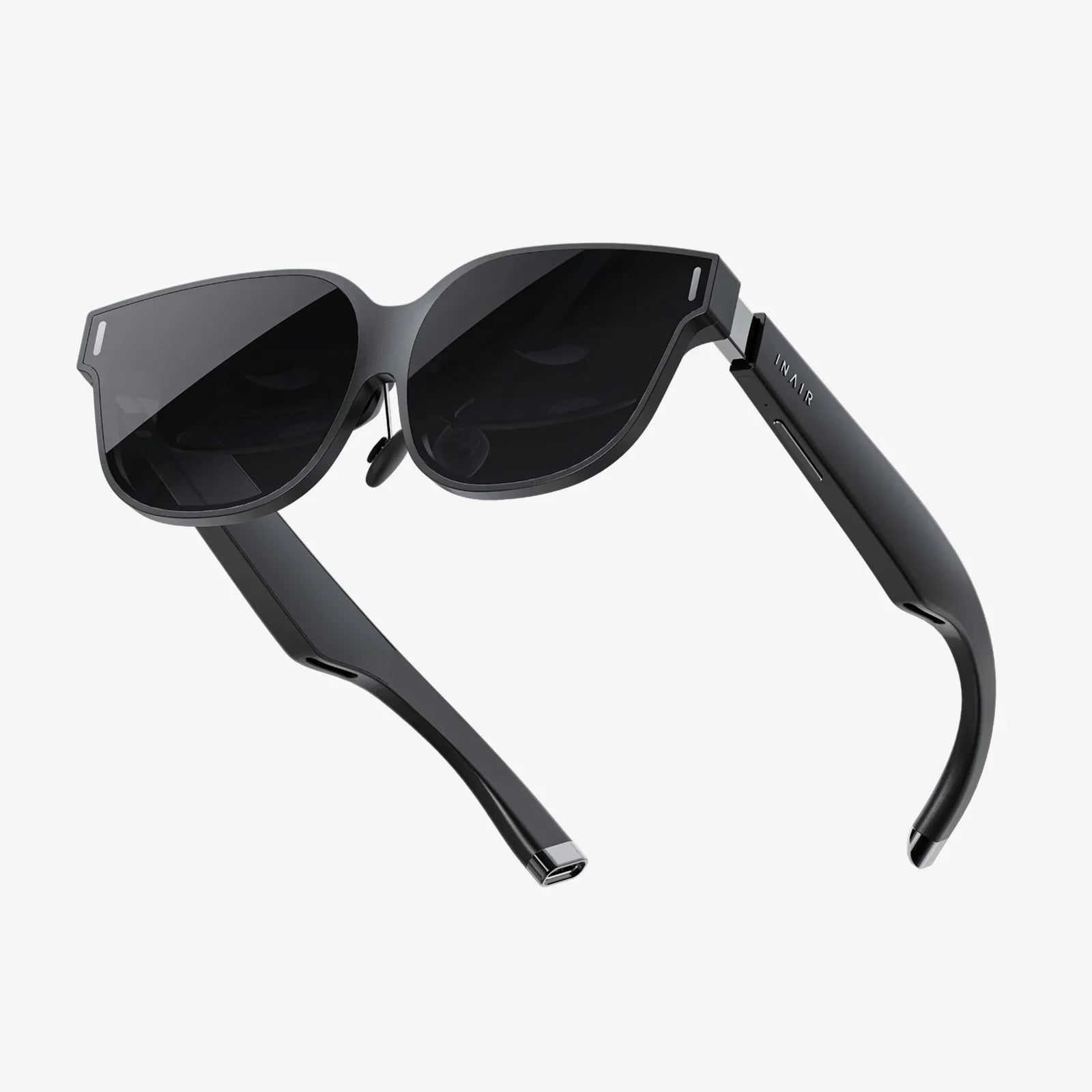
Imagine a world where the digital and the physical are not separate realms but a single, continuous fabric of experience. Where a surgeon in one country can guide a procedure in another through a pair of transparent lenses, where a historian can walk through a meticulously reconstructed ancient city, and where an engineer can assemble a complex engine prototype with digital parts that have weight and substance. This is the promise, the allure, and the rapidly approaching reality of Extended Reality. It’s a technological revolution poised to unlock doors of perception we never knew existed, and it’s a story that begins not in a lab, but in the very way we choose to see our world.
The XR Spectrum: Demystifying the Acronym
Before delving into its profound implications, it is crucial to understand what Extended Reality truly encompasses. XR is not a single technology but an umbrella term that covers all combined real-and-virtual environments and human-machine interactions generated by computer technology and wearables. It represents a continuum that spans from the completely real to the entirely virtual, a concept popularized by Paul Milgram and Fumio Kishino's Reality–Virtuality Continuum in 1994.
At one end of this spectrum lies our unmediated, physical reality. At the opposite end exists a fully digital, Virtual Reality (VR). VR immerses the user in a completely computer-generated environment, effectively shutting out the physical world. Through a head-mounted display (HMD), motion tracking, and controllers, users are transported to simulated worlds for gaming, training simulations, or social gatherings. The key principle of VR is immersion—the sensation of being physically present in a non-physical world.
On the other end, but not fully virtual, we find Augmented Reality (AR). AR overlays digital information—be it images, text, or 3D models—onto the user's view of their real-world environment. Unlike VR, AR does not replace reality but supplements it. This is most commonly experienced through smartphone screens (e.g., viewing furniture in your living room before purchase) or, more powerfully, through specialized glasses that project digital content directly onto the retina, allowing for hands-free interaction.
Bridging the gap between AR and VR is Mixed Reality (MR). This is often considered the most complex and compelling segment of the XR spectrum. MR not only overlays digital objects onto the real world but anchors them to it. These digital objects can interact with the physical environment in real-time—a virtual ball can bounce off a real table, and a digital character can hide behind your actual sofa. MR requires advanced sensors and cameras to deeply understand and map the geometry of the surrounding space, creating a cohesive blend where physical and digital elements coexist and interact.
Thus, Extended Reality is the unifying term for VR, AR, and MR. It signifies the entire spectrum of technologies designed to merge the real and the virtual, offering a new paradigm for human-computer interaction.
The Engine Room: Core Technologies Powering the XR Revolution
The magic of XR doesn't happen by chance; it is powered by a sophisticated convergence of several cutting-edge technologies. Each plays a critical role in creating convincing and interactive experiences.
1. Display and Optics
At the heart of any XR device is the display system. For VR, this involves high-resolution screens placed mere centimeters from the eyes, viewed through complex lenses that widen the field of view and create a stereoscopic 3D effect. The challenge is to achieve high pixel density to avoid the "screen-door effect" while maintaining a wide field of view for immersion.
For AR and MR, the display challenge is even greater. See-through waveguide technology is often employed, where micro-projectors beam light onto transparent lenses etched with microscopic patterns that reflect the light into the eye. This allows the user to see both the real world and the digital overlay simultaneously and in focus. Light-field technology, which replicates how light naturally enters the eye, is an emerging frontier aiming to solve visual comfort issues and make digital objects feel more physically present.
2. Tracking and Sensing
For XR to feel responsive and real, it must understand its environment and the user's position within it. This is achieved through a suite of sensors:
- Inside-Out Tracking: Cameras and sensors on the headset itself scan the environment to track the user's movement in space without external beacons. This is crucial for freedom of movement.
- Outside-In Tracking: External sensors or cameras placed in a room precisely track the position of the headset and controllers. While highly accurate, it limits the user to a predefined space.
- Eye Tracking: Infrared cameras inside the headset monitor the user's pupils. This enables foveated rendering (where only the center of the vision is rendered in high detail, saving processing power), more intuitive UI interaction, and avatars with lifelike eye contact in social applications.
- Hand Tracking: Computer vision algorithms allow cameras to see and interpret the user's hands, enabling natural gesture-based control without the need for physical controllers.
3. Spatial Mapping and Understanding
For MR experiences, the device must do more than just see the world; it must understand it. Using depth-sensing cameras (like time-of-flight sensors) and simultaneous localization and mapping (SLAM) algorithms, the headset constructs a real-time 3D mesh of the environment. This digital twin allows the system to understand the geometry, surfaces, and lighting of a room so digital objects can occlude correctly, cast accurate shadows, and collide with physical obstacles.
4. Processing Power and Connectivity
Rendering photorealistic 3D graphics at high frame rates is computationally intensive. While some standalone headsets have onboard processors, others are tethered to powerful computers or consoles. The advent of 5G and edge computing promises to offload this heavy processing to the cloud, potentially enabling complex, photorealistic XR experiences on lightweight, wireless devices by streaming content with ultra-low latency.
Beyond the Hype: Transformative Applications Across Industries
While entertainment and gaming are the most visible drivers of consumer XR, the technology's true potential lies in its capacity to solve real-world problems and enhance human capability across numerous sectors.
Revolutionizing Education and Training
XR transforms learning from a passive activity into an active, experiential journey. Medical students can practice complex surgical procedures on virtual patients, making mistakes without consequence. Mechanics can train on the internal systems of a jet engine, peeling back virtual layers to understand complex machinery. History students can embark on virtual field trips to ancient Rome or walk through a human cell in biology class. This "learning by doing" in a safe, simulated environment dramatically improves knowledge retention and skill acquisition.
Transforming Healthcare
The impact on healthcare is profound. Surgeons use AR overlays to visualize a patient's anatomy, such as veins or tumor margins, directly on their body during operations, increasing precision and safety. VR is a powerful tool for pain management, distracting burn victims during painful wound care procedures. It is also extensively used for exposure therapy, helping patients with phobias or PTSD confront and manage their triggers in a controlled, virtual setting. Furthermore, XR enables remote collaboration, allowing a specialist to guide a procedure from across the globe as if they were in the room.
Redefining Enterprise and Manufacturing
In the industrial world, XR is a cornerstone of the Fourth Industrial Revolution. Designers and engineers use VR to prototype and interact with 3D models of cars or buildings long before physical prototypes are built, saving immense time and resources. On the factory floor, assembly line workers use AR glasses that project step-by-step instructions, diagrams, and safety information directly into their field of view, streamlining complex processes and reducing errors. Remote experts can see what a field technician sees and annotate their reality to guide repairs, minimizing downtime and travel costs.
Enhancing Retail and Remote Work
The retail sector leverages AR to allow customers to "try before they buy," visualizing how furniture, clothing, or makeup will look in their home or on their person. This reduces purchase hesitation and return rates. In the realm of work, the concept of the "metaverse" points toward persistent virtual workspaces where remote teams can collaborate as avatars around virtual whiteboards and 3D models, fostering a sense of presence and shared purpose that video calls cannot replicate.
The Invisible Hurdles: Challenges on the Path to Mainstream Adoption
Despite its immense potential, the widespread adoption of XR faces significant technological, social, and ethical hurdles that must be addressed.
Technological Limitations
For all the progress, hardware remains a barrier. The ideal XR device—one that is socially acceptable, lightweight, high-resolution, power-efficient, and affordable—does not yet exist. Many users experience simulator sickness in VR due to latency or a mismatch between visual motion and physical sensation. Achieving true visual fidelity, where digital objects are indistinguishable from real ones, remains a monumental challenge requiring breakthroughs in display technology, graphics rendering, and artificial intelligence.
The Privacy Conundrum
XR devices are, by their nature, the most intimate data collection devices ever conceived. They have the potential to continuously monitor and record not only what you look at (eye tracking) and where you go (location data), but also the detailed 3D layout of your home, your office, and other private spaces. The biometric data they collect, from your pupil dilation to your gait, is incredibly sensitive. This raises alarming questions about data ownership, consent, and the potential for unprecedented surveillance and manipulation.
Social and Psychological Implications
As these technologies become more immersive, the line between the virtual and the real may blur in unsettling ways. Will prolonged immersion in idealized virtual worlds lead to dissatisfaction with reality? How will our sense of self and identity be affected by the ability to constantly modify our digital avatars? Furthermore, the potential for hyper-realistic misinformation and deepfakes within XR poses a severe threat, making it possible to create convincing simulations of events that never occurred. Establishing ethical frameworks and digital literacy will be paramount.
Accessibility and the Digital Divide
There is a real risk that the benefits of XR could exacerbate existing social and economic inequalities. High-cost hardware and the need for robust internet connectivity could create a new digital divide, where access to transformative educational, professional, and social XR experiences is limited to a privileged few. Ensuring equitable access must be a priority for developers and policymakers alike.
The Future is Blended: Where Do We Go From Here?
The trajectory of XR points toward a future of increasingly seamless integration between our digital and physical lives. We are moving toward always-available, context-aware computing, where intelligent glasses will become the primary interface to the digital world, replacing smartphones. The internet will not be something we look down at on a screen but something we look through, layered over our perception of reality—a concept often called the "spatial web" or "Web 3.0."
In this future, the world itself becomes the user interface. We will interact with digital information through natural gestures and voice commands. AI assistants will be visually embodied in our environment, providing contextually relevant information as we move through our day. Our virtual identities and social connections will persist across different applications and experiences, forming the basis of a true, interoperable metaverse.
This evolution will be driven by continued convergence: of AI and XR for intelligent interactions; of haptics for a sense of touch; of brain-computer interfaces for more direct control; and of blockchain for securing digital assets and identities. The ultimate goal is not to escape reality, but to augment it—to enhance human perception, cognition, and collaboration in ways that empower us to solve complex problems, create profound art, and connect with each other on a deeper level.
The door between realities is now open, offering a glimpse into a future where our digital and physical selves are no longer separate, but seamlessly intertwined in a new, extended human experience. The journey to redefine the very fabric of perception has just begun, and its destination promises to be more extraordinary than we can currently imagine.
Share:
Extended Reality Headset: A Portal to the Next Digital Dimension
What Can I Do With a VR Headset? An Expansive Guide to Virtual Possibilities