


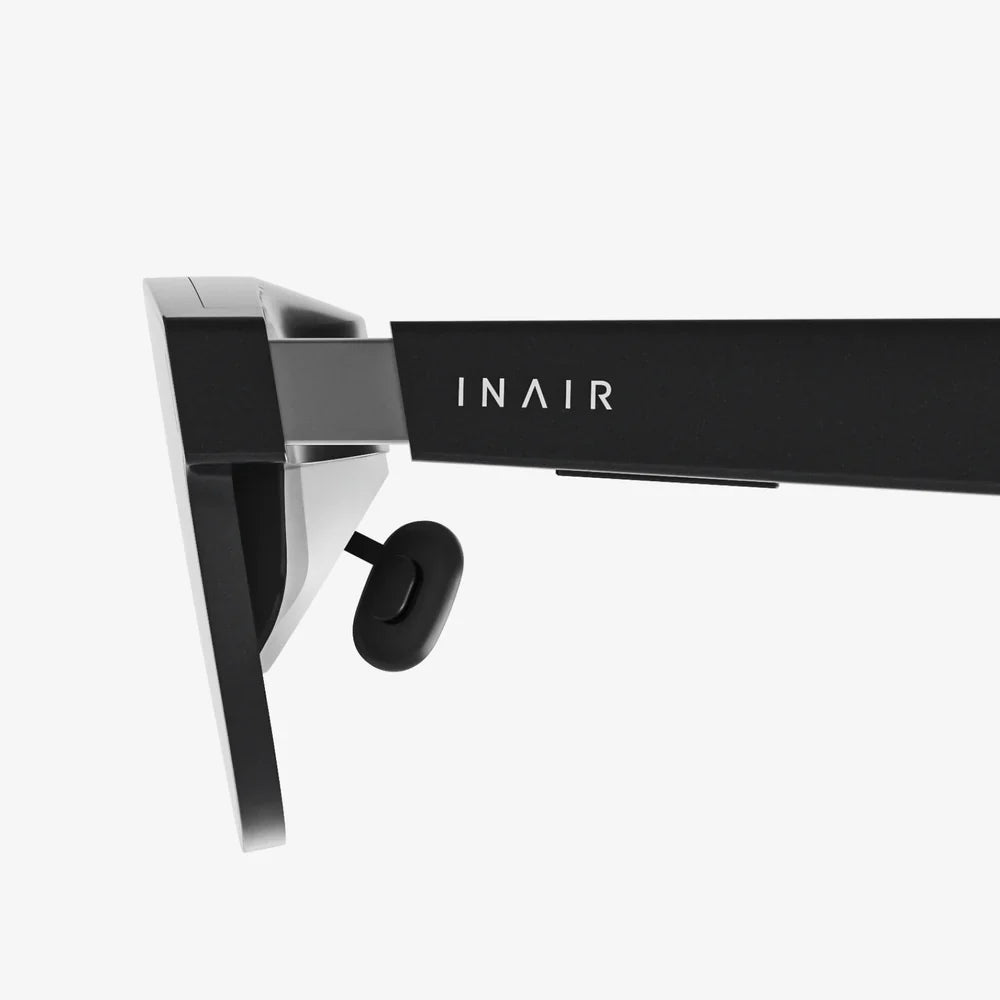
You’ve just unboxed that sleek, futuristic piece of hardware—your very own VR headset. The initial thrill of experiencing a new dimension is palpable, but soon a question emerges from the wonder: beyond the first few dazzling demos and games, what can I really do with this thing? Is it just an advanced gaming console, or is there a deeper, wider world waiting to be explored? The answer is a resounding yes. Your VR headset is a key, a passport, and a canvas all in one, capable of transforming your living room into a gateway for experiences that were, until very recently, the stuff of science fiction. This isn't just about seeing a new world; it's about stepping into it, interacting with it, and being fundamentally changed by it. Prepare to have your perception of reality expanded.
Beyond the Game: A Universe of Immersive Entertainment
The most well-known application for VR is, without a doubt, gaming. But to call it simply "gaming" is a dramatic understatement. This is about presence—the uncanny feeling that you are truly inside the game world.
The Ultimate Gaming Experience
Traditional flat-screen games offer a view into a world. VR places you within it. You don't just press a button to swing a sword; you physically swing your arm. You don't just move a thumbstick to peek around a corner; you cautiously lean your entire body. This physicality creates a level of immersion and intensity that is unparalleled. Genres like horror become genuinely terrifying, puzzle games require you to manipulate objects with your own hands, and rhythm games like the immensely popular ones that have you slicing blocks to the beat become a full-body workout. From sprawling RPGs and intense shooters to serene puzzle adventures, the library of VR-native games is vast and growing, offering experiences crafted from the ground up to leverage the unique magic of virtual reality.
A Front-Row Seat to Everything
Your headset is also a personal, immersive theater. Applications allow you to simulate a massive cinema screen floating in a virtual environment, from a cozy lodge to the edge of space, perfect for watching movies, streaming shows, or even browsing the web on a monumental scale. But the magic goes further. With 360-degree videos and photos, you can be transported to the center of the action. Stand on the surface of Mars, dive the Great Barrier Reef, or find yourself in the middle of a live music concert, able to look around in every direction. Major sporting events are now broadcasting in VR, allowing you to choose your vantage point from the best seats in the stadium, right on the sidelines, or even from the goalpost itself.
Transforming Your Body and Mind: Fitness and Wellbeing
One of the most surprising and impactful revolutions driven by VR is in the realm of health and fitness. The concept of "exergaming" has been utterly redefined.
Making Exercise Addictive
For many, the treadmill is a monotonous chore. VR fitness turns exercise into an engaging, fun, and often thrilling activity. A plethora of applications are designed specifically to get you moving. You might find yourself in a rhythm-based game, squatting and dodging walls while punching targets to high-energy music, burning hundreds of calories without even realizing it. You can box against virtual opponents, join a guided fitness class in an inspiring virtual setting, or even climb sheer rock faces. The key is fun. By distracting you with gameplay and goals, the perceived effort of the workout decreases, making you more likely to stick with it long-term. Many applications include detailed calorie trackers, progress reports, and social features to keep you motivated.
A Sanctuary for Mental Health
The immersive nature of VR also makes it a powerful tool for mental wellbeing and therapy. Guided meditation applications can transport you to a peaceful beach at sunset, a quiet forest glade, or a misty mountain temple, helping you achieve a state of calm and mindfulness far more deeply than simply listening to an audio track. More clinically, VR is being used for exposure therapy, helping people safely confront and manage phobias like fear of heights, public speaking, or flying in a controlled, repeatable virtual environment. It can also be a tool for cognitive rehabilitation and managing stress, providing a much-needed escape and a way to reset a anxious mind.
Expanding Your World: Travel and Social Connection
At its core, VR is a teleportation device for the mind. It has the profound ability to collapse distance, both geographical and social.
Virtual Tourism and Exploration
Always wanted to walk the streets of ancient Rome, visit the International Space Station, or explore the Louvre? A growing number of high-quality experiences and tours make this possible. While it doesn't replace the feeling of real travel, it offers an incredible alternative for those with physical limitations, budgetary constraints, or simply a desire to preview a destination. Museums and cultural institutions are creating detailed virtual walkthroughs of their exhibits. Documentaries are now being produced in immersive VR, letting you stand alongside scientists in the field or historians at archaeological digs. It’s an unparalleled educational tool that brings subjects to life.
The New Social Square
Perhaps the most significant long-term potential of VR lies in social connection. Platforms exist that are essentially virtual meeting spaces. You and your friends, represented by customizable avatars, can meet up to watch a movie together on a giant virtual screen, play games like chess or mini-golf, attend a virtual comedy show, or simply hang out and chat in a breathtaking environment as if you were in the same room, regardless of being thousands of miles apart. These spaces are also host to user-generated events, from book clubs and dance parties to business meetings and academic conferences, fostering a new kind of internet-based community that feels palpably real and present.
Unlocking Creativity and Boosting Productivity
Beyond consumption, VR is a powerful platform for creation and work, offering new paradigms for expressing ideas and organizing information.
A New Dimension of Creation
Imagine stepping inside your painting or sculpture. VR art applications allow you to do just that. Using motion controllers as brushes, palettes, and tools, you can create 3D sculptures in the air around you, paint with dynamic light and fire, and design structures at human scale. This has opened up new artistic mediums and made 3D creation incredibly intuitive. The barrier to entry for 3D modeling is dramatically lowered when you can simply reach out and shape your idea with your hands. Furthermore, 360-degree filmmaking is a growing field, allowing creators to tell stories in entirely new ways, placing the viewer at the center of the narrative.
The Infinite Workspace
The concept of the virtual office is becoming a reality. With VR, you are no longer limited by physical monitor screens. Productivity applications allow you to simulate multiple, massive virtual monitors floating in a distraction-free environment of your choosing. You can have a web browser, a spreadsheet, and a document all open at once, arranged exactly how you want them. This is a boon for remote workers and anyone needing deep focus. Architects and designers can walk clients through 3D models of buildings before a single brick is laid. Data scientists can visualize complex data sets in three dimensions, spotting patterns that would be invisible on a 2D graph. VR is evolving into a powerful tool for spatial computing, where digital information interacts with our physical space in intuitive ways.
A Glimpse into the Future: Emerging Applications
The potential of VR continues to expand into new and groundbreaking fields, hinting at a future where it is deeply integrated into our daily lives.
Revolutionizing Training and Education
Industries are adopting VR for high-stakes training where mistakes in the real world are costly or dangerous. Surgeons can practice complex procedures on virtual patients. Mechanics can learn to repair new engine models without needing the physical parts on hand. Pilots have used simulators for decades, and VR is making this technology more accessible and realistic than ever. In education, students can take field trips to historical events, explore the human body from the inside, or conduct chemistry experiments with virtual chemicals, enhancing engagement and retention through experiential learning.
The Next Frontier of Computing
As the technology matures, the line between our physical and digital lives will continue to blur. The eventual goal for many in the industry is the concept of the "metaverse"—a persistent, shared, virtual space that functions as an extension of the real world for work, socializing, and play. While this full vision is still developing, current VR technology is the first crucial step towards it, teaching us how to interact, build, and coexist in digital spaces.
So, what can you do with a VR headset? The question is almost a trick. It’s not about a finite list of activities; it’s about a fundamental shift in how we interact with technology and with each other. It’s a gym, a cinema, a paintbrush, a teleporter, a conference room, and a therapist's couch. It is, ultimately, a tool of immense potential limited only by the creativity of developers and the curiosity of users like you. That shimmering headset isn't just a device; it's an invitation. An invitation to play harder, create freely, connect deeply, and see the world—all worlds—in an entirely new light. The only thing left to do is put it on and discover your next reality.
Share:
Extended Reality: The Seamless Fusion of Our Digital and Physical Worlds
Most Expensive VR Headset Price: A Deep Dive Into the Pinnacle of Immersive Technology