


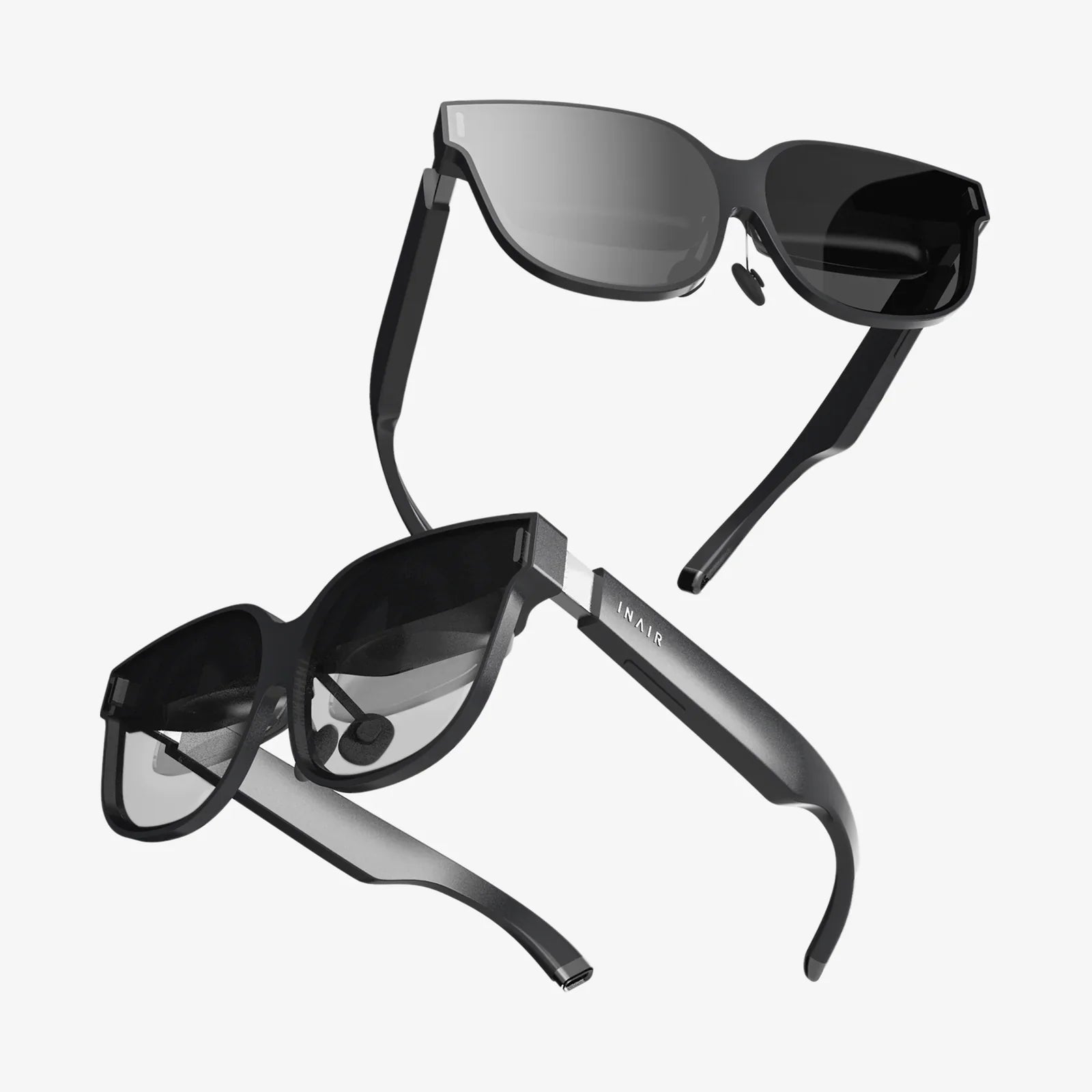
Imagine a world where the line between the physical and the digital doesn't just blur—it vanishes. Where your morning meeting is held on a virtual Mars base, your afternoon workout is guided by a holographic trainer in your living room, and your evening concert features a digitally resurrected artist performing to a global audience of millions, all from the comfort of your home. This isn't a distant sci-fi fantasy; it's the palpable, accelerating future being built today on the twin pillars of Extended Reality and the Metaverse. But are they the same thing? The conflation of these two powerful concepts is one of the biggest misunderstandings in tech. To truly grasp the revolution at our doorstep, we must dissect their unique roles and understand how they combine to create something far greater than the sum of their parts.
Defining the Digital Dichotomy
At its core, the confusion between Extended Reality (XR) and the Metaverse stems from their intertwined nature. One is the gateway; the other is the world beyond it.
Extended Reality is an umbrella term that encompasses all combined real-and-virtual environments generated by computer technology and wearables. It refers to the technological interfaces we use to access digital content. XR is not a single thing but a spectrum of immersive technologies:
- Virtual Reality (VR): A fully digital, immersive experience that shuts out the physical world. Users wearing a headset are transported to a computer-generated environment where they can look around, move, and interact with virtual objects.
- Augmented Reality (AR): Layers digital information—images, text, animations—onto the user's view of the real world. This is often experienced through smartphone cameras or transparent glasses, allowing digital content to interact with the physical environment.
- Mixed Reality (MR): A more advanced form of AR where digital objects are not just overlaid but anchored to and interact with the real world in real-time. A virtual ball can bounce off your real table, and a digital character can sit on your physical couch.
In essence, XR is about the how—the hardware and software that enable immersion.
The Metaverse, in contrast, is the what—the destination. It is a hypothesized iteration of the internet, a collective virtual shared space, created by the convergence of virtually enhanced physical reality and physically persistent virtual space. It is a network of interoperable, persistent, and real-time rendered 3D virtual worlds that can be experienced synchronously and persistently by an effectively unlimited number of users, with a sense of individual presence and continuity of data, such as identity, history, entitlements, objects, communications, and payments.
Think of it this way: XR is the television set, and the Metaverse is all the channels, streaming services, and interactive programs you can watch and participate in. You can access some aspects of the Metaverse without XR (e.g., on a traditional computer screen), but XR provides the most immersive and intuitive portal into it.
The Technological Foundations: Building Blocks and Visions
The development paths for XR and the Metaverse, while separate, are deeply codependent.
The Hardware Frontier: Pushing the Limits of XR
The evolution of XR is a story of miniaturization, sensory expansion, and computational power. Early headsets were bulky, tethered, and low-fidelity. Today, we are moving towards standalone devices with high-resolution displays, advanced inside-out tracking, and increasingly sophisticated haptic feedback systems. The holy grail is a pair of glasses that are socially acceptable, all-day wearable, and capable of seamlessly blending the real and digital worlds. This requires breakthroughs in areas like:
- Optics: Waveguide, holographic, and varifocal lenses to create clear, comfortable visuals.
- Processing: On-device AI and neural processing units (NPUs) to understand the environment and render complex graphics without latency.
- Connectivity: 5G and eventually 6G networks for cloud streaming and shared experiences with minimal lag.
- Human-Computer Interaction (HCI): Moving beyond controllers to hand-tracking, eye-tracking, voice commands, and even brain-computer interfaces for intuitive control.
These advancements are focused on making the interface to digital worlds disappear, making interaction feel natural and effortless.
The Software Ambition: Architecting the Metaverse
Building the Metaverse is an even more colossal software challenge. It's about creating a persistent, scalable, and unified digital reality. Key technological pillars include:
- Interoperability and Standards: This is the single greatest hurdle. For a true Metaverse to exist, digital assets—your avatar, your clothing, your car—must be able to move seamlessly from one virtual world to another. This requires universal standards, much like HTML and HTTP standardized the 2D web. Organizations are working on standards for 3D asset formats, avatar identity, and transactional ledgers.
- Network Infrastructure: Supporting millions of users interacting in real-time in a persistent world demands a new level of network architecture. Edge computing will be critical to reduce latency, and decentralized data centers will need to work in concert.
- Creator Economies: The Metaverse must be built by its users. Robust toolkits and game engines are empowering a new generation of creators to build experiences, from virtual stores and galleries to entire worlds, often leveraging blockchain technology for verifiable ownership of digital assets.
- Artificial Intelligence: AI will populate the Metaverse with intelligent NPCs (non-player characters), assist in world-building, personalize experiences, and ensure safety and moderation at scale.
The Metaverse is less a product and more a protocol—a set of rules that allows countless independent platforms to connect and become a greater whole.
Current Realities: Where We Are Today
In the present day, we have robust examples of XR and nascent, fragmented versions of the Metaverse. They exist on a spectrum of maturity.
XR is here now. It is a mature, shipping technology with clear enterprise and consumer applications. Surgeons use AR overlays for complex procedures, engineers use VR to prototype cars before a single piece of metal is cut, and consumers play immersive fitness games and socialize in VR chat rooms. The technology works, and its value is proven in specific verticals, even if the form factor is still evolving towards its ideal state.
The Metaverse, however, remains largely aspirational. What we have today are often closed-platform "proto-metaverses"—immersive digital platforms like popular social VR platforms or virtual worlds within game ecosystems. These are incredible proofs of concept, demonstrating the demand for shared virtual experiences. However, they are largely walled gardens. Your identity and possessions in one do not carry over to another. They are individual destinations, not a interconnected network.
The current battle is not between XR and the Metaverse, but between different visions for the Metaverse: will it be an open, decentralized web of experiences owned by its users, or a collection of closed, corporate-controlled platforms? This philosophical and commercial struggle will define the next decade of the internet.
Convergence: The Symbiotic Relationship
Despite their differences, XR and the Metaverse are engaged in a powerful positive feedback loop. Each drives the advancement of the other.
XR needs the Metaverse. Without a rich, persistent, and interconnected digital world to explore, high-fidelity XR hardware is like a powerful gaming console with no games. The Metaverse provides the compelling use cases—the work meetings, social gatherings, live events, and endless creative possibilities—that justify the investment in and adoption of advanced XR devices. It answers the question, "Why do I need this headset?"
The Metaverse needs XR. While accessible through screens, the Metaverse achieves its full potential and sense of true "presence" through immersive XR. A flat screen inherently creates a barrier, a layer of abstraction between you and the digital world. XR, particularly AR and MR, breaks down that barrier, allowing the digital and physical to coexist. It is the most natural and human way to interact with a 3D spatial internet, transforming the Metaverse from something we look at to something we live in.
This synergy is creating a new paradigm of computing: spatial computing. This is the fusion of the physical and digital worlds, where the environment itself becomes the interface. It’s not about using a tool; it’s about being within the information. This is the ultimate expression of XR and the Metaverse working as one.
Beyond the Hype: Challenges and Considerations
The path to this integrated future is fraught with significant challenges that extend far beyond technology.
- Privacy and Data Sovereignty: XR devices are data collection machines. They can map your home, track your eye movements, record your voice, and analyze your behavior. The Metaverse will compound this, creating a detailed record of your virtual actions and interactions. Establishing clear rules for who owns this data and how it can be used is paramount.
- Identity and Safety: How do you verify identity without compromising privacy? How do you prevent harassment and ensure digital safety in immersive environments where the sense of presence can make negative experiences feel more visceral and real? Robust moderation tools and digital identity systems are non-negotiable.
- The Digital Divide: Will these technologies be accessible to all, or will they create a new chasm between those who can afford to access the next internet and those who cannot? The cost of hardware and access to high-bandwidth connectivity could become a significant barrier.
- Psychological and Social Impact: What are the long-term effects of living increasingly hybrid lives? Will we strengthen global connections, or will we retreat into personalized digital bubbles? Navigating the social and psychological implications will be as important as developing the technology itself.
Addressing these issues requires a multidisciplinary effort involving technologists, ethicists, policymakers, and sociologists from the very beginning.
The Future is Hybrid
The ultimate destination is not a choice between the physical world and a virtual one, nor is it a victory of XR over the Metaverse or vice versa. The future is hybrid. It is a spectrum of experiences that blend the real and the virtual in ways that enhance our human capabilities and enrich our lives.
We will not live exclusively in the Metaverse; we will use it. We will use it to collaborate with colleagues on another continent as if they were in the same room, using XR glasses to annotate a shared 3D model. We will use it to try on clothes digitally before ordering the physical product, overlaying perfect digital replicas onto our reflection. We will use it to learn by walking through ancient Rome or exploring the human bloodstream, with XR making the lesson tangible.
The magic happens not in the isolation of these technologies, but in their integration. Extended Reality provides the lens, and the Metaverse provides the vista. Together, they are quietly assembling the framework for the most significant shift in how we live, work, and connect since the invention of the world wide web. The door is opening; the only question is what we will choose to build on the other side.
This isn't just about new gadgets or flashy virtual worlds—it's about the next evolution of reality itself. The convergence of Extended Reality and the Metaverse promises to unlock human potential in ways we are only beginning to imagine, turning the entire world into your interface and every experience into an opportunity for connection and creation. The journey into this blended existence has already begun; are you ready to see what happens when the digital and physical finally become one?
Share:
VR Headset Comfort Adjustments: The Ultimate Guide to Pain-Free Immersion
What Is a VR Headset Made Of - The Intricate Components Powering Virtual Worlds