


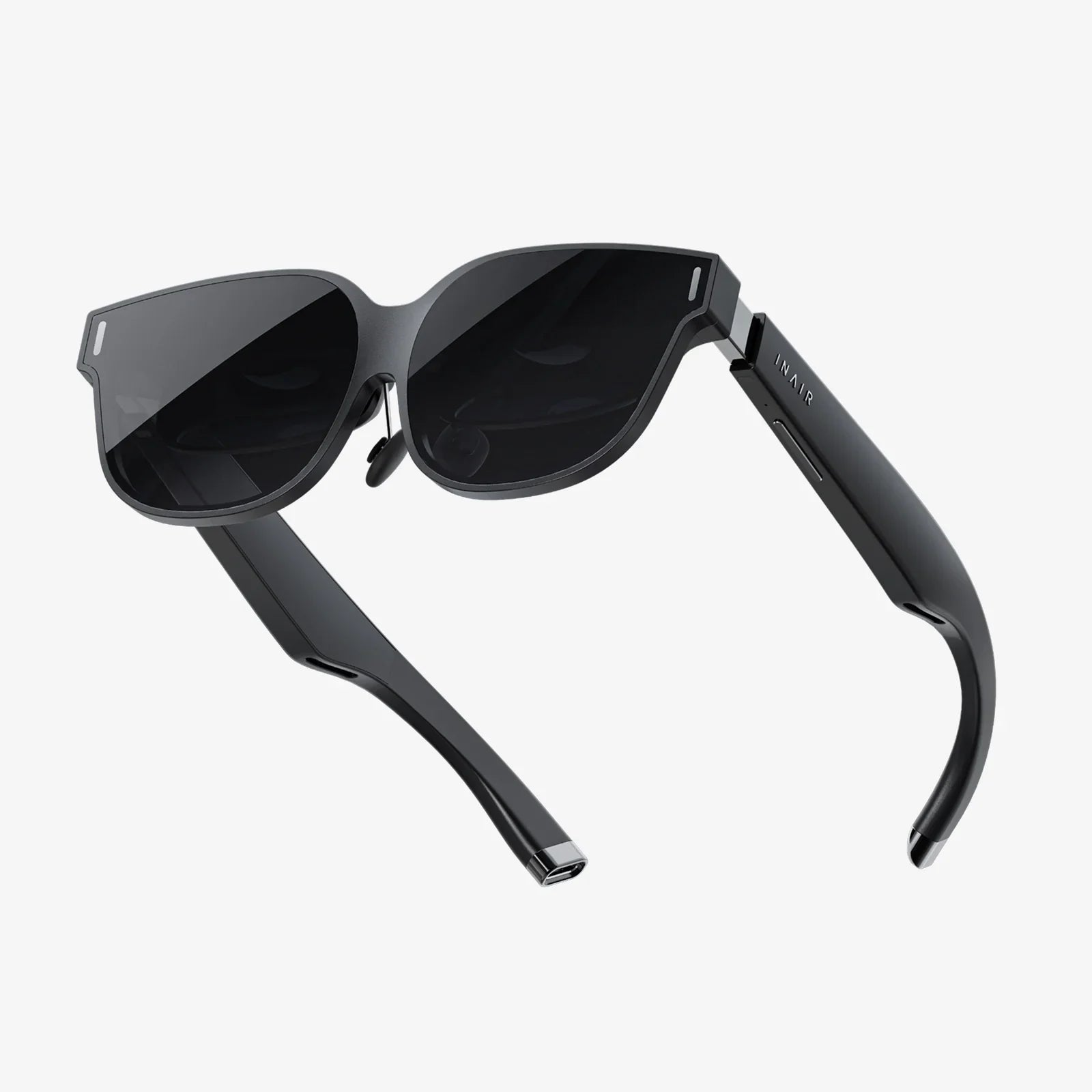
You slip it on, and the real world melts away. But have you ever stopped to wonder, as you're dodging alien lasers or exploring a digital museum, what kind of technological marvel is strapped to your face? The journey from a simple concept to a portal into another dimension is a story written in silicon, glass, plastic, and a myriad of other sophisticated materials. Unpacking the anatomy of a virtual reality headset reveals a breathtaking feat of modern engineering, where every gram and every millimeter is a calculated compromise between performance, comfort, and cost.
The Brain and the Senses: Processing and Tracking
At its core, a VR headset is a computer dedicated to a single task: generating a believable world. This requires immense processing power, which is handled in one of two ways. Some models are tethered, meaning they act as a sophisticated display and input device for a separate, more powerful external computer. These headsets contain minimal internal processing; their primary job is to receive a high-fidelity video signal and send back tracking data. The connection is typically made via a high-bandwidth cable designed to minimize latency, a critical factor in preventing motion sickness.
Standalone headsets, on the other hand, pack an entire computer system into the device itself. This includes a System-on-a-Chip (SoC), a component that integrates a central processing unit (CPU), a graphics processing unit (GPU), memory, and other core components onto a single microchip. These are similar to the chips found in high-end smartphones, optimized for balancing intense graphical workloads with power efficiency to preserve battery life. This internal computer is mounted onto a densely packed printed circuit board (PCB) along with RAM and flash storage, all carefully arranged to manage heat dissipation within the tight confines of the headset.
But a powerful brain is useless without senses. This is where the array of tracking sensors comes into play. The most common method for tracking a user's head position and orientation is through an Inertial Measurement Unit (IMU). This tiny but vital component is a micro-electromechanical system (MEMS) that contains a gyroscope, an accelerometer, and often a magnetometer. The gyroscope measures angular velocity (how you're turning your head), the accelerometer measures linear acceleration (how you're moving your head forward or sideways), and the magnetometer acts as a digital compass to correct for drift. The IMU provides incredibly high-frequency data, crucial for the low-latency response that makes VR feel real.
For more precise positional tracking and to compensate for the slight drift inherent in IMUs, headsets use external or internal cameras. Many modern headsets employ inside-out tracking, where several wide-angle or fish-eye cameras are embedded on the exterior shell of the device. These cameras constantly monitor the surrounding environment, tracking the movement of individual points and features in the room to anchor the virtual world to the real one. This complex sensor fusion—combining the high-speed data from the IMU with the absolute positioning from the cameras—is what allows you to lean around a virtual corner or duck under a virtual object with stunning accuracy.
Windows to Another World: The Optical Stack
If the processors are the brain, the display and lens system are the eyes of the VR headset. This optical stack is arguably the most critical component in defining the quality of the experience. It begins with the display panels themselves. Most modern headsets use either Fast-Switch LCDs or OLED (Organic Light-Emitting Diode) screens. LCDs are more common due to their lower cost and ability to achieve very high resolutions, which is vital for reducing the "screen door effect" (the visible gap between pixels). OLEDs are prized for their perfect blacks and incredibly fast pixel response times, which eliminate motion blur, but they can be more expensive and sometimes have a lower overall pixel density.
These displays are mounted extremely close to the user's eyes, which presents a fundamental optical problem: the human eye cannot focus on something that is physically that near. This is where the custom Fresnel lenses come in. Named after their inventor, Augustin-Jean Fresnel, these lenses are a masterpiece of optical engineering. Instead of being a heavy, curved piece of glass like a traditional lens, Fresnel lenses are thin and flat, with a series of concentric grooves etched into their surface. These grooves act like the curved contours of a standard lens, bending the light from the display to focus it correctly onto the user's retinas. This design drastically reduces the weight and thickness of the headset, but it can introduce visual artifacts like "god rays"—ghostly glare effects that appear around high-contrast objects.
More recent advancements have seen the adoption of pancake lenses. This complex design uses polarization folding to bounce light between multiple lens elements before it reaches the eye. This allows the lenses to be much thinner and lighter than Fresnel designs and significantly improves image clarity and reduces artifacts. However, pancake lenses are more expensive to manufacture and absorb more light, requiring brighter displays to compensate. Between the displays and the lenses, you often find a carefully engineered mechanical assembly that allows for Interpupillary Distance (IPD) adjustment. This lets users physically slide or dial the lenses closer together or further apart to match the distance between their pupils, ensuring a sharp and comfortable image for a wide range of users.
The Shell and The Straps: Ergonomics and Materials
Housing all this advanced technology is a shell designed for both protection and comfort. The primary material for the external rigid structure is almost always plastic, chosen for its excellent blend of low weight, durability, and ease of manufacturing through injection molding. The specific type of plastic can vary, but common choices include polycarbonate and ABS (Acrylonitrile Butadiene Styrene) for their high impact resistance. The interior face of the headset, which rests against the user's skin, is a complex system of comfort. A thick foam padding is standard, often covered with a removable, breathable interface made of fabrics like velour or synthetic leather. These materials are chosen for their moisture-wicking properties and ease of cleaning.
Equally important is the headstrap system. Basic models use simple elastic straps, but higher-end headsets feature rigid polymers molded into a halo or similar shape that distributes the device's weight evenly around the circumference of the head. These are frequently paired with a rear counterweight, which shifts the center of gravity backward to relieve pressure on the face. Many straps also incorporate audio solutions, ranging from simple pass-through ports for headphones to integrated, high-quality off-ear speakers that direct sound into the ears without isolating the user from their real environment—a key feature for safety and awareness.
The Unseen Essentials: Cooling and Connectivity
All the processing power packed into a standalone headset generates significant heat. To manage this, engineers incorporate passive and active cooling systems. Passive cooling relies on the strategic use of materials like heat-conductive metals (e.g., aluminum) or graphite sheets integrated into the design to draw heat away from the SoC and spread it across a larger area of the internal chassis. For more demanding devices, a tiny, ultra-quiet blower fan is used for active cooling. This fan pulls cool air from the outside through small vents and circulates it over heat sinks attached to the main components, exhausting the warm air out another set of vents. This system is a careful balancing act to prevent noise from disrupting immersion.
Connectivity is the final piece of the puzzle. Even standalone headsets are not islands; they need to connect to controllers, the internet, and sometimes a PC. This is facilitated by a suite of wireless technologies. Bluetooth is ubiquitous for pairing motion controllers and accessories. Wi-Fi is essential for downloading content, streaming video, and enabling social features. High-end tethered headsets may also use specialized wireless adapter kits that leverage technologies like WiGig (802.11ad) for high-bandwidth, low-latency transmission of video data from a PC to the headset, cutting the cord without sacrificing performance.
So, the next time you power up your device and prepare for an adventure, remember the intricate symphony of components working in perfect harmony. It's not just a piece of plastic; it's a universe of microchips, finely ground glass, whirring fans, and complex sensors—all meticulously designed to collapse the impossible distance between reality and imagination.
Share:
Extended Reality vs Metaverse: Navigating the New Digital Frontier
Extended Reality Market Trends 2025: A Deep Dive into the Next Digital Frontier