


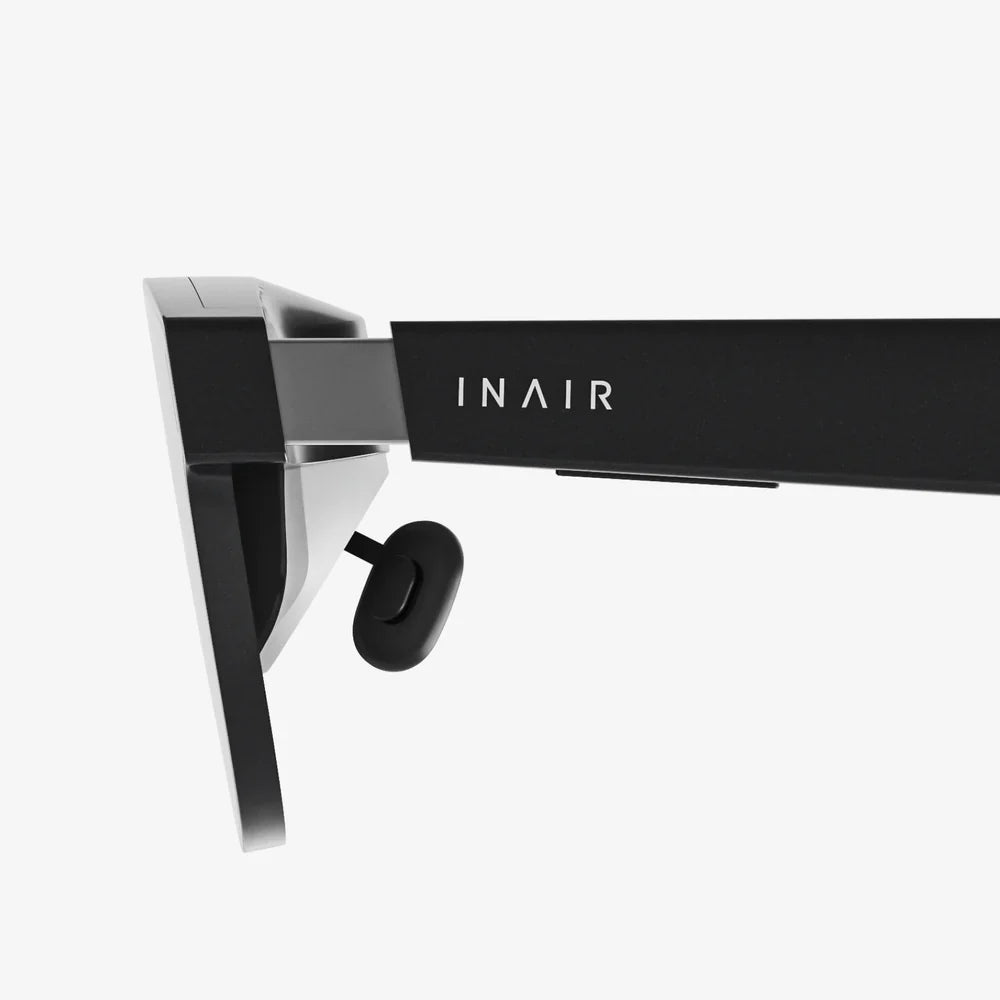
Imagine a world where the line between the digital and the physical isn't just blurred—it's erased. A world where you can train for complex surgery on a perfect holographic patient, stand atop a virtual mountain peak from your living room, or overlay a digital instruction manual directly onto a malfunctioning engine. This is no longer the stuff of science fiction; it is the emerging reality powered by a revolutionary technological paradigm known as Extended Reality. But what exactly does this term mean? Unpacking the Extended Reality XR definition is the first step to understanding the next great leap in human-computer interaction, a convergence of our physical and digital worlds that promises to reshape everything from entertainment to enterprise.
The Core of the Matter: Defining Extended Reality
At its simplest, the Extended Reality XR definition encompasses all real-and-virtual combined environments and human-machine interactions generated by computer technology and wearables. It is an umbrella term that includes all its immersive technologies, namely Augmented Reality (AR), Virtual Reality (VR), and Mixed Reality (MR), along with any interpolations among them. The 'extension' signifies the technology's primary function: to extend the reality we experience by either blending the virtual and real worlds or by creating a fully immersive digital experience.
Think of XR not as a single technology, but as a spectrum. On one end, you have the complete physical reality of your everyday life. On the other, a fully digital, virtual environment. XR technologies occupy every point in between, offering varying degrees of digital immersion.
Deconstructing the Spectrum: AR, VR, and MR
To fully grasp the Extended Reality XR definition, one must understand its constituent parts. Each technology on the XR spectrum offers a unique way of mediating our experience of reality.
Virtual Reality (VR): The Total Immersion
Virtual Reality sits at the far end of the spectrum, dedicated to complete immersion. Using a head-mounted display (HMD) or headset, VR blocks out the physical world and transports the user into a fully digital, computer-generated environment. These environments can be realistic simulations of actual places or fantastical worlds that defy the laws of physics.
The key characteristic of VR is its ability to make the user feel present in the digital world. This is achieved through:
- Visual Immersion: High-resolution screens fill the user's field of view.
- Audio Immersion: 3D spatial audio mimics how sound behaves in the real world.
- Tracking: Sensors track the user's head and, often, hand movements, allowing them to look around and interact with the virtual world naturally.
Applications range from immersive gaming and virtual tourism to high-stakes training simulations for pilots, soldiers, and surgeons, where mistakes in the real world carry significant consequences.
Augmented Reality (AR): The Digital Overlay
On the opposite end of the spectrum from VR lies Augmented Reality. Rather than replacing the real world, AR supplements it by overlaying digital information—images, text, 3D models, animations—onto the user's view of their physical surroundings. The most accessible form of AR is experienced through smartphone and tablet cameras, where digital objects appear to exist in the real world on the device's screen.
More advanced AR is delivered through smart glasses or transparent headsets, which project digital content directly onto the lenses, allowing the user to see their environment unimpeded. The core principle of AR is contextuality; the digital information is relevant to the user's location and what they are looking at. For instance:
- A mechanic seeing repair instructions overlaid on a faulty engine part.
- A tourist seeing historical facts and figures pop up as they point their phone at a monument.
- A shopper visualizing how a new sofa would look in their actual living room.
AR enhances reality by adding a layer of useful, interactive data.
Mixed Reality (MR): The Seamless Blend
Occupying the crucial middle ground between AR and VR is Mixed Reality. Often confused with AR, MR represents a more advanced and interactive evolution. While AR simply overlays digital content, MR allows that digital content to interact with and be anchored to the physical world in real-time.
In a true MR experience, a virtual object can be occluded by a real-world physical object. For example, a virtual character could walk behind your real desk and disappear from view. These digital objects understand and respond to the geometry of your environment. They can sit on your real table, bounce off your real walls, and cast shadows consistent with the real-world lighting. This requires sophisticated sensors and cameras to continuously map the environment, understanding its depth, surfaces, and lighting conditions.
MR is the pinnacle of the Extended Reality XR definition, as it creates a true synergy between the real and the virtual, enabling complex interactions that feel natural and intuitive.
The Technological Engine Powering XR
The magic of XR doesn't happen by accident. It is powered by a sophisticated stack of converging technologies that work in harmony to create convincing and responsive experiences.
- Hardware: This includes the headsets (from tethered VR headsets to standalone AR glasses), controllers, haptic feedback devices that provide a sense of touch, and omnidirectional treadmills for locomotion. The hardware is responsible for tracking user movement, displaying content, and providing sensory feedback.
- Sensors and Cameras: Crucial for AR and MR, these components scan the environment to create a digital map, enabling the precise placement of holograms and understanding of spatial relationships. They include depth sensors, RGB cameras, and LiDAR scanners.
- Software and Platforms: Development engines and software development kits (SDKs) provide the tools for creators to build XR experiences. These platforms handle the complex tasks of rendering, spatial mapping, and physics simulations.
- Connectivity: High-bandwidth, low-latency networks like 5G are essential for streaming rich XR content and enabling cloud-based rendering, which offloads the intensive computational work from the headset to powerful remote servers.
- Artificial Intelligence (AI): AI is the brain behind XR. It powers computer vision, allowing devices to recognize objects and scenes. It enables natural language processing for voice commands and drives intelligent avatars and agents that can interact with users in meaningful ways.
Transforming Industries: The Practical Applications of XR
Moving beyond the theoretical Extended Reality XR definition, the technology's true value is revealed in its transformative applications across countless sectors.
Revolutionizing Education and Training
XR is creating a paradigm shift from learning by reading to learning by doing. Medical students can perform virtual dissections and practice complex procedures without risk. Engineering students can deconstruct and reassemble virtual engines. History classes can take virtual field trips to ancient civilizations. This experiential learning improves knowledge retention and provides safe, repeatable, and scalable training environments.
Enhancing Enterprise and Manufacturing
In the industrial world, XR is a powerful tool for efficiency and precision. Remote experts can guide on-site technicians through repairs by annotating their live field of view. Designers and engineers can collaborate on 3D holographic prototypes, making changes in real-time. Warehouse workers can use AR to visualize optimal picking paths, dramatically speeding up logistics. This "see-what-I-see" capability is breaking down geographical barriers and streamlining complex workflows.
Redefining Healthcare
From diagnosis to treatment and therapy, XR is making waves in medicine. Surgeons use AR to visualize patient anatomy like a GPS for the body during operations. VR is proving highly effective in pain management, physical rehabilitation by making exercises engaging, and treating phobias and PTSD through controlled exposure therapy. It also offers a powerful escape for patients undergoing stressful treatments.
Shaping the Future of Retail and Commerce
XR is solving one of online shopping's biggest drawbacks: the inability to try before you buy. Customers can use AR to see how clothes fit, how makeup looks on their skin, or how furniture fits and looks in their home. Virtual showrooms allow for browsing products in a curated 3D space. This immersive shopping experience reduces uncertainty and purchase returns while increasing consumer confidence.
Creating New Frontiers in Entertainment and Social Connection
The entertainment industry is being reimagined through XR. VR concerts place fans in the front row. Immersive films allow viewers to step inside the story. Social VR platforms enable people to meet, play, and collaborate as lifelike avatars in virtual spaces, fostering a new sense of presence and connection that video calls cannot match. This evolution points toward a future concept known as the 'metaverse,' a persistent network of interconnected virtual spaces.
Navigating the Challenges and Ethical Considerations
Despite its immense potential, the path forward for XR is not without obstacles. Widespread adoption faces hurdles like the cost of high-end hardware, technical limitations in processing power and battery life, and the potential for user discomfort or motion sickness. Furthermore, the immersive nature of XR raises critical ethical questions that society must address.
- Privacy and Data Security: XR devices collect an unprecedented amount of sensitive data, including biometric data (eye tracking, hand movements), detailed 3D maps of users' homes, and records of their behavior and interactions. Protecting this data from misuse is paramount.
- Psychological and Social Impact: What are the long-term effects of prolonged immersion in virtual worlds? Could it lead to increased isolation, addiction, or a dissociation from physical reality? The lines between real and virtual experiences may become increasingly difficult to distinguish.
- Access and the Digital Divide: There is a risk that XR could become a luxury technology, creating a new divide between those who can afford to access these enhanced experiences and those who cannot.
- Content Moderation and Safety: As with any digital platform, ensuring that immersive virtual worlds are safe from harassment, abuse, and harmful content is a significant and complex challenge.
The Future is Extended: What Lies Ahead?
The evolution of XR is moving towards lighter, more powerful, and more socially acceptable hardware—think sleek glasses rather than bulky headsets. Advances in haptics will introduce a more sophisticated sense of touch, and brain-computer interfaces may eventually allow for control through thought alone. The convergence of XR with AI and the Internet of Things (IoT) will create a contextually aware, intelligent environment that seamlessly blends with our daily lives.
We are standing at the precipice of a new computing era. The journey beyond the screen has already begun, and the destination is a world where our digital and physical lives are not separate realms, but a single, integrated existence. The full potential of this technology is limited only by our imagination, and its responsible development will require careful consideration, not just from technologists, but from ethicists, policymakers, and society as a whole. The next dimension of human experience is here, and it is waiting to be explored.
Share:
Android XR News: The Evolving Battle for Our Reality
What Is The Lightest VR Headset - The Ultimate Guide To Unburdened Immersion