


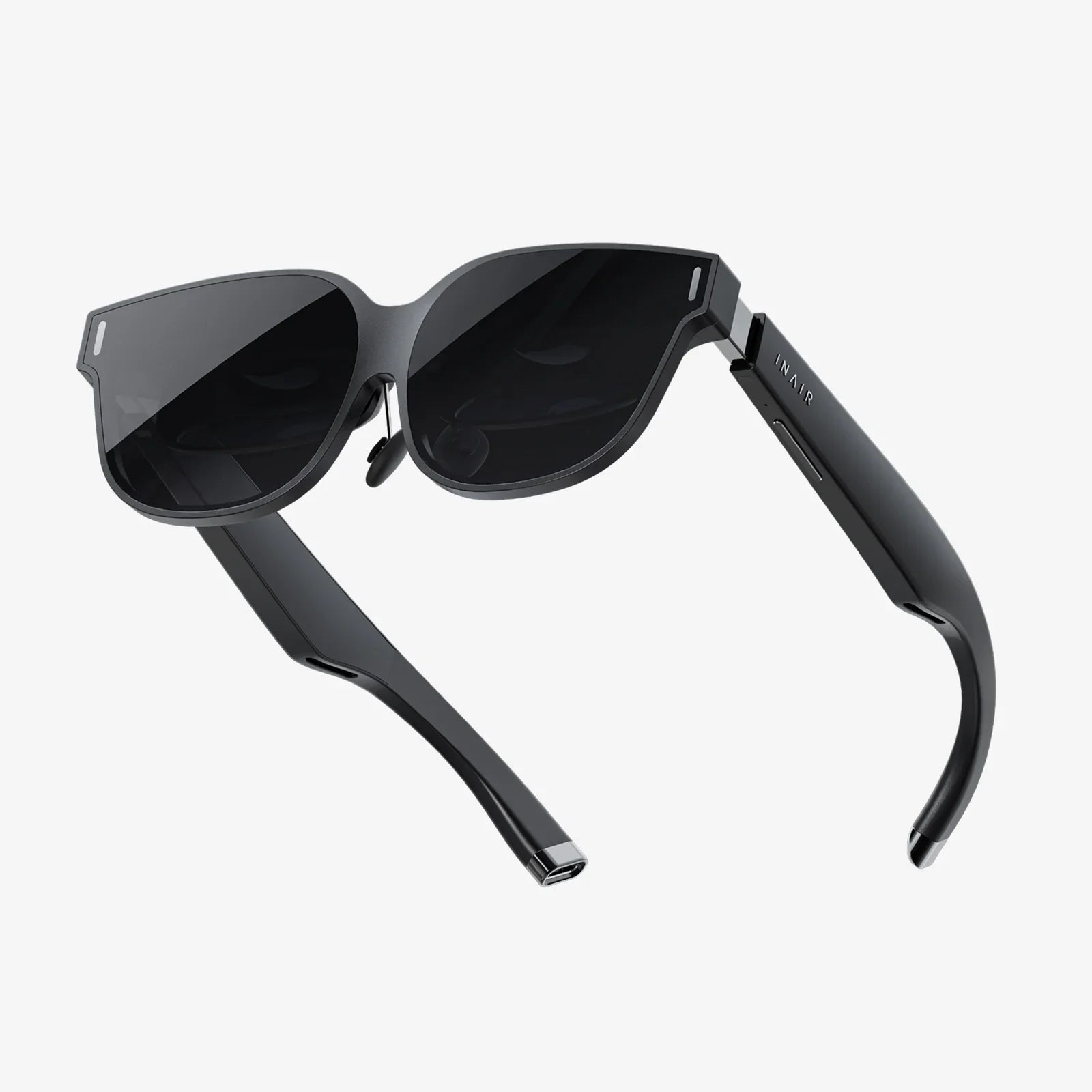
The digital and physical worlds are on a collision course, and the epicenter of this seismic shift is being charted in the latest Android XR news. Forget the clunky headsets and niche applications of yesterday; a new era of spatial computing is dawning, powered by the ubiquitous Android platform and a fierce battle for the operating system of our reality. This isn't just about playing games or watching immersive videos; it's about redefining how we work, connect, and interact with information itself. The stakes are monumental, and the developments emerging from labs and boardrooms are shaping a future that will make today's smartphones look like relics of a bygone age.
The Foundation: Android's Role in the XR Landscape
To understand the current flow of Android XR news, one must first appreciate the foundational role the Android operating system plays. Unlike closed ecosystems built from the ground up, Android offers a flexible, scalable, and familiar foundation for device manufacturers. This has lowered the barrier to entry, enabling a diverse range of hardware, from standalone VR headsets to sleek AR glasses prototypes, all powered by variants of the same core software. The open-source nature of Android, specifically AOSP (Android Open Source Project), allows for deep customization, letting manufacturers tailor the experience for their specific hardware capabilities and target audiences.
Recent iterations of the Android platform have increasingly baked in support for XR functionalities. This includes low-level optimizations for sensor fusion, positional tracking, and rendering pipelines that are crucial for creating a comfortable and convincing immersive experience. The development of dedicated APIs and frameworks within the Android ecosystem empowers developers to create applications that can seamlessly run across a spectrum of devices, fostering a richer and more unified software landscape.
Platform Wars: The Battle for the OS of Reality
The most significant thread in recent Android XR news revolves around the escalating platform war. The emergence of a major tech giant's standalone VR platform, built on a heavily modified version of Android, sent shockwaves through the industry. It demonstrated the potential for a successful, Android-based XR product but also highlighted a critical tension: fragmentation.
This move effectively forked the Android XR ecosystem, creating a walled garden with its own store, SDK, and app ecosystem. For developers, this presents both an opportunity and a challenge. The audience is large and engaged, but it requires developing specifically for that platform, often using its proprietary tools. In response, the stewards of open-source Android and other coalitions have been pushing for a more open, standardized approach.
Initiatives are underway to create a universal platform for AR and MR devices, aiming to provide a consistent developer and user experience across devices from different manufacturers. This is a direct counter to the walled-garden model and represents a fundamental philosophical divide in how the XR future should be built. The latest news suggests intense behind-the-scenes negotiations and development, as the industry grapples with whether the future will be a single, open standard or a series of competing, closed platforms. The outcome of this battle will determine the very fabric of the immersive web and how we access it.
Hardware Innovations: Beyond the Bulky Headset
Android XR news isn't just about software; it's driving a hardware revolution. The stereotype of a bulky, wired headset is rapidly becoming obsolete. Advances fueled by mobile technology are yielding sleeker, more powerful, and more comfortable devices.
- Standalone Power: The integration of powerful, yet efficient, mobile processors into self-contained headsets is a game-changer. Users are no longer tethered to a powerful computer, granting unprecedented freedom of movement.
- The Quest for Form Factor: The holy grail remains a pair of AR glasses that look and feel like regular eyewear. Recent leaks and patent filings show significant progress in waveguide technology, micro-LED displays, and battery miniaturization. Prototypes from various companies, often running on customized Android builds, are demonstrating slimmer profiles and longer battery life, bringing us closer to all-day wearable AR.
- Sensor Fusion and Tracking: Inside-out tracking, using onboard cameras and sensors to map the environment without external beacons, has become standard. The latest Android XR news highlights improvements in computer vision algorithms, making tracking more robust and accurate even in challenging lighting conditions. The addition of depth sensors and LiDAR scanners on newer prototypes is enabling precise spatial understanding, allowing digital objects to interact with the physical world in believable ways.
The AI XR Symbiosis
Perhaps the most transformative trend in Android XR news is the deepening integration of Artificial Intelligence. AI is the missing piece that will elevate XR from a novel display technology to an intelligent companion. On-device AI processors, now common in high-end mobile chipsets, are enabling real-time feats that were previously impossible.
Imagine your AR glasses not only showing you a translation of a foreign sign but using AI to understand the context and provide a nuanced summary. Or an MR workspace where an AI assistant organizes your virtual windows, retrieves documents based on your conversation, and summarizes meetings in real-time. AI-powered avatars are becoming more expressive and lifelike, making remote collaboration in VR feel more natural and present.
This symbiosis is a core focus of development. The latest updates to Android frameworks are increasingly incorporating ML Kit and other AI tools, making it easier for developers to build context-aware and intelligent XR applications. This moves the interaction paradigm beyond controllers and hand-tracking to true ambient computing, where the technology understands your intent and environment without explicit commands.
Developer Tools and the Evolving Metaverse
For the ecosystem to thrive, developers need powerful and accessible tools. The flow of Android XR news consistently highlights advancements in game engines and software development kits (SDKs). These tools are becoming more mature, allowing creators to build complex experiences for Android-based devices with greater efficiency.
The concept of the metaverse, a persistent network of interconnected 3D virtual worlds, is a major driver. While its ultimate form is debated, its foundation is being built today on open standards often supported by the Android ecosystem. The ability to create assets and experiences that can port across different devices and platforms is crucial. News from developer conferences often centers on new features that simplify multi-user synchronization, spatial audio implementation, and cloud-based rendering, which offloads heavy graphics processing to remote servers, making high-fidelity experiences possible on less powerful hardware.
Enterprise and Practical Applications
While consumer entertainment grabs headlines, some of the most impactful Android XR news comes from the enterprise sector. Businesses are adopting XR solutions for training, design, remote assistance, and retail, and they often prefer the flexibility and cost-effectiveness of Android-based hardware.
- Training and Simulation: From training surgeons on virtual procedures to preparing factory workers for complex machinery, VR provides a safe and repeatable training environment.
- Remote Assistance and Collaboration: A field technician wearing AR glasses can stream their point-of-view to a remote expert who can annotate the real world with arrows and instructions, drastically reducing downtime and errors.
- Design and Prototyping: Architects and engineers are using MR to visualize 3D models at scale, walking through virtual buildings before a single brick is laid.
These applications are proving a strong return on investment, driving adoption and funding further innovation in the Android XR space, particularly around device management and security features tailored for business use.
Ethical Considerations and the Path Forward
As the technology advances, Android XR news is increasingly punctuated by crucial discussions about ethics, privacy, and security. Always-on cameras and microphones worn on your face represent a profound shift in data collection. The detailed mapping of users' homes and environments raises serious questions about data ownership and security.
How do we prevent the creation of pervasive surveillance networks? How do we ensure addictive design patterns don't become the norm? How do we build inclusive experiences that are accessible to all? The industry, including those building on Android, is beginning to grapple with these questions publicly. The development of ethical guidelines, transparent data policies, and robust security frameworks is not just a PR exercise; it is essential for earning the public trust required for widespread adoption.
The path forward is one of convergence. Convergence of the digital and physical, of AI and reality, and of different Android-derived platforms towards greater interoperability. The next wave of Android XR news will likely be dominated by the launch of true consumer-grade AR glasses, breakthroughs in neural interfaces for control, and the solidification of the open standards that will underpin the next generation of the internet.
Imagine a world where your entire digital life—your calls, your apps, your memories—is projected seamlessly onto the world around you, accessible with a glance or a gesture, intelligently curated by an AI that understands your needs. This is the future being written today in the lines of code and the silicon of the Android XR ecosystem. The devices are getting lighter, the graphics more photorealistic, and the AI more intuitive, but the real story is the silent, rapid construction of an entirely new layer of human experience. The revolution won't be televised; it will be overlayed, and it's arriving faster than anyone anticipated.
Share:
Most Powerful VR Headset: Pushing the Boundaries of Immersive Reality
Extended Reality XR Definition: The Ultimate Guide to Understanding the Next Digital Dimension