


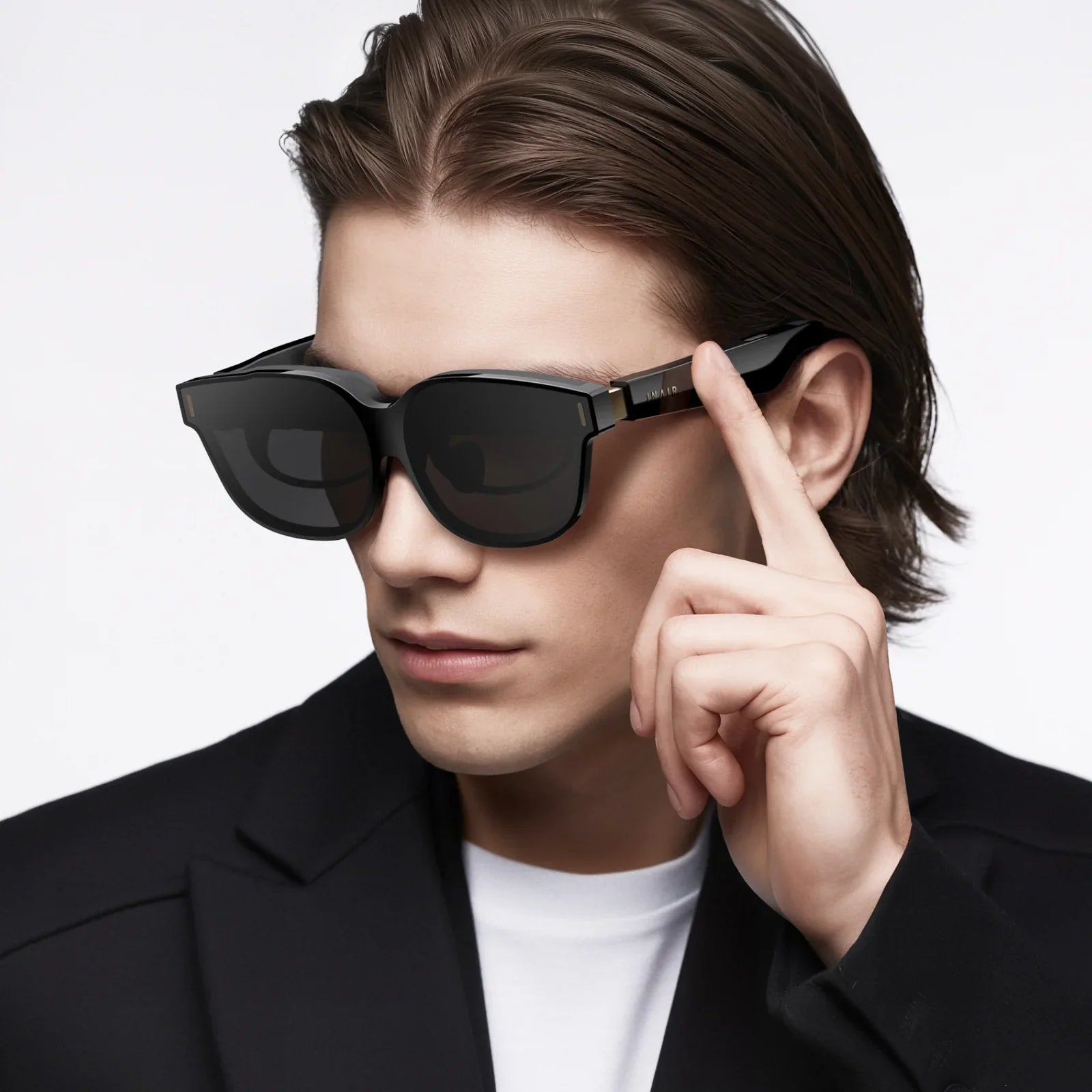
The world of vision is undergoing a radical transformation, moving far beyond simple sight correction into a realm of connected, intelligent, and health-focused devices. The latest eyewear technology news reveals an industry at a fascinating crossroads, where fashion meets high-tech functionality, and a simple pair of glasses is becoming a powerful wearable computer, a health monitor, and a personalized visual assistant all in one. This isn't science fiction; it's the imminent future, and it’s arriving on the bridges of our noses.
The Rise of Smart Eyewear: Beyond Basic Augmentation
For years, the concept of smart glasses was synonymous with clunky designs and limited functionality, often focused on a narrow subset of augmented reality (AR) applications. Today, the narrative has shifted dramatically. The current wave of eyewear technology news highlights a more sophisticated, integrated approach. The goal is no longer to make you look like a cyborg but to seamlessly embed technology into forms people actually want to wear.
Modern smart eyewear is focusing on three core pillars: discretion, connectivity, and context-awareness. Instead of obvious cameras and large projectors, manufacturers are miniaturizing components to the point of near-invisibility. Bone conduction audio, for instance, allows for private listening without earbuds, while micro-projectors discreetly display information only the wearer can see, such as navigation prompts, message notifications, or translated text overlaid on the real world. This shift is crucial for mainstream adoption, moving the technology from a niche gadget to a practical, all-day accessory.
AI-Powered Diagnostics and Continuous Health Monitoring
Perhaps the most profound development in recent eyewear technology news is the integration of artificial intelligence for health purposes. Eyewear is uniquely positioned as a health-monitoring platform because it sits close to two of the most data-rich parts of the human body: the eyes and the brain.
Researchers and developers are creating lenses and frames equipped with micro-sensors capable of tracking a surprising array of biometric data. This includes:
- Pupillometry: By analyzing pupil size, reactivity, and movement patterns, AI algorithms can detect signs of fatigue, cognitive load, concussion, and even neurological conditions like Alzheimer's disease in its early stages.
- Intraocular Pressure (IOP): Continuous monitoring of IOP is a critical metric for managing glaucoma, a leading cause of blindness. Smart contact lenses and glasses-based sensors are being developed to provide round-the-clock data, far superior to occasional measurements at a doctor's office.
- UV Exposure & Blue Light Protection: Lenses are now being engineered to dynamically adapt to harmful light levels. Photochromic technology is becoming more responsive, and integrated sensors can now alert the wearer to excessive UV exposure, a major factor in cataract development.
- Activity and Posture Tracking: With accelerometers and gyroscopes, smart glasses can monitor physical activity, count steps, and even nudge the wearer to correct their posture, reducing neck and back strain from screen time.
This transforms eyewear from a passive tool into a proactive health guardian, offering unprecedented insights into our well-being.
Adaptive Lenses: The End of the Bifocal?
Another groundbreaking area covered in eyewear technology news is the development of truly adaptive lenses. For centuries, the fundamental design of corrective lenses has remained largely static. You get a prescription, and it’s ground into a static piece of material. That is changing with the advent of liquid crystal technology and AI-driven focus systems.
Electro-active lenses are being developed that can change their optical power instantly based on where the wearer is looking. Using tiny eye-tracking sensors, these lenses detect whether you are reading a book, looking at a screen, or gazing into the distance. They then automatically adjust the focal power to provide crystal-clear vision at that specific distance, effectively eliminating the need for separate reading glasses, bifocals, or progressive lenses. This technology is a game-changer for presbyopia, the age-related loss of near focus that affects nearly everyone over 45.
Furthermore, light-adaptive technology is becoming faster and more nuanced. New generations of photochromic lenses transition from clear to dark and back again in seconds, not minutes, and can adjust their tint based on the specific intensity of UV light, providing optimal comfort and protection in any condition.
Augmented Reality Integration: A New Layer of Reality
While consumer AR had a rocky start, the technology is maturing rapidly, and eyewear is its natural home. The latest eyewear technology news shows a focus on enterprise and specialized applications that demonstrate clear value, paving the way for broader consumer use.
In fields like manufacturing, logistics, and medicine, AR glasses are providing workers with hands-free access to crucial information. A technician can see a schematic overlaid on the machine they are repairing, a warehouse worker can see picking instructions without looking down at a scanner, and a surgeon can view patient vitals and imaging data without turning away from the operating table.
For consumers, the applications are expanding into navigation, with arrows and directions painted onto the real world, immersive language translation where subtitles appear over foreign signs, and interactive tourism, where historical information pops up as you look at a landmark. The key to this new wave is spatial computing—the ability of the glasses to understand and interact with the 3D space around them, creating a persistent and contextual digital layer over our physical environment.
Sustainability and Material Innovation
As technology advances, the industry is also facing its environmental responsibilities. Eyewear technology news is increasingly featuring developments in sustainable materials. This includes frames made from recycled ocean plastics, bio-acetate derived from renewable resources like cotton and wood pulp, and even lab-grown materials that mimic precious substances without the environmental toll.
Furthermore, the concept of modularity is gaining traction. Instead of discarding an entire pair of glasses when the technology becomes outdated or a component breaks, new designs allow users to upgrade the electronic “brain” of the glasses (often housed in the temples) while keeping their favorite frames and lenses. This significantly reduces electronic waste and aligns with a more circular economy model.
Challenges and the Road Ahead
Despite the exciting progress, significant challenges remain. Battery life is a perpetual constraint; packing enough power into a lightweight frame to last a full day remains a formidable engineering hurdle. Privacy concerns, especially regarding always-on cameras and microphones, need to be addressed with transparent policies and user-controlled features. Social acceptance is another barrier; the world needs to become comfortable with the idea of people wearing cameras on their faces.
Finally, there is the challenge of accessibility. Cutting-edge technology often comes with a high price tag. The industry will need to find ways to scale production and reduce costs to ensure these life-enhancing and health-saving technologies are available to a wider audience, not just an affluent few.
The next time you push your glasses up the bridge of your nose, consider this: they are on the verge of becoming one of the most intelligent and intimate devices you will ever own. The latest eyewear technology news points to a future where your glasses will not only help you see the world more clearly but will also understand it, translate it, navigate it, and, most importantly, help you live healthier within it. The revolution isn't in your pocket or on your wrist—it’s right before your eyes.
Share:
AI-Powered AR Glasses Are Redefining Reality and Reshaping Our Future
Is AR VR the Future? An In-Depth Exploration of the Next Digital Frontier