


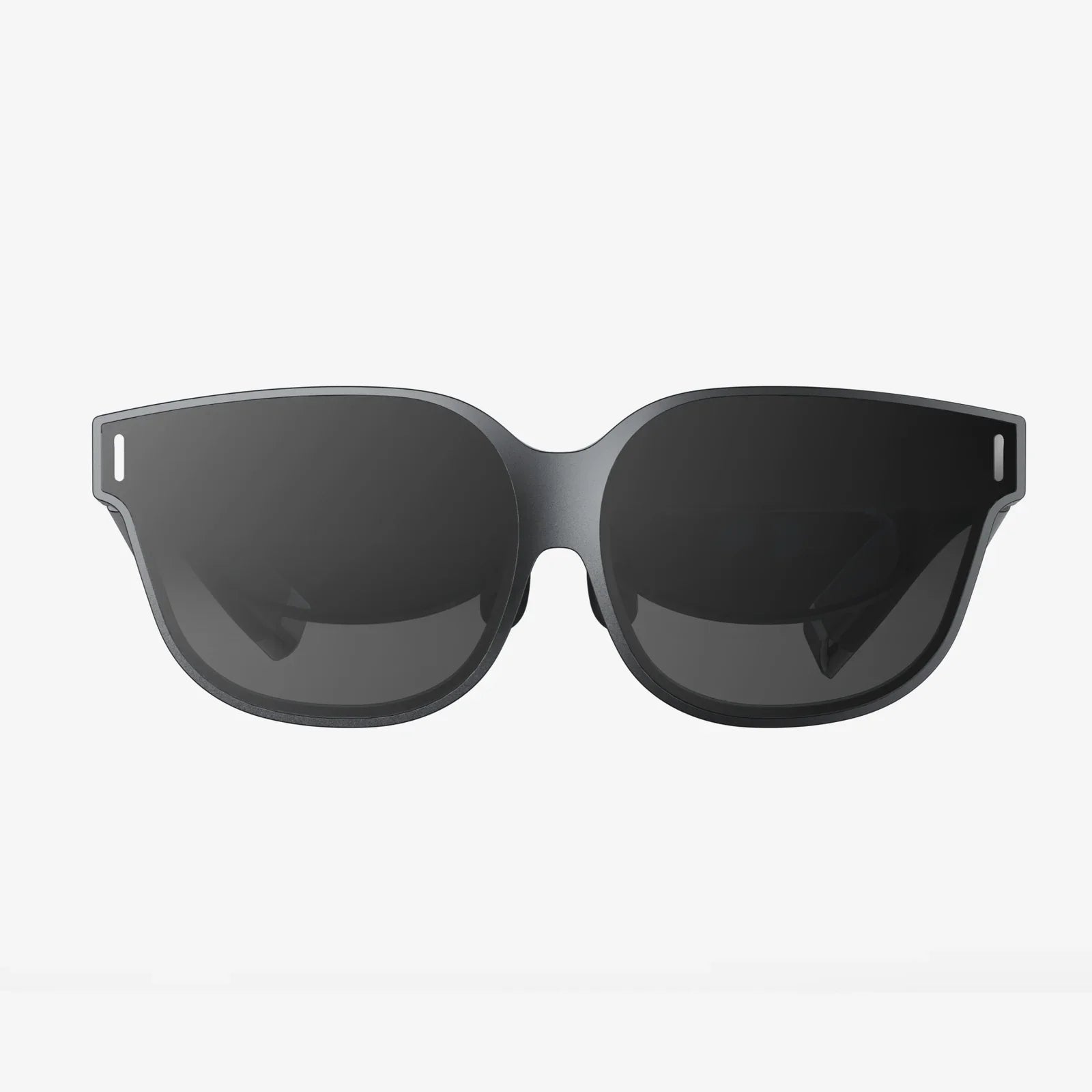
Imagine a world where the digital and the physical are no longer separate realms but a single, seamless tapestry of experience. This is the tantalizing promise held within the sleek headsets and sophisticated algorithms of Augmented and Virtual Reality—technologies poised not merely to change how we interact with machines, but to fundamentally redefine human experience itself. The question echoing through boardrooms, classrooms, and living rooms is no longer if these technologies are innovative, but whether they represent the next inevitable chapter in our digital evolution. Are we on the cusp of a paradigm shift as significant as the advent of the smartphone or the internet? The journey to answer this begins by peering through the lens of possibility.
From Science Fiction to Tangible Reality: The Evolution of Immersive Tech
The concepts of AR and VR are not newfound creations of the 21st century. Their roots are deeply embedded in the fertile ground of science fiction and early technological ambition. For decades, stories and films envisioned worlds where one could step into a computer-generated environment or have data overlay their vision. These fictional depictions were crucial, as they planted the seed of possibility in the cultural consciousness. The first, often clunky and prohibitively expensive, iterations of this technology emerged in military and academic labs, serving as proof-of-concept that such immersion was technically achievable, even if far from mainstream viability.
The true catalyst for the modern era of AR and VR was a convergence of several critical technologies. The smartphone revolution was arguably the most important, acting as an unexpected incubator. It drove the rapid miniaturization of high-resolution displays, motion sensors, powerful processors, and cameras—all the essential components that could be repurposed for a head-mounted device. Simultaneously, advancements in computer graphics, driven by the gaming industry, allowed for the creation of ever-more realistic and compelling 3D environments. Cloud computing provided the necessary backbone for streaming vast amounts of data, while improvements in haptic feedback and spatial audio began to engage more senses, deepening the illusion of presence. This perfect storm of innovation transformed these technologies from speculative prototypes into products with real, albeit nascent, applications.
Defining the Digital Duo: AR vs. VR and Their Core Philosophies
While often grouped together, Augmented Reality and Virtual Reality offer distinctly different experiences based on opposing philosophies of digital interaction.
Virtual Reality (VR) is an exercise in total immersion. It operates on a principle of replacement. By donning a headset, the user's physical surroundings are completely blocked out and replaced with a computer-generated simulation. This can be a photorealistic recreation of a real place, a fantastical game world, or a abstract data visualization. The goal of VR is to trick the brain into accepting this digital reality as its own, creating a powerful sense of "being there," known as presence. This makes it ideal for applications where the context of the real world is either a distraction or irrelevant to the task at hand.
Augmented Reality (AR), in contrast, is built on a foundation of enhancement. Rather than replacing the real world, AR superimposes digital information—images, text, 3D models—onto the user's view of their actual environment. This is typically achieved through glasses or, more commonly today, through the screen of a smartphone or tablet. The philosophy is to use digital tools to augment human capability within the real world, providing context-specific information exactly when and where it is needed. It seeks to blend the two worlds, making the digital a natural layer atop our physical reality.
A third, emerging category often discussed is Mixed Reality (MR), which represents a spectrum between the two. MR not only overlays digital objects but allows them to interact with and be occluded by the physical world in real-time, creating a more cohesive and believable fusion.
The Present-Day Playground: Current Applications Across Industries
Beyond the buzzwords and hype, AR and VR are already delivering tangible value and solving real-world problems across a diverse range of sectors. The current landscape is a vibrant testing ground, demonstrating the practical utility of immersive tech.
Revolutionizing Education and Training
Perhaps one of the most powerful applications is in learning and skill development. VR enables experiential learning that is otherwise impossible, too expensive, or too dangerous. Medical students can perform virtual dissections and practice complex surgical procedures on detailed anatomical models without risk to a patient. Aviation trainees can practice handling emergency scenarios in a flight simulator that feels utterly real. History students can take a guided tour of ancient Rome, walking through its streets and forums. This learning-by-doing in a safe, controlled virtual environment dramatically improves knowledge retention and skill acquisition.
AR brings a different strength to training, overlaying instructions and diagrams onto physical machinery. A technician repairing a complex engine can see animated guidance highlighting the exact bolt to turn next, or a warehouse worker can have the most efficient picking route displayed directly on their smart glasses, streamlining logistics and reducing errors.
Transforming Healthcare and Therapy
The healthcare industry is embracing immersive technology for both treatment and therapy. Surgeons use AR overlays during operations to view critical patient data like heart rate or a 3D model of a tumor without looking away from the operating table. VR is proving to be a remarkably effective tool for pain management, distracting burn victims during painful wound care procedures by immersing them in a calming, virtual snow world. It is also at the forefront of exposure therapy, helping patients with phobias or PTSD confront and manage their triggers in a safe, gradual, and controlled virtual environment.
Redefining Enterprise and Industrial Design
In the enterprise world, AR and VR are driving efficiency and innovation. Architects and engineers use VR to walk clients through unbuilt designs, experiencing the scale and flow of a space long before ground is broken. This allows for changes to be made at the design stage, saving immense costs down the line. Car manufacturers use VR to prototype new vehicle designs and run virtual crash tests. AR is used on factory floors to visualize assembly lines, identify maintenance issues with equipment by overlaying diagnostic data, and provide remote expert assistance, where an off-site engineer can see what a local technician sees and provide visual annotations to guide them.
Expanding the Frontiers of Entertainment and Social Connection
While gaming is the most visible entertainment application, the potential is far broader. VR concerts allow fans to get a front-row experience from their living room, while immersive films offer a new narrative medium where the viewer is inside the story. Social VR platforms are emerging where people can meet, talk, play games, and watch movies together as personalized avatars, offering a sense of shared presence that video calls cannot replicate. This has profound implications for reducing loneliness and connecting people across vast geographical distances.
The Hurdles on the Horizon: Challenges to Mainstream Adoption
For all their promise, significant barriers stand between the current state of AR/VR and a future where they are as ubiquitous as smartphones. Overcoming these challenges is critical for their long-term success.
The Hardware Conundrum: For true immersion, the hardware needs to be comfortable, socially acceptable, and high-performing. Today's best headsets are still often bulky, can cause motion sickness in some users, and have limited battery life. The quest for the perfect blend of high-resolution, wide field-of-view displays, powerful processing, and all-day comfort in a lightweight form factor is the industry's holy grail. The ideal device would resemble a pair of ordinary eyeglasses, a goal that remains years away.
The Social and Psychological Divide: Straping a device to your face is an inherently isolating act. It creates a physical barrier to interaction with others in the room and raises questions about social etiquette. Furthermore, prolonged use in immersive virtual worlds could potentially impact mental health, blurring the lines between reality and simulation. The ethical implications of such powerful technology, including data privacy, reality distortion, and addiction, must be carefully considered and addressed through thoughtful design and regulation.
Content and the Killer App: Hardware is useless without compelling software. While there are many impressive demos and applications, the industry is still searching for its definitive "killer app"—the application so essential that it drives widespread consumer adoption, much like email did for the personal computer or the web browser did for the internet. Is it a social platform? A revolutionary productivity tool? The ultimate gaming experience? This remains an open question.
The Road Ahead: What the Future Holds
The trajectory of AR and VR points toward a more integrated and intuitive future. We are moving toward lighter, more powerful, and more affordable devices. The technology will become less obtrusive and more context-aware, understanding our environment and intentions to provide information and experiences that feel natural and helpful rather than disruptive.
A critical evolution will be the move toward true spatial computing, where the digital layer understands the geometry and meaning of the physical world. Your AR glasses will not just display a floating screen; they will allow a digital pet to jump onto your real couch, hide behind your actual table, and recognize your gestures to play. In VR, this means environments that are dynamic and responsive, potentially even blending with physical objects in your room.
Ultimately, the long-term future may not be a choice between AR or VR, but a fluid spectrum of experiences accessible through a single device—a pair of glasses that can opacity their lenses to plunge you into a virtual meeting, or become transparent to show you directions to the coffee shop superimposed on the street in front of you. This device could become the primary portal through which we access the vast resources of the internet and computing power, potentially replacing the smartphone as our central technological hub.
The question of whether AR and VR are the future is not a binary yes or no. They are not a fleeting trend, but a fundamental shift in the human-computer interface. Their path to ubiquity will be iterative, overcoming hurdles and evolving through countless iterations. They will not replace all other forms of technology or human interaction; instead, they will add a powerful new dimension to it. The future they promise is one of enhanced human capability, deeper understanding, and experiences limited only by our imagination. The revolution won't be televised; it will be rendered in 3D, all around us, waiting for us to put on the glasses and step inside.
Share:
Eyewear Technology News: The Future of Vision is Smart, Adaptive, and Health-Focused
New Eyewear Technology: The Unseen Revolution Reshaping Vision and Beyond