


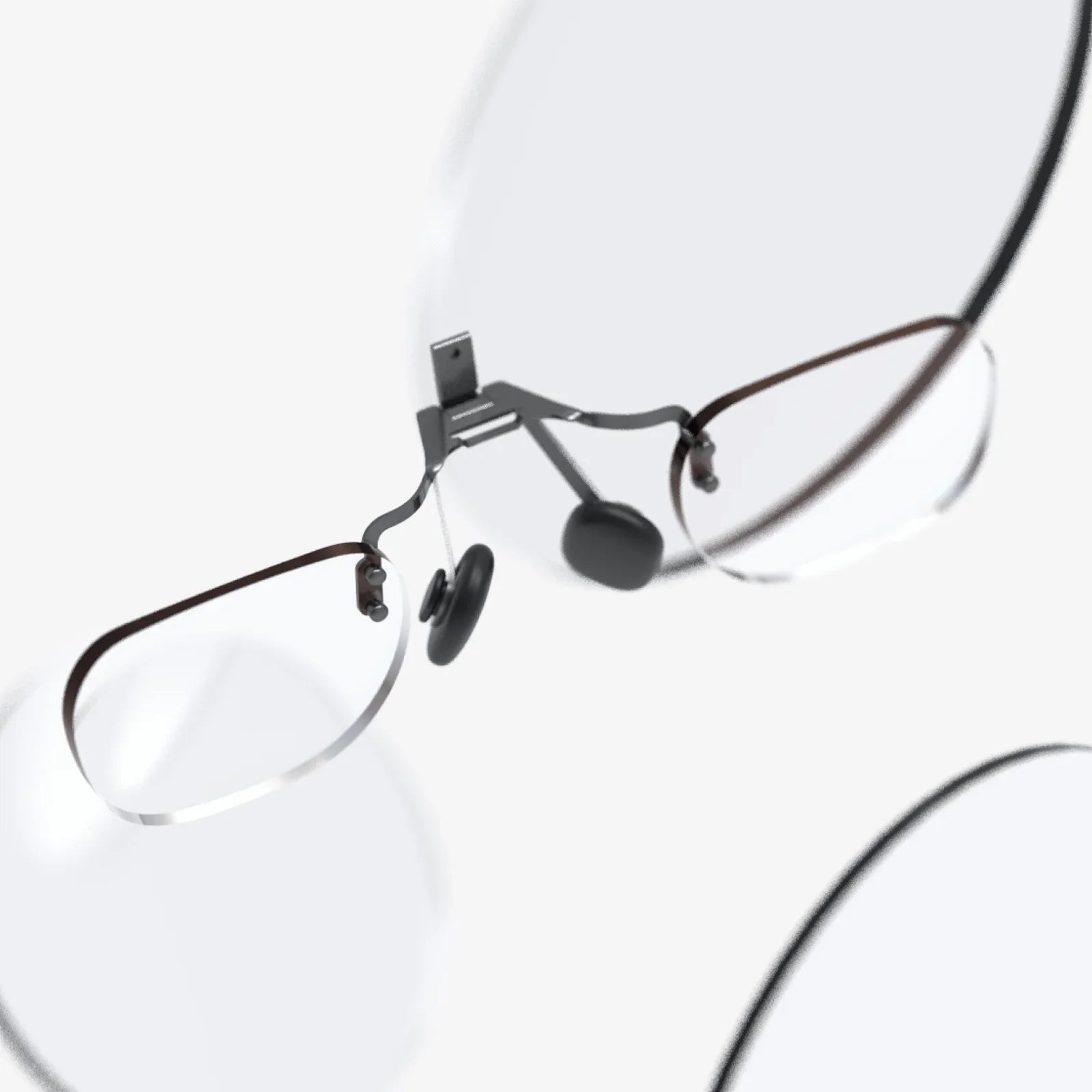
Imagine a world where your glasses do more than just help you see clearly—they translate conversations in real-time, monitor your health from your tears, and overlay digital information seamlessly onto your physical reality. This isn't a scene from a science fiction movie; it's the breathtaking reality being forged today by the relentless march of new eyewear technology. We are standing at the precipice of a revolution that will fundamentally alter our relationship with technology, information, and our own well-being, all from a device that rests on the bridge of our nose.
Beyond Vision Correction: The Dawn of Augmented Reality Eyewear
For centuries, the primary function of eyewear was singular: to correct refractive errors and bring the blurry world into focus. While this remains a core and vital function, new eyewear technology has exploded this limited definition. The most talked-about frontier is undoubtedly augmented reality (AR). Unlike virtual reality, which replaces your world with a digital one, AR superimposes computer-generated information onto your view of the real world.
The engineering challenges in creating comfortable, socially acceptable AR eyewear are immense. Early prototypes were bulky, had limited battery life, and offered a narrow field of view. However, recent breakthroughs in micro-optics, waveguide technology, and micro-LED displays are solving these problems. Waveguides, for instance, are incredibly thin, transparent glass or plastic components that use diffraction to pipe light from a tiny projector at the temple into the lens and then directly into the eye. This creates the illusion that digital images are floating in space ahead of the wearer, all while allowing them to see their natural environment perfectly.
The applications are staggering. A mechanic could see a schematic overlaid on the engine they are repairing. A surgeon could have vital signs and 3D anatomical models visible during a procedure. A tourist could walk through a city and see historical facts and directions pop up as they gaze upon landmarks. For the everyday user, it could mean never having to look down at a navigation app again, with turn-by-turn directions appearing on the road ahead, or having a constant, unobtrusive heads-up display for messages and notifications.
The Intelligence Within: AI and Machine Learning Integration
What makes this new eyewear technology truly powerful is not just its ability to display information, but its capacity to understand and react to it. This is where artificial intelligence (AI) and machine learning become the invisible brain behind the lenses.
Integrated sensors—including high-resolution cameras, microphones, accelerometers, and gyroscopes—constantly feed data about the user's environment and behavior to onboard or cloud-based AI processors. This AI can then:
- Provide Contextual Information: Look at a restaurant, and the AI can pull reviews and menu highlights from the web and display them. Look at a product on a shelf, and it can show price comparisons and specifications.
- Offer Real-Time Translation: Perhaps one of the most profound applications is real-time language translation. By reading subtitles directly onto a person's lenses as they speak, this technology has the potential to erase language barriers entirely, fostering deeper human connection and understanding.
- Enhance Accessibility: For individuals with visual or hearing impairments, AI-powered eyewear can be life-changing. It can identify and announce people and objects, read text aloud from any surface, or amplify and transcribe important sounds in the environment.
This intelligence is also key to user interaction. Instead of clumsy buttons or touchpads, new interfaces are emerging. Voice commands are a natural fit. Even more immersive are systems that use tiny inward-facing cameras to track eye movement and pupil dilation, allowing users to select menu items just by looking at them. Gesture recognition, where a small flick of the finger in the air can control the interface, is also being refined to be subtle and intuitive.
A Clearer View: Revolutionary Advances in Lenses Themselves
While AR captures headlines, the humble lens itself is undergoing a radical transformation. New materials science and nanotechnology are producing lenses that are smarter, more durable, and more adaptive than ever before.
- Photochromic 2.0: Traditional photochromic lenses that darken in sunlight have been around for decades. The new generation is far superior. They react significantly faster, both darkening and clearing in a matter of seconds rather than minutes. Furthermore, they are now responsive to car windshields, which often block the UV light that traditional lenses require to activate.
- Electrochromic Lenses: Taking adaptability a step further, these lenses use a tiny electrical charge (provided by an almost imperceptible battery in the frame) to change their tint instantly at the push of a button. This allows the wearer to go from clear to darkest sunglass tint in less than a second, regardless of UV exposure, offering unprecedented control over visual comfort.
- Blue Light Filtering: As our screen time has skyrocketed, so has concern over high-energy visible (HEV) blue light emitted by digital devices. New lens coatings and materials are engineered to selectively filter a portion of this light without distorting color perception, aiming to reduce digital eye strain and potentially support healthier sleep cycles.
- Superior Materials: New high-index polymers and Trivex-based materials continue to push the boundaries, allowing for incredibly thin, lightweight, and impact-resistant lenses even for very strong prescriptions. This makes glasses more comfortable and aesthetically pleasing than ever before.
The Guardian on Your Face: Health and Biometric Monitoring
Perhaps the most intimate application of new eyewear technology is in the realm of personal health. The proximity to the body makes glasses an ideal platform for non-invasive, continuous health monitoring.
Researchers are developing sensors that can be embedded in the nose pads or temple tips to track a surprising array of biometric data:
- Pupillometry: By analyzing changes in pupil size and response, algorithms can infer cognitive load, fatigue, and even certain neurological conditions.
- Sun Exposure: Miniature UV sensors can measure cumulative sun exposure throughout the day, alerting the wearer when it's time to seek shade or reapply sunscreen.
- Physical Activity: Accelerometers can track steps and movement, much like a smartwatch, but with the advantage of being always on and never forgotten on a charger.
- The Future of Tear Analysis: The most futuristic concept involves using micro-sensors to analyze the composition of tear film. Tears are a rich biofluid containing biomarkers for glucose levels (potentially for diabetics), cortisol (stress hormone), and even early signs of certain cancers. While this technology is still largely in the research phase, it points to a future where your annual physical could be conducted in part by your eyewear.
This shift turns eyewear from a passive tool into an active guardian of our health, providing real-time insights that can empower individuals to make better daily choices and alert them to potential health issues long before traditional symptoms appear.
Design, Sustainability, and the Road Ahead
For this technology to be adopted by the masses, it cannot look like a clunky piece of laboratory equipment. The industry is acutely aware that style is non-negotiable. The latest designs are indistinguishable from high-end fashion eyewear. Frames are crafted from advanced, lightweight materials like memory titanium and bio-acetate, ensuring all the sophisticated electronics are housed in a package people are proud to wear.
Sustainability is also becoming a core consideration. Companies are exploring the use of recycled metals and plastics, developing biodegradable frame options, and creating modular designs. A modular approach, where components like batteries or processors can be easily upgraded or replaced, not only extends the product's lifespan but also significantly reduces electronic waste, addressing a critical concern for the tech industry as a whole.
The road ahead is filled with both excitement and challenges. Issues of data privacy, security, and the potential for digital distraction are paramount and must be addressed through thoughtful design and robust regulation. The "social acceptability" of constantly recording our surroundings also raises important ethical questions that society will need to grapple with.
Yet, the potential for good is immense. This convergence of optics, miniaturization, AI, and biomedicine is creating a platform that is uniquely positioned to enhance human capability, promote independence, and deepen our understanding of our own health.
The next time you see someone wearing a pair of glasses, look a little closer. They might simply be enjoying a book, or they might be navigating a foreign city, monitoring their blood sugar, or learning how to fix a complex machine—all through a piece of technology that has quietly evolved from a simple visual aid into the most personal and powerful computer we may ever own. The future is not on the horizon; it's right before our eyes.
Share:
Is AR VR the Future? An In-Depth Exploration of the Next Digital Frontier
AR VR Market Size Growth 2025: A Deep Dive into the Immersive Future