


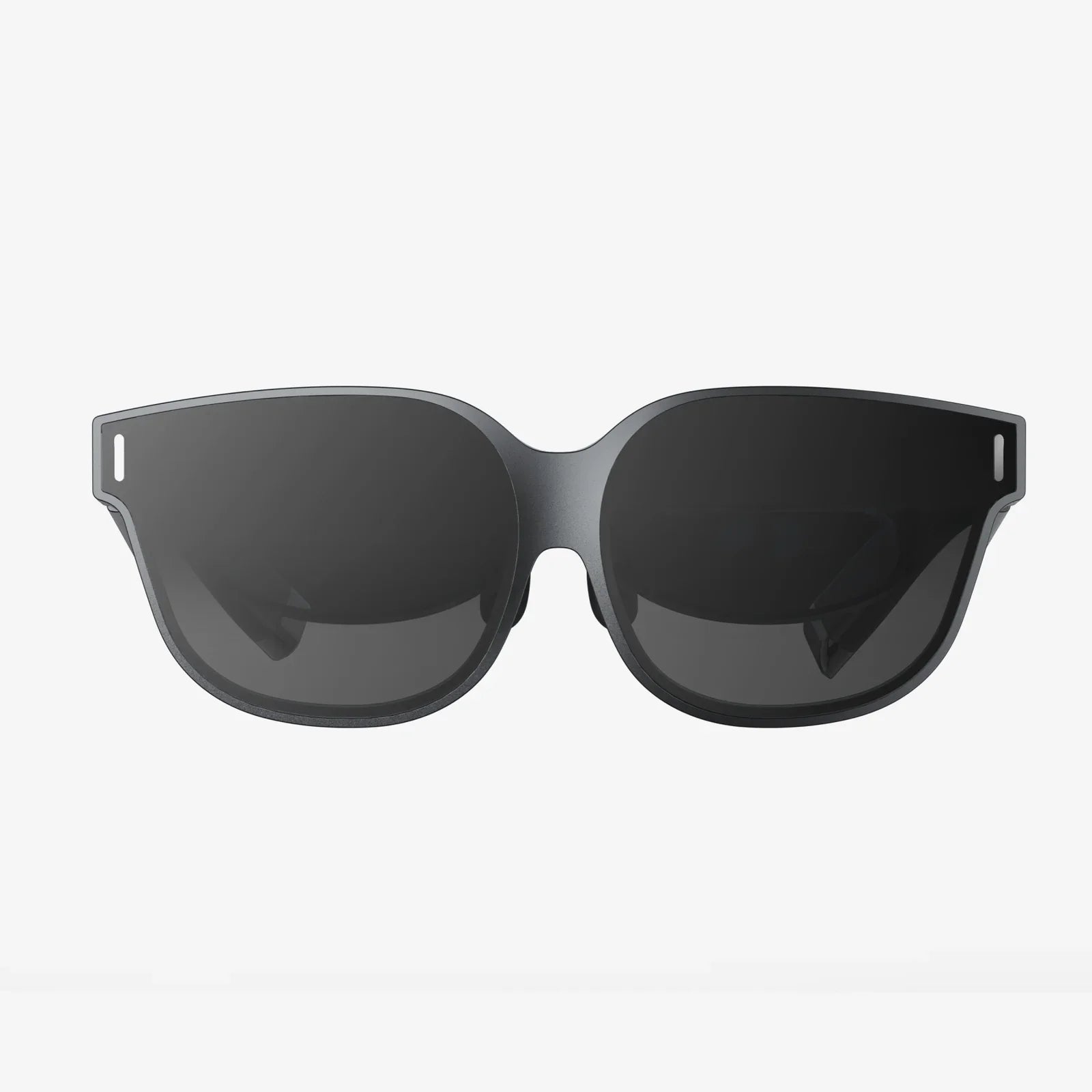
Imagine standing in front of a mirror that knows your face better than you do, a digital stylist that understands your unique features, personal style, and even your lifestyle needs, all to present you with the perfect pair of glasses. This is no longer a scene from a sci-fi movie; it’s the reality of shopping for eyewear today. The quest to find glasses with AI has transformed a traditionally tedious and often frustrating process into an exciting, personalized, and remarkably accurate digital adventure. This technological leap is not just a novelty; it’s a fundamental shift in how we connect with a product that sits at the very center of our identity and vision.
The Revolution in the Eyewear Aisle: From Guesswork to Precision
For decades, the process of selecting new glasses followed a familiar, and often flawed, pattern. You would visit a physical store, overwhelmed by walls of frames, and try on dozens of pairs. You’d rely on a small mirror, the opinion of a friend or a store associate you just met, and a gut feeling. The lighting was often unflattering, and the brief moment you spent with each frame hardly gave you a true sense of how they would look in your daily life. This method was ripe for disruption, and artificial intelligence has answered the call with breathtaking efficiency.
The core of this revolution lies in sophisticated computer vision and machine learning algorithms. These systems are trained on vast datasets of facial images, learning the intricate geometry of the human face—the distance between eyes, the width of the nose, the height of cheekbones, the shape of the jawline, and the proportion of the forehead. This allows the technology to move far beyond a simple, static overlay of a frame image onto a photo. It creates a dynamic, three-dimensional understanding of your face, enabling a virtual try-on experience that is both realistic and personalized.
How AI-Powered Virtual Try-On Technology Actually Works
To truly appreciate the magic of finding glasses with AI, it’s helpful to understand the technological ballet happening behind the screen. The process can be broken down into several key steps:
- Facial Mapping and Landmark Detection: Using your device's camera, the AI scans your face in real-time. It instantly identifies and maps key facial landmarks—typically over 100 points—including the pupils, the corners of the eyes, the tip of the nose, the edges of the lips, and the contour of the face. This creates a precise digital blueprint of your unique features.
- 3D Modeling and Augmentation: The frames themselves are not simple 2D images. They are intricate 3D models, digitally crafted with exact measurements for the lens width, bridge size, temple length, and overall frame dimensions. The AI algorithm then perfectly aligns this 3D model onto your facial map, ensuring the glasses sit correctly on the bridge of your nose, the temples rest naturally over your ears, and the lenses are perfectly centered over your pupils.
- Realistic Rendering and Physics Simulation: Advanced rendering techniques account for lighting, shadows, and skin tones. The software simulates how light would reflect off the lenses and how the frames would cast subtle shadows on your face. It even understands how the glasses might move slightly when you smile, talk, or turn your head, adding a crucial layer of realism that static images could never provide.
- Machine Learning for Personalized Recommendations: This is where the intelligence becomes truly personalized. By analyzing your facial shape, skin tone, and even your past preferences or stated style goals (e.g., "professional," "bold," "minimalist"), the AI can curate a selection of frames that are statistically likely to flatter you. It learns from millions of successful matches to predict what will work for your specific attributes.
Beyond Vanity: The Practical and Inclusive Benefits of AI Fitting
While the "wow" factor of seeing yourself in new glasses instantly is undeniable, the benefits of this technology run much deeper than simple convenience.
- Unprecedented Accuracy in Sizing: One of the biggest challenges of buying glasses online has always been sizing. A frame that looks great in a photo might be completely the wrong width for your face. AI eliminates this guesswork. By knowing your precise facial measurements, it can filter out frames that are too wide, too narrow, or otherwise ill-fitting, showing you only options that are technically a good match for your face shape and size. This drastically reduces returns and customer dissatisfaction.
- Democratizing Style and Access: For individuals in remote areas or those with mobility issues, visiting a well-stocked optical store can be a significant challenge. AI try-on technology brings the entire inventory to them. It also empowers those who may feel shy or pressured in a retail environment to experiment and make confident choices at their own pace.
- Discovering Your Authentic Style: Humans are often creatures of habit. We tend to gravitate toward the same styles we’ve always worn. An AI stylist has no bias. It might suggest a bold, oversized frame to someone who has always worn thin, wire-rimmed glasses, opening them up to a new look they find they love. It encourages experimentation and self-discovery in a low-risk environment.
- A Data-Driven Approach to Design: On the business side, the aggregated anonymized data from millions of try-ons is a goldmine for eyewear designers and manufacturers. They can see which styles work best for which facial structures, leading to future designs that are more inclusive and cater to a wider variety of faces from the outset.
Addressing the Skepticism: Privacy, Accuracy, and the Human Touch
As with any technology that involves personal data, particularly biometric data like facial geometry, valid concerns exist. Reputable companies deploying this technology are typically transparent about their data practices. They often process the facial mapping data locally on your device without storing it, or if they do use it to improve their algorithms, they do so in an aggregated and anonymized manner. It is crucial for consumers to use services from trusted sources and to review privacy policies to understand how their data is being handled.
Another common question is about accuracy. Can a screen really replace the physical feel of glasses on your face? While AI can get you 95% of the way there in terms of fit and appearance, it cannot yet replicate the exact weight of the frames or the subtle comfort of the nose pads. For this reason, the most successful eyewear brands using AI often couple it with a generous, no-questions-asked home try-on policy or return program, allowing the final test to be in the real, physical world.
Furthermore, AI is not meant to replace optometrists or skilled opticians. Their expertise in ensuring the correct prescription, adjusting frames for perfect comfort, and advising on lens materials remains irreplaceable. The ideal future of eyewear retail is a hybrid model: using AI for initial discovery and selection from home, and then visiting a professional for the crucial final fitting and lens expertise.
The Future of Finding Glasses with AI
The technology is still evolving at a rapid pace. We are moving toward even more immersive experiences with Augmented Reality (AR) try-ons through AR glasses themselves, offering a truly hands-free and holographic shopping experience. AI recommendations will become even more nuanced, potentially integrating with your personal calendar to suggest appropriate frames for your upcoming meetings or events. We might see AI that can simulate how certain frames can make you look more approachable, authoritative, or creative based on perceptual psychology studies.
Integration with other health tech is another fascinating frontier. Imagine an AI that can subtly detect signs of eye strain from how you squint at the screen and recommend specific lens coatings or tints to alleviate it. The intersection of visual health, fashion, and artificial intelligence is poised to create a future where our glasses are not just a tool for seeing, but an intelligent, adaptive accessory designed uniquely for us.
The journey to find your perfect pair of glasses has been utterly transformed. It’s no longer a chore defined by uncertainty and limited choice, but an engaging process of discovery powered by intelligent algorithms that see you for who you are. This is the promise of finding glasses with AI—a perfect fusion of art and science, style and data, all working in harmony to help you present your best self to the world, with perfect clarity.
Share:
Smart Vision AI Glasses: The Invisible Revolution Reshaping Human Experience
How Does AR Differ From VR: A Deep Dive Into The Digital Realms