


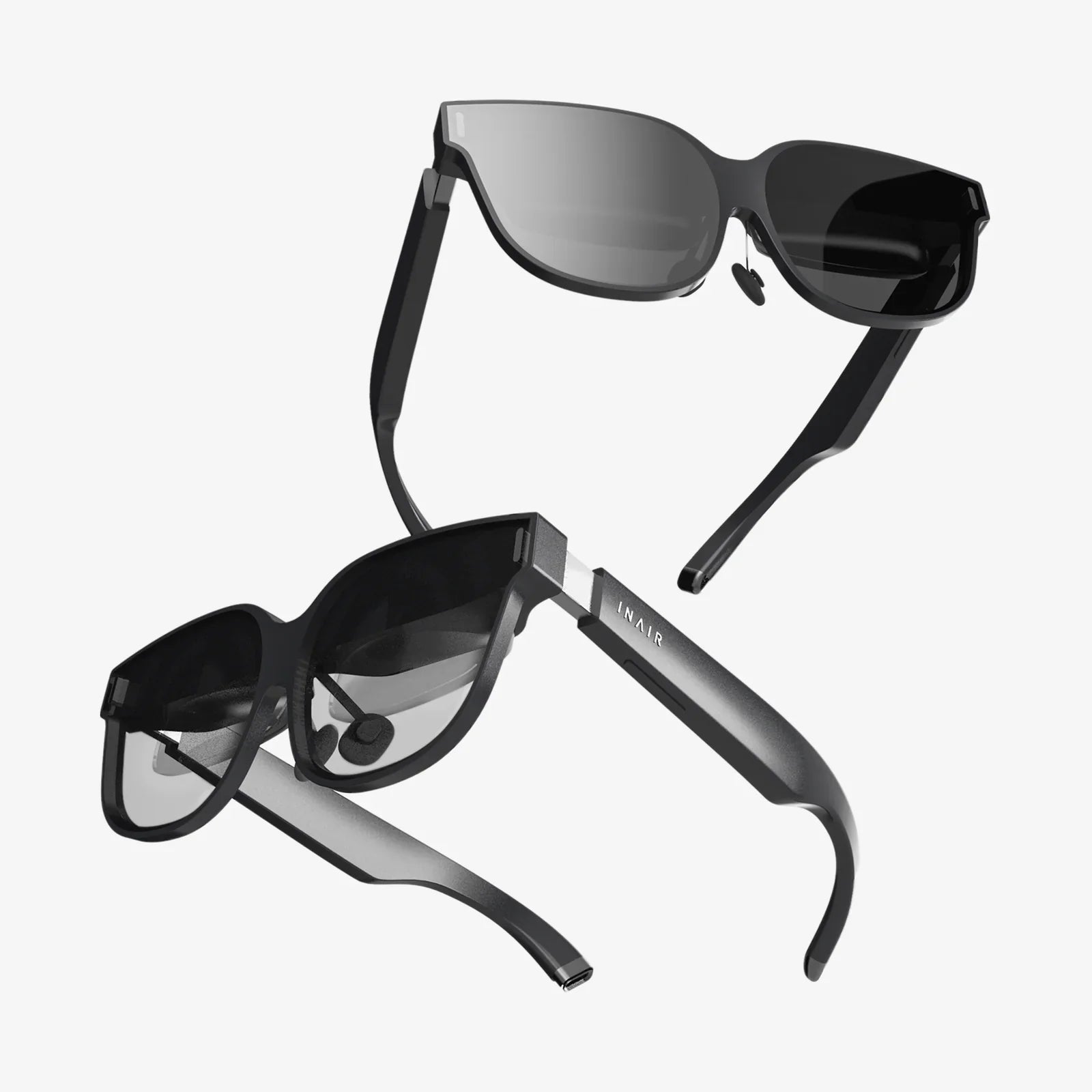
Imagine a world where digital dragons soar across your living room ceiling or a mechanic thousands of miles away can see exactly what you see and guide your hands with floating, holographic arrows. This isn't the distant future; it's the burgeoning present, powered by two revolutionary technologies that are often confused but are fundamentally different: Augmented Reality and Virtual Reality. Understanding the chasm between them is the first step into the next computing revolution.
The Core Philosophical Divide: Enhancement vs. Replacement
At its heart, the difference between AR and VR is a difference in intent and philosophy.
Augmented Reality (AR) is best understood as an overlay. Its primary goal is to enhance, or augment, your perception of the real world. It adds a digital layer of information—images, data, 3D models, annotations—on top of the physical environment you are currently in. AR does not seek to remove you from reality but to make your interaction with it richer and more informed. You remain present in your actual surroundings, which are now supplemented with digital content. Think of it as a high-tech, visual heads-up display for life itself.
Virtual Reality (VR), in stark contrast, is an enclosure. Its primary goal is to immerse you completely in a simulated, digital environment. It replaces your real-world surroundings with a computer-generated one, effectively transporting your senses to a different place, whether a photorealistic simulation of a foreign city or a fantastical landscape that could never exist. VR seeks to isolate you from your physical reality and convince your brain that you are somewhere else entirely. It’s a passport to any conceivable world.
Technical Underpinnings: How They Create Their Realities
This philosophical divide dictates vastly different technological requirements and challenges for each domain.
The AR Tech Stack
Augmented Reality's magic lies in its ability to understand and interact with the real world in real-time. This requires a sophisticated blend of hardware and software.
- Sensors and Cameras: AR devices are packed with sensors—cameras to see the world, depth sensors (like LiDAR) to understand it in three dimensions, and IMUs (Inertial Measurement Units) to track the device's movement and orientation.
- Computer Vision and SLAM: This is the brain of AR. SLAM (Simultaneous Localization and Mapping) is the critical technology that allows a device to simultaneously map an unknown environment and track its own position within that map. It lets the digital content "stick" to the real world. Computer vision algorithms identify surfaces (planes), objects, and even images to anchor digital assets accurately.
- Display Technology: AR content can be delivered via smartphone and tablet screens, transparent glasses or lenses (optical see-through), or by using a camera feed to project the digital world onto an opaque display (video see-through).
- Processing Power: All this sensing, mapping, and rendering demands significant computational horsepower, which is increasingly being handled by dedicated processors and cloud computing.
The VR Tech Stack
Virtual Reality’s primary technical challenge is creating a convincing and comfortable illusion of presence, tricking the human sensory system.
- Head-Mounted Displays (HMDs): VR headsets are opaque, enclosing your field of view. They contain high-resolution, fast-refresh-rate displays placed very close to the eyes, often through specialized lenses that widen the field of view and focus the image.
- Precise Head Tracking: Using internal and external sensors (like cameras and infrared LEDs), VR systems track the rotation and translation of your head with extreme precision and low latency. Any lag between your head movement and the visual update causes disorientation and simulator sickness.
- Controllers and Body Tracking: To interact with the virtual world, VR systems use handheld controllers tracked in 3D space. Advanced systems incorporate full-body tracking, using additional sensors to map your entire body's movement into the virtual avatar.
- Audio: Immersive 3D spatial audio is crucial. Sounds change based on your head position and orientation, making a virtual object snapping behind your left ear sound like it's actually behind your left ear.
- Graphics Rendering: VR requires rendering two high-fidelity images (one for each eye) at a very high frame rate (90Hz or higher) to maintain immersion and prevent nausea. This is one of the most computationally intensive tasks in computing.
The User Experience: A Study in Contrasts
Putting on an AR device versus a VR headset results in a completely different user journey.
An AR Experience: You slip on a pair of AR glasses or open an app on your phone. You can still see your desk, your hands, and the people around you. A virtual screen appears pinned to your wall, displaying your schedule. A virtual pet scurries under your chair. You receive a notification that hovers in the air next to your coffee mug. You are in control, aware of your environment, and can interact with both the digital and the physical simultaneously. The experience is often contextual, triggered by your location or a specific object you point the device at.
A VR Experience: You put on the headset, and the physical world vanishes. You are now standing on the surface of Mars, the red dust swirling at your feet. You look down and see a gloved, robotic hand—your hand. You hear the low hum of a nearby rover. You reach out and grab a virtual rock, feeling a haptic buzz in your controller. The sense of "being there" is total. The experience is immersive and all-encompassing, designed to make you forget your actual surroundings for a period of time.
Application Spectrum: Solving Different Problems
Because they offer such different experiences, AR and VR have naturally diverged into distinct, though sometimes overlapping, application areas.
Where Augmented Reality Excels
- Enterprise and Industrial: Providing workers with hands-free information. A technician sees wiring diagrams overlaid on machinery. A warehouse worker sees navigation arrows on the floor leading to the correct shelf. A surgeon sees a patient's vital stats and 3D scan data during an operation.
- Retail and E-commerce: "Try before you buy" applications for furniture (seeing how a sofa looks in your living room), clothes (virtual fitting rooms), and makeup.
- Navigation: Superimposing directions onto the real world through a windshield or phone screen, making it intuitive to follow a path.
- Education and Training: Interactive learning experiences where students can dissect a virtual frog on a real table or see historical events play out in their schoolyard.
- Maintenance and Repair: Providing step-by-step visual instructions overlaid directly onto the equipment being serviced.
Where Virtual Reality Dominates
- Gaming and Entertainment: This is VR's flagship domain, offering unparalleled immersion in games, 360-degree videos, and virtual concerts.
- Training and Simulation: High-risk, high-cost training for pilots, surgeons, soldiers, and first responders in perfectly replicated, risk-free virtual environments. They can practice complex procedures and react to dangerous scenarios without any real-world consequences.
- Architecture and Design: Allowing architects and clients to step inside a full-scale, photorealistic model of a building before a single brick is laid, enabling design changes and walkthroughs.
- Therapy and Rehabilitation: Used for exposure therapy to treat phobias (fear of heights, flying), PTSD, and for physical rehab within engaging virtual worlds that motivate patients.
- Social Connection and Remote Collaboration: Creating virtual meeting spaces where avatars of colleagues or friends can interact with shared 3D objects as if they were in the same physical room, despite being continents apart.
The Blurring Lines: Mixed Reality and the Future
The line between AR and VR is not always razor-sharp. The term Mixed Reality (MR) has emerged to describe experiences that sit on the spectrum between the two. MR starts with the real world and anchors virtual objects within it (like AR), but these objects can be occluded by real-world objects and interact with the physical environment in a believable way. For example, a virtual ball in MR would roll down a real slope and bounce off a real wall, understanding the physics of your room. High-end AR headsets are increasingly capable of these MR experiences, representing the convergence of both technologies.
Looking ahead, the ultimate destination for this technology is often referred to as the "Metaverse"—a persistent network of shared, virtual spaces. In this vision, AR and VR will likely converge as complementary interfaces into this digital universe. You might use lightweight AR glasses for everyday information and social interaction woven into your real life, and then slip into a more immersive VR headset for deep work, specialized training, or elaborate entertainment within the same persistent digital world.
The journey into these digital realms is just beginning. While they share a common ancestry in computer graphics and a desire to blend the real with the digital, Augmented Reality and Virtual Reality are distinct paths. AR aims to make our reality smarter and more connected, while VR offers the ultimate escape and tool for simulation. One enhances your world; the other replaces it. Recognizing this fundamental distinction is key to understanding not just the technology of today, but the shape of our digitally-augmented tomorrow. The choice isn't about which is better, but about which is the right tool for the experience you want to create or the problem you need to solve.
Which reality will you choose to enhance your own? The power to layer information onto your world or to step entirely into a new one is rapidly moving from science fiction to an accessible tool in your pocket—or on your face. The next time you see someone gesturing at thin air or completely engrossed in a headset, you'll know exactly which realm they've chosen to explore, and perhaps you'll be tempted to take the plunge yourself into one of the most transformative technological frontiers of our time.
Share:
Find Glasses with AI: The Ultimate Guide to Your Perfect Digital Frame Fitting
Smart Glass Meaning: The Future of Windows is Transparently Intelligent