


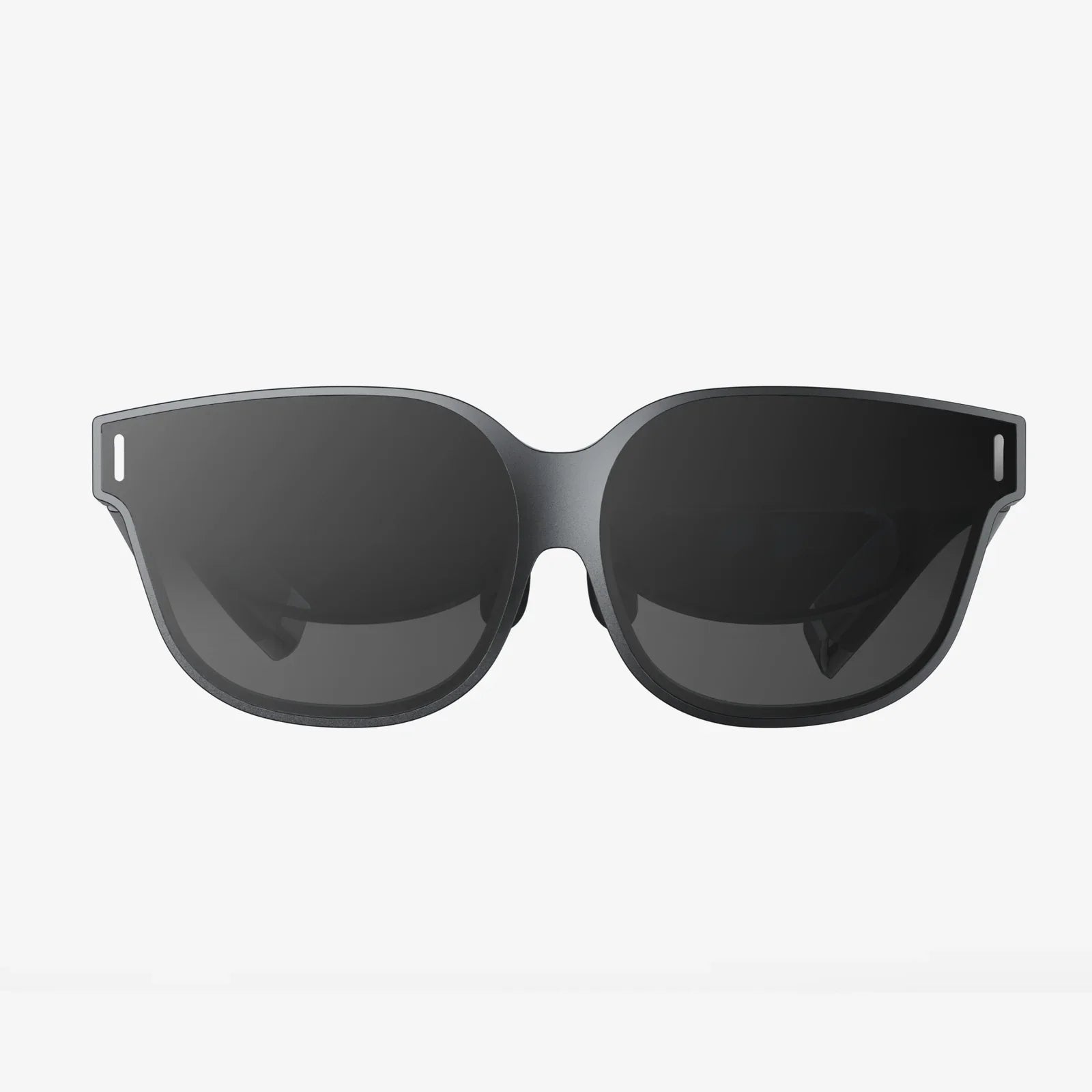
Imagine a world where digital information doesn’t just live on a screen in your hand, but is seamlessly painted onto the very fabric of your reality. This wasn’t the opening scene of a sci-fi blockbuster; it was the audacious dream that fueled the creation of the very first augmented reality glasses. Long before the concept became a buzzword in tech circles, a small group of visionary engineers and scientists embarked on a quest to bend the nature of perception itself. Their story is one of colossal prototypes, breathtaking innovation, and a stubborn belief in a future that others could scarcely imagine. This is the origin story of a technology poised to redefine humanity's relationship with information, and it all started with a pair of clunky, wired, and utterly miraculous glasses.
The Conceptual Forerunners: Visionaries Before Their Time
The idea of augmenting human vision with machine-generated data is surprisingly old. Decades before the hardware could even remotely support the concept, pioneers were laying the philosophical and technical groundwork. In 1968, computer scientist Ivan Sutherland, often called the "father of computer graphics," and his student Bob Sproull created what is widely considered the first head-mounted display system, dubbed "The Sword of Damocles." This terrifying contraption was so heavy it had to be suspended from the ceiling, and it used primitive computer graphics to overlay simple wireframe shapes onto the user's view of the physical world. While it was a virtual reality system by technical definition, its core principle—the fusion of the real and the digital—directly informed the development of augmented reality. It proved a fundamental point: a human could, in fact, perceive and interact with computer-generated imagery superimposed on their environment. This was the Big Bang moment for spatial computing.
The 1990s: From Theory to Tangible Prototypes
For the next twenty years, the concept remained largely confined to multi-million-dollar laboratory experiments, primarily funded by government and military agencies for applications like aircraft maintenance and complex assembly guidance. The technology was simply too expensive, too power-hungry, and too large for any commercial consideration. However, the 1990s witnessed critical advancements that began to shrink the dream down to size. The decade saw the coining of the term "Augmented Reality" by researchers Thomas Caudell and David Mizell at Boeing, who were developing an experimental head-up display to assist workers in assembling intricate wiring harnesses for aircraft.
Simultaneously, advances in miniaturized computing, motion tracking, and display technologies started to converge. Early luminaries like Steve Mann, a Canadian researcher often credited as the "Father of Wearable Computing," began building his own wearable computer systems in the 1980s, evolving them throughout the 90s. His creations, though cumbersome and personal projects, were functional precursors to modern smart glasses, capable of overlaying text and graphics for personal use. This era was less about creating a consumer product and more about proving viability across niche industrial, medical, and academic fields. The foundational technologies—inertial measurement units (IMUs), GPS, and early micro-displays—were being stress-tested and refined in these demanding environments, setting the stage for a more integrated design.
The Birth of a Commercial Product Category
The true genesis of the first recognizably modern AR glasses as a dedicated hardware category arrived in the early 2010s. A pivotal moment came with the announcement and subsequent release of a device designed not for a lab or a factory floor, but for developers and early adopters. This device represented a monumental engineering challenge, solving a complex set of problems that had previously seemed insurmountable.
The Trilogy of Technological Hurdles
Creating these glasses required a harmonious solution to three core challenges:
- Display Technology: How do you project a bright, high-resolution digital image that can be seen clearly over the real world without blocking it out? Early solutions used projection systems and semi-transparent "waveguide" optics that could bend light from a tiny projector into the user's eye while still allowing ambient light to pass through. This was the magic trick: making the digital content appear solid and anchored in the real world.
- Processing Power: AR is computationally brutal. It requires understanding the environment in 3D, tracking the user's head and eye movements with extreme precision, and rendering complex graphics in real time—all while sipping battery power. The first devices relied on a tethered connection to a powerful computer, a necessary compromise to achieve the desired experience.
- Spatial Understanding: The glasses needed to be more than just a display; they needed to be a sensor platform. They incorporated cameras, depth sensors, gyroscopes, and accelerometers to constantly map the room and understand surfaces, edges, and objects. This allowed digital content to convincingly occlude behind real-world objects or sit stably on a physical table.
The Form Factor Conundrum
Beyond the core tech, there was the immense challenge of design. The first generation of devices were often described as "face computers," and for good reason. They were bulky, had limited battery life, and generated significant heat. Engineers were trapped in a vicious cycle: more power required a larger battery, which made the device heavier, which required more structure, which increased weight further. Achieving a socially acceptable, glasses-like form factor was, and in many ways still is, the final frontier. The first devices prioritized function over form, accepting that early users would be making a statement simply by wearing them in public.
The Impact and Legacy of the Pioneers
The release of the first true AR glasses sent shockwaves through the tech industry. It was a proof-of-concept that captured the world's imagination. Developers rushed to get their hands on them, creating experimental applications that hinted at a transformative future:
- Enterprise and Manufacturing: Providing workers with hands-free schematics, remote expert guidance, and data visualization directly in their line of sight.
- Healthcare: Allowing surgeons to see vital signs or MRI data overlaid on a patient during a procedure, or helping medical students learn anatomy through interactive 3D models.
- Design and Architecture: Enabling creators to visualize and manipulate 3D models at full scale within a physical space before anything is built.
- Navigation: Projecting turn-by-turn directions onto the street in front of the user, fundamentally changing how we interface with maps.
Perhaps their greatest legacy, however, was not in any single application, but in the ecosystem they ignited. They provided a tangible hardware platform that moved AR from theory and mobile phone screens into a persistent, head-up, and hands-free experience. They proved there was a market, they identified the key technological bottlenecks, and they created a community of developers dedicated to building the software for this new medium. The lessons learned from their limitations—battery life, thermal performance, field of view, and social acceptance—directly shaped the roadmap for every company that has entered the space since.
Beyond the Hype: The Long Road to Refinement
The journey from those first groundbreaking devices to the sleek, more powerful models of today was not a straight line. The initial hype often collided with the harsh realities of physics, battery chemistry, and software complexity. Early adopters faced a familiar cycle of excitement, frustration, and ultimately, profound glimpses of potential. The technology was clearly revolutionary, but it was also clearly in its infancy. This period of refinement focused on the relentless pursuit of the five pillars of wearable AR:
- Visual Fidelity: Increasing resolution, brightness, and field of view to make digital objects indistinguishable from reality.
- Comfort and Wearability: Drastically reducing size, weight, and heat generation to allow for all-day use.
- Battery Life: Moving from minutes of untethered use to hours, through more efficient processors, displays, and better battery technology.
- Intuitive Interaction: Evolving beyond simple controllers to voice commands, hand tracking, and eventually, seamless eye tracking for a truly natural interface.
- The Killer App: The ongoing search for the application that will make the technology not just useful, but indispensable to the average consumer.
This long arc of progress demonstrates that transformative technologies are rarely born perfect. They are iterated upon, criticized, and improved through a sustained effort spanning many years and countless iterations. The first AR glasses were not the end of a journey, but the vital and necessary beginning.
We now stand on the precipice of a new era, with major investments flooding into the space and new announcements happening regularly. The foundational work is complete. The path from those first, daring prototypes to the future—a future where digital assistants have a face, information has a place, and our physical and digital lives are one—is now being paved at an incredible pace. The true impact of those first AR glasses is only just beginning to be felt, and their story is the essential prologue to the next chapter of human-computer interaction. The pioneers who built them didn't just create a device; they opened a window to a new way of seeing, and we are all just starting to peer through it.
Share:
Top 10 AR Glasses: The Ultimate Guide to the Future on Your Face
How Many Types of AI Are There: A Deep Dive Into The Digital Mind