


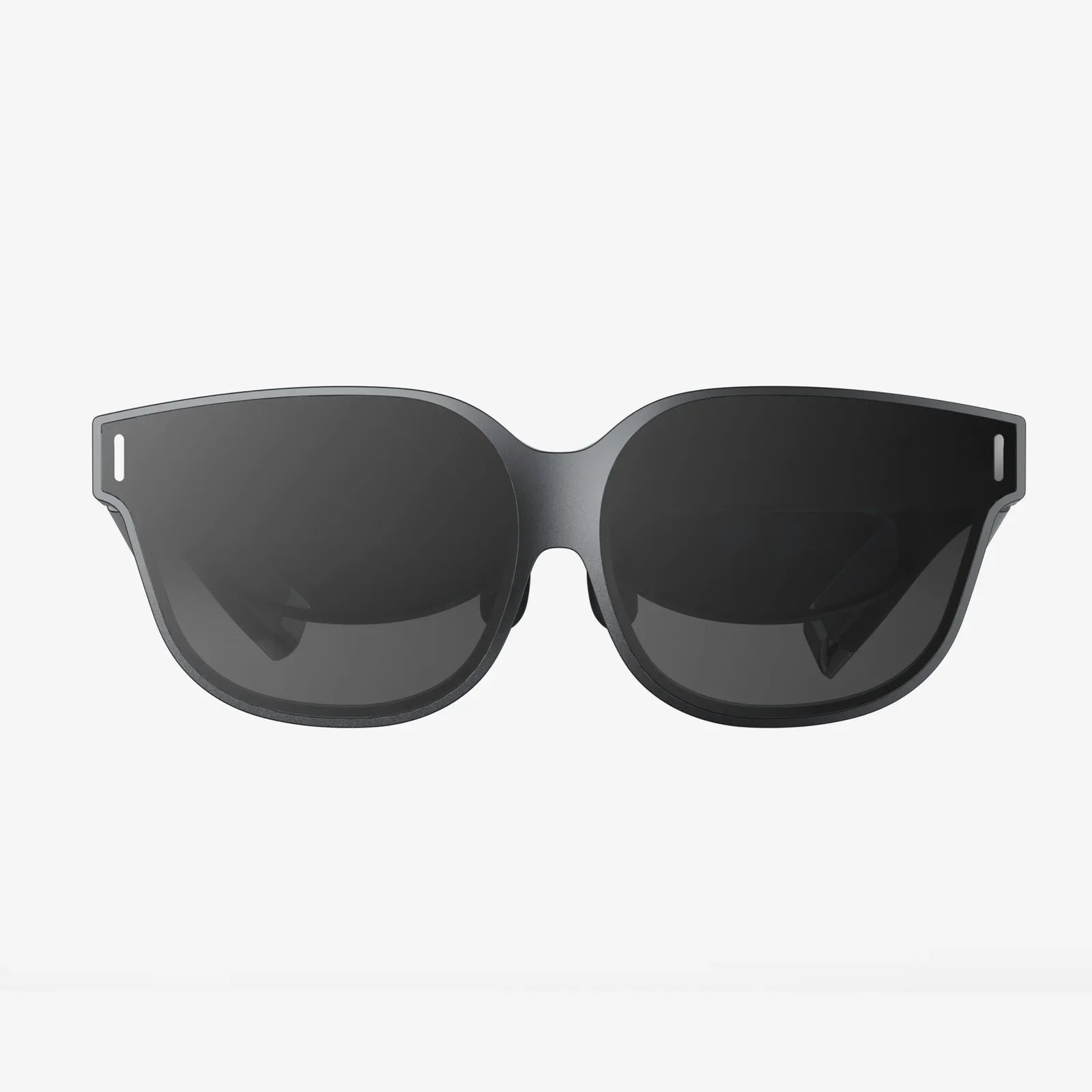
Imagine a device so revolutionary it promised to weave digital dreams directly into the fabric of our physical world, forever altering the very lens through which we perceive reality. The journey of the first true augmented reality headset is not merely a tale of technological innovation; it is the origin story of a new human sense, a paradigm shift that began not with a bang, but with a flickering, monochrome ghost of an idea.
The Precursors: A Landscape of Imagination
Long before a wearable device could be credibly called an "AR headset," the concept lived in the fertile ground of science fiction. Writers and filmmakers envisioned worlds where information overlayed vision, where characters interacted with data floating in mid-air. These visions were crucial, for they provided the blueprint, the north star for engineers and inventors. They defined the dream long before the technology to build it existed.
In the realm of academia and defense, the seeds were being sown with immense, impractical machines. Early head-mounted displays, often tethered to room-sized computers, were developed for specialized applications. These were not the sleek headsets of today but cumbersome, heavy helmets designed for tasks like remotely manipulating hazardous materials or providing targeting data for military pilots. They offered a form of augmented reality, but it was confined, expensive, and utterly inaccessible. They proved the concept was possible, but the challenge of miniaturization, processing power, and user interface remained a monumental hurdle.
The Confluence of Technologies
The birth of the first consumer-grade AR headset was not the result of a single invention but the perfect storm of several technologies finally reaching a point of maturity. It was a convergence that made the previously impossible merely difficult.
First, the miniaturization of computing components, driven by the smartphone revolution, provided the necessary processors, sensors, and memory that could be packed into a wearable form factor. Second, advances in display technology, particularly micro-displays and waveguides, allowed for the projection of bright, clear images directly in front of the user's eye without blocking their view of the real world. Third, the development of sophisticated tracking systems—combining accelerometers, gyroscopes, magnetometers, and eventually cameras—enabled the device to understand its position and orientation in space with enough precision to anchor digital objects to the physical environment.
Finally, the software and algorithms needed to stitch these hardware components together into a seamless experience reached a new level of sophistication. Simultaneous Localization and Mapping (SLAM) algorithms, which allow a device to map its surroundings in real-time while tracking its movement within that map, became the magical ingredient that made stable, convincing AR possible.
The Prototype That Changed Everything
While several research prototypes and limited-run devices emerged in the late 2000s and early 2010s, the moment the concept truly captured the world's imagination was with the unveiling of a specific, pioneering developer unit. This device was unmistakably a first draft—bulky, with a limited field of view, and requiring a tethered connection to a powerful computer. Its aesthetic was purely functional, a geometric assemblage of sensors, cameras, and lenses.
Yet, what it demonstrated was nothing short of magic. For the first time, developers could place a digital chessboard on a physical table and walk around it. They could summon a weather forecast that appeared to hover next to their window. They could have a video call where the participant seemed to be sitting on their couch. The experience was raw and often glitchy, but it was undeniably, tangibly real. This headset wasn't just a screen you strapped to your face; it was a window into a blended world, and it single-handedly launched a thousand startups and established an entirely new category of computing.
Overcoming the Invisible Hurdles
The path from that groundbreaking prototype to a polished consumer product was fraught with challenges that were invisible to the end-user but Herculean for engineers. The "latency" problem was paramount—the delay between a user moving their head and the digital display updating had to be reduced to mere milliseconds to prevent motion sickness. Achieving this required incredibly fast sensor processing and rendering.
Another immense challenge was creating a comfortable form factor. The first devices were front-heavy, leading to neck strain, and their field of view was often compared to looking through a letterbox. Battery life was a constant struggle, as powering multiple cameras, displays, and processors drained cells at an alarming rate. Furthermore, creating intuitive user interfaces was a全新的 challenge. There was no mouse or touchscreen; interaction had to happen through gaze, gesture, and voice, all of which required new design languages and incredibly robust and accurate tracking.
A New Language for Interaction
The first AR headset did more than just show images; it invented a new way of communicating with technology. The concept of the "digital twin"—a virtual copy of a physical object or space—became a foundational principle. Users could manipulate digital controls that felt as real as physical ones.
This gave rise to core interaction paradigms that are now standard. Air tapping, pinching, and dragging to select and move virtual objects. Using eye-tracking to highlight menu items simply by looking at them. Employing spatial anchors to pin applications to specific locations in a room, so they remained exactly where you left them. This was a move away from the abstracted, file-and-folder desktop metaphor into a world where computing was contextual, environmental, and immediate.
The Ripple Effect: Industries Transformed
The impact of this new technology immediately reverberated far beyond gaming and entertainment. The first AR headsets found eager adopters in enterprise and industry, where they solved real-world problems with dramatic efficiency gains.
- Manufacturing & Field Service: Technicians could see wiring diagrams overlaid directly on complex machinery, guiding them through repairs step-by-step without ever looking away at a manual.
- Healthcare: Surgeons gained X-ray vision, visualizing patient scan data like tumors or blood vessels directly on the patient's body during procedures. Medical students could practice on detailed, interactive holographic anatomy models.
- Design & Architecture: Architects and interior designers could walk clients through full-scale, holographic models of buildings before a single brick was laid, making changes to structures and materials in real-time.
- Remote Collaboration: The concept of the "holoportation" emerged, where experts from across the globe could be virtually present as life-like holograms, able to annotate the physical environment and collaborate as if they were in the same room.
The Cultural and Social Awakening
Culturally, the arrival of the first AR headset triggered a global conversation that we are still having today. It forced us to confront profound questions about the nature of reality, privacy, and human connection. If digital content can occupy physical space, who owns the augmented air around us? How do we prevent digital graffiti on our streets and in our homes?
It sparked a debate about the "attention economy" and the potential for both empowerment and isolation. Would these devices help us be more present in our world by making information seamless, or would they further distract us, creating a new layer of digital isolation? The headset became a symbol of a technological future that was both exhilarating and unnerving, a dichotomy that continues to define the conversation around spatial computing.
The Legacy and The Road Ahead
The true legacy of the first AR headset is not the device itself, which was quickly surpassed by more advanced models. Its legacy is the ecosystem it spawned. It created a new industry, attracted billions in investment, and inspired a generation of developers to build for a world that didn't yet exist. It established the foundational technologies and design principles that every subsequent device has built upon.
It proved that the appetite for blending the digital and physical was immense. It showed that this was not a niche interest but a fundamental shift in how we could work, learn, play, and connect. The first headset was the proof-of-concept for a future where information is not something we go to a screen to find, but something that exists all around us, accessible, contextual, and immediate.
Today, the echoes of that first device are everywhere. The sleek, modern AR glasses and more powerful mixed reality headsets of the present are direct descendants of that clunky, revolutionary prototype. They stand on the shoulders of a giant—a first attempt that dared to ask a simple, world-changing question: What if the digital world didn't have to be separate from our own? The answer to that question is still being written, but it all started with a headset that taught us to see the world not for what it was, but for what it could become.
From that initial, grainy overlay to the photorealistic holograms of tomorrow, the first AR headset didn't just launch a product—it opened a doorway. It challenged us to reimagine the boundaries of human-computer interaction and planted the flag for a future where our reality is not just viewed, but actively, dynamically, and magically augmented.
Share:
How to Use VR on iPhone 12 Pro: The Ultimate Immersive Guide
Average Price of Smart Glasses: A Deep Dive into the Cost of Wearing the Future