


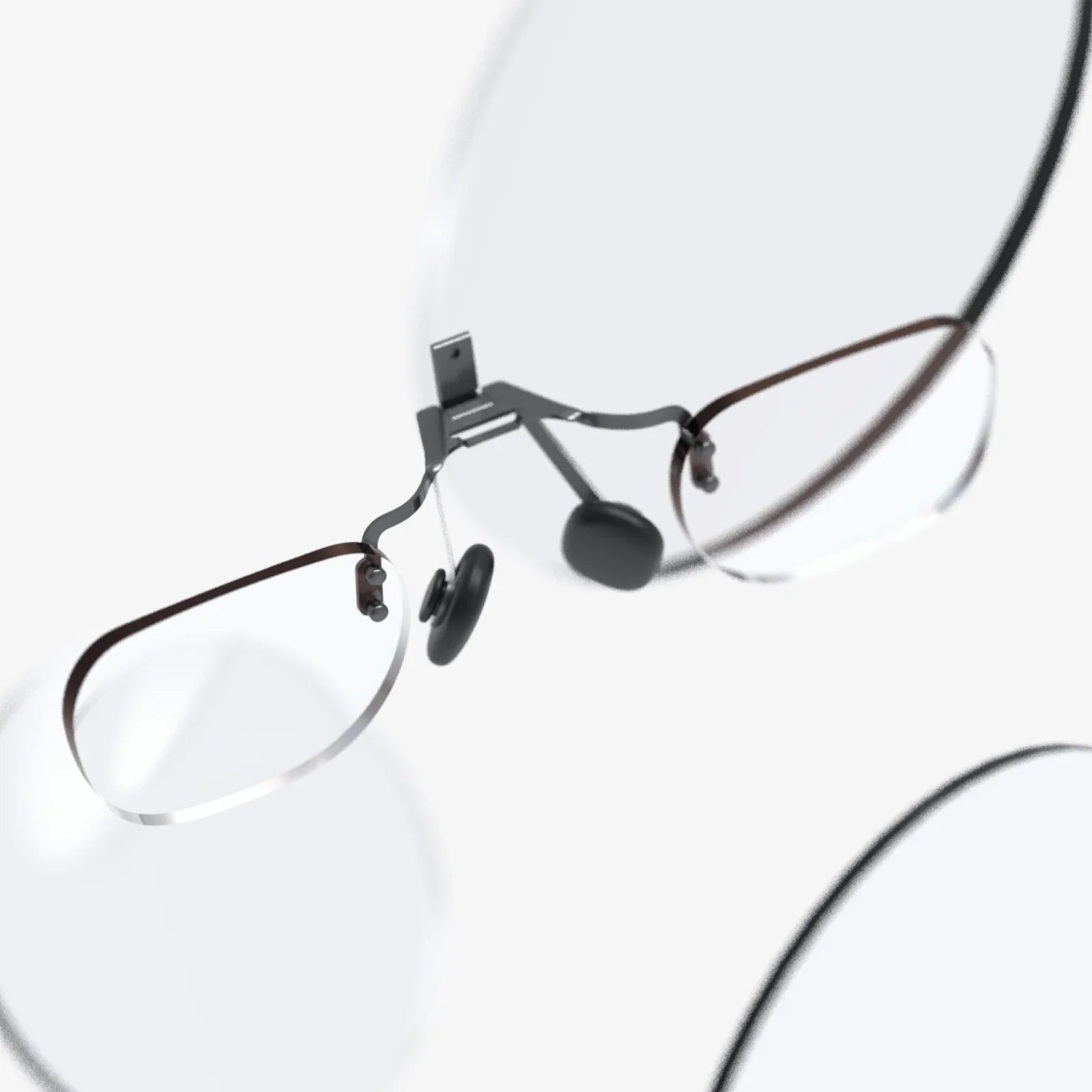
Imagine a world where information floats seamlessly before your eyes, where digital assistants are not confined to a screen but exist in the space around you, and where the line between the physical and digital realms becomes beautifully blurred. This is not a distant science fiction fantasy; it is the imminent future being shaped by a new class of wearable device. At the forefront of this revolution are form smart goggles, a sleek, sophisticated evolution of head-mounted displays that promise to redefine our daily lives, professional workflows, and social interactions. They represent the culmination of decades of research and development, compacting powerful computing, advanced optics, and intuitive interfaces into a form factor designed not just for function, but for life.
The Architectural Marvel: Deconstructing the Technology
The magic of form smart goggles lies in their intricate and harmonized internal architecture. Unlike their bulky virtual reality predecessors, which aim to fully replace your vision with a digital world, these devices are built for augmentation. They are designed to be lightweight, comfortable for extended wear, and, crucially, socially acceptable.
The Optical Heart: Waveguide Displays
At the core of the user experience is the display technology. Most advanced form smart goggles utilize something called waveguide optics. Think of a waveguide as a transparent piece of glass or plastic that acts like a highway for light. Tiny projectors, often using technologies like LCoS (Liquid Crystal on Silicon) or MicroLEDs, shoot images toward the edge of this waveguide. Through a complex process of reflection, diffraction, and refraction—often guided by nanoscale gratings etched into the material—this light is bounced through the waveguide until it is finally directed into the user’s eye. The result is a crisp, bright digital image that appears to be superimposed on the real world, all while allowing the user to see their natural environment perfectly. This technology is the key to achieving a slim, glasses-like profile instead of a front-heavy helmet.
The Brain: Spatial Computing and Processing Power
A stunning display is useless without intelligence to drive it. Form smart goggles are essentially wearable computers, a concept known as spatial computing. They contain a sophisticated System-on-a-Chip (SoC) that must handle immense tasks with extreme efficiency: rendering high-resolution graphics, processing complex computer vision algorithms, and running artificial intelligence models—all while managing thermals and maximizing battery life. This processor is the brain that understands the world around you.
The Senses: A Suite of Advanced Sensors
To blend the digital with the physical, the goggles must first perceive the physical world with incredible accuracy. This is achieved through a suite of sensors that act as the device’s eyes and ears.
- Cameras: High-resolution RGB cameras capture the world in detail, while depth-sensing cameras (using technologies like LiDAR or structured light) map the environment in three dimensions, understanding the distance and shape of every object.
- Inertial Measurement Units (IMUs): These accelerometers and gyroscopes track the precise movement and rotation of your head in real-time, ensuring the digital content remains locked in place as you look around.
- Eye-Tracking Cameras: By monitoring the pupils, these sensors enable intuitive interaction (just look at a button to select it), create a more realistic depth of field for visuals, and allow for foveated rendering—a power-saving technique that renders the area you are directly looking at in high detail while subtly reducing the detail in your peripheral vision.
- Microphones and Speakers: Advanced beamforming microphones isolate your voice from ambient noise for clear voice commands and calls, while spatial audio speakers deliver sound that seems to come from specific points in your environment, enhancing immersion.
A World Transformed: Applications Across Industries
The true potential of form smart goggles is unlocked not in what they are, but in what they enable. Their applications stretch far beyond novelty, promising profound changes across numerous sectors.
Revolutionizing Professional Workspaces
In the professional realm, these devices are productivity powerhouses. For a field engineer, a schematic or instruction manual can be pinned to the machine they are repairing, leaving their hands free. An architect can walk through a full-scale, holographic 3D model of their building design, making changes in real-time with gesture controls. A surgeon could have vital signs, ultrasound data, or procedural guides overlay their field of view during an operation without ever turning away from the patient. Remote collaboration ceases to be a gallery of faces on a screen; instead, a colleague’s photorealistic avatar can be present in the room with you, able to point to and manipulate virtual objects as if they were physically there.
Redefining Navigation and Exploration
For the everyday user, navigation will never be the same. Instead of glancing down at a phone, arrows and street names can be painted directly onto the road ahead, guiding you seamlessly to your destination. Tourists exploring a new city could see historical information and reconstructions overlay ancient ruins as they look at them. At an airport, flight statuses and gate directions could appear next to the relevant signs, eliminating confusion and stress.
Unleashing New Forms of Creativity and Entertainment
The entertainment possibilities are boundless. Imagine watching a film where the characters and action appear to unfold on your living room wall, or even around you. Gamers will no longer be confined to a television; their gaming universe can inhabit their physical space, turning a table into a strategic command center and the entire room into a playground. For creators, digital sculpting and painting can become a tactile, three-dimensional experience, manipulating virtual clay and light with their hands.
Navigating the Inevitable Challenges
Despite the exciting potential, the path to mainstream adoption for form smart goggles is fraught with significant hurdles that developers must overcome.
The Social Acceptance Hurdle
Technology is not adopted in a vacuum; it exists in a social context. For decades, head-mounted displays have been perceived as geeky, isolating, or even intrusive. The success of form smart goggles hinges on their ability to become a fashionable, socially normalized accessory. This requires not just technical miniaturization, but a design language that appeals to personal expression and taste. They must be something people want to be seen wearing.
The Privacy Paradox
A device equipped with always-on cameras and microphones worn in public is a privacy advocate’s nightmare. The potential for unauthorized recording and data collection is a serious concern. Manufacturers must implement unequivocal privacy safeguards. This includes clear, physical indicators like LED lights that show when recording is active, robust data encryption, and on-device processing that ensures sensitive information like eye-tracking data never leaves the device without explicit user consent. Building trust is not a feature; it is a prerequisite for survival.
The Battery Life Conundrum
Powering such a dense array of high-performance components is a monumental challenge. Users will not adopt a device that needs recharging every two hours. Innovations in battery technology, power-efficient chipsets, and intelligent software that manages power draw based on usage are critical. The ideal solution may involve a hybrid system: a lightweight battery in the glasses frame for short-term use, supplemented by a more powerful battery pack that can be discreetly stored in a pocket for all-day endurance.
The Road Ahead: A Glimpse into the Future
The current generation of form smart goggles is merely the first step. The trajectory points toward even more seamless integration. Future iterations will likely become indistinguishable from standard eyewear, with advancements in holographic optics and neural interfaces potentially doing away with screens altogether. They could evolve into a universal personal computing platform, replacing smartphones, laptops, and televisions by projecting virtual screens anywhere, anytime. As artificial intelligence becomes more deeply integrated, these devices will evolve from passive tools into proactive assistants, anticipating our needs and providing contextually relevant information before we even ask.
The journey of form smart goggles is just beginning, a quiet whisper of a revolution that promises to amplify human potential and reshape our reality. They stand at the intersection of ambition and utility, challenging us to reimagine the very tools we use to connect, create, and comprehend the world. The future is not something we will step into; it is something we will see through a new lens.
Share:
How to Use VR Headset with iPhone: The Ultimate Immersive Guide
Mr Eyeglasses The Ultimate Guide to Style Vision and Identity