


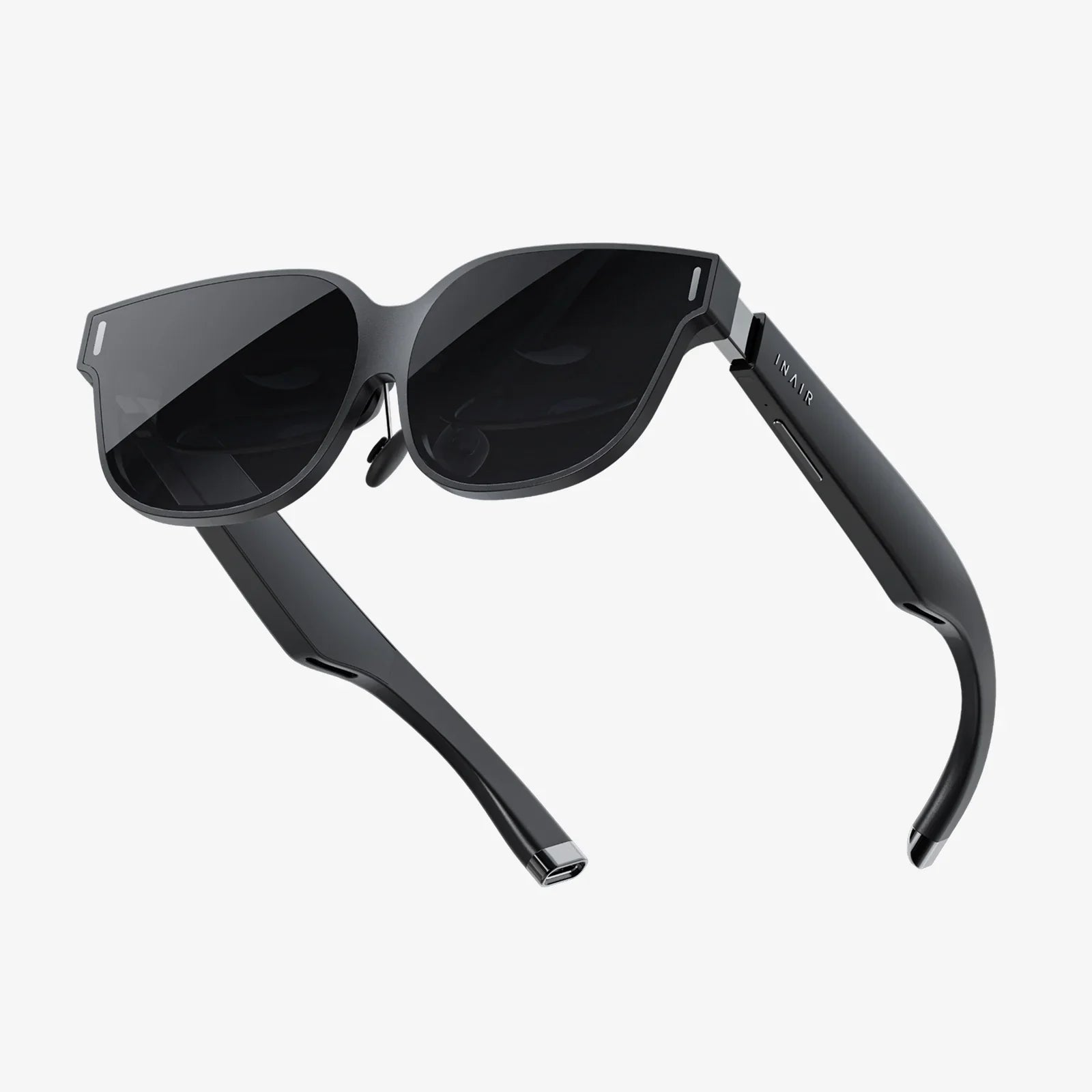
Imagine stepping through a portal into another world, feeling the sun on your virtual skin, hearing the subtle crunch of gravel beneath your feet, and reaching out to interact with a reality that doesn't physically exist. This is the promise of a truly immersive experience, and it all begins with a meticulously planned and executed full VR setup. This journey from curious observer to active participant in virtual realms is more accessible than ever, but navigating the path requires a clear understanding of the ecosystem. Building your portal to other dimensions is an exciting project, blending hardware prowess with spatial awareness to unlock experiences that defy the ordinary.
The Core of the Experience: Choosing Your Headset
The head-mounted display, or HMD, is the undeniable heart of your system. It is your window into virtual worlds and the primary interface between you and the experience. The market offers a spectrum of devices, broadly categorized by their operational methodology.
Standalone headsets represent the most accessible entry point. These all-in-one devices have all the necessary computing power, sensors, and batteries built directly into the unit. They are incredibly user-friendly, requiring no external devices or complicated wiring, offering a degree of freedom that is immediately appealing. The trade-off often comes in raw graphical fidelity and processing power, which, while impressive and constantly improving, may not match the zenith of what is possible.
On the other end of the spectrum are PC-powered headsets. These devices act as dedicated displays and sensor hubs, offloading all the intense computational work to a powerful external computer connected via a high-speed cable, and sometimes wirelessly with optional adapters. This symbiosis allows for the highest possible resolutions, incredibly detailed textures, complex physics simulations, and the most visually stunning experiences available to consumers. The requirement, of course, is a computer capable of meeting the significant demands of rendering two high-refresh-rate displays simultaneously.
A third, hybrid category is emerging, often referred to as standalone devices with PC connectivity. This offers the best of both worlds: the untethered freedom for more casual or mobile experiences and the option to connect to a powerful computer for when you want to experience the absolute cutting edge of visual immersion.
Beyond the core type, several technical specifications demand careful consideration. Resolution per eye dictates the clarity and sharpness of the image, reducing the "screen-door effect" where the lines between pixels become visible. The field of view (FOV) determines how much of your vision is occupied by the virtual world; a wider FOV increases immersion but requires more rendering power. Refresh rate, measured in Hertz (Hz), is critical for smoothness and comfort—higher rates (90Hz, 120Hz, and beyond) make fast-moving action feel fluid and real, significantly reducing the potential for motion sickness. Finally, the tracking technology—inside-out, where cameras on the headset track the environment, or outside-in, where external sensors track the headset—will influence your space requirements and setup complexity.
The Engine Room: Computing Hardware Requirements
For those opting for a PC-powered experience, the computer itself is the silent engine powering your adventures. This is not a task for a modest machine. The graphics processing unit (GPU) is the most critical component, responsible for generating the complex, stereoscopic 3D environments at high frame rates. A capable GPU is non-negotiable for a smooth and enjoyable experience. The central processing unit (CPU) also plays a vital role, handling physics calculations, artificial intelligence for non-player characters, and overall system coordination.
Furthermore, sufficient RAM is essential for loading expansive virtual environments quickly and keeping everything running smoothly. Don’t overlook storage; modern VR titles and experiences can be enormous in file size, so a large, fast solid-state drive (SSD) is highly recommended to minimize loading times and prevent immersion-breaking stutters. It is crucial to consult the recommended specifications for your chosen headset and the applications you wish to run, as they provide a reliable baseline for the performance you will need.
Command and Control: Input Devices and Peripherals
Interaction is what transforms a visually impressive slideshow into a believable reality. This is handled by motion-tracked controllers, which are typically included with your headset. These sophisticated wands are equipped with buttons, analog sticks, triggers, and haptic feedback motors. Most importantly, they are tracked in 3D space, allowing the virtual world to replicate your real-world hand movements, gestures, and precise finger placements. This enables you to grab, throw, shoot, paint, and manipulate the environment with intuitive motions.
For specific simulators, such as flight or racing sims, dedicated peripherals elevate the experience to unparalleled levels of authenticity. A force-feedback steering wheel and pedal set or a full flight stick and throttle setup can make all the difference, providing tactile and physical feedback that standard controllers cannot replicate. For the ultimate immersion, additional accessories like haptic feedback vests can translate in-game events like explosions or gunfire into physical sensations on your body, and omnidirectional treadmills allow for natural walking motion within a limited physical space.
Carving Out Your Reality: The Play Space
Before you can explore infinite virtual spaces, you must first prepare your finite real one. There are two primary classifications for play area: seated/stationary and room-scale. Seated experiences are ideal for flight sims, racing games, or cinematic viewing, requiring little more than a comfortable chair. Room-scale is where VR truly shines, allowing you to physically walk, crouch, dodge, and explore within a defined boundary.
Setting up a room-scale environment involves using your system's tracking technology to define a "play area" or "guardian boundary." This is a crucial safety feature—as you move around in the headset, a virtual wall will appear when you approach the real-world boundaries of your designated space, preventing collisions with furniture and walls. Ensure the area is clear of obstacles, tripping hazards, and fragile items. Consider the flooring; a soft rug can help you tactilely orient yourself within the physical room. Good overhead lighting is also important for the tracking systems of most headsets, though direct sunlight on the headset's lenses must be avoided at all costs, as it can permanently damage the internal screens.
Fine-Tuning for Comfort and Performance
A technically perfect system is useless if it's uncomfortable to use. Comfort is highly subjective but paramount for long sessions. Begin with a proper fit; most headsets have adjustable straps, top straps, and dials for tightening to distribute weight evenly across your head, not just on your face. The interpupillary distance (IPD) adjustment, whether software-based or physical, should be calibrated to match the distance between your pupils, ensuring a clear and strain-free image.
Hygiene is also a factor. Consider purchasing aftermarket interfaces made from materials like silicone or pleather, which are easier to clean than the standard foam, especially if multiple people will be using the device. If you wear glasses, investigate prescription lens inserts for your specific headset model; they will provide a wider field of view and better clarity than trying to wear glasses underneath the headset. For PC setups, cable management systems using pulleys can help mitigate the annoyance of a trailing cable, further enhancing freedom of movement.
The Digital Landscape: Software and Experiences
Your hardware is merely a vessel; the software is the destination. Digital storefronts are your gateways to a vast and growing library of experiences. These range from full-fledged, narrative-driven games and intense multiplayer shooters to incredibly creative social platforms, educational applications, and mind-bending artistic experiences.
When building your library, explore a diverse range of genres to see what resonates with you. Many stores offer robust refund policies for software used for less than a specified time, allowing you to try experiences risk-free. Beyond purchased games, a wealth of free content is available, including demos, tech showcases, social hubs, and creative tools. This digital landscape is constantly evolving, with developers pushing the boundaries of what is possible within these immersive mediums.
Troubleshooting and Community
As with any complex technology, you may encounter hurdles. A dropped tracking signal, audio routing issues, or performance stutters can occur. The first resource for any problem should be the official support channels and documentation for your hardware. However, the broader user community is an invaluable asset. Online forums, subreddits, and Discord servers are filled with experienced enthusiasts who have likely encountered and solved the exact issue you are facing. A quick search can often yield step-by-step guides, recommended settings, and workarounds for common problems.
Building a full VR setup is a deeply personal and rewarding endeavor. It is a commitment to exploring new forms of entertainment, connection, and creativity. It requires an investment not just of money, but of time and space. Yet, the return on that investment is the unparalleled ability to travel to impossible places, to learn by doing in simulated environments, and to share experiences with others in a way that flat screens simply cannot replicate. It is the closest many of us will come to having a functional holodeck, a personal gateway to any reality imaginable. The journey to crafting your perfect portal is an adventure in itself, one that culminates in the endless adventures that await on the other side.
Your journey into the virtual frontier awaits, not in a distant future, but in the choices you make today. This ultimate guide has illuminated the path, from the silicon heart of a powerful computer to the careful clearing of your physical floor space. The components are now known quantities, the considerations laid bare. All that remains is to take that first step—to define your boundary, power on your headset, and let the real world fade away. The perfect immersive experience is not a fantasy; it's a system waiting to be built, a new reality ready for you to log in and explore its every incredible detail.
Share:
Eyeglasses Bluetooth: The Invisible Tech Revolutionizing Your Daily Life
HCI Programs: Your Gateway to Designing the Future of Human-Technology Interaction