


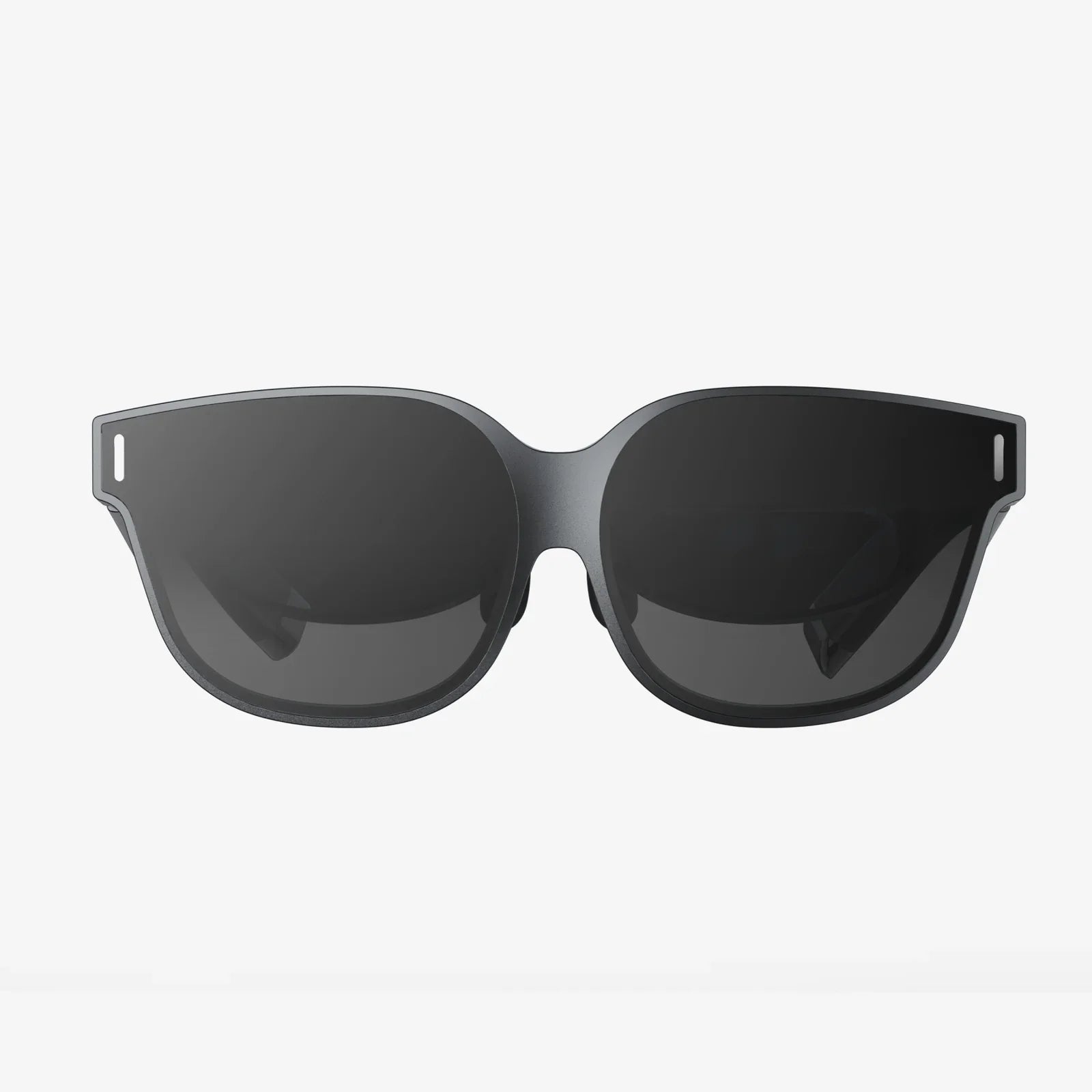
Imagine a world where you can climb Mount Everest, stroll through ancient Rome, or design a skyscraper, all from your living room—not as a spectator, but as a full participant, feeling the chill of the wind, the grit of the stone, and the weight of your tools. This is the promise of fully immersive virtual reality, a technological frontier that is rapidly shifting from science fiction to tangible reality. The implications are staggering, poised to redefine everything from entertainment and education to how we connect and perceive existence itself. The door to these boundless digital realms is now creaking open, and what lies beyond will change everything.
The Pillars of True Immersion: Beyond Sight and Sound
For decades, virtual reality has been synonymous with clunky headsets that provide a compelling visual and auditory experience but constantly remind the user of the real world's limitations. Achieving true, full immersion requires a multi-sensory assault on the brain, convincing it completely that the digital environment is real. This feat rests on several critical technological pillars that are now being built.
Visual Fidelity: The Quest for Photorealism
The first and most obvious hurdle is visual realism. Current systems have made incredible strides with high-resolution displays, but the goal is to achieve a level of detail indistinguishable from reality. This involves not just higher pixel density to eliminate the "screen door effect," but breakthroughs in fields like foveated rendering. This technology uses eye-tracking to render only the specific area of the screen where the user's fovea (the center of the retina) is looking in ultra-high definition, while the peripheral vision is rendered at a lower resolution. This mimics how human vision actually works and drastically reduces the computational power required, making photorealistic graphics feasible.
The Auditory Landscape: 3D Spatial Audio
Sound is half the experience. True immersion requires 3D spatial audio that replicates how sound waves interact with the environment and our ears. Advanced audio engines can now simulate how sound changes based on its source, distance, and the materials in a virtual space. The subtle echo of a footstep in a cavernous hall, the muffled conversation from another room, the Doppler effect of a passing vehicle—these auditory cues are fundamental to selling the illusion of presence, making the brain believe the space is physically real.
The Touchable Digital World: Haptics and Tactile Feedback
Perhaps the most significant leap toward full immersion is the replication of the sense of touch. This goes far beyond the simple rumble of a controller. The field of haptics is exploding with innovation, aiming to let users feel the texture, weight, temperature, and resistance of digital objects.
Next-Generation Haptic Suits and Gloves
Researchers and engineers are developing full-body haptic suits embedded with a network of actuators. These devices can simulate a wide range of sensations, from the gentle pressure of a hand on your shoulder to the impact of a virtual punch. Paired with advanced haptic gloves, users can feel the shape of a digital apple, the recoil of a virtual weapon, or the brush of leaves against their skin. This technology uses a combination of vibrations, electrical muscle stimulation, and pneumatic pressure systems to create convincing tactile feedback, closing the loop between seeing an object and actually "feeling" it.
Ultra-Haptics and Force Feedback
Even more futuristic are systems using ultrasound arrays to project sensations directly onto the user's skin without any wearable device. These "ultra-haptic" systems can create the feeling of shapes and textures mid-air. Meanwhile, sophisticated force feedback systems, often using robotic exoskeletons, provide physical resistance, allowing a user to lean against a virtual wall and feel it push back, or struggle to lift a heavy digital crate.
The Final Frontier: Smell, Taste, and Neural Interfaces
To achieve the zenith of immersion, the other senses must be engaged. Olfactory technology, or digital smell, is being developed through devices that can synthesize and release a vast array of scents on command. Imagine the smell of rain on dry earth, ocean spray, or gunpowder in a virtual battle—each scent meticulously timed to enhance the narrative.
The sense of taste remains the most challenging frontier, but early experiments with electrical and thermal stimulation of the tongue show it is not entirely out of reach. More radical, and potentially the ultimate key to full immersion, is the development of brain-computer interfaces (BCIs). These systems aim to bypass the sensory organs entirely, sending signals directly to the brain's visual, auditory, and somatosensory cortices. While in early stages, progress by various research institutions suggests a future where a virtual experience could be injected directly into our neural circuitry, creating a perfect simulation that is utterly indistinguishable from physical reality.
The Engine Room: Computational Power and Network Latency
None of these sensory experiences are possible without an immense amount of processing power and incredibly fast data transmission. Rendering complex, photorealistic worlds in real-time requires computing capabilities that push the boundaries of Moore's Law. The advent of cloud computing and 5G/6G networks is critical here. By offloading the intense rendering tasks to powerful remote servers, the user's headset can become a lighter, more comfortable receiver. However, this introduces the challenge of latency—the delay between a user's action and the system's response. For true immersion, this latency must be reduced to under 20 milliseconds, a feat that requires edge computing and next-generation wireless technology to achieve seamless, lag-free interaction.
The Human and Societal Impact: A Double-Edged Sword
The realization of fully immersive virtual reality is not just a technical challenge; it is a philosophical and societal earthquake. The potential benefits are profound.
Revolutionizing Industries
In education, students could take field trips to the bottom of the ocean or the surface of Mars. In medicine, surgeons could practice complex procedures on virtual patients, and therapists could use controlled immersive environments to treat phobias and PTSD. Architects and engineers could walk through and modify their designs at a 1:1 scale before a single physical resource is expended. Remote work could evolve into shared virtual offices where collaboration feels as natural as being in the same room.
The Psychological and Ethical Quandaries
Yet, this power comes with significant risks. The phenomenon of "VR addiction" could become a severe public health issue if virtual worlds offer an escape more appealing than reality. The concept of the "simulation hypothesis"—the idea that we might already be in a simulation—could move from philosophical debate to a tangible existential crisis for some. Ethically, we must grapple with questions of data privacy on an unprecedented scale, as these systems would have access to our biometric data, eye movements, and even neural patterns. Furthermore, the potential for hyper-realistic virtual crime or trauma necessitates the development of new legal and ethical frameworks.
Bridging Realities: The Path to Ubiquity and Accessibility
For fully immersive VR to become a part of daily life, it must overcome practical barriers. The hardware needs to become affordable, comfortable, and socially acceptable—moving from bulky headsets to perhaps sleek glasses or even contact lenses. The content ecosystem must expand beyond gaming to offer compelling experiences for every aspect of human interest. Most importantly, we must navigate this transition carefully, establishing norms and regulations that maximize the technology's incredible potential for good while mitigating its inherent dangers. It must be a tool that enhances human connection and understanding, not one that further divides us from each other and from the physical world we inhabit.
The click of a headset turning on will soon be synonymous with the opening of a portal. We are standing on the threshold of a new dimension of human experience, where the only limit is the imagination of the creators who build these worlds and the wisdom of the users who step into them. The technology to make it happen is being assembled in labs right now, and its arrival will be less like the invention of a new gadget and more like the discovery of a new continent—ripe with unimaginable opportunity and uncharted peril. The real and the virtual are about to collide, and our world will never be the same.
Share:
AI Definition: Unraveling the Complex Tapestry of Artificial Intelligence
Mass VR: The Dawn of a New Collective Digital Consciousness