


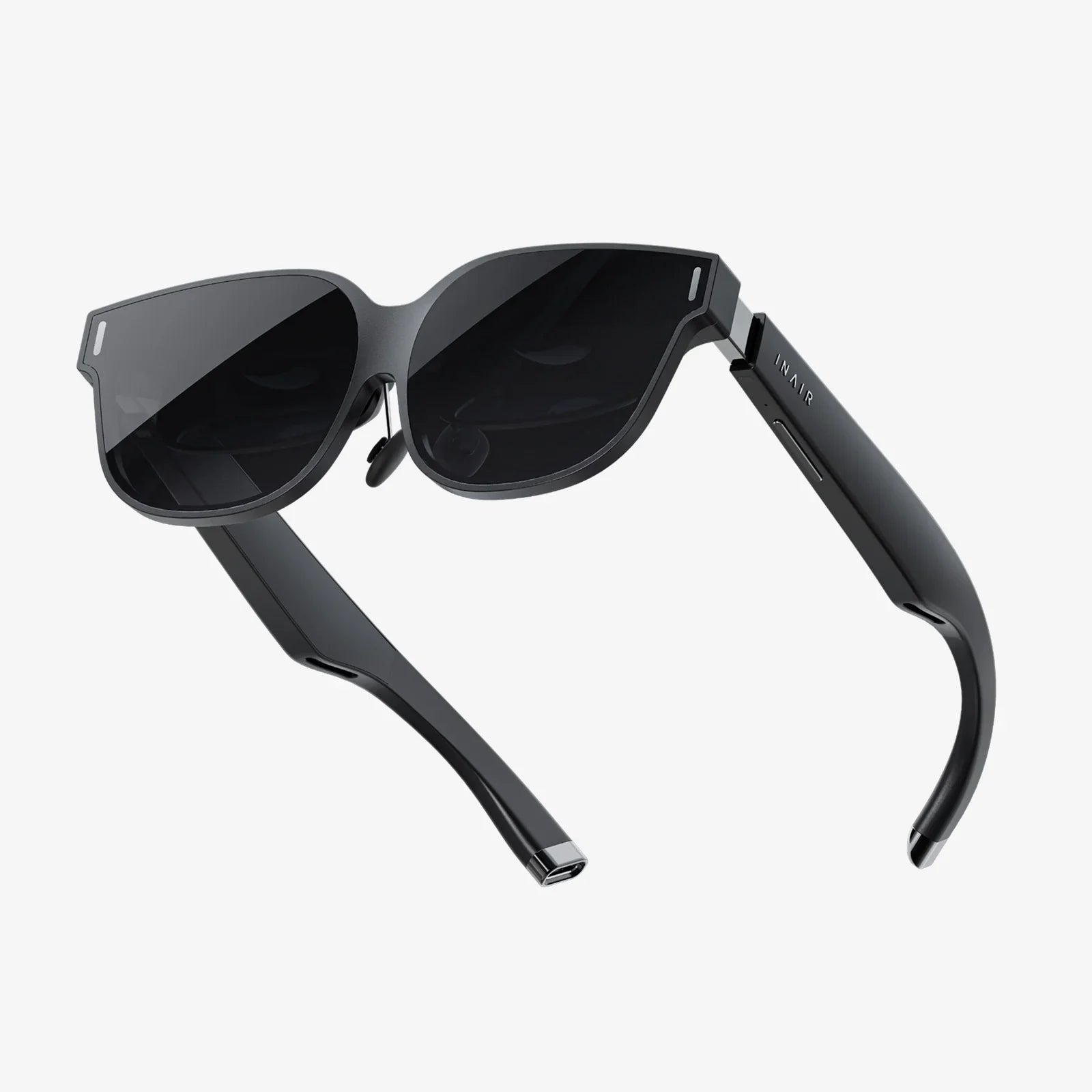
- by wangfred
Future AR Glasses Powered by AI: The Next Paradigm in Human-Computer Interaction
- by wangfred
Imagine a world where the digital and physical realms don’t just coexist but are seamlessly, intelligently intertwined. A world where information doesn’t just appear before your eyes but understands the context of your life, anticipates your needs, and enhances your reality in real-time. This is the profound promise of future AR glasses powered by AI, a technological synergy poised to move beyond the screens in our pockets and fundamentally reshape human experience itself. This isn't just another gadget; it's the dawn of a new sensory layer for humanity.
To understand the magnitude of this shift, we must look at the two technologies converging to create it. Augmented reality, at its core, is about overlaying digital information onto our view of the physical world. For years, the challenge has been making this overlay persistent, high-fidelity, and socially acceptable. Meanwhile, artificial intelligence, particularly the advances in machine learning and computer vision, has been racing forward, giving machines the ability to see, interpret, and even reason about the world. Individually, they are powerful. Combined, they become transformative. AI provides the brain, and AR provides the eyes and the canvas. The AR glasses are the vessel—the indispensable piece of hardware that brings this intelligent overlay into our perpetual field of view, making the interaction ambient and intuitive rather than something we have to consciously initiate by looking down at a device.
The key differentiator for the next generation of AR glasses will be the sophistication of the onboard or cloud-connected AI. This is what moves the technology from a simple heads-up display to a true visual companion. Early AR might project a floating navigation arrow. An AI-powered system, however, would understand the entire scene. Its computer vision algorithms would identify the street signs, crosswalks, and pedestrians. Its natural language processing could listen to your question, "Where's the best coffee near me that's not too busy?" and its predictive analytics would cross-reference live foot traffic data, your personal taste preferences, and your calendar to highlight a route to a quiet café with your favorite roast, projecting a subtle path on the sidewalk itself while summarizing the reviews for you audibly. The AI acts as a perceptual filter and a cognitive assistant, deciding what information is crucial at that exact moment and presenting it in the most ergonomic way possible.
The implications for specialized fields are staggering. Imagine a surgeon performing a complex procedure. Today, they might glance at screens displaying vital signs and MRI scans. With AI-powered AR glasses, the surgeon’s view of the patient is directly augmented. Critical stats are hovered neatly to the side of their field of view. The AI system highlights blood vessels and nerves based on the patient's unique scan data, effectively providing X-ray vision and reducing risk. It could even alert the surgeon to subtle physiological changes invisible to the human eye. Similarly, an engineer repairing a complex machine could see internal components highlighted, with step-by-step instructions from a manual digitally anchored to specific parts. A architect could walk through a physical space and see their digital building model superimposed onto the empty lot, allowing them to adjust designs in real-time by using gesture or voice commands. The AI understands the task at hand and serves up the precise tools and information needed, turning every environment into an interactive workshop.
Perhaps the most human-centric evolution will be in how we connect with others. AI-powered AR could dismantle language barriers in real-time. Imagine conversing with someone speaking another language and seeing their words translated as subtitles seamlessly integrated below them, complete with cultural nuance and colloquialisms preserved by the AI. Beyond translation, these glasses could enhance social memory, discreetly displaying the name and key details of a person you met years ago as you greet them at a conference. For remote collaboration, it goes far beyond video calls. Colleagues from across the globe could be rendered as photorealistic avatars in your physical office space, able to interact with and point to shared 3D models as if they were truly present. The AI would manage these digital presences, making interactions feel natural and cohesive within your environment.
Such a powerful technology does not arrive without significant challenges. The ethical considerations are vast and complex. The constant capture of first-person video and audio raises monumental questions about privacy and surveillance. Who has access to the data stream from your glasses? How is it stored and used? The potential for misuse is significant, necessitating robust, transparent data policies and perhaps even new digital rights. There's also the risk of reality dilution—where the line between the augmented digital layer and the actual physical world becomes blurred, potentially leading to over-reliance or manipulation. Furthermore, the digital divide could widen into a perceptual divide, creating a chasm between those who can afford this enhanced reality and those who cannot. The AI itself must be designed with profound ethical constraints to avoid biases in its perception and recommendations. Addressing these issues is not a secondary task; it is integral to the responsible development of the technology itself.
Ultimately, the goal of future AR glasses powered by AI is to make the technology itself disappear. The interface won't be a screen or a mouse; it will be our world. Interaction will happen through gaze, gesture, voice, and even intent, sensed by the AI. This represents the final step in a long journey of making computers more human-centric. We moved from command lines to graphical interfaces to touchscreens. The next logical step is to remove the intermediary device altogether and have computing power woven into the fabric of our daily perception, accessible without ever needing to look down. It’s a shift from technology we use to technology we live with.
The path toward this future is being paved today in research labs and design studios. The hardware is becoming smaller, lighter, and more powerful. The AI models are growing more sophisticated and efficient. While the perfect embodiment of this vision may still be on the horizon, its trajectory is clear. Future AR glasses powered by AI are not merely about providing information; they are about enhancing understanding. They promise a world where we are more capable, more connected, and more creative, with an intelligent companion that helps us see our world not just as it is, but as it could be. The next great platform for human experience is being built, and it’s designed to fit right before our eyes.
Share:
Risks of Augmented Reality: Navigating the Unseen Dangers in Our Overlaid World
Augmented Reality Companies Market: A Deep Dive into the Digital Overlay Revolution