


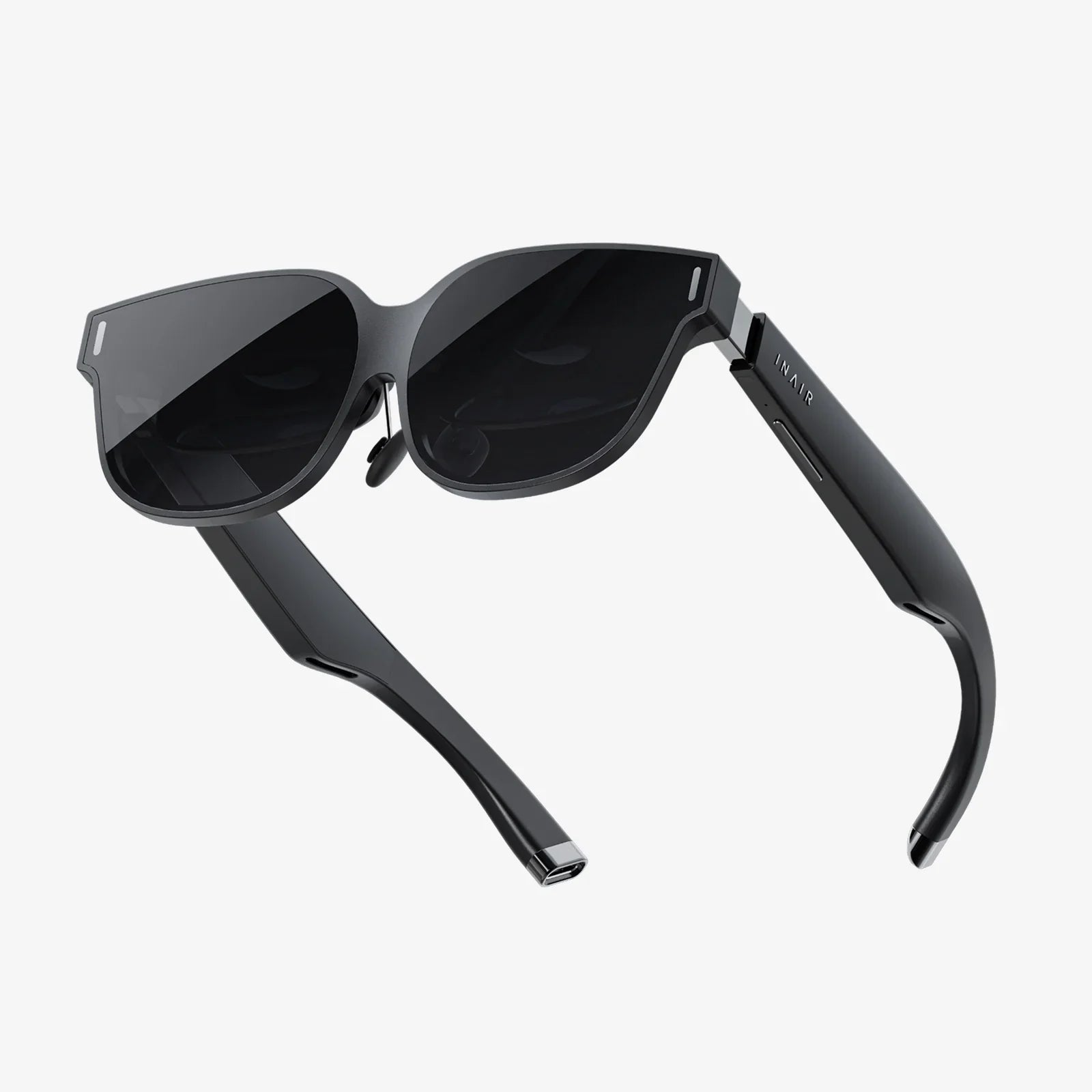
Imagine a world where digital information doesn't live on a screen in your hand but is woven seamlessly into the fabric of your reality, where instructions float over a complex machine you're repairing, historical figures stroll through the ruins you're touring, and a navigational path is painted directly onto the street before you. This is the tantalizing promise of augmented reality, a promise that by 2025, is set to move from speculative fiction to tangible, wearable reality. The hardware that powers this revolution is undergoing a metamorphosis, poised to shed its clunky, experimental skin and emerge as a sleek, indispensable part of our daily lives.
The Evolutionary Leap: From Prototype to Product
The journey to 2025 is not about inventing entirely new concepts but rather about the refinement and maturation of existing technologies. The current landscape is dominated by two extremes: smartphone-based AR, which offers accessibility but a limited, disconnected experience, and high-end standalone headsets, which offer immersion but often at the cost of size, weight, and social acceptability. The next three years will be defined by the convergence of these paths, driven by a relentless focus on solving the fundamental hardware constraints that have held AR back.
The core challenges are well-known: creating displays that are bright enough for outdoor use yet efficient enough for all-day battery life, designing optics that are both wide-field and miniature, packing supercomputer-level processing into a glasses-like form factor, and developing intuitive, multifaceted interaction models. By 2025, breakthroughs in material science, semiconductor design, and manufacturing will provide answers to these challenges, giving rise to a new category of device that finally feels like a natural extension of the user, rather than a piece of cumbersome technology.
The Form Factor Revolution: The Dawn of True AR Spectacles
The most immediate and visible change by 2025 will be the dramatic reduction in size and weight. The goal is to achieve a form factor indistinguishable from standard eyeglasses. This is not merely an aesthetic concern; it is the primary barrier to mass adoption. Social acceptability is paramount. People will not wear bulky headsets to the grocery store, a business meeting, or a social gathering. The hardware of 2025 will prioritize a normal appearance, with styles and customization options that align with personal fashion.
This miniaturization will be made possible by several key innovations. Firstly, the shift from traditional birdbath optics to more advanced waveguide and holographic optics will allow for a much thinner and lighter profile. These waveguides act like conduits, piping light from micro-displays at the temples into the user's eye without the need for large, heavy lenses positioned directly in front of the display. Secondly, the use of new lightweight, durable composite materials and advanced alloys will reduce overall mass without sacrificing durability. The result will be devices that users can comfortably wear for an entire day, forgetting they are even there until the digital information they provide is needed.
Seeing the Light: Breakthroughs in Display and Optics
The display is the soul of the AR experience. By 2025, we will see significant advancements in both the micro-displays that generate light and the optics that deliver it to the eye. MicroLED technology is poised to become the gold standard. Unlike OLED or LCD, MicroLEDs offer exceptional brightness, high resolution, and incredible power efficiency—a critical combination for overlaying digital content onto bright, sunlit environments.
On the optical front, the industry is moving beyond simple monochromatic waveguides. Expect to see mass adoption of full-color, wide field-of-view (FoV) waveguides. A FoV of 50 degrees or more will become common, moving away from the frustratingly small, postage-stamp windows of early devices and towards an immersive canvas that fills a significant portion of the user's natural vision. Furthermore, developments in adaptive optics and focal planes will begin to address the vergence-accommodation conflict, a technical term for the eye strain caused when virtual objects appear at a fixed depth regardless of where the user tries to focus. Solving this will make prolonged AR use far more comfortable and realistic.
The Brain Behind the Eyes: On-Device Intelligence and Processing
For AR to be responsive and contextually aware, immense processing must happen in real-time. Relying on a constant, high-bandwidth cloud connection is impractical due to latency and reliability issues. Therefore, the true intelligence must reside on the device itself. The AR hardware of 2025 will be equipped with specialized processing units that go far beyond today's mobile chipsets.
We will see the proliferation of dedicated AI accelerators, or Neural Processing Units (NPUs), designed specifically for the continuous and parallel tasks required by AR: simultaneous localization and mapping (SLAM), object recognition, gesture tracking, and semantic understanding of the environment. These NPUs will operate with extreme power efficiency, allowing for complex scene analysis without draining the battery. This on-device intelligence will enable what is known as "contextual compute"—the hardware will not just see the world but understand it. It will recognize your coffee mug on the desk, know that you have a meeting in 10 minutes, and subtly highlight a reminder to take your notes, all without you issuing a single command.
Interacting with the Augmented World
The question of how users will interact with this blended reality is paramount. The answer in 2025 will not be a single modality but a sophisticated fusion of several. Voice assistants will become more advanced and conversational, understanding context and intent with far greater accuracy. Hand and gesture tracking will evolve to a point where pinching, tapping, and dragging virtual elements feels as natural as manipulating physical objects, with haptic feedback provided through ultrasonic or wearable devices to simulate a sense of touch.
However, the most significant evolution will be in passive interaction. The hardware will increasingly rely on implicit commands derived from user behavior. Simply looking at an object for a sustained period might bring up a contextual menu. The device's ability to read and interpret the user's environment will allow it to proactively offer information. The line between user input and system anticipation will blur, creating an interface that feels less like a tool and more like a helpful partner.
Connectivity and the Ecosystem: The 5G and Wi-Fi 6E Enabler
While on-device processing is crucial, the AR hardware of 2025 will not be an island. It will be a hub within a broader ecosystem of devices and cloud services. This is where next-generation connectivity standards like 5G and Wi-Fi 6E become critical enablers. These technologies offer the high bandwidth and ultra-low latency required for seamless cloud offloading.
For instance, while the device handles real-time tracking and basic object recognition, it could offload a massively complex task—like rendering a highly detailed, photorealistic 3D model or analyzing a vast dataset—to the cloud in milliseconds, streaming the result back to the glasses without any perceptible delay. This hybrid approach, balancing on-device power with cloud scalability, will allow even the sleekest form factors to deliver computationally intensive experiences. Furthermore, this connectivity will enable persistent multi-user AR experiences, where the digital layer over a physical space is shared and consistent for everyone wearing compatible hardware.
Powering the Day: The Battery Life Conundrum
All-day battery life remains the holy grail. The solution by 2025 will be multi-faceted. Firstly, advances in silicon efficiency, particularly the move to more advanced 3nm and 2nm process nodes, will ensure that the core processors and NPUs do more work with less energy. Secondly, the adoption of new battery chemistries, such as solid-state batteries, promises higher energy density in a smaller, safer package.
However, the most innovative solution will be a system-level approach to power management. AR glasses will likely employ a distributed power architecture. The primary computing unit, which contains the bulk of the processors and battery, may be housed in a small, smartphone-like puck that can be carried in a pocket, connected to the glasses via a sleek wireless link. The glasses themselves will contain a smaller battery to handle short-term usage when disconnected from the compute unit. This separation allows the glasses to remain light and comfortable while still providing the necessary power for extended use.
Software and Developer Readiness
Powerful hardware is meaningless without a robust software ecosystem. By 2025, we can expect the maturation of sophisticated operating systems built specifically for spatial computing. These platforms will provide developers with powerful tools to create AR experiences that are aware of surfaces, physics, and semantics, drastically reducing development time and complexity.
The emergence of cross-platform SDKs and standards will be critical. Developers will demand the ability to write an application once and have it run across different hardware platforms, much like mobile app development today. This interoperability will be the key to attracting the vast developer talent needed to create the killer apps that will drive consumer and enterprise adoption beyond novelty and into necessity.
The Enterprise and Industrial Vanguard
While consumer applications capture the imagination, the most profound and immediate impact of advanced AR hardware by 2025 will be felt in enterprise and industrial settings. Here, the ROI is clear and compelling. Field service technicians will use AR glasses to access schematics and receive remote expert guidance hands-free, reducing errors and downtime. Surgeons will have vital patient data and imaging overlayed directly onto their field of view during procedures. Architects and engineers will walk through full-scale holographic models of their designs before a single foundation is poured.
In these environments, the hardware will be ruggedized, and the applications will be mission-critical. The advancements in comfort, display clarity, and contextual awareness will directly translate into increased productivity, enhanced safety, and reduced operational costs, making AR hardware an indispensable tool in the industrial toolkit.
The path to 2025 is not merely an incremental update; it's the critical bridge from promise to practice. The augmented reality hardware emerging in this timeframe will finally possess the necessary blend of elegance, intelligence, and utility to step out of the lab and the enthusiast's closet and onto the faces of millions. It will mark the moment when we stop looking at devices and start looking through them, forever changing our perception of what is possible.
Share:
Best VR 3D Glasses: Your Ultimate Portal to Immersive Digital Realities
10 Augmented Reality Technologies That Are Reshaping Our World