


Imagine a world where the boundaries between the physical and the digital not only blur but dissolve entirely, where your workspace is a sun-drenched virtual beach, your history lesson a walk through ancient Rome, and a doctor’s consultation a collaborative 3D exploration of a beating heart. This is the breathtaking promise of the future of extended reality, a technological revolution poised to leap far beyond niche gaming and novelty filters to become as integral to our lives as the smartphone is today. We stand on the precipice of a new era of human-computer interaction, and the view is nothing short of transformative.
The XR Spectrum: Defining the Playing Field
Before charting the future, it's crucial to understand the landscape. Extended Reality (XR) is the umbrella term encompassing the entire spectrum of immersive technologies.
Virtual Reality (VR): Total Immersion
VR completely replaces the user's real-world environment with a simulated one, typically achieved through a head-mounted display (HMD) that blocks out the physical world. The future of VR lies in achieving true photorealism, with resolutions so high and latency so low that the human brain is utterly convinced. This will be powered by hyper-realistic graphics engines and vast, cloud-streamed virtual worlds, moving beyond entertainment into spaces for high-fidelity collaboration, complex training simulations, and social connection that feels tangibly present.
Augmented Reality (AR): The Digital Overlay
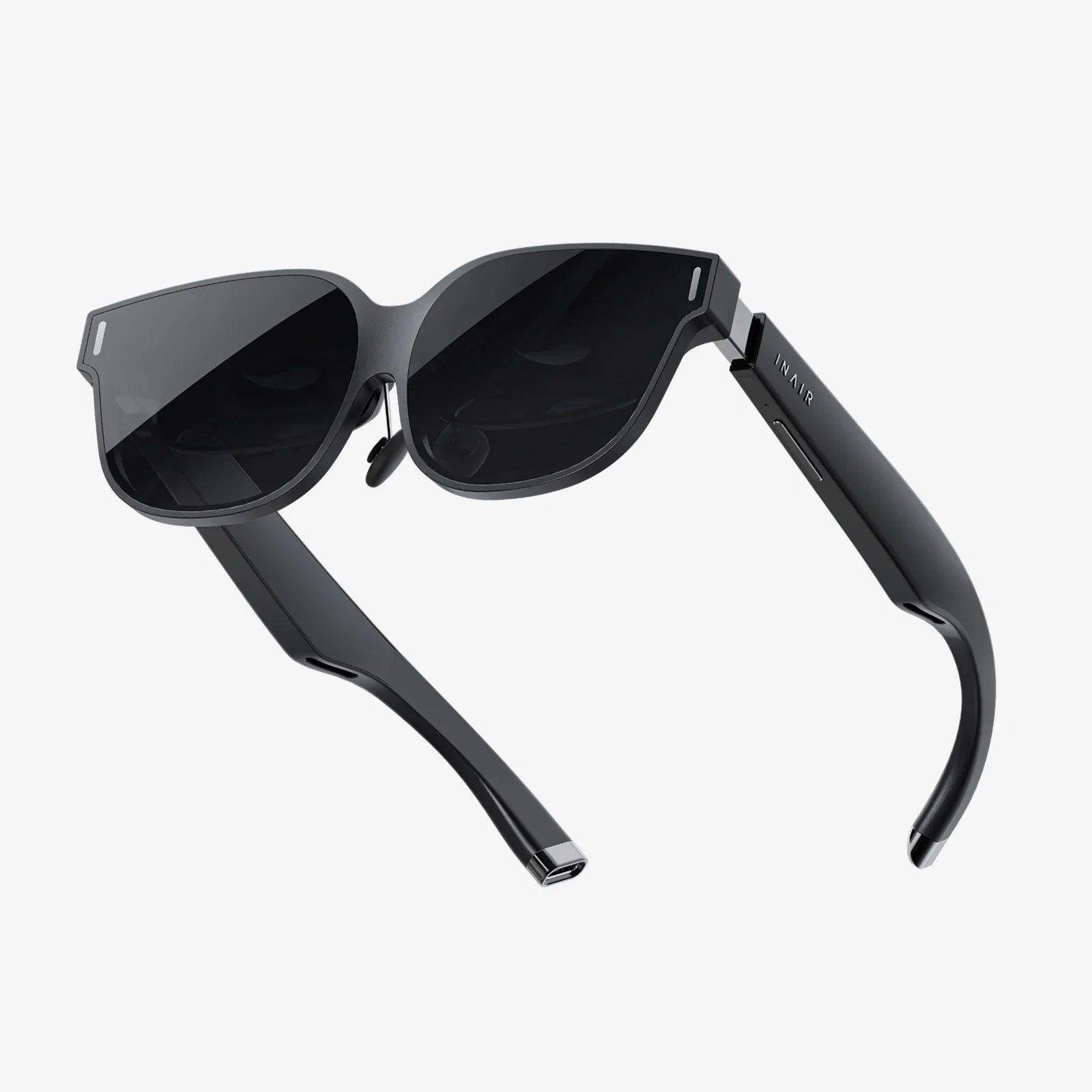
AR overlays digital information onto the user's view of the real world. Unlike VR, it does not replace reality but enhances it. The current archetype is smartphone-based AR, but the future is undoubtedly in wearable form factors like smart glasses. The ultimate goal is a pair of lightweight, socially acceptable glasses that can project contextual information—navigation arrows on the street, a recipe hovering over your mixing bowl, the name of a colleague you just met—seamlessly onto your field of vision. This technology promises to weave a layer of useful data directly into the fabric of our daily existence.
Mixed Reality (MR): The Best of Both Worlds
MR is the most advanced and often misunderstood segment. It doesn't just overlay digital content; it anchors it to the real world, allowing for genuine interaction. A virtual character can sit on your real couch, and a digital tennis ball can bounce off your physical wall. This is achieved through advanced sensors, cameras, and spatial mapping that understand the geometry and physics of your environment. The future of MR is a world where digital and physical objects coexist and interact in real-time, creating entirely new hybrid experiences for design, manufacturing, and play.
The Technological Pillars of Tomorrow's XR
The journey from today's compelling prototypes to tomorrow's ubiquitous reality requires breakthroughs across several key technological frontiers.
Hardware: The Quest for Invisibility
The hardware of the future must become smaller, lighter, faster, and more powerful. We are moving from bulky, tethered headsets to sleek, self-contained glasses. This miniaturization hinges on advancements in micro-optics, ultra-low-power processors, and high-density battery technology. Furthermore, displays must achieve retinal resolution with high dynamic range (HDR) and a wide field of view to prevent the "/looking through binoculars/" effect. The ideal form factor is a pair of ordinary-looking eyeglasses that you can wear all day, making the technology fade into the background until you need it.
Haptics and Sensory Feedback: Beyond Sight and Sound
True immersion engages all the senses. The next frontier is convincing haptic feedback—the sensation of touch. This ranges from advanced controllers that can simulate resistance and texture to full-body haptic suits that let you feel virtual rain or a digital punch. Research into neural interfaces and ultrasonic mid-air haptics points to a future where you can reach out and /feel/ a virtual object without wearing any special gloves, receiving tactile feedback directly through the air onto your skin.
Connectivity and Computing: The Power of the Cloud
Rendering complex, photorealistic worlds in real-time requires immense computational power that cannot be housed in a lightweight headset. The widespread deployment of 5G and eventually 6G networks, with their high bandwidth and ultra-low latency, is the critical enabler. This will allow for cloud rendering, where the heavy processing is done on remote servers and the visual stream is beamed to the headset wirelessly. This not only reduces device cost and weight but also ensures everyone is experiencing the same persistent, complex world simultaneously.
Artificial Intelligence: The Brain of XR
AI is the silent engine that will make XR intelligent and contextual. It will power:
- Real-time object recognition: Your AR glasses will instantly identify objects, translate signs, and provide information based on what you're looking at.
- Natural Interaction: Instead of controllers, you will use gesture, gaze, and voice commands, with AI interpreting your intent seamlessly.
- Avatar Creation: AI will generate hyper-realistic digital avatars that not only look like you but can mimic your expressions and emotions in real-time, enabling profound social presence.
- World Building: AI will be used to generate vast, dynamic virtual environments on the fly, creating unique experiences for every user.
Revolutionizing Industries: The Enterprise Metaverse
While consumer applications capture the imagination, the most immediate and profound impact of XR will be felt across enterprise and industry.
Training and Simulation
From surgeons practicing complex procedures on virtual anatomy to mechanics training on the latest engine model without needing a physical unit, XR offers a risk-free, cost-effective, and highly effective training environment. It allows for the simulation of dangerous or rare scenarios, from firefighting to deep-sea repair missions, ensuring workers are prepared for anything.
Remote Collaboration and Design
The concept of the /digital twin/—a perfect virtual replica of a physical object, system, or factory—will become standard. Engineers from around the world can meet inside a 1:1 model of a new jet engine, inspecting parts, testing airflow simulations, and making changes collaboratively in real-time. Architects and clients can walk through a full-scale model of a building long before the foundation is poured. This will drastically reduce errors, speed up development cycles, and democratize expertise.
Retail and Commerce
Try before you buy will take on a new meaning. You'll use AR to see how a new sofa fits in your living room, how a paint color looks on your walls at different times of day, or how a pair of glasses looks on your face. Virtual showrooms will allow you to explore products in 3D from home, leading to more confident purchasing decisions and reduced return rates.
The Social and Ethical Labyrinth
With great power comes great responsibility. The widespread adoption of XR presents a host of complex challenges that society must address.
The Privacy Paradox
An always-on AR device equipped with cameras, microphones, and sensors is arguably the most intimate surveillance device ever conceived. It will continuously collect unprecedented amounts of data about your environment, your interactions, your gaze, and even your biometric responses. Who owns this data? How is it used? The potential for abuse by corporations or governments is staggering, necessitating robust new frameworks for data ownership and privacy.
The Reality Divide
There is a very real risk that XR could exacerbate existing social and economic inequalities. Will access to immersive education and high-paying virtual jobs become a new class differentiator? Could we see a world where the wealthy curate their perfect augmented realities while others are bombarded with ads and information overload? Ensuring equitable access and developing a /code of ethics/ for the augmentation of reality will be one of the defining challenges of the coming decade.
Mental Health and Identity
What are the psychological effects of living increasingly in synthetic worlds? Could we see a rise in /virtual addiction/ as people prefer idealized digital lives to their complex physical ones? The line between our real and digital selves may blur, raising profound questions about identity, presence, and what it means to be human in a hybrid world. Establishing digital well-being practices will be crucial.
The Path Forward: A Symbiotic Future
The future of extended reality is not about escaping our world, but about enhancing it, understanding it, and connecting with it—and each other—in deeper ways. It is a tool of immense potential, and its ultimate shape will be determined not just by engineers and corporations, but by artists, educators, policymakers, and every one of us. It demands a thoughtful, human-centric approach to development, one that prioritizes augmentation over replacement, connection over isolation, and empowerment over control.
The next great platform for human experience is being built before our eyes, not as a destination to visit, but as a layer to live within. It promises a world where distance is no barrier to collaboration, where learning is an adventure, and where our digital tools understand the context of our lives. The journey into this extended reality has just begun, and it is inviting us all to not just witness the future, but to step directly into it and help build what comes next.
Share:
VR Set for iPhone XR: Your Ultimate Guide to Affordable Mobile Virtual Reality
VR Goggles for Android Phone: Your Ultimate Portal to Immersive Mobile Virtual Reality