


Imagine a world where your shirt diagnoses a looming illness before you feel a single symptom, where your glasses translate a foreign street sign in real-time while overlaying directions to the best local café, and where a gentle, imperceptible vibration from your ring guides you through a meditative state to combat stress. This isn't a distant science fiction fantasy; it is the imminent, tangible, and transformative future of wearables. We are on the cusp of a revolution that will see technology shed its clunky, external shell and become an intimate, invisible, and indispensable part of our very being, moving beyond simple tracking and into the realm of proactive enhancement and seamless integration.
The Great Unshackling: From Wrist to Ecosystem
The current era of wearables has been dominated by the wrist. Wrist-based devices, while powerful, represent a first draft—a convenient but limited form factor. The future lies in a great unbundling and expansion. We will witness a proliferation of devices designed for specific purposes and parts of the body, creating a cohesive ecosystem rather than relying on a single, multi-purpose gadget.
Smart rings will emerge as powerful tools for continuous, medical-grade health monitoring. Their position on the finger provides access to richer vascular data, potentially leading to more accurate heart rate, blood oxygen saturation (SpO2), and even non-invasive blood glucose monitoring. They offer a less obtrusive form of all-day-and-night wear, capturing crucial data during sleep without the bulk of a wrist device.
Smart fabrics and e-textiles will transform ordinary clothing into a network of sensors. Shirts woven with conductive fibers will monitor respiratory rate, electrocardiogram (ECG) data, and muscle activity for athletes and patients alike. Socks will analyze gait and pressure distribution to prevent injuries for diabetics and runners. This seamless integration means health monitoring becomes passive and continuous, requiring no conscious effort from the user.
Advanced hearables (earbuds) will evolve beyond audio playback into sophisticated health and augmented auditory hubs. They will monitor core body temperature from the ear canal, a key health metric. They will enhance hearing, amplifying important sounds like conversations while dampening background noise, and even providing real-time language translation directly into the ear. Furthermore, bone conduction technology will allow us to receive audio information without blocking our ears, keeping us connected to our environment.
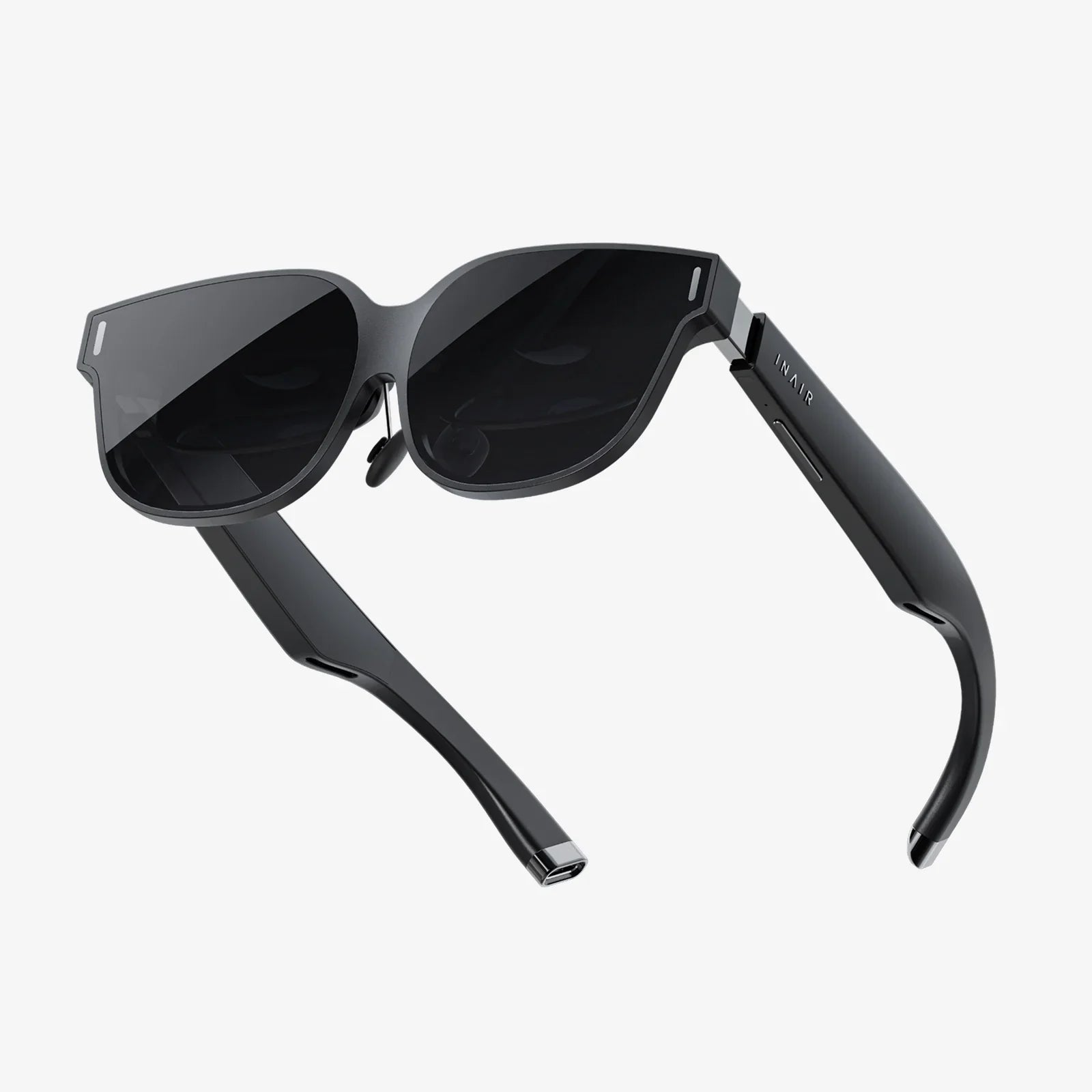
Perhaps the most significant leap will come from smart glasses, finally maturing into a socially acceptable and genuinely useful platform. They will serve as our overlay to the physical world, projecting contextual information—navigation, messages, product details—onto our field of vision. This represents the true beginning of the ubiquitous computing era, where information is available at a glance without the need to look down at a screen.
The Invisible Interface: How We Will Interact
As devices become smaller and more integrated, the clunky touchscreens of today will become increasingly impractical. The future interface of wearables will be largely invisible, leveraging a combination of advanced technologies.
Voice control, powered by ever-improving natural language processing AI, will become the primary command modality. We will converse with our wearables as naturally as with another person, asking for data, controlling smart home devices, and dictating messages hands-free.
Gesture recognition will allow for subtle, private interactions. A flick of the wrist or a pinch of the fingers could answer a call, control music playback, or scroll through information projected by smart glasses. This enables control without needing to vocalize commands in public settings.
The most profound shift will be toward silent, thought-based interfaces through Brain-Computer Interfaces (BCIs). While still in early stages, non-invasive BCIs, often in the form of headbands or integrated into headphones, are already demonstrating the ability to detect focus, meditation states, and intent. The long-term potential is a wearable that can be controlled by thought alone, helping to restore function to those with disabilities and ultimately providing a new, direct channel for human-computer interaction.
Finally, these devices will increasingly use predictive AI and context-aware computing. They will learn our routines and anticipate our needs, proactively presenting the right information at the right time without being asked. Your ecosystem will know you're heading to the gym and automatically queue your workout playlist and start tracking your reps, or sense a stressful heart rate pattern and suggest a breathing exercise.
The Data Revolution: From Quantified Self to Qualified Existence
The sheer volume and quality of data generated by this future wearable ecosystem will be staggering. We will move far beyond step counts and sleep scores into a new paradigm of hyper-personalized, predictive, and preventative health and wellness.
The focus will shift from mere data collection to actionable insight. AI will act as a personal health analyst, continuously sifting through streams of biometric, environmental, and behavioral data. It won't just tell you you had a bad night's sleep; it will cross-reference your sleep data with your caffeine intake, stress levels, and evening screen time to provide a probable cause and a concrete suggestion for improvement.
This will give rise to true predictive health. By establishing ultra-detailed baselines for each individual, these systems will be able to detect subtle, pathological deviations long before they manifest as noticeable symptoms. An algorithm might detect a tiny, recurring irregularity in heart rhythm patterns indicative of atrial fibrillation risk, or a gradual change in neurological tremor that could suggest the early onset of a condition. This shifts the medical paradigm from reactive treatment to proactive prevention, potentially saving countless lives and reducing healthcare burdens.
This deep, personal data will also fuel hyper-personalized recommendations. Your wearable ecosystem will know precisely which type and duration of exercise optimizes your mental clarity, which foods disrupt your sleep, and what time of day you are most productive. It will become a personalized coach for your entire life, offering tailored advice on everything from nutrition and fitness to cognitive performance and mental well-being.
The Inevitable Challenges: Privacy, Equity, and the Human Divide
This technologically utopian vision is not without its profound risks and ethical dilemmas. The path forward must be navigated with careful consideration for the societal implications.
The privacy and security of intimate biometric data represent the single greatest challenge. This data is arguably the most personal information that can exist—a digital readout of your body and mind. Who owns this data? You? The device manufacturer? Your insurance company? Robust, transparent, and user-centric data governance frameworks must be established. Encryption must be unbreakable, and users must have ultimate control over how their data is used and shared. The potential for discrimination by employers or insurers based on this data is a terrifying possibility that must be preemptively legislated against.
This leads to the threat of a new digital and biological divide. Will these life-enhancing and potentially life-saving technologies be accessible to all, or will they become luxury items that exacerbate existing inequalities? If a wearable can detect cancer early or significantly enhance cognitive function, a society where only the wealthy have access creates a frightening future of biological castes. Ensuring equitable access is paramount to preventing a dystopian outcome.
There is also a psychological risk: the quantified life versus the qualified life. An over-reliance on data could lead to heightened health anxiety (cyberchondria) or a disconnection from our own innate bodily senses. We must avoid becoming slaves to the metrics, remembering that the goal of this technology is to enhance human experience, not to replace intuition, lived experience, and the simple joy of being present in a moment that isn't being tracked, analyzed, and scored.
The Seamless Integration: The End of the Device and the Beginning of the Platform
The ultimate endgame for wearables is not better gadgets, but their eventual disappearance. The goal is ambient computing, where technology recedes into the background of our lives, woven into our clothing, our accessories, and our environment. The device itself becomes irrelevant; what matters is the seamless flow of information and the enhancement it provides.
This future wearable ecosystem will function as a central platform, a bridge between our biological selves and the digital world. It will be the primary way we interact with the Internet of Things (IoT), controlling our homes, our vehicles, and our cities with a gesture, a word, or a thought. It will be our guardian, continuously monitoring our well-being and our environment for threats like pollutants or extreme UV exposure. It will be our guide, enhancing our perception and cognition as we navigate an increasingly complex world.
We are moving toward a new form of symbiosis, not man versus machine, but man enhanced by machine. This partnership will empower us to understand ourselves with unprecedented depth, to stave off disease, to expand our cognitive and physical capabilities, and to interact with our world in richer, more meaningful ways. The wristwatch was just the starting line. The real race—to weave technology into the very fabric of human existence—has just begun.
The next time you glance at your wrist for a notification, remember that the true breakthrough won't be a sharper screen or a longer battery life; it will be the moment the technology itself fades from view, leaving behind only its profound and empowering effect on your life, silently working in the background to make you healthier, safer, and more connected to the world than you ever thought possible.
Share:
Virtual Reality Goggles: A Journey Beyond the Screen and Into the Future
Virtual Reality Goggles: A Journey Beyond the Screen and Into the Future