


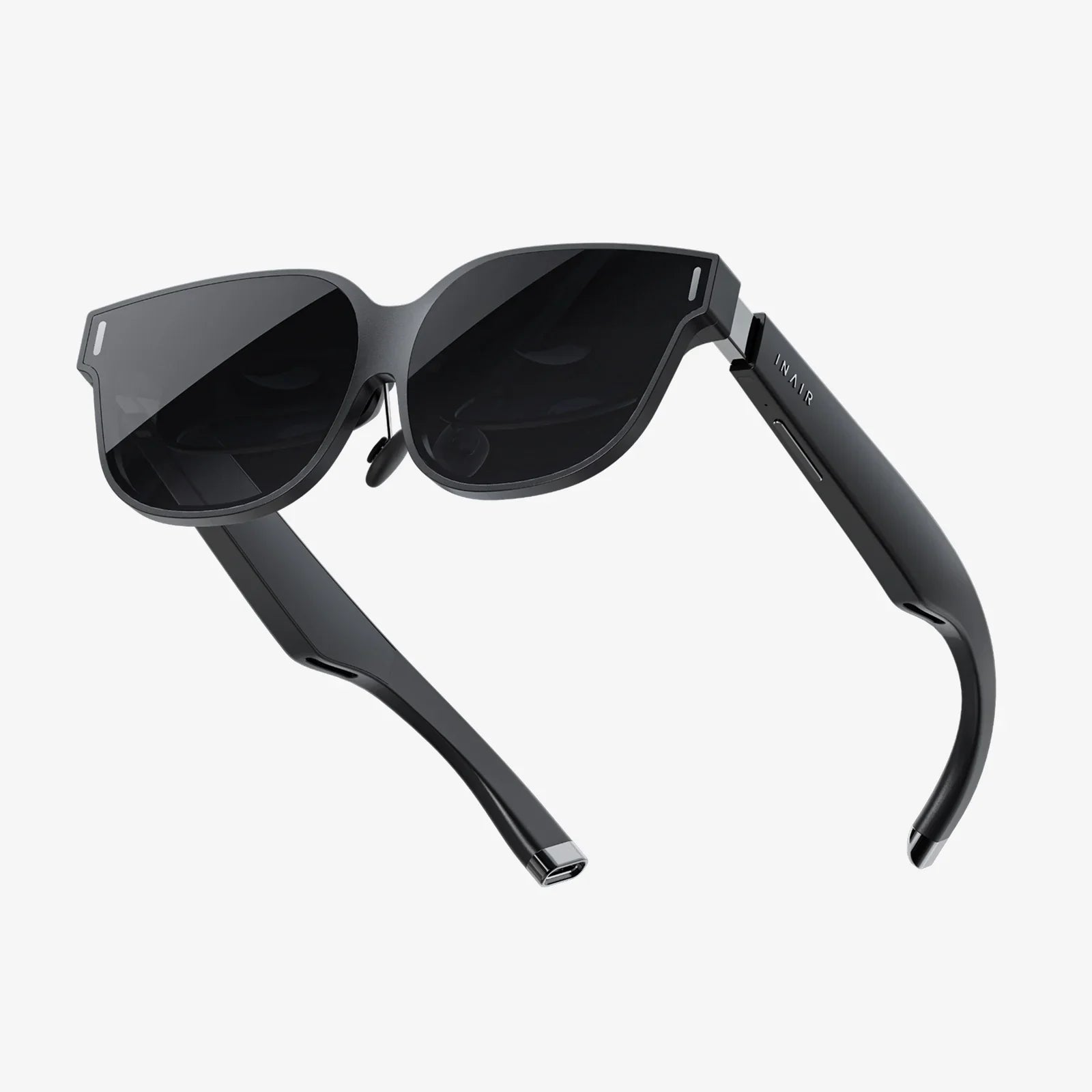
Imagine slipping on a pair of sleek, futuristic eyewear and, in an instant, being transported. The familiar confines of your room dissolve, replaced by the vertiginous peak of a mountain, the bustling deck of a starship, or the hushed reverence of a ancient, digital museum. This is the profound and paradigm-shifting promise of virtual reality goggles, a technology that is not just evolving our entertainment but is fundamentally reshaping the human experience, blurring the lines between the physical and the digital with breathtaking speed and profound implications.
The Architectural Marvel: Deconstructing the Portal
At first glance, a modern headset appears as a single, cohesive unit. Yet, within its streamlined housing lies a symphony of sophisticated technology working in perfect harmony to craft a believable illusion. Understanding these core components is key to appreciating the magic they create.
The Eyes of the Machine: Advanced Display Systems
The primary gateway into a virtual world is the display. Unlike a television or monitor, which is viewed from a distance, these screens are mere centimeters from the user's eyes. They are typically high-resolution, fast-refresh-rate panels, often one for each eye, providing a stereoscopic 3D effect that is the foundation of depth perception in VR. The pursuit of visual fidelity is relentless, with advancements like micro-OLED technology offering unparalleled pixel density and contrast, making the dreaded "screen door effect" a relic of the past. The goal is nothing less than retinal resolution—a clarity so sharp that the human eye cannot distinguish individual pixels, cementing the illusion of reality.
The Mind of the Operation: Precision Tracking and Sensors
A static image is not an experience. The feeling of presence—the undeniable sensation of being somewhere else—is generated by the headset's ability to track your every movement with sub-millimeter accuracy. This is achieved through a complex array of internal sensors:
- Inertial Measurement Units (IMUs): These include gyroscopes, accelerometers, and magnetometers that track the rotation and orientation of your head at incredibly high speeds, preventing the disorientation and motion sickness that plagued early systems.
- Outside-In and Inside-Out Tracking: Systems may use external sensors placed around the room (outside-in) or cameras mounted directly on the headset itself (inside-out) to map the physical environment and understand the user's position within it. Inside-out tracking has become the standard for consumer devices, offering greater freedom and ease of setup.
The Bridge to the Body: Controllers and Haptic Feedback
To interact with a virtual world, you need virtual hands. Modern controllers are ergonomic marvels, tracked in 3D space just like the headset. They feature an array of buttons, triggers, thumbsticks, and, most importantly, sophisticated haptic feedback. This technology uses precise vibrations and force feedback to simulate the sensation of touching virtual objects—the recoil of a weapon, the weight of a tool, or the subtle texture of a stone. This tactile layer is crucial for suspending disbelief, transforming a visual spectacle into a tangible interaction.
The Auditory Layer: Spatialized 3D Audio
Sound is half the experience. Cutting-edge audio solutions use head-related transfer function (HRTF) algorithms to simulate 3D spatial sound. In a virtual environment, you can hear an opponent creeping up behind you, a bird chirping high in a digital tree to your left, or the echo of your voice in a vast cavern. This auditory immersion is as critical as the visual; it completes the sensory bubble, making the virtual space feel alive and consistent.
A Universe of Applications: Far Beyond Gaming
While gaming provided the initial commercial thrust for VR, the applications for this technology now extend into nearly every facet of professional and personal life, proving its utility as a general-purpose computing platform.
Revolutionizing Education and Training
Virtual reality goggles are becoming the most powerful teaching tool since the invention of the printing press. Imagine:
- Medical students performing intricate virtual surgeries on detailed anatomical models, making mistakes without consequences.
- History students walking through a meticulously reconstructed ancient Rome, witnessing the grandeur of the Forum firsthand.
- Mechanics trainees taking apart and reassembling complex engine models, guided by interactive holograms.
- Corporate employees practicing public speaking in front of a virtual audience or navigating difficult conversation simulations.
This experiential learning leads to significantly higher knowledge retention and competency compared to traditional methods.
Transforming Healthcare and Therapy
The therapeutic potential of VR is staggering. It is being used for:
- Exposure Therapy: Helping patients with phobias (fear of heights, flying, spiders) confront their triggers in a safe, controlled, and gradual manner.
- Pain Management: Immersive experiences can distract the brain from chronic pain or the intense discomfort of wound care and physical therapy, reducing the reliance on pharmaceuticals.
- Cognitive Rehabilitation: Assisting stroke victims and those with brain injuries in relearning motor skills and navigating virtual environments to rebuild neural pathways.
- Surgical Planning: Allowing surgeons to step inside a 3D model of a patient's anatomy from a scan, planning complex procedures with unprecedented insight.
Redefining Social Connection and Remote Work
Virtual reality offers a powerful antidote to the isolation of remote work and the flatness of video calls. Social VR platforms allow colleagues from across the globe to meet in a shared virtual office, brainstorming around a whiteboard, examining 3D models together, and interacting with natural body language and avatars. This sense of "co-presence"—feeling like you are truly in a room with others—fosters collaboration and camaraderie in a way two-dimensional screens simply cannot match. It promises a future where distance is no longer a barrier to meaningful, productive interaction.
Unleashing Creativity and Design
For artists, architects, and designers, VR is a revolutionary canvas. Tools exist that allow creators to "paint" in three dimensions, sculpt virtual clay with their hands, or design buildings at a 1:1 scale, walking through their creations before a single brick is laid. This embodied design process unlocks new forms of creativity and intuition, moving creation from a screen-based abstraction into a tangible, inhabitable space.
Navigating the Uncharted: Challenges and Ethical Considerations
This powerful technology does not arrive without significant questions and challenges that society must grapple with.
The Physical and Psychological Realm
Prolonged use can lead to eyestrain, simulator sickness for some users, and a phenomenon known as "VR fatigue." Furthermore, the psychological effects of spending significant time in idealized virtual worlds are not fully understood. Issues of dissociation, addiction, and the potential for neglecting real-world relationships and responsibilities are areas requiring ongoing research and user education.
The Data Privacy Abyss
Headsets are data collection powerhouses. They can track precise eye movement (gaze), body movement, vocal inflections, and even biometric responses like heart rate. This data is incredibly valuable and deeply personal. Who owns this data? How is it used? Could it be used for targeted advertising or, more nefariously, manipulation? Robust, transparent data privacy frameworks are arguably the single biggest hurdle to mainstream, trusted adoption.
The Societal Impact: Accessibility and the Digital Divide
There is a real risk that VR could exacerbate existing social and economic inequalities. High-quality equipment and the powerful computing hardware needed to run it remain expensive. If crucial areas of life—education, work, socializing—begin to migrate into virtual spaces, those without access could be left at a severe disadvantage, creating a new kind of digital divide.
The Horizon Beckons: The Future Worn on Our Faces
The trajectory of VR is moving towards greater integration with our lives and our biology. The bulky, wired headsets of today are giving way to smaller, wireless, and more powerful standalone devices. The ultimate goal is a pair of glasses that are indistinguishable from regular eyewear, yet capable of overlaying rich digital information onto the real world (augmented reality) or replacing it entirely at a moment's notice. This concept, often called the "metaverse," envisions a persistent, interconnected network of virtual spaces that becomes a new layer of reality for work, play, and socializing.
Further out, research into neural interfaces suggests a future where we may bypass screens and controllers entirely, interacting with virtual environments through thought alone. While this sounds like the realm of science fiction, rapid advances in brain-computer interfaces indicate that this could be the ultimate form of immersion, fundamentally challenging our concepts of reality and self.
The journey of virtual reality goggles is far from over; in many ways, it has just begun. They are more than a piece of hardware; they are a key, a vehicle, and a canvas. They represent humanity's enduring desire to explore, create, and connect, now unshackled from the constraints of the physical world. The question is no longer if this technology will change our world, but how we will choose to shape this powerful tool to build a future that is more immersive, empathetic, and extraordinary for everyone. The portal is open, and the next great adventure awaits, just a pair of goggles away.
Share:
Future of Wearables: Beyond the Wrist, Into the Fabric of Life
Future of Wearables: Beyond the Wrist, Into the Fabric of Life