


Imagine a world where your clothing monitors your health, your contact lens connects you to the digital universe, and a subtle interface on your skin allows you to control your environment with a thought. This isn't a scene from a science fiction novel; it is the tangible, rapidly approaching reality of future types of wearable technology. We are moving beyond the wrist, beyond the screen, and beyond mere convenience into an era where technology integrates seamlessly with the human body, augmenting our abilities, safeguarding our health, and redefining the very fabric of human experience. The next wave of wearables promises to be invisible, intuitive, and intimately connected to our biological selves, transforming us from consumers of technology into integrated hybrids of biology and machine.
The Second Skin: Epidermal Electronics and Bio-Integrated Sensors
The most profound shift in wearable technology will be its transition from something we wear to something we are. This future is being built on the foundation of epidermal electronics—ultra-thin, flexible patches that adhere to the skin like a temporary tattoo. These patches will house a sophisticated array of sensors, processors, and wireless communication systems, powered by flexible batteries or even energy harvested from the body's own heat or movement.
Their applications are staggering. Imagine a continuous, clinical-grade health monitor that tracks blood glucose levels without a single pinprick, measures hydration and electrolyte balance for athletes, or monitors cardiac activity with the precision of an EKG machine, all from a nearly invisible patch on the chest or arm. This technology will move healthcare from reactive to profoundly predictive, alerting users and their physicians to potential health issues long before they become critical. For chronic disease management, it will be nothing short of revolutionary, offering freedom from constant finger-sticks and cumbersome devices while providing a rich, continuous stream of data for personalized treatment plans.
Woven Intelligence: The Rise of Smart Fabrics and E-Textiles
While epidermal electronics stick to us, the next layer of future wearables will be woven into the very clothes we wear. Smart fabrics, or e-textiles, integrate conductive threads and micro-sized sensors directly into garments, turning a simple shirt, pair of socks, or even a baseball cap into a powerful data-gathering and interactive platform.
An athlete's shirt could provide real-time feedback on running form, muscle exertion, and breathing efficiency. For industrial workers, a uniform could monitor exposure to toxic gases or extreme temperatures, sending alerts to the wearer and their supervisor if dangerous levels are detected. Beyond sensing, e-textiles will also incorporate adaptive functionality. Jackets could automatically adjust their insulation based on the external temperature and the wearer's body heat. Clothing could incorporate subtle haptic feedback for navigation, gently pulsing on the left shoulder to indicate a turn, eliminating the need to look at a phone while walking or cycling.
The ultimate goal is ambient computing—technology that serves us without demanding our attention. Our clothing, the most universal human interface, will become our primary, yet most unobtrusive, portal to a digitally-augmented world.
Augmenting Vision: The Next Generation of Smart Glasses and Contact Lenses
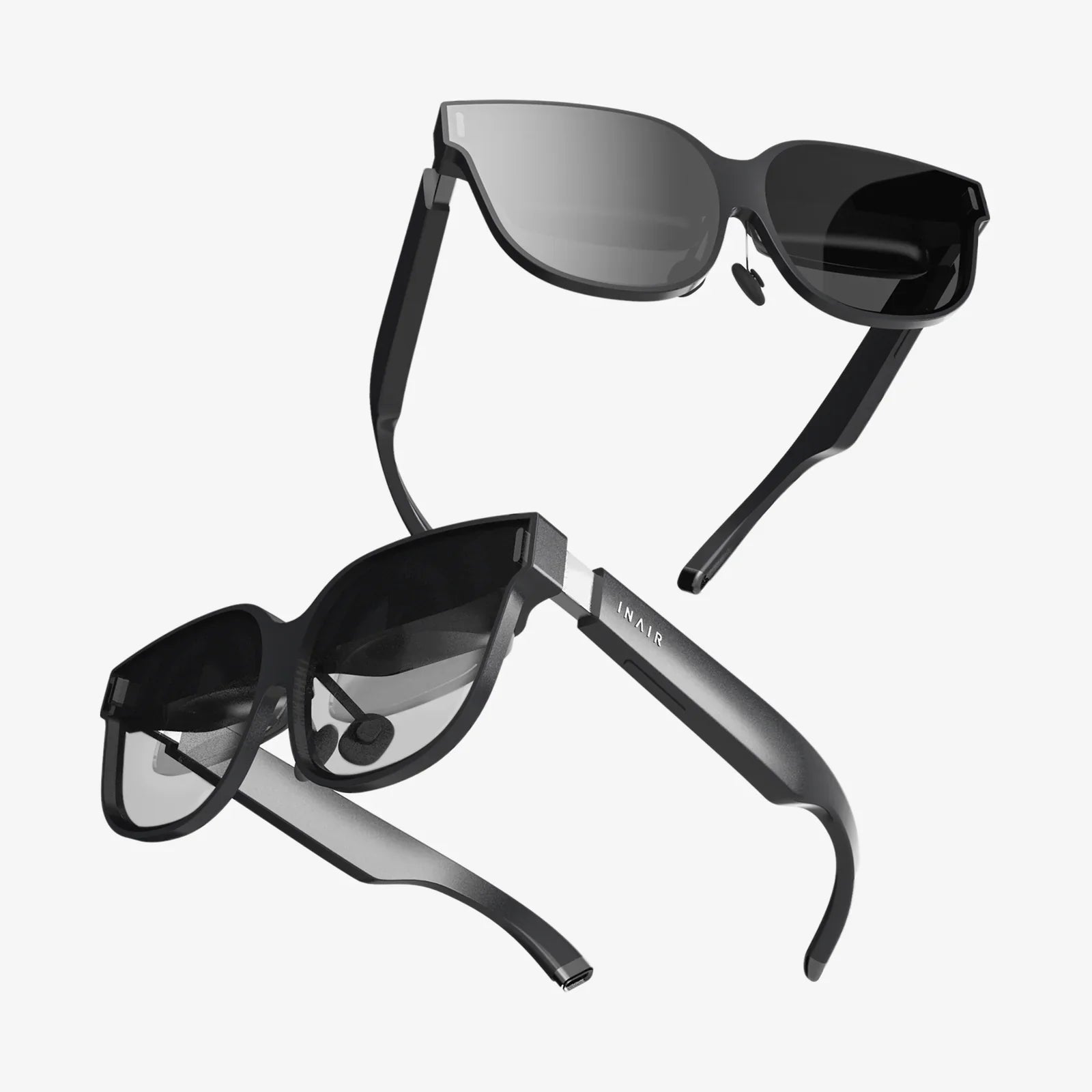
The quest for a perfect augmented reality (AR) interface has long focused on glasses, but future iterations will be far more sophisticated and socially acceptable than the bulky prototypes of today. The future types of wearable technology for our eyes will be lightweight, stylish, and indistinguishable from regular eyewear. They will project high-resolution, context-aware information onto our field of vision, overlaying digital information onto the physical world.
A mechanic could see a wiring diagram superimposed on the engine they are repairing. A traveler could see historical facts and translations floating beside a monument. A medical student could practice procedures on a virtual overlay. The key will be intuitive control, likely through a combination of voice commands, subtle gesture recognition, and eventually, neural inputs.
Beyond glasses lies an even more integrated future: smart contact lenses. Developed by major research institutions, these lenses aim to embed micro-scale electronics, including displays and sensors, onto a soft, biocompatible lens. The initial application is, again, medical—continuous, non-invasive glucose monitoring for diabetics via tears. But the long-term vision is breathtaking: a contact lens that can zoom in on distant objects, display information directly onto the retina, or record video with a blink. This would represent the ultimate convergence of the human body and the digital information sphere, making the smartphone screen obsolete.
Hearing More: Advanced Auditory Wearables
The humble earbud is evolving into a powerful wearable computer for the ear, or an "hearable." Future hearables will do far more than play music and take calls. They will act as sophisticated health monitors, tracking heart rate and core body temperature through the ear canal, a highly accurate location for such measurements. They will incorporate advanced active noise cancellation that can be context-aware, perhaps mutating the roar of a city street into a gentle hum while still allowing the sound of a car horn or a person calling your name to come through clearly.
They will also offer real-time language translation, functioning like a universal translator from science fiction, allowing for seamless conversation between two people speaking different languages. Furthermore, with integrated AI assistants, they will provide hyper-contextual information audibly, telling you the name of the song playing in a café or summarizing the headlines as you get ready in the morning, all without requiring you to look at a screen. The ear, as a private and always-available channel to the brain, is poised to become a primary interface for the flow of personalized information.
Direct Lines to the Brain: Neural Interfaces and Brain-Computer Integration
The most futuristic and potentially disruptive category of wearable technology involves interfacing directly with the human nervous system. Non-invasive neural interfaces, often in the form of headbands or caps embedded with electrodes, are already allowing users to control video games, drones, and software with their brainwaves. This technology, known as electroencephalography (EEG), is rapidly advancing.
The future of neural wearables lies in higher-resolution readings and more sophisticated algorithms capable of interpreting intent. This could lead to control schemes for our personal devices that feel telepathic—changing a song on your playlist by merely thinking of the next track, or composing an email without typing a word. For individuals with paralysis or locked-in syndrome, this technology could restore the ability to communicate and interact with the world, representing a monumental leap in assistive technology.
While truly invasive brain-computer interfaces (BCIs) implanted in the brain fall more under the category of "implantable" rather than "wearable" tech, they represent the logical endpoint of this trajectory: a complete fusion of human cognition and machine intelligence.
The Challenges on the Horizon: Privacy, Security, and the Human Element
This deeply integrated technological future does not arrive without significant challenges. The most pressing concern is data. A wearable that reads your blood sugar, brainwaves, and location generates an unimaginably intimate portrait of your life. Who owns this data? How is it secured? The potential for hacking is no longer just about stolen credit cards; it could mean the manipulation of a person's medical data or even their sensory input. Robust encryption and clear, transparent data governance policies will be non-negotiable.
Furthermore, there is the human element. Will constant augmentation lead to new forms of digital dependency or inequality? Will we be able to disconnect, or will the pressure to be always-on and always-optimized become overwhelming? The design of these technologies must include built-in respect for human psychology, offering users full control over their connectivity and data sharing. The goal should be augmentation, not replacement, of the human experience.
The journey of wearable technology is a journey inward, towards a more symbiotic relationship with our tools. We are building a future where technology sheds its clunky, external form to become a seamless part of us, enhancing our health, expanding our senses, and unlocking potentials within ourselves we are only beginning to imagine. The line between user and device is set to blur into obscurity, heralding a new chapter in human evolution defined not by what we carry, but by what we become.
Share:
ConnectWise Automate Desktop Client: The Ultimate Guide to Unlocking Its Full Potential
Are Wearables Worth It? A Deep Dive Into the Data-Driven Life