


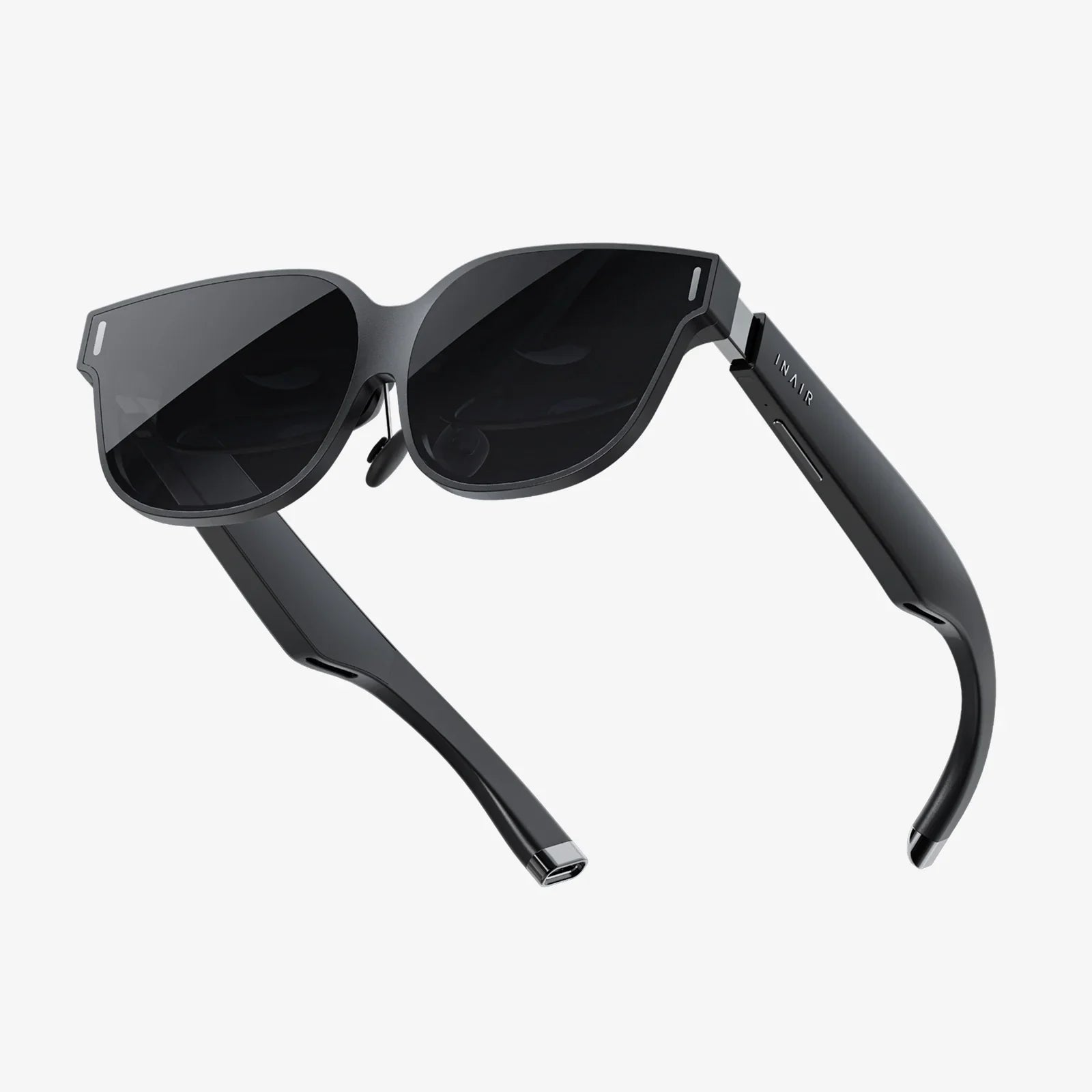
Imagine a world where the boundaries between the digital and the physical dissolve, where you can walk with dinosaurs, design skyscrapers with a wave of your hand, or sit across from a loved one who is continents away, all from your living room. This is not a distant dream; it is the imminent future being unlocked by the latest generation of futuristic VR goggles. These devices are rapidly evolving from clunky novelty gadgets into sleek, powerful portals, promising to revolutionize every facet of our existence, from how we work and learn to how we connect and escape. The journey into this new reality is beginning, and it is more profound and disruptive than anyone could have predicted.
The Architectural Leap: From Bulky Headset to Seamless Interface
The first and most obvious evolution is in the very form of the hardware. Early iterations were often cumbersome, wired affairs that tethered users not just to a powerful computer, but to a specific physical location. Futuristic VR goggles are shedding this skin. Advances in materials science, micro-optics, and miniaturization are leading to devices that are significantly lighter, more comfortable, and increasingly wireless. The goal is a pair of goggles that feel as natural to wear as a pair of sunglasses, enabling all-day use without the fatigue and isolation of previous models. This shift is critical for moving VR from a dedicated ‘activity’ into a persistent layer over our daily lives.
Seeing the Unseeable: Breakthroughs in Visual Fidelity
At the heart of the immersive experience is the display. The screen-door effect—that faint grid of lines that reminded users they were looking at a screen—is becoming a relic of the past. Futuristic VR goggles are employing ultra-high-resolution micro-OLED and similar displays, pushing pixel densities to levels where the human eye can no longer distinguish individual pixels. This creates a crystal-clear image that is crucial for believability. Furthermore, High Dynamic Range (HDR) technology is being integrated, providing a much wider range of contrast and color. This means deeper blacks, brighter whites, and a visual richness that more accurately mirrors the real world, making virtual sunsets feel warm and caverns feel authentically dark and mysterious.
The Sound of Reality: Immersive 3D Audio
Immersion is not solely a visual phenomenon. True presence—the undeniable feeling of ‘being there’—is heavily dependent on accurate spatial audio. Futuristic VR goggles are incorporating sophisticated head-related transfer function (HRTF) algorithms to simulate 3D soundscapes. This means that if a virtual bee buzzes around your head, the sound will accurately move from your right ear to your left ear and even change in pitch as it circles. This auditory precision is not just for games; it allows for more natural conversations in social VR spaces, where you can tell who is speaking in a group based on the direction of their voice, just like in a real room.
Beyond the Controller: The Rise of Natural Input
The clunky handheld controllers of yesterday are giving way to more intuitive and powerful methods of interaction. Inside-out tracking, using a constellation of cameras on the goggles themselves, maps the physical environment and tracks the user's movement within it without external sensors. This paves the way for:
- High-Fidelity Hand Tracking: Cameras and machine learning algorithms now allow the goggles to see and interpret your hands with remarkable accuracy. You can push virtual buttons, manipulate digital objects with precise finger movements, and communicate through natural gestures, making the technology feel like a direct extension of your body.
- Eye-Tracking: This is a game-changer. By knowing precisely where you are looking, the system can enable Foveated Rendering—a technique that renders the area in your direct focus in high detail while subtly reducing the detail in your peripheral vision. This massively reduces the computational power needed, allowing for more complex graphics without sacrificing performance or requiring heavier hardware.
- Emerging Biometrics: Prototypes are exploring the integration of sensors that can read facial expressions, muscle twitches, and even brainwave patterns (via non-invasive electroencephalography). This could lead to interfaces controlled by thought or emotion, and avatars that perfectly mirror your real-time expressions, conveying subtle nuances of feeling that are lost in today's digital interactions.
Blending Worlds: The Path to Augmented and Mixed Reality
The most significant leap may not be into fully virtual worlds, but into ones that blend with our own. Many futuristic VR goggles are, in fact, Mixed Reality (MR) devices. Using high-resolution passthrough camera technology, they can display a live video feed of your actual surroundings and then seamlessly overlay digital content onto it. This transforms the device from an escape pod into a transformative tool. You could have multiple large virtual screens floating around your physical desk, examine a life-sized 3D model of a new car engine on your garage floor, or play a game where alien creatures appear to be hiding behind your actual sofa. This MR capability is the bridge that will integrate these powerful computing platforms into our everyday workflows and play.
The Software Revolution: Building the Metaverse
Hardware is nothing without software. The vision for these futuristic VR goggles is underpinned by the development of persistent, interconnected virtual spaces—often colloquially grouped under the term ‘metaverse.’ This is not a single app, but a constellation of platforms and experiences:
- Social Connection: Platforms are evolving into vibrant virtual townsquares, concert halls, and meeting rooms where your avatar, empowered by eye and face tracking, can interact with others with unprecedented realism and empathy.
- Enterprise and Design: Architects walk clients through unbuilt structures, surgeons practice complex procedures on detailed holographic anatomies, and factory floor managers visualize production line data floating in the air before them.
- Education and Training: Students can take a field trip to ancient Rome or the International Space Station, experiencing history and science rather than just reading about it. Dangerous or expensive training scenarios, from firefighting to aircraft piloting, can be rehearsed safely and repeatedly.
The Human Factor: Societal Impact and Ethical Considerations
Such a powerful technology does not arrive without profound questions. The widespread adoption of futuristic VR goggles will challenge our societal norms and force us to confront new ethical dilemmas.
- The Privacy Paradigm: These devices are data collection engines. They have the potential to record not just what you look at, but how long you look at it, your physiological responses, the precise layout of your home, and even your unconscious gestures. Who owns this data? How is it used and secured? Establishing robust ethical frameworks and regulations is paramount.
- The Reality Gap: As experiences become hyper-realistic, the line between virtual and actual consequences may blur. Issues of virtual harassment could carry very real psychological weight. Societies will need to develop new norms and possibly even laws to govern behavior in these blended spaces.
- Access and Inequality: There is a risk that this technology could become a new frontier for the digital divide. Will access to transformative educational, professional, and social experiences in VR become a privilege for the wealthy, creating a new class of ‘real-world’ and ‘virtual-world’ haves and have-nots?
A Glimpse Over the Horizon: What Comes Next?
The current pace of innovation suggests the goggles of tomorrow will be almost unrecognizable. Research is already pointing to technologies like:
- Varifocal Displays: Systems that dynamically adjust focus based on where you are looking, solving the vergence-accommodation conflict that can cause eye strain and reminding your brain that virtual objects have real depth.
- Haptic Feedback Suits and Gloves: Moving beyond visual and auditory immersion to full-body tactile sensation, allowing you to feel the virtual rain on your skin or the texture of a digital stone wall.
- Neural Interfaces: A longer-term frontier involves direct communication between the brain and the digital world, potentially bypassing physical interfaces altogether to create experiences that are indistinguishable from memory or dream.
The ultimate promise of futuristic VR goggles is not to replace our reality, but to expand it. They offer a canvas for human creativity, a tool for unparalleled understanding, and a bridge for deeper connection across vast distances. They hold the potential to democratize experience, giving anyone access to places, skills, and perspectives previously reserved for a few. While the challenges are significant and demand our careful attention, the opportunity is breathtaking. We are not just putting on a new device; we are stepping into a new dimension of human experience, and it is a journey that is only just beginning. The portal is opening; the only question is, what will we create on the other side?
Share:
Who Invented AR? The Untold Story of Augmented Reality's Pioneers
Smart Glasses for Small Faces: The Ultimate Guide to Finding a Perfect Tech Fit