


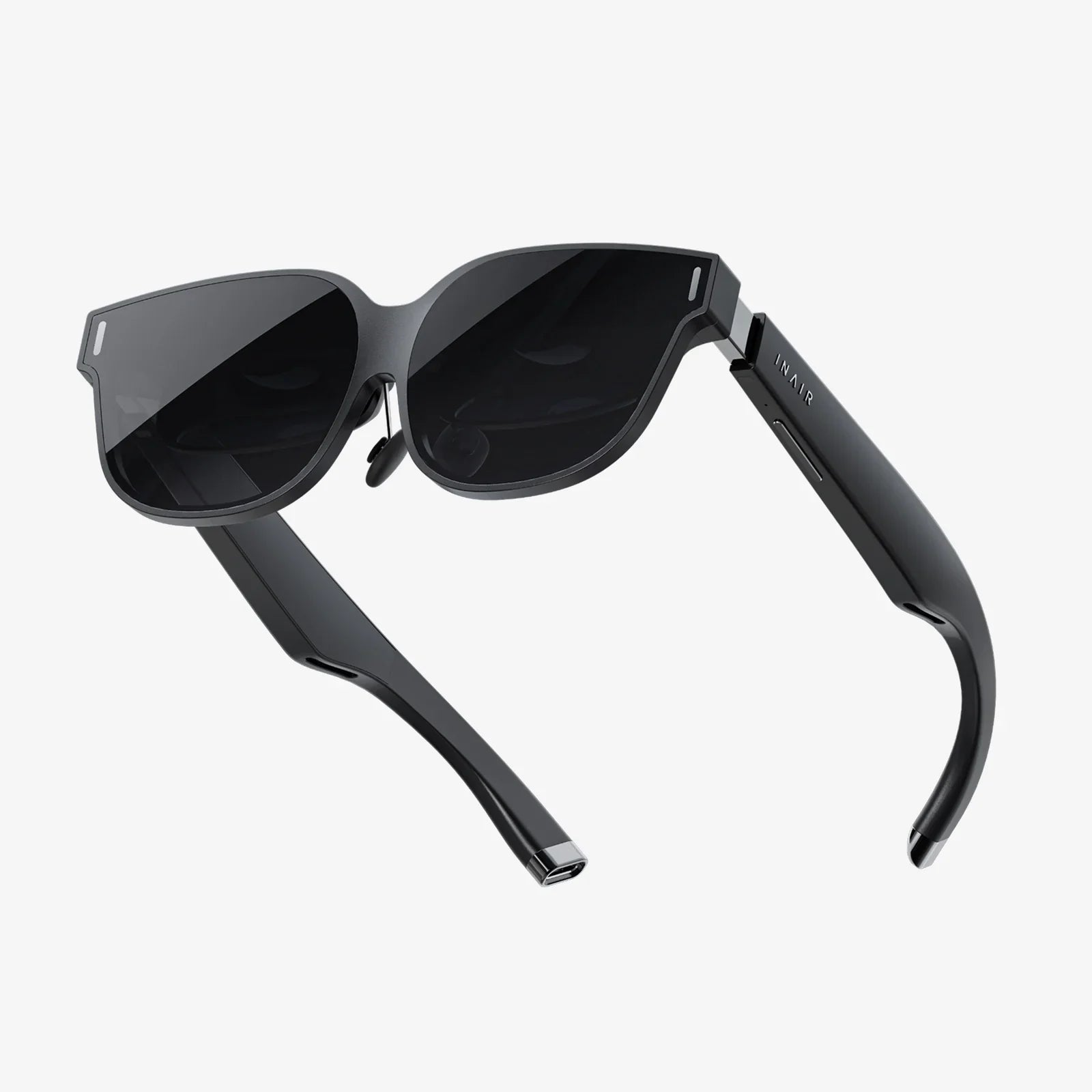
You’ve probably used it to catch a Pikachu in your local park or to see how a new sofa might look in your living room, but have you ever stopped to wonder who first dreamed of blending the digital and physical worlds? The story of who invented augmented reality is a captivating tale of science fiction made fact, a puzzle where the pieces were assembled not by a single genius but by a series of brilliant, often overlooked, pioneers. It's a journey that stretches back further than you might imagine, long before the smartphones in our pockets could make the magic happen. Unraveling this history reveals not just a timeline of technological breakthroughs, but a profound shift in how humanity perceives and interacts with information itself.
The Seminal Visionary: Ivan Sutherland's Ultimate Display
While the term "augmented reality" would not be coined for another two decades, the foundational work that made it all possible was undeniably the creation of Ivan Sutherland. In 1968, Sutherland, a computer scientist, unveiled what is widely considered the first head-mounted display (HMD) system, a device so monumental it earned the name "The Sword of Damocles." This was not AR as we know it today; it was a virtual wireframe world, a stark, geometric reality generated by a computer and viewed through incredibly primitive hardware. The headset was so heavy it had to be suspended from the ceiling, and the computing power required was immense. Yet, within this crude apparatus lay the DNA of all immersive computing to follow.
Sutherland’s genius was not merely in building the hardware. Two years earlier, in 1966, he had laid the philosophical groundwork with a seminal essay. He described a conceptual "Ultimate Display" that would serve as "a window into a virtual world." This idea—that a computer could generate a reality that was indistinguishable from the real one and that users could interact with it naturally—was nothing short of revolutionary. It established the core ambition that would drive both virtual and augmented reality research for the next half-century. Sutherland didn't just invent a device; he invented the dream.
Coining the Term: Tom Caudell and the Birth of a Industry
The leap from Sutherland’s virtual world to a true augmented one—where digital information is superimposed onto the user’s view of the real world—required a new vision and a new name. That credit goes to Tom Caudell, a former Boeing researcher. In the early 1990s, Caudell and his colleague David Mizell were working on a complex problem for the aerospace giant: simplifying the assembly of aircraft, a process that involved vast, difficult-to-read schematic diagrams and templates.
Caudell and Mizell envisioned a system where workers could wear head-mounted displays that would project digital, animated wiring diagrams and assembly instructions directly onto the physical boards and components in front of them. This would eliminate the need for physical templates and massively reduce errors. It was during this project that Caudell first used the term "augmented reality" to describe this new paradigm of a computer-enhanced view of a real-world task. While their system was a prototype, it was the first practical, industrial application of AR, moving it from a laboratory curiosity to a tool with tangible business value.
The Academic Architect: A Landmark Paper by Ronald Azuma
As the 1990s progressed, research into AR expanded across various universities and labs. However, the field lacked a cohesive definition and a clear framework for what constituted AR. This changed in 1997 with the publication of a landmark survey paper by Ronald Azuma, then a researcher at the University of North Carolina at Chapel Hill.
Azuma’s paper, "A Survey of Augmented Reality," did more than just summarize existing research; it provided the field with its first widely accepted definition. Azuma established three core characteristics that define a true AR system:
- Combines real and virtual: It must seamlessly blend digital content with the real environment.
- Interactive in real time: The digital content must respond and change in sync with the user’s movements and the environment.
- Registered in 3D: The virtual objects must be accurately aligned and anchored to the physical world, appearing as if they truly belong there.
The Unsung Heroes: Key Technological Breakthroughs
Attributing the invention of AR to a single person is impossible because it is a symphony of technologies, each with its own inventors. The creation of viable AR required breakthroughs in numerous fields that had to mature and converge.
Tracking and Registration
The magic of AR—making a digital dinosaur look like it's standing on your coffee table—relies on incredibly precise tracking. This involves knowing the exact position and orientation of the user's viewpoint in real-time. Early pioneers like Steven Feiner, Blair MacIntyre, and others at Columbia University and the University of North Carolina developed complex computer vision algorithms and hybrid tracking systems that used cameras, sensors, and fiducial markers (like QR codes) to solve this "registration problem." Their work in the 1990s and early 2000s made stable, believable AR possible.
Hardware Miniaturization
Ivan Sutherland’s ceiling-mounted display was a far cry from today’s sleek smart glasses. The relentless march of Moore’s Law, driven by thousands of engineers in the semiconductor industry, shrunk processors, sensors, and displays. The invention of the microdisplay, tiny but high-resolution screens, was another critical step. This collective effort in miniaturization over decades is what finally freed AR from the lab and made wearable, untethered devices a reality.
Mobile Computing
The true catalyst for the AR explosion was the smartphone. The modern smartphone is a perfect AR platform, bundling a high-resolution display, a powerful processor, cameras, GPS, accelerometers, and gyroscopes into a single device everyone carries. While Apple, Google, and others created the software platforms (ARKit and ARCore) that democratized mobile AR, they were standing on the shoulders of giants. They integrated the decades of research in tracking, computer vision, and graphics pioneered by the academic and research community.
From Labs to Living Rooms: The Mainstream Moment
The journey of AR into public consciousness has been a series of stepping stones, each one built by different teams for different purposes.
In 1998, SPORTV used a virtual first-down line during an American football broadcast. This was many people’s first exposure to AR-like technology, though it was a broadcast overlay rather than a personal display. Later, industrial and military applications became more common, with companies developing AR systems for complex manufacturing, maintenance, and heads-up displays for fighter pilots.
The cultural zeitgeist truly embraced AR in 2016 with the release of a mobile game that became a global phenomenon. It demonstrated the power of AR to create shared, location-based experiences, getting millions of people out into their neighborhoods to interact with digital creatures overlaid onto their streets and parks. This was the undeniable proof of concept for consumer AR.
A Collaborative Invention: The True Answer
So, who really invented augmented reality? It is not a "who" but a "who and who and who."
- Ivan Sutherland invented the concept of immersive computer graphics and the first HMD, providing the foundational vision and technology.
- Tom Caudell and David Mizell invented the term "augmented reality" and demonstrated its first practical industrial application.
- Ronald Azuma provided the definitive academic framework that defined the field and guided its growth.
- Countless researchers in computer vision, graphics, and hardware miniaturization solved the myriad technical challenges that made AR feasible.
- The smartphone industry created the ubiquitous hardware platform that brought AR to the masses.
It is a story of collaborative genius. A symphony of innovation where theorists, engineers, software developers, and hardware designers each played an indispensable part. There was no single moment of invention, but rather a long, iterative process of discovery and refinement.
Today, as we try on virtual clothes, navigate with arrows on the street, and learn complex tasks with digital instructions, we are interacting with the culmination of this decades-long effort. The story of AR’s invention is still being written, with new pioneers now working on the next frontiers: lightweight AR glasses, neural interfaces, and the ever-elusive but compelling vision of the metaverse. The dream that Ivan Sutherland first dared to imagine is now our shared reality, and its next chapter promises to be even more extraordinary than its past.
From the heavy, ceiling-suspended Sword of Damocles to the powerful computer in your pocket, the evolution of augmented reality is a testament to human imagination and perseverance. The next time you use a filter to place a pair of digital sunglasses on your face or project a constellation chart onto your night sky, remember that you are experiencing the legacy of a whole pantheon of inventors. Their collective vision has permanently altered our reality, weaving a layer of digital information into the very fabric of our daily lives and opening a window to a future limited only by our imagination.
Share:
Best Buy Wearable Technology: A Guide to the Future on Your Wrist
Futuristic VR Goggles Are Redefining Reality and Our Place Within It