


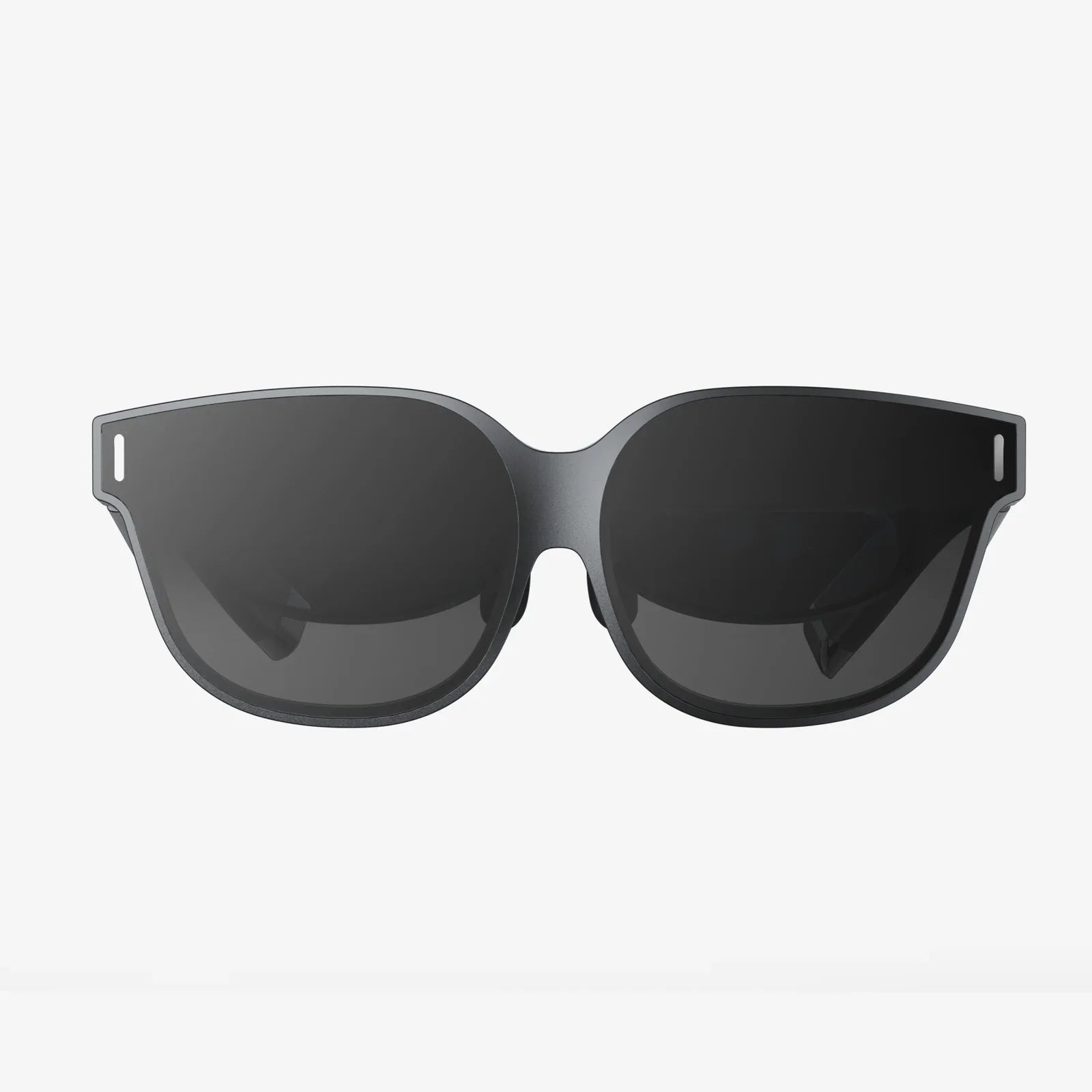
Imagine a world where information doesn't live on a screen in your hand but is seamlessly woven into the fabric of your reality. Where directions float on the street before you, translations are overlaid directly onto foreign menus, and a mechanic can see a schematic superimposed on a broken engine. This is no longer the stuff of science fiction; it is the imminent future being built today, not by a single proprietary device, but by the burgeoning ecosystem of generic smart glasses. This technology is poised to break free from niche markets and become the next major computing platform, fundamentally altering how we work, learn, socialize, and perceive the world around us.
The Architectural Pillars of Modern Eyewear
At their core, generic smart glasses are a sophisticated convergence of several key technologies. Understanding these components is essential to appreciating their capabilities and limitations.
The Display: Your Window to Augmented Reality
The most critical component is the display technology, which projects digital images onto the user's field of view. Several methods dominate the landscape:
- Waveguide Technology: This is often considered the gold standard. It uses microscopic gratings to "bend" light from a projector on the temple of the glasses into the user's eye. This allows for a relatively sleek form factor and a bright, clear image.
- Birdbath Optics: This system uses a beamsplitter and a concave mirror to reflect the image from a micro-display into the eye. It can offer a wide field of view but often results in a slightly bulkier design.
- Curved Mirror Optics: Simpler and more cost-effective, this method uses a small projector and a curved combiner lens to reflect the image. It's a common choice for more basic notification-based devices.
The ultimate goal for all these systems is to achieve optical transparency—allowing the user to see both the real world and the digital overlay with clarity and without obstruction.
Sensing the World: Cameras and Sensors
To interact with and understand the environment, smart glasses are equipped with a suite of sensors. These typically include:
- High-Resolution Cameras: For capturing photos, videos, and, most importantly, for computer vision tasks.
- Depth Sensors (Time-of-Flight or LiDAR): These measure the distance to objects, creating a 3D map of the surroundings. This is crucial for placing digital objects convincingly in physical space.
- Inertial Measurement Units (IMUs): Comprising accelerometers, gyroscopes, and magnetometers, these track the precise movement and orientation of the user's head.
- Ambient Light Sensors: These adjust the brightness of the display based on environmental lighting conditions.
- Microphones: For voice commands and audio capture, often featuring advanced beamforming and noise cancellation.
The Brain: Processing Power and Connectivity
All this data requires significant processing. Higher-end models feature a dedicated System-on-a-Chip (SoC) similar to those found in smartphones, handling complex computer vision and machine learning algorithms on-device. This is vital for low-latency interaction and user privacy, as data doesn't always need to be sent to the cloud. Other models may act as a companion display, leveraging the processing power of a connected smartphone. Connectivity via Wi-Fi, Bluetooth, and increasingly 5G is essential for cloud-based services and real-time data streaming.
Interaction: How We Command the Digital Overlay
Interacting with a screenless interface requires novel input methods:
- Voice Commands: The most natural and hands-free method, powered by intelligent voice assistants.
- Touchpads: A small, discreet touch-sensitive surface on the temple of the glasses for swiping and tapping.
- Gesture Control: Using the onboard cameras to track hand movements near the glasses for a more futuristic, albeit sometimes less precise, control scheme.
- Button Press: Simple, reliable physical buttons for primary functions like photo capture.
A Society Viewed Through a New Lens
The widespread adoption of generic smart glasses will trigger profound societal shifts, presenting a mix of exhilarating possibilities and complex challenges that we must confront proactively.
The Privacy Paradox
This is arguably the most significant hurdle. Devices with always-on cameras and microphones worn in public spaces raise legitimate concerns about surveillance, both corporate and governmental. The concept of consensual interaction becomes paramount. How do we prevent unauthorized recording? Will public spaces need "recording" and "non-recording" zones? Robust digital ethics, clear legislation, and transparent user controls must be developed in parallel with the technology itself. Features like a prominent recording indicator light are a basic but necessary step towards building trust.
The Digital Divide and Accessibility
Smart glasses have the potential to be a great equalizer in terms of accessibility. Real-time translation can break down language barriers, while navigation aids and object recognition can provide unprecedented independence for the visually impaired. However, if the technology remains expensive, it risks creating a new kind of divide: one between those who can afford augmented information and those who cannot. Ensuring these tools are developed with accessibility as a core principle, not an afterthought, is critical.
Shifting Social Norms
Social acceptance will be a gradual process. Engaging with someone who is wearing smart glasses may feel disconcerting at first, akin to talking to someone wearing headphones—are they fully present? Etiquette will evolve. Furthermore, the potential for constant distraction is real. The challenge will be to design interfaces that enhance interaction with the physical world rather than replacing it, promoting augmented reality rather than mediated reality.
Beyond the Hype: Real-World Applications Today
While consumer applications like gaming and social media filters grab headlines, the most impactful use cases for generic smart glasses are currently in enterprise and specialized fields.
Revolutionizing the Industrial Workspace
In factories, warehouses, and on construction sites, smart glasses are boosting efficiency and safety. Technicians can access hands-free manuals and schematics while repairing complex machinery. Warehouse workers receive picking instructions overlaid directly onto their visual field, streamlining logistics. Remote experts can see what an on-site worker sees and provide visual annotations and guidance, reducing travel costs and solving problems faster.
Transforming Healthcare and Medicine
Surgeons can visualize patient data, such as MRI scans, directly on their field of view during procedures without turning away from the operating table. Medical students can learn anatomy through detailed 3D models. Paramedics can receive remote guidance from doctors while attending to an emergency. The potential to improve patient outcomes and enhance medical training is immense.
Enhancing Education and Training
Imagine history students walking through an ancient Roman ruin and seeing a reconstruction of the city overlay the crumbling remains. Mechanics-in-training can practice complex procedures on digital overlays before touching real equipment. This experiential, hands-on learning can deepen understanding and retention in ways textbooks never could.
Empowering Everyday Life
For the general consumer, the promise is a more intuitive and integrated digital life. Navigation arrows appear on the road itself. Recipes hover next to your mixing bowl. You can instantly identify constellations in the night sky or get a subtitled translation of a foreign film poster. The smartphone's pull-to-engage model is replaced by a push-of-information model that is contextually aware and immediately relevant.
The Road Ahead: From Prototype to Paradigm Shift
For generic smart glasses to achieve mass adoption, several technological and design barriers must be overcome. The holy grail remains achieving a form factor that is indistinguishable from traditional eyewear—lightweight, stylish, and with all-day battery life. Advances in micro-LED displays, battery technology, and ultra-low-power processors are steadily progressing toward this goal. Furthermore, the development of a robust and intuitive spatial operating system, a true successor to iOS and Android, is needed to provide a cohesive user experience across different hardware.
The true revolution of generic smart glasses isn't about adding more screens to our lives; it's about making the world itself our interface. It's a shift from looking at a device to looking through a device at an enhanced reality. As the technology sheds its clunky prototypes and evolves into a seamless extension of ourselves, it promises to unlock human potential in ways we are only beginning to imagine, blurring the line between the digital and the physical until it disappears entirely.
Share:
Good AR: How Augmented Reality is Reshaping Our World
Good AR: How Augmented Reality is Reshaping Our World