


Imagine a world where digital information doesn't just live on a screen but is seamlessly woven into the fabric of your reality. Where instructions for assembling furniture appear as glowing holograms right on the pieces in front of you, where historical figures step out of textbooks to tell their stories in your living room, and where a surgeon can see a patient’s vital signs and 3D scans overlaid directly onto their body during an operation. This isn't a distant science fiction fantasy; it's the promise and present reality of good Augmented Reality (AR). The journey from a novel gadget to a genuinely useful, transformative tool is what separates a technological gimmick from a paradigm shift, and that is the very essence of good AR.
Defining the Digital Overlay: What Exactly is Augmented Reality?
At its core, Augmented Reality is a technology that superimposes a computer-generated image, video, or 3D model onto a user's view of the real world, thus providing a composite, enhanced perspective. Unlike Virtual Reality (VR), which creates a completely immersive, digital environment that replaces the real world, AR adds a digital layer on top of it. This crucial distinction means AR is designed to enhance your existing environment, not replace it, making it inherently more accessible and applicable to a vast range of daily tasks and experiences.
The magic of good AR lies in its three fundamental components. First, it requires a robust combination of the physical and digital worlds. This isn't just about putting a filter on a camera feed; it's about creating a believable, interactive fusion. Second, it must offer real-time interaction. The digital elements must respond and adapt to changes in the real-world environment instantaneously. Finally, it must be accurately registered in 3D space. A digital dragon that appears to sit convincingly on your coffee table, occluded by a real-world vase, is a sign of sophisticated AR. When these three elements work in harmony, the user experiences a sense of true immersion, where the digital augmentation feels like a natural part of their world.
The Engine Room: The Core Technologies Powering AR
The seemingly effortless experience of good AR is powered by a complex symphony of hardware and software working in concert. Understanding these components reveals why the technology has only recently begun to reach its potential.
Sensors: The Eyes and Ears
AR devices are packed with an array of sensors that act as their perception system. High-resolution cameras capture the live video feed of the user's surroundings. Depth sensors, like time-of-flight cameras or LiDAR scanners, measure the distance to objects, creating a detailed 3D map of the environment. This map allows digital objects to understand the geometry of the space, enabling them to sit on surfaces, hide behind real objects, and interact with the physical world. Inertial Measurement Units (IMUs), including accelerometers and gyroscopes, track the device's precise orientation and movement, ensuring the digital overlay stays locked in place even as the user moves their head or hand.
Processing: The Brain
The raw data from these sensors is meaningless without immense computational power. This is where processors and sophisticated algorithms take over. Computer vision software analyzes the camera feed to identify flat surfaces (like floors and tables), recognize objects, and even track specific images or locations. Simultaneous Localization and Mapping (SLAM) algorithms are the true heroes, continuously constructing and updating the map of the unknown environment while simultaneously tracking the device's location within it. This is what allows for persistent AR experiences, where a digital annotation left on a machine in a factory remains in the exact same spot for the next shift worker to see.
Displays: The Canvas
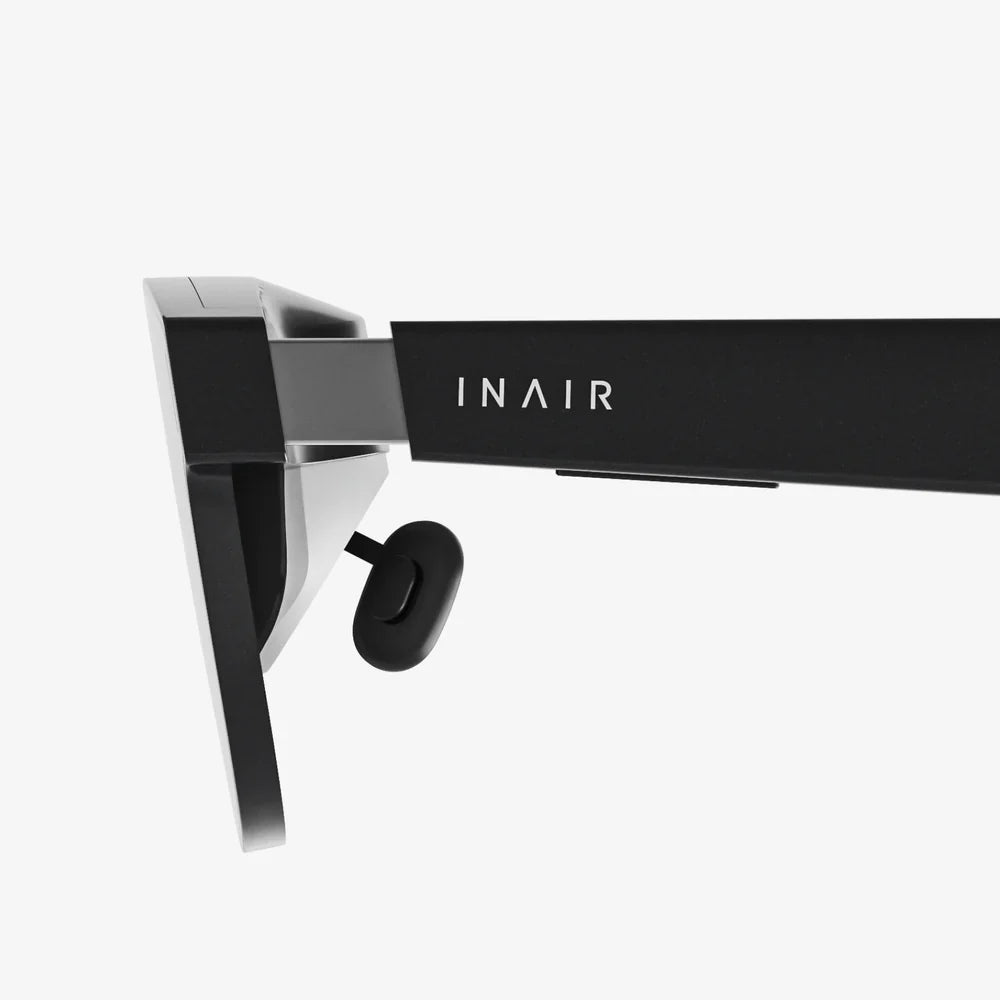
How the digital information is presented to the user is the final, critical piece. Current mainstream AR largely relies on smartphone and tablet screens, using the device's camera to see the world and the screen to display the augmented view. This is known as video see-through AR. The next evolution is in optical see-through displays, most commonly found in smart glasses. These use waveguides or other micro-optical systems to project light directly into the user's eyes, allowing them to see the real world naturally with digital information overlaid. The holy grail is achieving a wide field of view, high resolution, and all-day battery life in a comfortable, socially acceptable form factor—a challenge that continues to drive innovation.
Beyond the Novelty: The Practical Applications of Good AR
While playful filters and games brought AR into the public consciousness, the true value of good AR lies in its profound utility across countless industries. It is moving from a toy to a tool, revolutionizing how we work, learn, and connect.
Revolutionizing Industry and Manufacturing
In industrial settings, good AR is a powerhouse for efficiency, safety, and accuracy. Technicians performing complex repairs can have schematic diagrams, torque specifications, and step-by-step animated instructions overlaid directly onto the equipment they are servicing. This hands-free access to information drastically reduces errors, slashes training time, and improves first-time fix rates. In logistics and warehousing, workers wearing AR glasses can see optimal picking routes and instantly verify order details without looking down at a scanner or clipboard, supercharging fulfillment speed and accuracy. Architects and engineers can project full-scale 3D models of their designs onto empty construction sites, allowing for clash detection and design validation before a single foundation is poured.
Transforming Education and Training
AR has the unique ability to make the abstract tangible and the inaccessible accessible. Imagine a biology student being able to walk around a life-sized, beating human heart, peeling back layers to see the valves and chambers at work. History lessons can be transformed as students explore ancient Roman ruins rebuilt in their classroom. Medical students can practice complex surgical procedures on hyper-realistic virtual patients, gaining invaluable muscle memory and experience without any risk. This experiential learning fosters a deeper understanding and retention of knowledge that textbooks alone cannot provide.
Enhancing Retail and Consumer Experiences
The retail sector is leveraging AR to bridge the gap between online and in-store shopping. The ability to try before you buy has been supercharged. Customers can see how a new sofa would look and fit in their living room, how a pair of glasses frames their face, or how a shade of paint would change the mood of a room—all from their own home. This not only boosts consumer confidence and reduces return rates but also creates engaging, memorable brand interactions. Good AR in retail is about empowering the customer with perfect information, leading to more satisfying purchase decisions.
Redefining Healthcare and Medicine
The stakes in healthcare are incredibly high, and good AR is rising to the challenge. Surgeons can use AR headsets to visualize critical information like patient vitals, ultrasound data, or 3D reconstructions of tumors directly in their line of sight during procedures, eliminating the need to look away at external monitors. This improves precision and reduces cognitive load. AR is also a powerful tool for patient education, helping doctors explain complex conditions and treatment plans visually. Furthermore, it is revolutionizing physical therapy by providing patients with interactive guides for exercises and offering real-time feedback on their form to ensure correct and safe rehabilitation.
The Human Factor: Design Principles for Good AR
Technology alone does not create a good experience; thoughtful design does. Badly designed AR can be disorienting, overwhelming, or simply useless. Several key principles separate good AR from bad.
User-Centricity is Paramount: The digital augmentation must serve a clear, useful purpose for the user. It should solve a problem, answer a question, or provide delight in a meaningful way. AR for AR's sake is a recipe for quick abandonment.
Context is King: The digital content must be relevant to the user's immediate environment and task. An instruction manual appearing in mid-air is helpful; a random animated character is not. Good AR understands the context and provides information that is pertinent to it.
Prioritize Safety and Awareness: Unlike VR, AR users are still present in the real world. Designs must never obstruct a user's view in a way that could create a dangerous situation, like when walking down a street or operating machinery. Visual elements should be carefully placed to complement, not clutter, the user's field of view.
Intuitive Interaction: How users interact with the digital elements should feel natural. This could be through gesture control, voice commands, or a simple tap on a touch surface. The interaction model should be easy to learn and not require the user to think too hard about how to manipulate the interface.
Navigating the Challenges: The Path Forward for AR
Despite its rapid advancement, the widespread adoption of good AR faces several significant hurdles that must be overcome.
Technical Limitations: For optical see-through glasses, the quest for the perfect display continues. Challenges include achieving sunlight-readable brightness, a wide field of view, all-day battery life, and a socially acceptable form factor that people will want to wear for extended periods. Processing power must also continue to increase to handle more complex environments and graphics without generating excessive heat.
Social and Ethical Considerations: The proliferation of always-on cameras and sensors raises legitimate privacy concerns. The concept of digital graffiti—where anyone can leave persistent AR content in public spaces—presents novel challenges for content moderation and property rights. Furthermore, the potential for reality-distorting filters or malicious misinformation overlaid on the real world is a serious issue that society will need to grapple with.
The Digital Divide: As with any advanced technology, there is a risk that AR could exacerbate existing inequalities. Ensuring that the benefits of good AR are accessible to all, not just those who can afford the latest hardware, is a crucial challenge for developers and policymakers alike.
The Invisible Revolution: The Future is Augmented
The ultimate destiny of good AR is not to be a device we put on, but an invisible layer of intelligence integrated into our lives. As the technology matures, we will move towards a world where AR is ambient and contextual, providing information only when and where it is needed, and receding into the background when it is not. The goal is to enhance human capability, not to distract from it. We are moving towards a future where the line between the digital and physical will continue to blur, creating a world rich with information and possibility. This is the promise of good AR: not to escape our reality, but to make it richer, smarter, and more connected than ever before.
The next time you look at a complex piece of machinery, an empty room, or a historical landmark, imagine the invisible layer of knowledge that could be unlocked. The tools to build that world are being forged today, and they promise to change everything about how we live, work, and perceive the reality around us. The age of augmentation is here, and its potential is limited only by our imagination.
Share:
Generic Smart Glasses Are Redefining Our Digital and Physical Realities
Generic Smart Glasses Are Redefining Our Digital and Physical Realities