


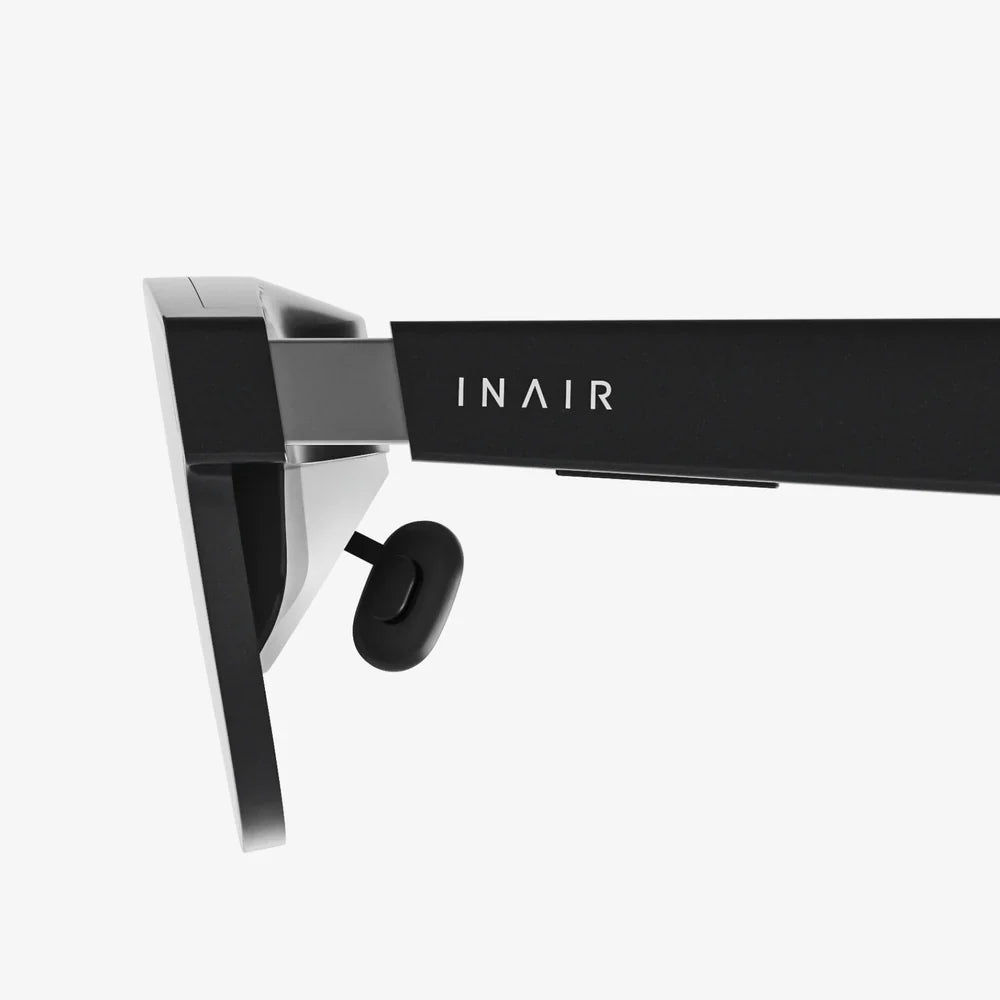
Imagine controlling your entire digital world with a subtle flick of the wrist, a snap of your fingers, or a wave of your hand—no phone to dig out, no screen to tap, no voice command to utter. This is the tantalizing promise of gesture interaction wearable technology, a field that is rapidly evolving from science fiction fantasy into a tangible, market-ready reality. It represents a fundamental shift in the human-computer relationship, moving us away from clunky peripherals and towards a future where our intentions are understood through the most natural language we possess: movement. This isn't just an upgrade; it's a revolution brewing on our wrists, fingers, and even integrated into our clothing, poised to make the interface itself invisible.
Beyond the Touchscreen: The Urgent Need for a New Paradigm
For decades, our primary method of interacting with computers has been defined by indirect manipulation. The mouse, the keyboard, and later, the capacitive touchscreen, all require us to learn their specific language. We've become experts at dragging, clicking, and pinching, but these actions are abstractions. They are not how we interact with the physical world. This paradigm hits a hard wall in many emerging technological contexts. How do you interact with a complex augmented reality overlay while holding a tool? How do you control a device when your hands are dirty, wet, or gloved? How do you issue a quick command without breaking social etiquette by talking to your wrist? Voice control offers a partial solution but falters in noisy environments or when privacy is desired. Gesture interaction wearables elegantly solve these problems by providing a silent, subtle, and always-available input mechanism that feels less like operating a machine and more like an extension of one's own body.
How It Works: The Symphony of Sensors and Algorithms
The magic of a gesture interaction wearable lies in its ability to see, feel, and interpret motion. This is achieved through a sophisticated fusion of hardware and software, a symphony of data collection and intelligent processing.
The Hardware: Eyes and Ears for Motion
Different wearables employ different sensor suites to capture gestural data:
- Optical Sensors: Miniaturized cameras or infrared projectors paired with sensors can track hand and finger movements in three dimensions. They work by projecting a pattern of light and measuring its deformation to create a depth map of the hand, effectively seeing its shape and position in space.
- Inertial Measurement Units (IMUs): These are the workhorses of motion tracking. Combining accelerometers, gyroscopes, and magnetometers, IMUs measure the precise rotation, acceleration, and orientation of the wearable itself. By understanding how the device is moving, sophisticated algorithms can infer the gestures being performed by the limb it's attached to.
- Electromyography (EMG): This technology is perhaps the most futuristic. EMG sensors placed against the skin detect the tiny electrical signals generated by muscles when they contract. The incredible implication is that the device can detect your intention to move a finger before the finger even physically moves, allowing for incredibly fast and subtle interactions.
- Radar and Lidar: Borrowing from automotive and aerospace industries, some experimental wearables use micro-radar or lidar to detect fine-grained hand movements with high accuracy and low latency, even through certain materials.
The Software: The Brain That Understands
Raw sensor data is just noise. The true intelligence resides in the software stack. Machine learning models, often trained on millions of recorded gestures, are the key. They filter out irrelevant movement (like the natural swing of your arm while walking) and identify intentional gesture patterns. This process involves motion filtering, feature extraction (identifying key data points like finger bend angle or wrist rotation velocity), and classification (matching the extracted features to a known gesture library). This all happens in milliseconds, either on a dedicated processor within the wearable or by streaming data to a paired device for more complex computation.
The Form Factor Revolution: Where Will You Wear Your Interface?
The application of this technology is being explored across a spectrum of wearable form factors, each with unique advantages and challenges.
Wrist-Worn Bands and Smartwatches
The wrist is a natural and socially accepted location for a wearable. Devices here leverage IMUs and optical sensors to track arm and gross hand movements. Gestures like a quick wrist flick to dismiss a notification or a double-tap of the index finger and thumb to play music are becoming standard. The challenge is that fine finger dexterity is harder to track accurately from the wrist alone.
Smart Rings
Rings offer a compelling balance of discretion and capability. Placed on a finger, they can provide excellent tracking of that finger's movement and, through IMUs, the general motion of the hand. They are perfect for simple, one-handed gestures like scrolling through a presentation or controlling media playback with a circular motion. Their small size limits battery life and processing power, often making them a secondary device paired to a phone or computer.
Smart Glasses and AR Headsets
This is arguably the killer application for gesture control. Augmented reality demands an interaction model that doesn't break immersion. Gesture interaction allows users to reach out and manipulate virtual holograms with their hands as if they were real objects. Cameras on the glasses themselves often handle the tracking, creating a seamless experience where your hands are the controllers. This enables everything from complex 3D design to intuitive gaming and hands-free technical instruction.
E-textiles and Smart Clothing
The most integrated form factor involves weaving sensors directly into the fabric of clothing. This could allow for gestures performed on the sleeve of a jacket or the thigh of a pair of pants to control devices. While still largely in the research phase, e-textiles promise the ultimate invisible interface, turning our entire body into a potential control surface.
Transforming Industries: The Practical Power of a Wave
The potential applications for this technology stretch far beyond skipping a song on a playlist. It is poised to revolutionize numerous professional fields.
Healthcare and Surgery
In sterile environments like operating rooms, touching a screen or keyboard is a contamination risk. Surgeons wearing gesture-controlled systems can manipulate medical images, review patient data, or guide robotic surgical arms without breaking scrub. This reduces time and infection risk, potentially saving lives. It also aids in physical rehabilitation, where precise motion tracking can guide patients through exercises and provide real-time feedback on their form.
Manufacturing and Field Work
A technician repairing a complex machine can have schematics hover in their field of view via AR glasses. With greasy hands holding tools, they can gesture to zoom in on a diagram, play a tutorial video, or order a part without ever putting their tools down. This drastically improves efficiency, safety, and accuracy in industrial settings.
Accessibility and Inclusive Design
For individuals with limited mobility or speech impairments, gesture control can be life-changing. Customizable gestures can offer a powerful new channel for communication and environmental control, allowing people to operate computers, smart home devices, and wheelchairs through movements they can comfortably make.
Automotive
Inside a car, minimizing distraction is paramount. Gesture control allows drivers to adjust volume, change the climate control, or answer a call with a simple hand movement without taking their eyes off the road or fumbling for a tiny button on a screen.
The Hurdles on the Path to Adoption: Not Just a Hand-Wavy Future
Despite its immense potential, gesture interaction wearable technology must overcome significant challenges before achieving mainstream ubiquity.
- The "Gorilla Arm" Effect: Holding your arm up to perform gestures for extended periods is physically fatiguing. Interaction paradigms must be designed for brevity and comfort, avoiding sustained unnatural poses.
- Social Acceptance and Privacy: Will people feel comfortable gesturing in public? What does a conversation look like when everyone is subtly wiggling their fingers to control their private digital world? Furthermore, the constant collection of biometric and motion data raises serious privacy concerns about how this intimate data is stored and used.
- Standardization and the "Midi" Problem: There is no universal gesture language. A thumbs-up might mean "like" in one app and "shut down system" in another. Widespread adoption will require a level of standardization to avoid user confusion, much like the QWERTY keyboard or MIDI protocol did for their respective industries.
- Power and Processing: High-fidelity gesture tracking is computationally intensive. Balancing long battery life with powerful, low-latency processing in a small form factor remains a major engineering challenge.
- Accuracy and Error Reduction: The system must be nearly flawless. False positives (interpreting a casual movement as a command) and false negatives (missing an intentional gesture) will quickly frustrate users and lead to abandonment. The technology must be robust enough for mission-critical tasks.
The Road Ahead: An Intuitive and Embodied Digital Future
The evolution of gesture interaction wearables is steering towards greater miniaturization, improved accuracy, and deeper contextual awareness. Future devices will likely combine multiple sensing modalities (IMU + EMG + radar) for fail-safe operation. They will be powered by AI that understands not just gestures, but also user intent based on the situation, moving from explicit commands to implicit interaction. The line between the physical and digital selves will continue to blur, fostering a more intuitive and embodied way of experiencing technology.
The day is approaching where the most powerful remote control you own won't be in your pocket, but on your hand. The silent language of gesture, interpreted by the ever-present wearable, will unlock a world of possibilities, transforming how we work, heal, learn, and play, making our technology not something we use, but something we simply are.
Share:
Computer Science Wearables: The Invisible Revolution Reshaping Human Existence
Examples of Wearable Computers and Their Uses: A Glimpse into Our Augmented Future