


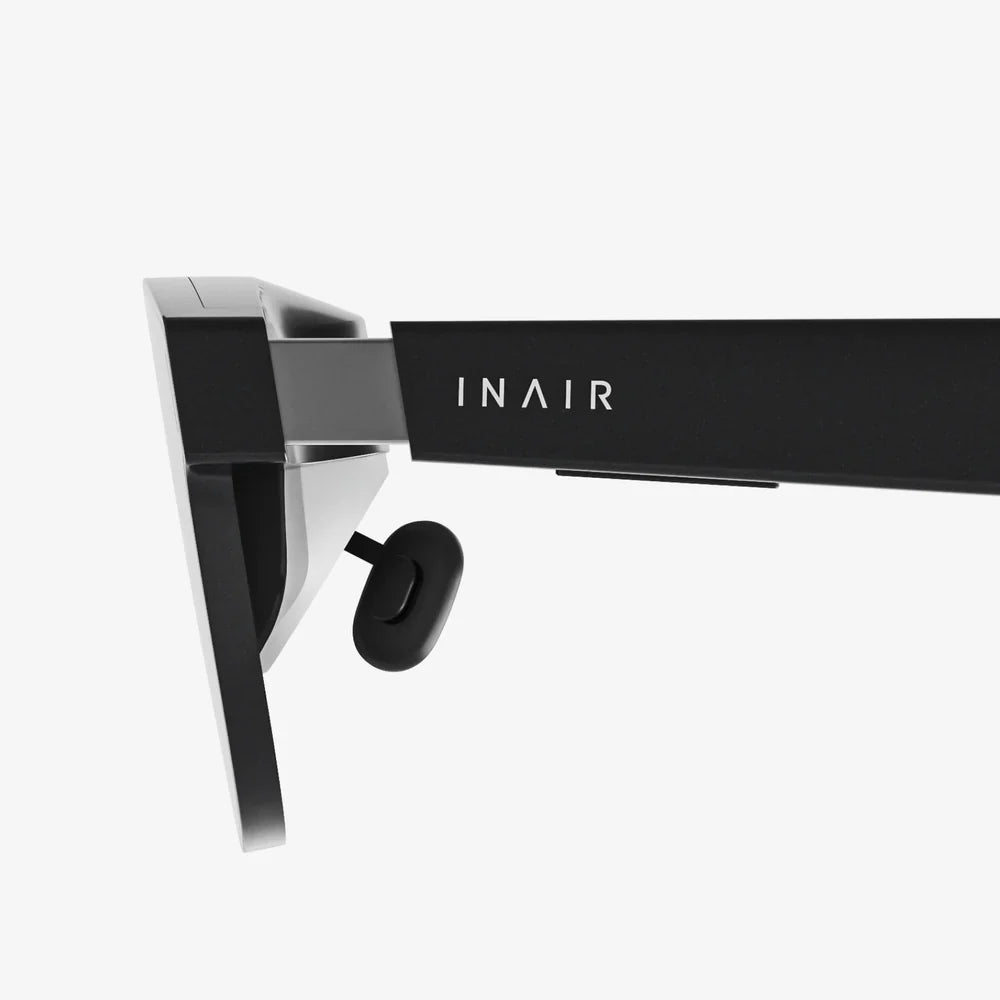
Imagine sitting on a crowded morning commute, a bustling airport terminal, or simply in your own living room without disturbing a soul, and with a flick of a switch, you are instantly transported. The world around you melts away, replaced by the vast, shimmering dunes of Arrakis, the deep, ominous silence of a spaceship drifting near a black hole, or the roaring applause of a concert filmed from the front row. This is no longer the stuff of science fiction. The advent of glasses where you can watch movies is fundamentally reshaping our relationship with visual media, offering a portal to unparalleled immersion and a radical redefinition of personal entertainment. This technology promises a cinematic experience that is both intensely private and infinitely expansive, all from a device that fits neatly in a travel case.
The Technology Behind the Frames: More Than Meets the Eye
At first glance, a pair of movie-watching glasses might look like a slightly bulkier version of standard eyewear. However, hidden within their sleek design is a symphony of advanced engineering. The core magic lies in the micro-display technology. Two miniature, high-resolution displays, often based on OLED or MicroLED technology, are positioned in front of each lens. These displays are capable of producing incredibly sharp images with vibrant colors and deep blacks, essential for a convincing cinematic experience.
The image from these tiny screens is then projected towards the user's eyes via a complex system of optics. This is where waveguides, tiny lenses, and prisms come into play. Their job is to take the small, bright image and make it appear as a large, virtual screen floating in space several feet or even meters away. The quality of this optical system is paramount; it determines the apparent size of the screen, the clarity of the image (preventing any 'screen door' effect where pixels are visible), and the sweet spot for viewing comfort. Advanced models even offer diopter adjustments, allowing users to fine-tune the focus to match their individual eyesight, often eliminating the need to wear contact lenses or prescription inserts.
A Universe of Content in Your Pocket: Connectivity and Sources
These glasses are, for the most part, not standalone devices. They act as a personal high-definition monitor. They typically connect to a media source via a wired connection like USB-C or, more commonly, wirelessly via low-latency protocols. This source can be a smartphone, a dedicated media streaming dongle, a laptop, or even a gaming console.
This connectivity is the gateway to a near-infinite library of content. Users can stream from all major subscription services, access their personal digital movie collections, or even mirror their computer desktop for a massive, private workspace. The ability to connect to next-generation gaming consoles is a particular game-changer, offering a truly immersive, big-screen gaming experience without the need for a physical television. The glasses themselves often house a small battery to power the displays and integrated speakers, providing several hours of continuous viewing on a single charge.
The Sound of Silence: Immersive and Private Audio
A visual masterpiece is only half the experience; audio is its crucial partner. High-end movie-watching glasses tackle this in two primary ways. The first is through integrated directional speakers. These are carefully engineered to beam sound directly into the user's ears with minimal sound leakage. This allows for a surprisingly rich and immersive audio experience for the wearer while keeping the sound virtually inaudible to anyone else nearby, perfect for shared or public spaces.
The second, and often preferred method for audiophiles, is through a standard 3.5mm audio jack or Bluetooth connectivity for pairing with high-quality personal headphones or earbuds. This allows users to leverage their existing premium audio gear to create a truly customized and powerful soundscape, from the subtle rustle of leaves to the earth-shattering bass of an explosion, all contained within their own private auditory bubble.
Beyond the Couch: Revolutionary Applications
While the primary draw is undeniably entertainment, the utility of these personal visual displays extends far beyond binge-watching the latest series.
- The Ultimate Travel Companion: They are a godsend for frequent travelers. Long flights are transformed as passengers can enjoy a massive private screen in the cramped confines of an economy seat, free from the glare and limited angle of a seat-back display. Hotel rooms with subpar televisions become irrelevant.
- Redefining the Home Environment: At home, they solve the age-old problem of conflicting tastes. One person can watch a thrilling action movie in full immersion while their partner reads a book in silence next to them. They allow for late-night viewing without keeping a partner awake with light and sound, preserving domestic harmony.
- A Productivity Powerhouse: For remote workers and digital nomads, these glasses can create a portable, multi-monitor workstation anywhere. By connecting to a laptop, users can have multiple virtual screens arrayed around them, dramatically enhancing productivity in coffee shops, co-working spaces, or even in a park, all while maintaining privacy and focus.
- Accessibility Breakthrough: This technology represents a significant leap forward for accessibility. Individuals with mobility challenges or visual impairments that make traditional cinema trips difficult can now experience films on a grand scale from the comfort of their preferred environment.
Weighing the Experience: Considerations and Trade-offs
As with any emerging technology, there are factors to consider. Comfort during extended viewing sessions is paramount. Manufacturers are in a constant race to make devices lighter, better balanced, and with improved weight distribution to avoid pressure on the nose and ears. Battery life, while steadily improving, is still a finite resource, typically capping a single viewing session to the length of a few movies.
There is also a social component to ponder. The traditional movie night, with its shared bowl of popcorn and collective reactions, is a cherished social ritual. This technology is inherently solitary by design. While perfect for individual consumption, it could potentially contribute to a sense of isolation if it completely replaces shared viewing experiences. The key, as with most technology, is balance—using it to enhance personal freedom without entirely forsaking communal activities.
The Future is Clear: What Lies Ahead for Wearable Displays
The trajectory for this technology is incredibly exciting. We are rapidly moving towards even higher resolutions, with 4K per eye becoming the new standard, promising unimaginable clarity. The integration of augmented reality (AR) features will allow digital screens and interfaces to be pinned to the real world, blending our physical and digital environments seamlessly. Imagine watching a cooking tutorial with a video player seemingly fixed to your kitchen wall, or having navigation instructions appear overlaid on the street in front of you.
Further down the line, we can anticipate advancements like eye-tracking for intuitive control, variable focus to make on-screen text and real-world objects sharp simultaneously, and even more sophisticated haptic feedback to deepen the sensory immersion. The line between simply watching a movie and being inside it will continue to blur.
The development of glasses where you can watch movies is more than a simple gadget iteration; it is a paradigm shift. It challenges the very concept of a screen as a fixed, shared object in a room. It democratizes the premium cinematic experience, making it portable, personal, and accessible. It liberates entertainment from physical and social constraints, giving ultimate control to the individual. While the shared theater experience will always have its place, the power to summon a perfect, private cinema at a moment's notice, anywhere on Earth, is not just a convenience—it is a quiet revolution in how we consume visual media, offering a glimpse into a future where our reality is entirely what we choose to make of it.
Share:
Digital Interactive Definition: The Core of Modern Engagement
Lens AR Experiences Are Redefining Our Perception of Reality