


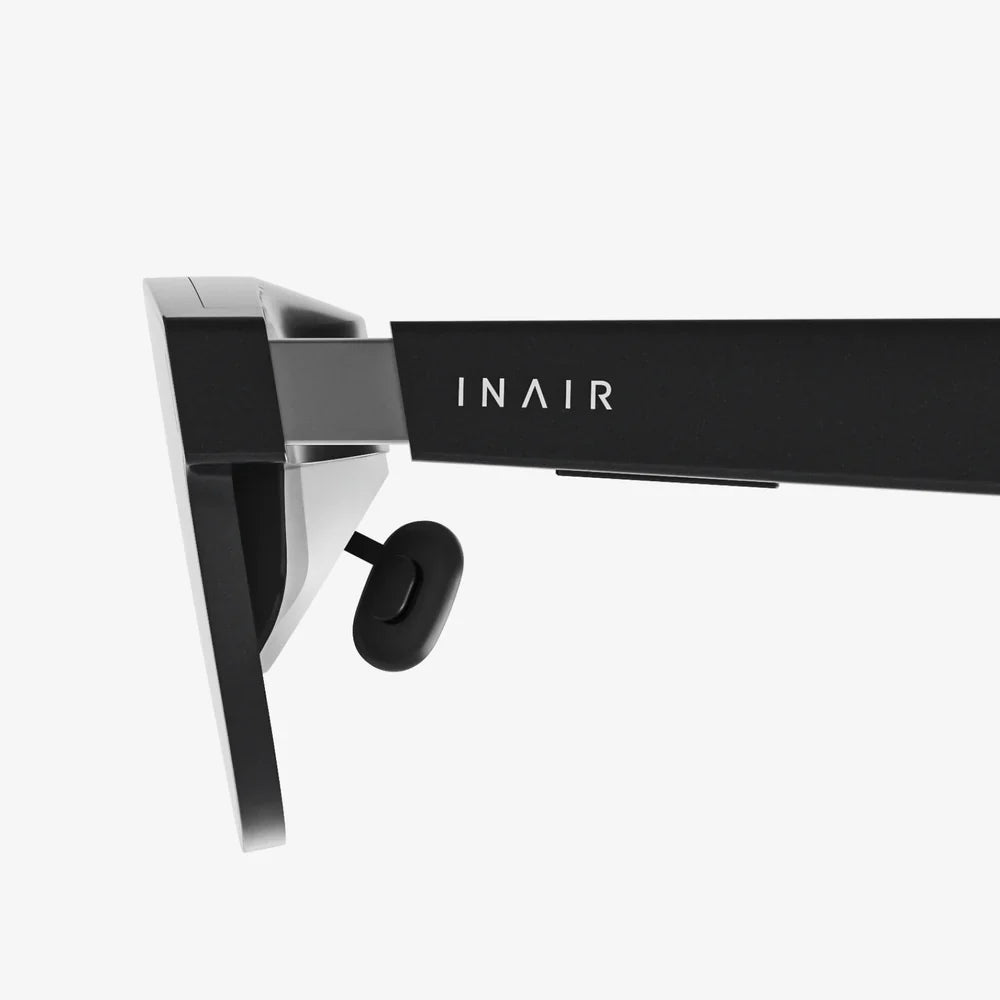
Imagine a world where your most cherished memories are captured not through a screen you hold up, but through your own eyes, in perfect high definition, without ever missing a beat in the conversation. Envision receiving turn-by-turn navigation directly into your ears, translating foreign street signs in real-time, or accessing a digital assistant with a mere whisper—all while looking exactly like you’re wearing a classic, stylish pair of spectacles. This is not a distant sci-fi fantasy; it is the present and rapidly evolving reality of glasses with camera and Bluetooth technology, a silent revolution poised to fundamentally alter our relationship with technology, information, and each other.
Beyond Novelty: The Functional Core of Smart Eyewear
The initial public perception of camera-equipped glasses was often one of gimmickry or, worse, a privacy nightmare. However, the technology has matured far beyond its nascent stages, evolving into a sophisticated class of wearable computers with profound practical applications. At its heart, this technology integrates two powerful components: a first-person perspective (POV) camera, typically discreetly embedded in the frame, and Bluetooth connectivity for seamless pairing with a smartphone or other devices.
The Power of a First-Person View
Unlike a smartphone camera, which requires the user to deliberately frame a shot, the camera in smart glasses operates from a natural perspective. This hands-free, eye-level capture is transformative for numerous activities.
- Professionals and Creators: Mechanics can record complex repair procedures for training manuals. Architects can document site visits without fumbling for a device. Chefs can create immersive cooking tutorials from their precise point of view. The value for content creation, documentation, and remote assistance is immense.
- Everyday Memory Keeping: Capturing a child’s first steps, a breathtaking sunset during a hike, or a spontaneous laugh among friends becomes effortless and organic. The camera is always ready, yet never a physical or social barrier.
- Augmented Reality (AR) Foundations: The camera is the eye for AR software, allowing it to understand the environment. This enables features like object recognition, text translation overlaid on the real world, and interactive digital experiences anchored to physical spaces.
Bluetooth: The Invisible Tether to a Wider World
The camera would be a lonely island without connectivity. Bluetooth is the critical conduit that transforms the glasses from a simple recording device into a central hub for personal computing.
- Audio Integration: This is arguably its most popular function. Bluetooth allows the glasses to stream music, podcasts, and audiobooks directly to built-in speakers or to pair with hearing aids. More importantly, it enables crystal-clear phone calls and access to voice assistants without needing headphones, keeping your ears open to ambient sounds for safety.
- Data Syncing and Control: Media captured on the camera can be instantly uploaded to the cloud or transferred to a paired smartphone. Smartphone notifications can be read aloud, and the glasses can often be controlled via a companion app.
- Low Power Consumption: Bluetooth Low Energy (BLE) ensures that this constant connection doesn’t come at the cost of short battery life, allowing the glasses to remain functional throughout a full day.
A Technological Symphony: How the Components Work in Concert
The magic of these devices lies in the seamless integration of hardware and software. It’s a symphony conducted by a miniature processor within the frame.
1. Capture: A high-resolution, wide-angle lens captures video and still images. Advanced models feature image stabilization to smooth out the natural motion of walking or moving.
2. Process: An onboard System-on-a-Chip (SoC) handles the initial processing, often compressing the video stream and preparing it for transmission.
3. Connect & Transmit: Using Bluetooth, the processed data is sent to the paired smartphone. For more complex tasks like real-time translation or AR, the video feed is sent to the phone’s more powerful processor, which analyzes the scene and sends instructions back to the glasses.
4. Interact: The user provides input through subtle touch-sensitive pads on the temples, voice commands, or even gesture controls, creating an intuitive and hands-free interface.
The Unavoidable Elephant in the Room: Privacy and Ethics
No discussion about glasses with a camera is complete without a serious and nuanced examination of privacy. The ability to record audio and video surreptitiously is a significant concern and the primary reason for the initial backlash against early iterations.
The Concerns Are Real
- Consent: Individuals in public and private spaces have a reasonable expectation of privacy. Recording them without their knowledge or consent raises serious ethical and legal questions.
- Data Security: The footage captured is deeply personal. A robust security framework is essential to prevent this data from being hacked or misused.
- Social Anxiety: The presence of such devices can create a chilling effect, making people nervous and less authentic in social interactions if they suspect they are being recorded.
Navigating the New Norm
The industry and society are developing norms to address these challenges. Many modern devices feature a prominent LED indicator light that activates when the camera is recording, providing a clear signal to others. Legal frameworks are slowly adapting to define the boundaries of acceptable use in public versus private settings. Ultimately, the responsibility lies with the user to employ this technology ethically and respectfully, understanding that the power to record comes with the responsibility to do so with integrity.
The Future is Clear: What's Next for Smart Eyewear?
The current generation is just the beginning. The trajectory points towards even more deeply integrated and powerful technology.
- Advanced AR Displays: Future models will move beyond audio to project high-resolution holographic images onto the lenses, overlaying navigational arrows, information about landmarks, or digital avatars during video calls directly onto the user’s field of vision.
- AI Integration: On-device artificial intelligence will become standard, allowing for real-time analysis of the visual field without needing a phone connection. Imagine your glasses identifying plant species, analyzing a wine label to suggest pairings, or reminding you of a person’s name at a networking event.
- Biometric Sensing: Sensors could monitor health metrics like heart rate, blood oxygen levels, or even detect early signs of neurological conditions through eye-tracking.
- Superior Design and Battery Life: The technology will continue to shrink, becoming virtually indistinguishable from regular eyewear while battery life extends to multiple days, overcoming the final hurdles to mass adoption.
Choosing Your Portal: A Buyer's Considerations
For those considering entering this new world, several factors are crucial beyond style and prescription options.
- Battery Life: Assess your daily needs. Will you need all-day recording, or is intermittent use sufficient?
- Video and Audio Quality: Resolution, frame rate, and microphone clarity are paramount if you plan to create content.
- Storage: Does it have onboard storage, or does it rely solely on streaming to a phone? How much footage can it hold?
- Intended Use: Are you a creator, a tech enthusiast, someone seeking hands-free convenience, or a professional needing remote support? Your primary use case will dictate the most important features.
- Comfort: This is wearable technology. If it’s not comfortable, you won’t wear it, rendering it useless.
We stand at the precipice of a new era of personal technology, one where our tools don’t separate us from the world but help us engage with it more deeply. Glasses with camera and Bluetooth are the vanguard of this shift, offering a glimpse into a future where the line between the digital and the physical finally blurs into irrelevance. The power to document our lives from a truly human perspective, to access the sum of human knowledge with a glance, and to stay connected without being disconnected from our surroundings is now literally in front of our eyes. The question is no longer if this technology will become mainstream, but how quickly we will adapt to the profound and exciting changes it brings to every facet of our daily existence.
Share:
Good Bluetooth Headphones for Music: The Ultimate Guide to Sonic Fidelity
Stereoscopic Headset: A Deep Dive into the Gateway of Immersive Realities