


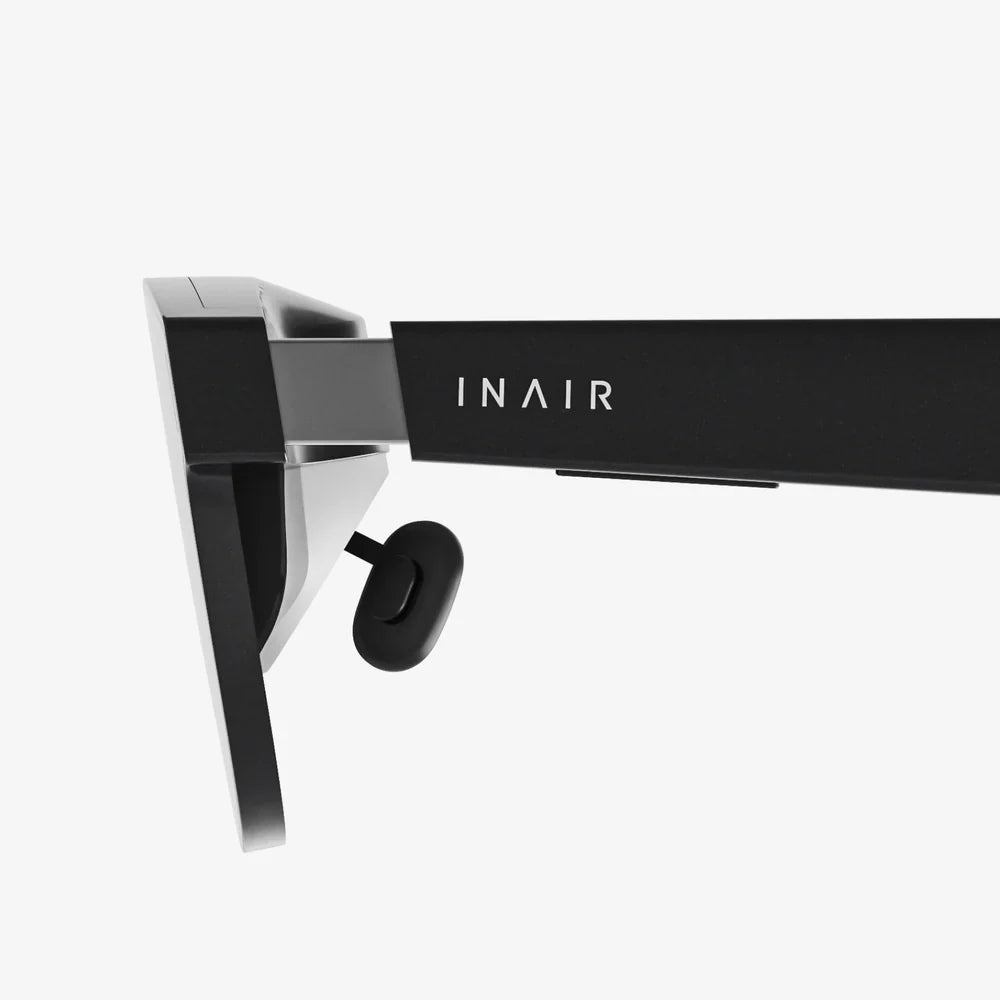
Imagine a device that can dissolve the walls of your room, transport you to the edge of a volcano, or let you stand shoulder-to-shoulder with a digital giant. This is no longer the stuff of science fiction; it's the palpable reality offered by the modern stereoscopic headset, a technological marvel that is fundamentally rewiring our perception of the possible. It is the ultimate passport to experiences beyond our physical limitations, a gateway to worlds crafted from light and data, waiting for you to take the first step.
The Foundational Illusion: How Stereoscopy Tricks the Brain
At its core, the magic of a stereoscopic headset is a sophisticated deception, one that leverages the most advanced graphics processor known to humanity: the human brain. The principle, known as stereoscopy, is surprisingly ancient. It replicates the way our two eyes naturally perceive the world. Because our eyes are spaced approximately two and a half inches apart, each one receives a slightly different two-dimensional image of our surroundings. The brain's visual cortex then performs an incredible feat of computation, fusing these two flat images into a single, coherent three-dimensional picture with depth, volume, and space.
A stereoscopic headset meticulously recreates this biological process. It presents a unique image to each eye through dedicated high-resolution displays, often one per eye. These two images are rendered from perspectives that mimic the separation of human eyes. Advanced lenses placed between the displays and the eyes then focus and reshape the light, making the screen appear to be at a more comfortable distance and widening the field of view to feel more natural and immersive than staring at a simple monitor.
Beyond the Screen: The Anatomy of Immersion
While the visual trick is the heart of the experience, a truly immersive stereoscopic headset is a symphony of integrated technologies working in perfect harmony. The visual component is just the beginning.
Precision Tracking: Knowing Where You Are
For the virtual world to feel solid and responsive, the headset must know its own position in space and the orientation of your head with incredible precision. This is achieved through a combination of internal and external sensors.
- Inertial Measurement Units (IMUs): These are the workhorses inside the headset, containing gyroscopes, accelerometers, and magnetometers. They track the rotational movement of your head—looking up, down, left, and right—with extremely high speed and low latency, preventing any feeling of lag or disorientation.
- Outside-In Tracking: This method uses external sensors or base stations placed around the room. These devices emit lasers or other signals that are picked up by sensors on the headset, triangulating its exact position in the physical space. This allows for highly accurate positional tracking, enabling you to walk around, duck, and lean within the virtual environment.
- Inside-Out Tracking: A more recent and consumer-friendly advancement, this technology embeds cameras directly onto the headset itself. These cameras continuously scan the surrounding environment, using the details of your room to track the headset's movement without any external hardware. This simplifies setup and increases portability dramatically.
Spatial Audio: Hearing in 360 Degrees
Immersion would shatter the moment a sound didn't match what you were seeing. Spatial audio is the auditory counterpart to stereoscopic vision. Instead of standard stereo sound, advanced audio algorithms simulate how sound waves interact with the human head and ears. A sound emanating from behind and to your left will actually reach your left ear slightly sooner and with a different frequency signature than your right ear. By replicating this, a stereoscopic headset can create a convincing 3D soundscape that grounds you in the virtual world. You'll hear the whisper of an ally over your shoulder or the distant roar of an approaching vehicle long before you see it, triggering instinctual reactions and deepening the sense of presence.
Haptic Feedback: The Sense of Touch
While still an emerging field, haptic feedback is becoming an increasingly important part of the immersive puzzle. This isn't just simple vibration; it's about conveying texture, impact, and resistance. Advanced controllers can simulate the recoil of a virtual tool, the tension of drawing a bowstring, or the subtle bump of a virtual object. Research into full-hand haptic gloves and even vests that can simulate a punch or a change in atmospheric pressure promises a future where the digital world isn't just something we see and hear, but something we can truly feel.
The Spectrum of Experience: From Virtual to Augmented Realities
The term "stereoscopic headset" often conjures images of completely enclosed virtual reality, but the technology encompasses a spectrum of experiences.
Virtual Reality (VR): The Total Escape
This is the most common association. A VR headset blocks out the physical world entirely, replacing it with a fully digital one. It is the ultimate tool for escapism, simulation, and immersive storytelling. Users can find themselves piloting a starship, painting in a 3D space with virtual light, or undergoing training in a perfectly recreated hazardous environment without any real-world risk.
Augmented Reality (AR) and Mixed Reality (MR): Blending Worlds
On the other end of the spectrum are headsets designed for augmented and mixed reality. These devices are typically transparent or use cameras to pass a video feed of the real world to the displays, upon which digital information is overlaid. Imagine seeing a virtual screen floating on your wall, a digital character sitting on your real couch, or repair instructions visually superimposed onto the complex machinery you are fixing. This technology, often called spatial computing, has profound implications for work, education, and daily life, seamlessly blending the digital and physical realms.
Transforming Industries: More Than Just Games
While gaming provided the initial commercial thrust for stereoscopic headsets, their applications are rapidly expanding into nearly every professional field.
- Healthcare: Surgeons practice complex procedures on virtual anatomy, medical students explore detailed 3D models of the human body, and therapists use controlled virtual environments to treat phobias and PTSD.
- Architecture and Design: Architects and clients can walk through unbuilt structures long before ground is broken. Interior designers can place virtual furniture in a real room to visualize changes.
- Education and Training: From history students taking a virtual field trip to ancient Rome to mechanics training on the internal systems of a jet engine, these headsets offer experiential learning that is far more impactful than textbooks or videos.
- Remote Collaboration: The concept of the "metaverse" is fundamentally about connection. Teams distributed across the globe can meet in a shared virtual space, interacting with 3D models and data as if they were in the same physical room, breaking down the limitations of traditional video conferencing.
The Human Factor: Challenges and the Road Ahead
For all its promise, the technology is not without its hurdles. Issues like simulator sickness, caused by a disconnect between perceived motion and the inner ear's sense of movement, still affect some users. The form factor, while improving, needs to become lighter, more comfortable, and less socially isolating for all-day use. Furthermore, critical questions about data privacy, psychological effects of long-term immersion, and the creation of equitable access to these new digital frontiers must be addressed by developers and society as a whole.
The future, however, is dazzlingly bright. Research into varifocal displays that mimic the eye's natural focus, eye-tracking for more intuitive interaction, and neural interfaces that could translate intention into action promise to make the line between real and virtual even more indistinct. We are moving towards a future where a stereoscopic headset could become as ubiquitous and essential as the smartphone, a window not to a flat internet of information, but to an internet of experiences.
The journey into the digital frontier is no longer a solitary trek for tech enthusiasts; it's a collective migration, and the stereoscopic headset is the vessel. It promises a revolution not just in how we play, but in how we work, learn, heal, and connect. The boundaries of our reality are expanding, and these devices are the key to stepping across the threshold into a new dimension of human experience—are you ready to see what's on the other side?
Share:
Glasses With Camera and Bluetooth: The Invisible Revolution in Wearable Tech
VR Immersive: The Future of Experience and Its Profound Impact on Our Reality