


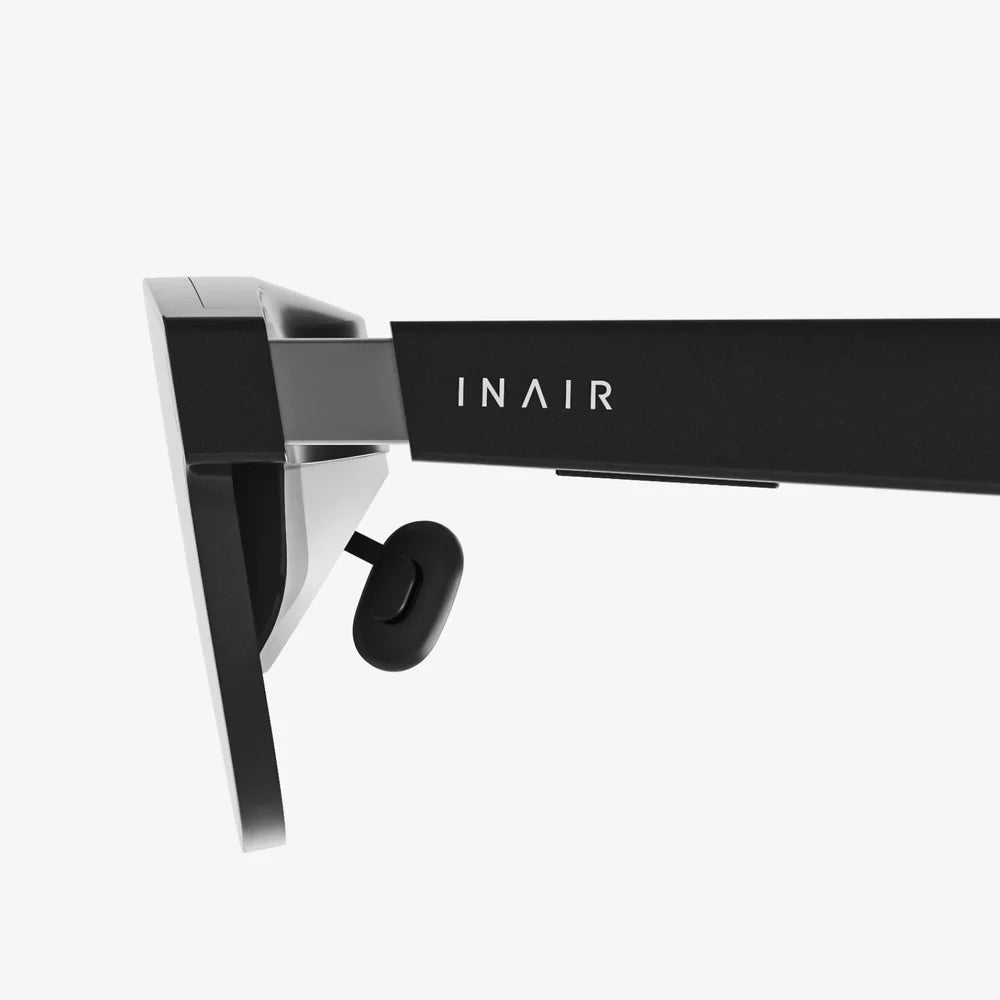
Imagine a world where your entire digital life—your emails, your entertainment, your navigation, your memories—floats seamlessly before your eyes, not on a screen you hold, but integrated into the very lens through which you see reality. This is the breathtaking promise of glasses with integrated monitors, a technological leap that is quietly moving from science fiction to tangible reality, poised to redefine our relationship with information and with each other.
The Architectural Marvel: How It All Comes Together
At its core, the concept is deceptively simple: to project a digital image directly onto the retina or the lens of the eye itself. But the engineering required to achieve this is nothing short of revolutionary. Unlike traditional displays that you look at, these devices create an image you look through.
The magic happens through a combination of micro-optics, advanced waveguide technology, and miniature projection systems. Tiny projectors, often no larger than a grain of rice, are embedded within the frames. These projectors beam light onto specially engineered lenses or combiners. These are not simple pieces of glass; they are complex optical waveguides that use principles of diffraction or reflection to bend the light from the projectors and direct it precisely into the pupil.
The result is a crisp, high-resolution digital overlay that appears to hover in space, superimposed onto the user’s natural field of view. This can range from a small, discreet notification in the corner of one’s eye to an immersive, cinema-sized screen that only the wearer can see. The fidelity of these displays is rapidly approaching retinal resolution, meaning the individual pixels become indistinguishable to the human eye, creating a smooth and incredibly realistic image.
Beyond Novelty: A Universe of Practical Applications
While the initial allure might be for entertainment, the true power of monitor-equipped eyewear lies in its profound utility across countless professional and personal domains.
Revolutionizing the Professional Workspace
For the modern professional, these glasses promise the ultimate productivity setup. Imagine an architect walking through a construction site, seeing the digital blueprints overlaid onto the physical steel and concrete. A surgeon could have vital signs, 3D anatomical models, or real-time guidance from a remote specialist displayed directly in their line of sight, keeping their hands and focus on the patient. Mechanics could have repair manuals and diagnostic data floating next to an engine, and logistics workers could see picking lists and inventory information without ever glancing down at a clipboard or handheld device.
This technology effectively creates an infinite, virtual desktop that follows you everywhere. You could have multiple browser windows, spreadsheets, and communication apps open in your periphery, accessible with a glance or a voice command, completely untethered from a physical desk.
Transforming Social and Personal Interaction
On a personal level, the implications are equally staggering. Navigation becomes intuitive, with glowing arrows painted onto the street in front of you. Travelers could see real-time translations of street signs and menus, not on a phone screen, but elegantly superimposed onto the world itself. Language barriers could begin to crumble as subtitles for real-world conversations appear in your vision.
For those with visual impairments, this technology offers a new frontier of accessibility. The glasses could enhance contrast, highlight obstacles, recognize faces from a distance, and read text aloud—all by integrating the information directly into the user’s visual perception.
A New Paradigm for Entertainment and Gaming
Entertainment will be fundamentally reimagined. Instead of gathering around a television, a family could each watch their own movie on a massive virtual screen while sitting in the same living room. Augmented reality gaming will reach its ultimate expression, transforming parks, city streets, and homes into immersive playgrounds where digital characters and objects interact with the real environment in a convincing and magical way.
The Inevitable Challenges: Navigating the Obstacles
For all its potential, the path to mainstream adoption of glasses with integrated monitors is fraught with significant technical, social, and ethical hurdles that must be thoughtfully addressed.
The Form Factor Conundrum
The classic technological trade-off between power and portability is acutely present here. Early iterations often faced criticism for being too bulky, too heavy, or too aesthetically conspicuous. The holy grail is to create a device that is indistinguishable from a stylish pair of ordinary eyeglasses—lightweight, comfortable for all-day wear, and socially acceptable. This requires monumental advancements in miniaturizing batteries, processors, and cooling systems without sacrificing performance or battery life.
Battery Life and Computational Power
Rendering high-resolution graphics and processing complex data in real-time is computationally intensive and a notorious drain on battery life. Achieving a full day of use on a single charge, with the computing power housed within the slim arms of the frames, remains a formidable engineering challenge. Solutions may involve split computing, where the glasses handle display and tracking, while a companion device in a pocket handles heavier processing.
The Privacy Paradox
This is perhaps the most critical and sensitive challenge. Devices that can record video and audio continuously raise profound questions about consent and surveillance. The very feature that makes them powerful—their ability to capture and analyze the world—also makes them potentially intrusive. Robust, transparent, and user-centric privacy controls will be non-negotiable. Features like a physical shutter, clear recording indicators, and ethical design principles that prioritize the privacy of non-users will be essential for building public trust.
The Social Contract and the "Glasshole" Stigma
Previous attempts at always-on eyewear computing stumbled on social norms. People are understandably wary of conversations when they are unsure if they are being recorded. Normalizing this technology will require a new social contract—established norms about when it is and isn’t appropriate to use them. It will also demand designs that make their status (e.g., recording, active) clearly visible to others, moving away from the secretive and alienating perception that plagued earlier prototypes.
Gazing into the Future: The Long-Term Vision
Looking beyond the immediate hurdles, the long-term trajectory of this technology points toward a future where the line between the digital and the physical is not just blurred, but erased.
We are moving toward contact lenses with embedded displays and eventually, perhaps, direct neural interfaces that can stimulate the visual cortex, bypassing the eyes altogether. The goal is a truly ubiquitous and invisible computing experience—information and assistance available the moment you think of it, integrated so deeply into your perception that it feels like a natural extension of your own cognition.
This will herald new forms of communication, potentially beyond text and video to the sharing of emotions, sensations, and experiences. It could democratize information and expertise on an unprecedented scale, allowing a farmer in a remote field to access the same vast knowledge base as a researcher in a lab.
Yet, this future also demands careful philosophical consideration. As our reality becomes increasingly mediated and augmented, we must grapple with questions of authenticity, attention, and what it means to have a shared human experience. Will we risk losing ourselves in personalized digital bubbles, or will this technology help us connect with the world and each other in deeper, more meaningful ways?
The journey of glasses with integrated monitors is more than just a story of technological innovation; it is a mirror reflecting our deepest aspirations and anxieties about the future. It challenges us to build not just smarter devices, but a wiser and more conscious society capable of harnessing this power for the collective good. The display is booting up, and the choice of what we project onto it—and onto our world—is ultimately ours to make.
Share:
Hologram Display Technology is Revolutionizing Our Visual and Interactive Experience
Good VR Goggles: Your Ultimate Guide to Immersive Virtual Reality