


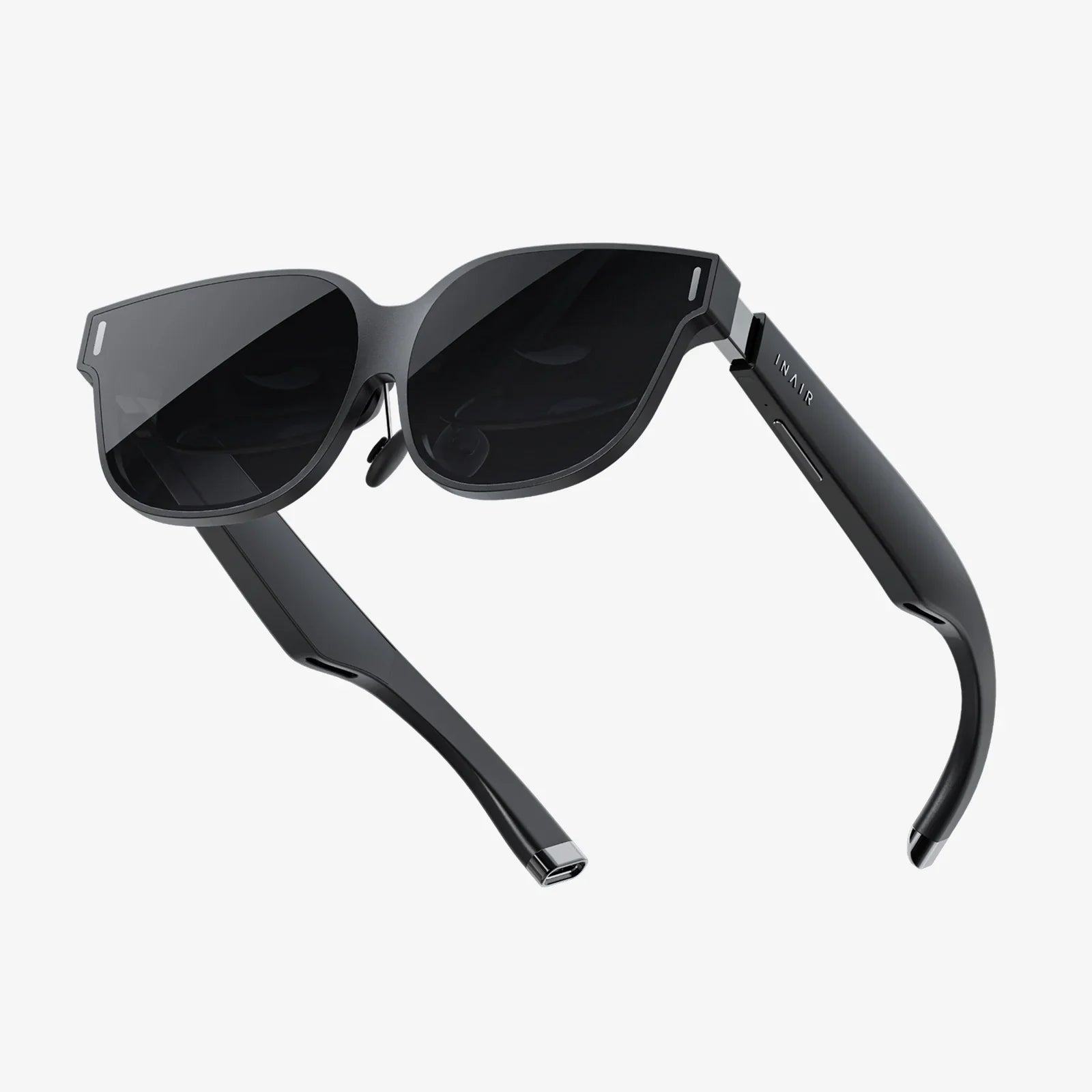
Imagine stepping into another world, a digital realm so vivid and convincing that your brain struggles to distinguish it from physical reality. This is the promise of virtual reality, a promise fulfilled not by magic, but by the sophisticated piece of technology strapped to your face: good VR goggles. The quest for the perfect headset is more than a search for specs; it's a journey towards unparalleled immersion, and it starts with knowing what truly separates a forgetgettable gadget from a transformative portal.
The Pillars of a Premium Virtual Reality Experience
Not all headsets are created equal. The chasm between a basic model and a truly good VR headset is vast, defined by several core pillars that work in concert to create a believable experience. Compromising on even one can shatter the illusion of presence, that precious feeling of truly being somewhere else.
Visual Fidelity: The Window to Another World
The most immediate feature any user notices is the quality of the display. This goes far beyond a simple resolution number.
- Resolution and Pixel Density (PPI): High resolution is crucial for eliminating the "screen door effect," where users can see the fine lines between pixels, constantly reminding them they are looking at a screen. Good VR goggles feature high-resolution displays with a high pixels-per-inch density, creating a smooth, continuous image.
- Refresh Rate: Measured in Hertz (Hz), the refresh rate determines how many times the image on the screen updates per second. A higher refresh rate (90Hz and above is the standard for good VR goggles) is critical for smooth motion. Low refresh rates can lead to lag, stuttering, and is a primary contributor to VR-induced motion sickness. A fluid, responsive visual feed is non-negotiable for comfort and immersion.
- Lens Quality and Field of View (FOV): The lenses are the optics through which you view the screens. High-quality, custom Fresnel or pancake lenses are used in good VR goggles to provide a sharp image from edge-to-edge, minimizing god rays, glare, and distortion. The Field of View is the extent of the observable world seen at any given moment, measured diagonally. A wider FOV (around 100 degrees or more) is essential for peripheral immersion, making the virtual world feel vast and all-encompassing rather than like looking through a narrow tunnel.
Precision Tracking and Intuitive Control
For the virtual world to feel responsive and real, your movements must be translated with pinpoint accuracy and minimal delay.
- Inside-Out vs. External Sensor Tracking: Modern good VR goggles predominantly use inside-out tracking, where cameras mounted on the headset itself track the environment and the controllers, eliminating the need for external base stations placed around the room. This makes for a much simpler setup. The best systems offer sub-millimeter accuracy, ensuring your virtual hands move exactly as your real ones do.
- Controller Design and Haptics: The controllers are your hands in the virtual world. They must be ergonomic, well-balanced, and feature intuitive button layouts. Advanced haptic feedback goes beyond simple vibration, providing nuanced sensations like the gentle pull of a bowstring, the recoil of a weapon, or the tactile click of a virtual button. This tactile layer deepens immersion significantly.
Ergonomics and Comfort: The Forgotten Frontier
The most technically advanced headset is worthless if it's too uncomfortable to wear for more than ten minutes. Good VR goggles are designed for long-term wear.
- Weight Distribution: Rather than just overall weight, how that weight is distributed is key. A front-heavy device will strain the neck and cheeks. Premium designs use counter-balancing, rigid head straps, and adjustable systems to shift weight onto the crown of the head and the forehead.
- Materials and Adjustability: Plush, breathable facial interfaces (often made from hypoallergenic materials like leather or antimicrobial fabric) create a comfortable seal without generating excessive heat. Inter-pupillary distance (IPD) adjustment, both software and mechanical, is vital for aligning the lenses with the user's eyes, ensuring a clear image and reducing eye strain.
Audio: The Unsung Hero of Immersion
3D spatial audio is arguably half of the VR experience. Hearing a sound and instinctively knowing its location and distance behind you, above you, or in another room is a powerful tool for belief. Good VR goggles often integrate high-quality, directional off-ear speakers that deliver immersive audio without isolating the user from their real-world environment entirely. For private sessions, a standard headphone jack allows for personal audio solutions.
Navigating the Technical Specifications
Understanding the spec sheet is crucial to identifying good VR goggles that match your needs and hardware.
Standalone vs. Tethered (PCVR) Headsets
This is the fundamental divide in the VR market, each with distinct advantages.
- Standalone: These are all-in-one devices with a mobile processor, battery, and storage built directly into the headset. They offer unparalleled freedom and convenience—no wires to trip over, no powerful computer required. They are the epitome of pick-up-and-play accessibility. The trade-off is that their graphical processing power is limited compared to a high-end gaming computer, so experiences are often less visually complex.
- Tethered (PCVR): These headsets act as dedicated displays, connecting via a high-speed cable to a powerful gaming computer that does the actual processing. This setup unlocks the highest possible fidelity, with photorealistic graphics, vast, detailed worlds, and the most demanding simulations. The experience is superior visually but comes at the cost of being tethered to a location and requiring a significant investment in a compatible PC.
- Standalone with Tethering Capability: Many modern good VR goggles cleverly bridge this gap. They are primarily standalone devices but can also be connected to a gaming PC via a link cable, effectively switching into a tethered PCVR mode. This offers the best of both worlds: wireless freedom for casual use and high-fidelity power for premium experiences.
- Eye-Tracking and Foveated Rendering: This is a game-changer for performance. Eye-tracking sensors monitor exactly where the user is looking. Foveated rendering then uses this data to render the area of central vision in full detail while subtly reducing the detail in the peripheral vision—where the human eye cannot perceive the difference. This drastically reduces the GPU workload, allowing for either significantly better graphics on existing hardware or the same high-fidelity graphics on less powerful devices.
- Micro-OLED Displays: This display technology offers incredible benefits over standard LCDs, including true black levels (as each pixel can be individually turned off), extremely high contrast ratios, vibrant colors, and the potential for even higher resolutions in a compact form factor. They are set to become the premium display standard.
- Haptic Suits and Gloves: While currently niche, the development of full-body haptic feedback will add an entirely new layer of physical sensation to VR, moving beyond the controllers to simulate touch, impact, and temperature.
- Neural Interface Research: Looking far into the future, the ultimate goal is a direct neural interface, bypassing screens and controllers entirely. While this technology is in its infancy, it represents the final frontier for absolute immersion.
The Heart of the Machine: Processing Power
For standalone headsets, the processor is its brain. A powerful chipset is necessary for smooth performance, complex physics simulations, and advanced features like high-resolution passthrough for mixed reality applications. The latest chipsets in good VR goggles rival those found in high-end smartphones, enabling increasingly impressive experiences without external help.
Understanding Connectivity and Passthrough
Wi-Fi 6/6E support is becoming a standard for high-end standalone devices, enabling faster wireless streaming from a PC and smoother multiplayer experiences. Furthermore, high-resolution color passthrough cameras are no longer a novelty but a core feature. They allow users to see their physical surroundings in real-time, either in a blended mixed reality (MR) experience or simply to find their drink without taking the headset off. The quality of this video feed is a key differentiator.
Defining "Good" Based on Your Virtual Playground
The definition of "good" is inherently subjective and depends entirely on what you intend to do in VR.
The Hardcore Gamer
For the user seeking the most visually stunning, graphically intensive games and simulations, a tethered PCVR headset or a high-end standalone with PC linking is the only choice. Priority number one is maximum fidelity, high refresh rates (120Hz+), and the widest field of view. Comfort remains critical for those extended gaming sessions.
The Fitness and Rhythm Enthusiast
VR has exploded as a fitness platform. For this user, a lightweight, secure, and well-ventilated standalone headset is paramount. The device needs to stay firmly in place during rapid movement, wick away sweat (often with removable and washable facial interfaces), and have a long-lasting battery. Visual specs, while still important, may take a backseat to comfort and practicality.
The Social Connector and Explorer
For those who spend time in social VR platforms, attending virtual concerts, and exploring user-generated worlds, a balanced headset is key. Strong standalone performance, good built-in audio for chatting, and high-quality passthrough for mixed reality interactions are the highlights. Ease of use and a wide software library are more important than raw, cutting-edge power.
The Professional and Creator
VR is a powerful tool for architecture, design, training, and 3D sculpting. For professional use, resolution is king. The need to see fine details, read text clearly, and work with precision makes a high-resolution display—often found in specialized professional-focused headsets—the top priority. Accurate tracking and comfortable ergonomics for long workdays are also essential.
Looking Forward: The Future of the Technology
The evolution of VR hardware is rapid and relentless. The features that define good VR goggles today will be the baseline tomorrow. Several emerging technologies are poised to redefine the standard.
Your journey into virtual reality deserves a beginning worthy of its potential. It's not about finding the most expensive headset or the one with the longest list of features; it's about finding the key that unlocks a universe tailored to your imagination. Good VR goggles are that key—a seamless, comfortable, and breathtakingly clear window that doesn't just show you another world, but makes you believe you've actually stepped through. The portal awaits; all you need to do is choose the right one to open it.
Share:
Glasses with Integrated Monitor: The Dawn of a New Visual Era
Mobile Phone Glasses: The Ultimate Shield for the Digital Age