


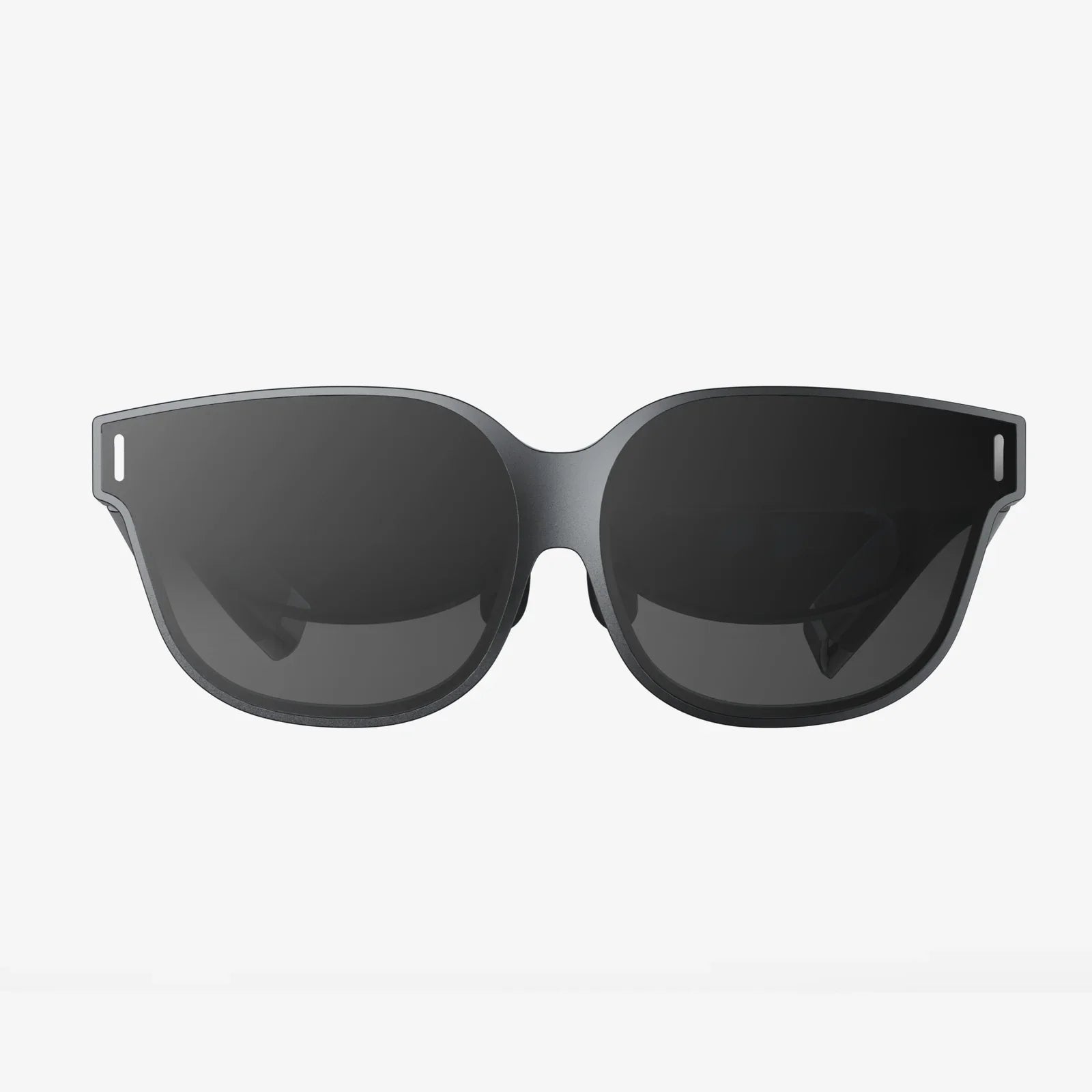
Imagine a world where information flows as freely as the air you breathe, where the digital and physical realms are not just connected but seamlessly intertwined, accessible not through a device in your hand but through the very lens through which you see reality. This is the promise, the potential, and the profound paradigm shift offered by glasses with internet access. This isn't merely a new gadget; it's a fundamental reimagining of human-computer interaction, poised to dissolve the barrier between our minds and the global digital consciousness. The era of staring down at a screen is ending, and the age of looking up and out into an augmented world is dawning.
The Architectural Framework: How Smart Glasses Perceive and Project
At their core, glasses with internet access are a marvel of miniaturization and sensor fusion. Unlike their handheld counterparts, they must process the world in real-time, overlaying data without obstructing the user's view. This requires a sophisticated and integrated architecture.
The foundation is a constant, low-latency connection to the cloud, typically via Wi-Fi or advanced cellular networks. This link serves as the bridge to vast computational power and the entirety of the internet's knowledge base. However, the true magic happens locally, on the device itself. An array of tiny, powerful sensors acts as the glasses' eyes and ears. High-resolution cameras continuously capture the user's field of view, while depth sensors and LiDAR scanners map the environment in three dimensions, understanding the geometry and distance of objects and surfaces.
This real-time environmental data is processed by an onboard system-on-a-chip (SoC), a compact powerhouse that handles the immense computational load of simultaneous localization and mapping (SLAM). This is the technology that allows the glasses to understand precisely where they are in space and how they are moving. It's this precise spatial awareness that enables digital content—a floating navigation arrow, a virtual review hovering over a restaurant, a schematic of a machine part—to be anchored convincingly to the physical world, rather than simply floating in front of the user's eyes.
The final piece of the puzzle is the display technology. Early attempts often used cumbersome projections or small screens that felt disconnected from reality. The current generation employs advanced waveguides or micro-LED projects that beam light directly onto the retina or through a transparent lens. The result is crisp, bright graphics and information that appear to exist within the world itself, integrated into the user's natural line of sight without blacking out the environment. This creates the illusion that the digital and physical are one and the same.
Beyond Novelty: The Transformative Applications
The potential applications for this technology extend far beyond checking social media feeds or receiving notifications. They promise to revolutionize entire professions, enhance human capabilities, and redefine how we learn and interact.
The Professional Landscape Reimagined
In fields where hands-free operation and instant access to information are critical, smart glasses are a game-changer. For a surgeon, a real-time overlay of a patient's vital signs, MRI data, or an anatomical guide during a complex procedure could improve precision and outcomes. For a field engineer repairing a malfunctioning turbine, the ability to see a holographic schematic overlaid on the machinery, annotated with step-by-step instructions from a remote expert thousands of miles away, drastically reduces downtime and errors. Architects could walk through full-scale, holographic models of their designs before a single brick is laid, and warehouse workers could have picking lists and bin locations highlighted in their vision, streamlining logistics to an unprecedented degree.
Augmenting Human Experience and Accessibility
For the general consumer, the implications are equally profound. Imagine traveling in a foreign country and seeing real-time translations of street signs, menus, and conversations seamlessly integrated into your view. Historical sites could come alive with virtual recreations of their past, and museums could offer rich, contextual information about each exhibit. For individuals with visual impairments, auditory descriptions of their surroundings or highlighted pathways could provide a new level of navigational independence. This technology has the potential to break down language barriers, democratize information, and create a more accessible world for all.
The Evolution of Social Connection
Communication itself is ripe for disruption. Video calls could transition from a flat screen on a desk to a life-sized, holographic presence of a loved one or colleague sitting across from you on your couch. Shared augmented experiences—watching a virtual concert with friends who are physically elsewhere or collaborating on a 3D design model in a shared virtual space—could create a new sense of togetherness and collaboration that today's video conferencing tools cannot match.
The Double-Edged Sword: Privacy, Security, and the Ethical Abyss
However, this always-on, always-perceiving technology introduces a host of daunting ethical and societal challenges that must be addressed head-on. The most pressing concern is privacy. A device that records audio and video from the wearer's perspective is, by its very nature, a potent surveillance tool. The potential for constant, clandestine recording in public and private spaces raises alarming questions about consent. Will there be clear social and legal norms indicating when recording is happening? How do we protect the privacy of individuals who are inadvertently captured by someone else's augmented gaze without their knowledge or permission?
This leads directly to the issue of data security. The amount of personal, biometric, and environmental data collected by these devices is staggering—a detailed log of everything the user sees, hears, and interacts with throughout their day. This data is a goldmine, not just for personalized advertising, but for malicious actors if breached. Robust encryption, transparent data policies, and giving users ultimate control over their information are not optional features; they are absolute necessities for this technology to gain public trust.
Furthermore, the societal impact cannot be ignored. Will constant access to an information overlay lead to cognitive overload and a decreased ability to be present in the moment? Could it widen the digital divide, creating a class of "augmented" individuals with significant advantages over those who are not? The potential for new forms of distraction, especially while driving or operating machinery, presents a clear and present danger that requires rigorous safety protocols and user education. We must also grapple with the concept of reality itself—if everyone can customize their perception of the world with digital filters, do we risk eroding a shared sense of objective truth?
The Road Ahead: From Prototype to Paradigm
The journey to perfecting and mainstreaming glasses with internet access is still in its early chapters. Current limitations include battery life, processing power, display brightness, and overall form factor. The ideal device must be as lightweight, comfortable, and socially acceptable as a standard pair of eyeglasses, a significant engineering hurdle. Furthermore, the development of a intuitive and natural user interface is crucial. Voice commands, gesture control, and even subtle neural input interfaces are being explored to move beyond the clumsy interactions of first-generation devices.
The ultimate success of this technology will depend on the creation of a rich and open ecosystem. A unified operating system and development platform will be essential to empower a global community of developers to build the applications that will truly define the medium, much like the app stores did for smartphones. This ecosystem must be built on a foundation of open standards, interoperability, and a firm commitment to user privacy and ethical design from the ground up.
The path forward is not merely a technological one; it is a societal conversation. It requires collaboration between engineers, ethicists, policymakers, and the public to establish the norms, regulations, and safeguards that will allow this powerful technology to flourish for the benefit of humanity, rather than become a tool for division or control. The choices we make today will shape the augmented reality of tomorrow.
The screen that has dominated our attention and shaped our interactions for decades is finally fading from view. In its place, a new interface is emerging, one that is woven into the very fabric of our perception. Glasses with internet access are the key to unlocking this new layer of reality, offering a future where knowledge is contextual, assistance is instantaneous, and our digital lives are no longer separate from our physical existence. The revolution won't be televised; it will be seen through a lens that makes the invisible, visible, and the impossible, possible. The question is no longer if this future will arrive, but how we will choose to build it.
Share:
Augmented Reality Meaning in English: The Digital Layer Transforming Our World
VR MR Headset: The Ultimate Guide to Immersive Technology