


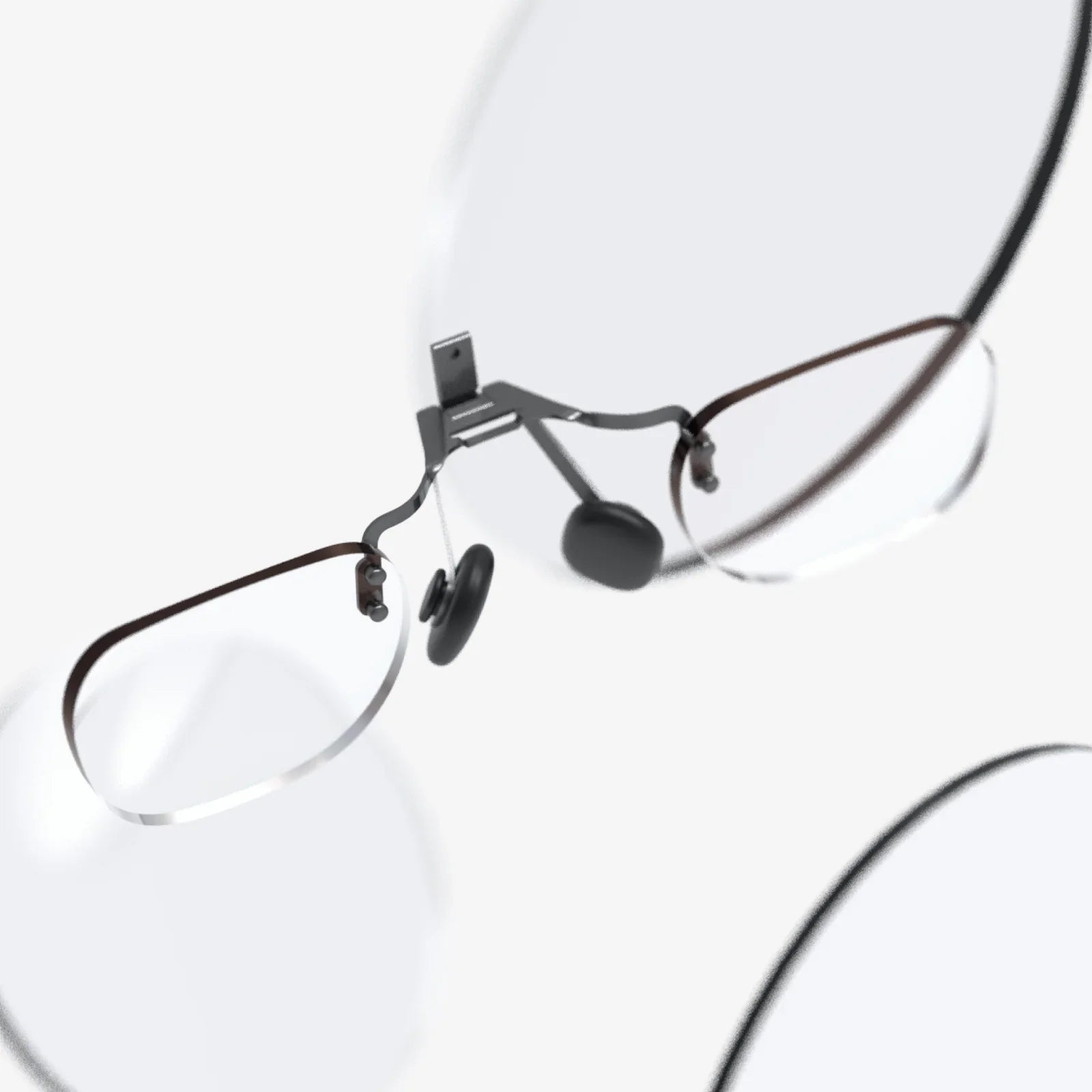
Imagine a device that can transport you to the summit of Mount Everest, train you to perform complex heart surgery, or allow you to collaborate with colleagues as if you were all in the same room, despite being continents apart. This is no longer the realm of science fiction; it is the tangible, exhilarating reality offered by today's VR and MR headsets. These technological marvels are not just reshaping entertainment; they are fundamentally altering how we work, learn, connect, and perceive reality itself. Strap in, as we embark on a deep dive into the past, present, and breathtaking future of immersive computing.
The Spectrum of Immersion: Defining the Realities
Before delving into the intricacies of the hardware, it's crucial to understand the landscape of immersive technologies. While often used interchangeably, the terms Virtual Reality (VR) and Mixed Reality (MR) represent distinct points on a spectrum known as the "Virtuality Continuum."
Virtual Reality (VR) offers a complete departure from the physical world. By wearing a headset, your vision and hearing are fully enclosed, and you are transported into a fully digital, computer-generated environment. Whether it's a fantastical game world, a 360-degree documentary, or a virtual meeting space, VR is defined by its immersion and isolation. The goal is to make you feel "present" in a place that doesn't physically exist, tricking your brain into accepting the digital world as real.
Mixed Reality (MR), sometimes used synonymously with Augmented Reality (AR), sits at a more complex intersection. Rather than replacing your world, MR overlays digital content onto your physical environment. A true MR headset uses advanced sensors and cameras to understand the geometry of your room—your walls, tables, and chairs—and then anchors holographic objects to them. You can place a virtual television on your real wall, examine a photorealistic 3D model of a engine block sitting on your desk, or have a life-sized digital person walk through your actual living room. The magic of MR is the seamless blending and persistent interaction between the real and the virtual.
Under the Hood: The Anatomy of a Modern Headset
The experience of immersion is made possible by a symphony of sophisticated components working in perfect harmony. The core of any headset is its display system. Most modern devices use high-resolution LCD or OLED panels for each eye, providing a crisp, clear image. A critical factor here is the field of view (FOV)—the angular extent of the observable world seen at any given moment. A wider FOV increases the feeling of immersion but demands more processing power. To prevent the image from appearing pixelated, a high pixels-per-degree (PPD) density is essential.
Between the displays and your eyes sit specialized lenses. These are not simple magnifying glasses; they are precision-engineered Fresnel or aspheric lenses designed to focus the image across the entire panel, correct for optical distortions, and create a comfortable viewing experience for a wide range of users. They are the key to making a small screen feel like a vast world.
Tracking is what makes the experience interactive. Inside-Out Tracking has become the standard. This technology uses multiple wide-angle cameras mounted on the headset itself to constantly scan the environment. By tracking the relative position of fixed points in the room, the headset calculates its own position and orientation in 3D space with remarkable accuracy, all without the need for external sensors placed around the room.
For interaction, users wield motion controllers. These are ergonomic handheld devices packed with their own sensors—accelerometers, gyroscopes, and often haptic feedback motors. They are tracked by the headset's cameras, allowing you to see your virtual hands and manipulate objects with intuitive gestures. More advanced systems are pioneering hand tracking, which uses machine learning and the headset's cameras to track all 26 degrees of freedom of your bare hands, eliminating the need for controllers altogether and enabling more natural interaction.
Finally, spatial audio completes the illusion. Unlike standard stereo sound, spatial audio uses head-related transfer function (HRTF) algorithms to simulate how sound waves interact with the human head and ears. This creates a 3D soundscape where you can hear a whisper behind your left shoulder or an explosion in the distance in front of you, dramatically enhancing the sense of presence.
Untethered Freedom: The Wireless Revolution
The earliest high-end headsets were tethered by thick cables to powerful computers. This provided immense graphical fidelity but severely limited movement and accessibility. The industry's relentless push has been toward untethered, standalone devices. These all-in-one headsets contain the entire computing system—processor, memory, and battery—within the visor itself.
This wireless revolution is arguably the most significant advancement for mass adoption. It removes the friction of setup, lowers the cost of entry (as a powerful computer is no longer required), and, most importantly, grants users complete physical freedom. They can turn, crouch, walk, and explore without a single thought of tripping over a cable. While standalone devices may sacrifice some graphical horsepower compared to their tethered counterparts, the trade-off for pure, unencumbered immersion is one most consumers are eager to make.
Beyond Gaming: The Enterprise Metaverse
While gaming remains a powerful driver, the most profound and immediate impact of VR and MR technology is happening in enterprise and professional fields.
In design and manufacturing, engineers use MR headsets to visualize and interact with full-scale 3D prototypes long before a physical model is built. They can walk around a virtual car chassis, inspect the internal components of a jet engine, or rearrange the production line in a factory, identifying potential issues and saving millions in development costs.
The medical field is undergoing a transformation. Surgeons use VR to plan complex procedures by practicing on accurate 3D reconstructions of a patient's anatomy from CT or MRI scans. MR is used during surgery to overlay critical information, like the location of a tumor, directly onto the surgeon's field of view. Furthermore, VR is proving to be a revolutionary tool for therapy, treating PTSD, phobias, and chronic pain through controlled, immersive exposure.
Remote collaboration is being redefined. Instead of a grid of faces on a flat screen, teams can meet in a shared virtual space using avatars. In MR, remote experts can see what a local technician sees and draw holographic arrows and instructions directly into their environment, guiding them through a repair process step-by-step. This "see-what-I-see" capability drastically reduces error rates and travel costs.
In education and training, these technologies offer safe, scalable, and incredibly effective learning environments. Trainees can practice dangerous tasks—from fighting a fire to operating heavy machinery—without any risk. History students can take a field trip to ancient Rome, and biology students can dissect a virtual frog, gaining experiential knowledge that is impossible to convey through textbooks alone.
Navigating the Challenges: The Path to Ubiquity
Despite the incredible progress, the industry still faces significant hurdles on the path to mainstream ubiquity. User comfort remains a primary concern. Issues like simulator sickness, often caused by a latency mismatch between a user's movement and the visual response, can be a barrier for some. The physical weight and ergonomics of headsets, while improving with each generation, need to become as comfortable and forgettable as a pair of sunglasses for all-day use.
The quest for visual perfection, often called the pursuit of the "visual Turing Test," continues. This involves achieving resolutions and refresh rates high enough to be indistinguishable from real life, alongside realistic lighting, shadows, and textures. This requires immense computational power, which must be balanced against the thermal and battery constraints of a mobile device.
Finally, there is the challenge of creating a cohesive and open ecosystem and metaverse. The vision of a persistent, interconnected digital world where users can travel between experiences with their identity and digital assets intact is still in its infancy. Overcoming walled gardens and establishing universal standards for avatars, identity, and commerce will be critical for the long-term health and growth of the immersive web.
The Horizon: What the Future Holds
The next decade will see innovations that feel like magic. We are moving toward varifocal displays that dynamically adjust their focus based on where your eyes are looking, solving the vergence-accommodation conflict that can cause eye strain. Eye-tracking will become ubiquitous, not just for interaction but for foveated rendering—a technique that renders only the center of your gaze in full detail while saving processing power on your peripheral vision.
The form factor will evolve dramatically. Research into holographic optics and new materials promises future headsets that are sleek, lightweight glasses. Eventually, the technology may converge with our smartphones, becoming a powerful, general-purpose computing platform we wear on our faces.
Most importantly, the content and applications will become more intelligent and contextual. With advancements in AI, your headset will understand your intentions and the world around you at a deeper level, proactively offering information and assistance, transforming it from a viewing device into a true cognitive partner.
The journey into the virtual and mixed realms is just beginning. From clunky prototypes to sleek portals into new dimensions, VR and MR headsets are rapidly evolving from niche curiosities into essential tools that will redefine human experience. The boundary between the digital and the physical is dissolving, and the next great computing platform is not on your desk or in your pocket—it's on your face, waiting to show you a world of infinite possibilities.
Share:
Glasses with Internet Access: The Invisible Revolution Reshaping Reality
What VR Headset Should I Get - The Ultimate Guide to Finding Your Perfect Virtual Reality Match