


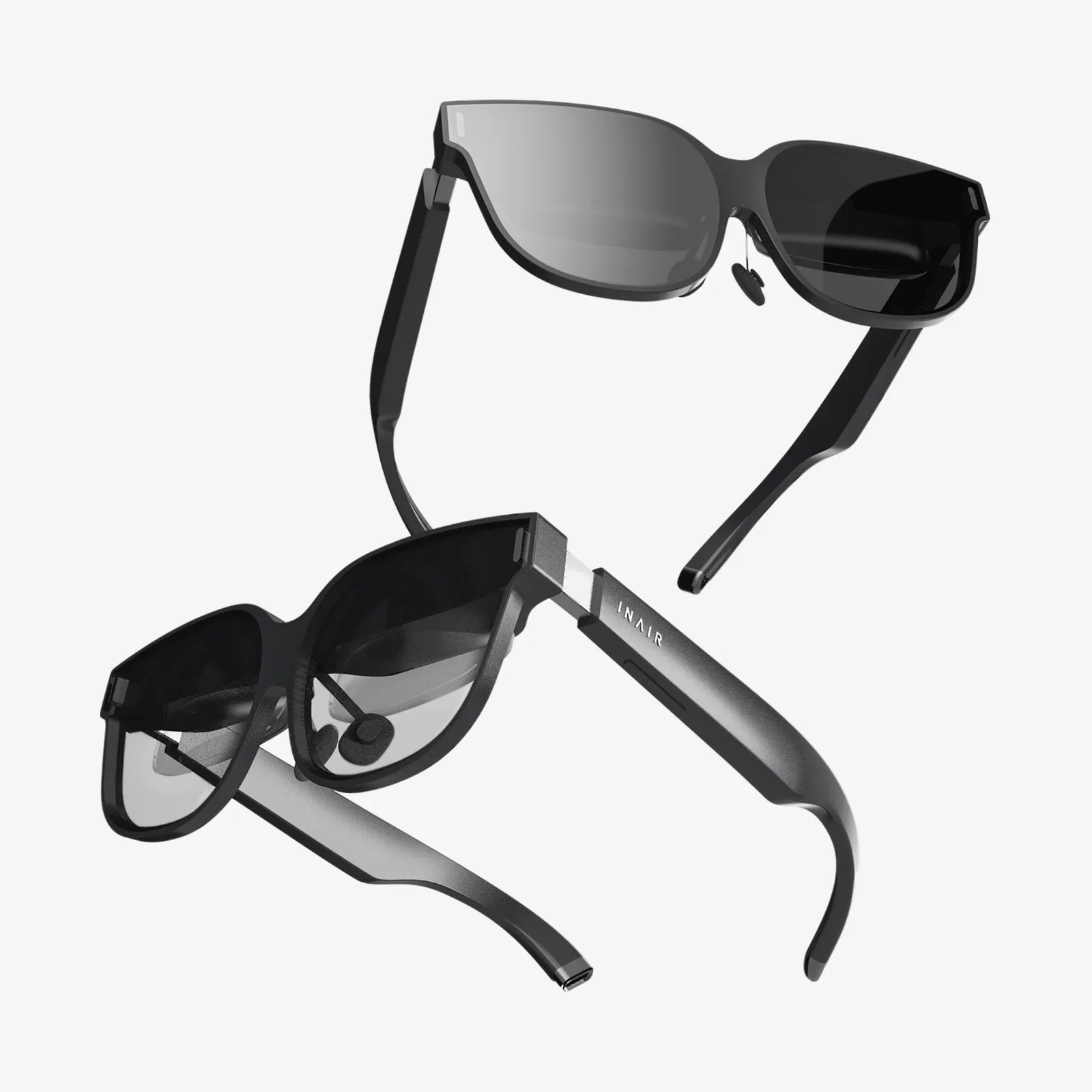
Imagine a world where digital information doesn't confine you to a screen but bleeds seamlessly into your living room, where instructions for repairing your car engine hover over the very parts you need to fix, and where a history lesson transforms your city park into a bustling ancient Roman forum. This is the promise of augmented reality, a future that is no longer science fiction but an emerging reality. The key to unlocking this potential lies in a single, crucial piece of technology: a good AR headset. But with so much hype and rapid technological advancement, what does “good” truly mean? It’s not just about the specs on a box; it’s about an elegant, powerful, and intuitive bridge between our physical and digital lives.
Beyond the Hype: Defining the Core Qualities of a Superior AR Experience
The journey to finding a good AR headset begins by understanding the fundamental pillars that separate a gimmick from a genuine tool for transformation. These are the non-negotiable elements that form the foundation of a compelling and useful augmented reality experience.
Visual Fidelity: The Window to a Blended World
At the heart of any AR headset is its ability to convincingly render digital content into your field of view. This is a complex dance of optics, displays, and software.
- High Resolution and Wide Field of View (FoV): A good display must be sharp enough that text is crisp and graphics are clear, not pixelated. Equally important is a wide field of view. A narrow, binocular-like view shatters the illusion of immersion. A good AR headset strives for a FoV that allows digital objects to feel present in your peripheral vision, making them a natural part of your environment rather than a small, floating window.
- Accurate Passthrough and Occlusion: For headsets that use cameras to show you the real world (video passthrough), low latency and high resolution are critical to avoid nausea and create a natural feel. Furthermore, advanced occlusion is a hallmark of a good AR headset. This is the technology that allows a virtual coffee cup to be realistically hidden behind your real monitor, creating a true sense of depth and spatial coexistence.
Comfort and Form Factor: The Forgotten Frontier
The most technologically advanced headset is useless if it’s a pain to wear. A good AR headset must be designed for human ergonomics.
- Weight Distribution: It should feel balanced on your head, not front-heavy, to avoid strain on your neck and face during extended use.
- Materials and Adjustability: Plush, breathable materials and multiple points of adjustment (headband, IPD, etc.) ensure a secure and comfortable fit for a diverse range of users. The goal is for the technology to fade into the background, allowing you to focus on the experience, not the device on your face.
Intuitive Interaction: Speaking the Language of Reality
How do you interact with a world that doesn’t physically exist? A good AR headset offers a suite of natural input methods.
- Hand Tracking: The ability to reach out and manipulate digital objects with your bare hands is arguably the most intuitive interface possible. Precision and low latency are key here.
- Voice Commands: Seamless integration with a powerful voice assistant allows for hands-free control, perfect for pulling up information or issuing commands while your hands are busy.
- Controllers (Optional but Useful): For specific tasks requiring extreme precision (e.g., detailed 3D design), optional controllers can provide tactile feedback and pinpoint accuracy, complementing the primary input methods.
Spatial Awareness and Processing Power: The Digital Brain
For digital objects to stay locked in place and interact with the real world, the headset needs to understand its environment perfectly.
- Precision Tracking: A combination of cameras, sensors, and LiDAR scanners continuously maps the room, understanding surfaces, edges, and objects. This is known as simultaneous localization and mapping (SLAM). A good AR headset performs this quickly and accurately, preventing digital content from jittering or drifting.
- Onboard Compute: Processing all this visual data, running complex environments, and rendering high-fidelity graphics requires immense processing power. Whether through a powerful onboard chip or a reliable, low-latency connection to an external compute unit, a good AR headset delivers smooth performance without lag or stutter.
The Real-World Impact: How a Good AR Headset Transforms Industries
The value of this technology is not in playing virtual games on your tabletop—though that can be fun—but in its profound practical applications. A good AR headset is a productivity multiplier, an educational revolution, and a creative canvas.
Revolutionizing Enterprise and Manufacturing
This is where AR is currently making its most significant commercial impact. Enterprises are leveraging the technology to solve real problems and save millions.
- Remote Assistance and Expert Guidance: A field technician facing a complex problem can stream their point-of-view to an expert thousands of miles away. The expert can then annotate the technician’s real-world view with arrows, notes, and diagrams, guiding them through the repair step-by-step. This drastically reduces downtime, travel costs, and errors.
- Complex Assembly and Training: Digital work instructions can be overlaid directly onto assembly lines, showing workers exactly which part to install next and how to torque it. This improves accuracy and speeds up training for new employees. Surgeons can practice complex procedures on virtual patients, and mechanics can learn the intricacies of a new engine model before ever touching the physical thing.
- Design and Prototyping: Architects and engineers can walk through full-scale 3D models of their designs, identifying spatial issues and making changes in real-time before any physical construction begins, saving immense resources.
Redefining Education and Learning
AR has the power to turn abstract concepts into tangible, interactive experiences.
- Immersive History and Science: Instead of reading about ancient Egypt, students can walk around a virtual pharaoh’s tomb right in their classroom. They can dissect a virtual frog, explore the human circulatory system from the inside, or witness the orbits of planets around the sun in real-time.
- Skill-Based Learning: From playing a virtual piano with guided hand positions to learning complex repair procedures, AR provides a safe, repeatable, and interactive environment for mastering new skills.
Unleashing Creativity and Social Connection
Beyond work and school, AR is a new medium for art, expression, and connection.
- Spatial Computing and Art: Artists are using AR to create dynamic sculptures and paintings that exist in specific locations, transforming public spaces into interactive galleries. Users can decorate their homes with digital art that never fades or create entire virtual worlds in their backyard.
- The Future of Social Media and Communication: Imagine sharing not just a photo, but a full 3D memory or experience. A good AR headset could allow you to leave a virtual note for a family member on the kitchen counter or watch a movie with a friend who lives across the country as if they are sitting on your couch.
Navigating the Challenges: The Path to a Ubiquitous AR Future
Despite the incredible potential, the road to perfect, ubiquitous AR is still under construction. Acknowledging these hurdles is key to understanding the current state of the technology.
- Battery Life and Thermal Management: The immense processing power required for high-end AR is a significant drain on batteries. A good AR headset must find a balance between performance and all-day usability, often through innovative power management and efficient chip design. This also generates heat, which must be dissipated comfortably.
- The Social Acceptance Hurdle: While technology advances, the social awkwardness of wearing a computer on your face in public remains. Designers are working on making headsets smaller, lighter, and more like traditional eyewear, but this is a challenge of physics and social norms that will take time to overcome.
- Developing a Robust Ecosystem: Hardware is nothing without software. The success of any computing platform hinges on a vibrant ecosystem of developers creating compelling applications. This is still in its early stages for AR, though it is growing rapidly as the hardware becomes more capable and accessible.
- Privacy and Ethical Considerations: A device that maps your home and workplace and potentially records video and audio raises serious privacy questions. A good AR headset must have transparent privacy policies, robust user controls over data, and clear indicators when recording or mapping is active to build and maintain user trust.
Looking Ahead: The Future is Augmented
The trajectory is clear. The clunky, limited AR devices of yesterday are giving way to a new generation of sleek, powerful, and intelligent headsets. The future will see the convergence of AR and VR into a single device capable of blending realities, the development of even more advanced photonic displays for brighter, lighter visuals, and the integration of artificial intelligence that understands context and intent to provide truly proactive assistance. The goal is a pair of glasses that offer all the power of a computer while being as socially acceptable and comfortable as a pair of sunglasses. We are moving towards a world where the line between the digital and the physical is not just blurred but erased, creating a canvas for human potential limited only by our imagination.
This isn't about escaping reality; it's about enhancing it. The right device will feel less like a piece of technology and more like a natural extension of your own capabilities, unlocking new ways to work, learn, create, and connect. The future isn't just coming; it's about to be layered right on top of the world you see today.
Share:
How to Show VR Headset on TV: The Ultimate Guide to Sharing Your Virtual World
Best PC Connected VR Headset - The Ultimate Guide to High-Fidelity Immersion