


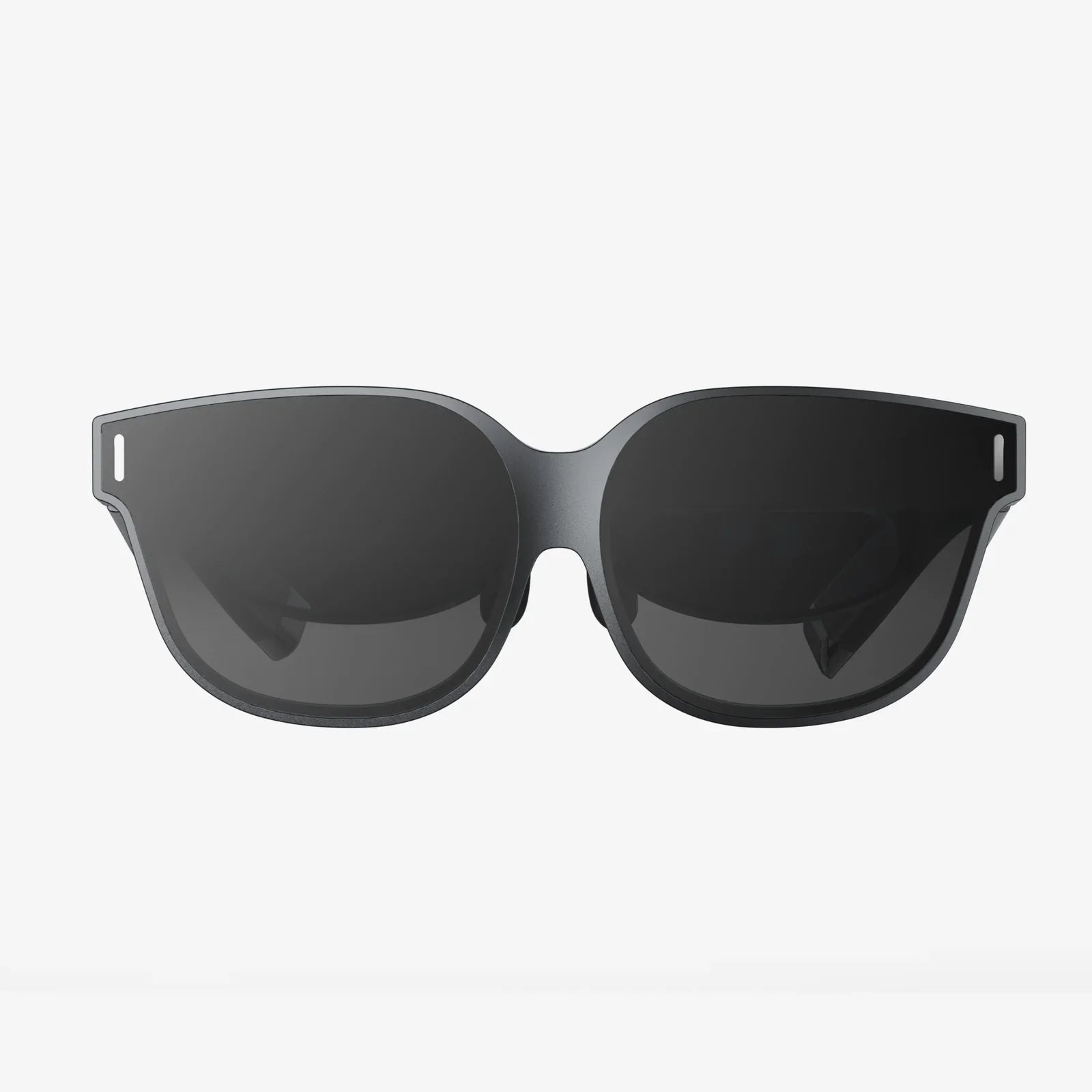
Imagine a world where the digital and the physical are no longer separate realms, but a seamless, interactive tapestry woven into the very fabric of your daily life. This isn't a distant sci-fi fantasy; it's the imminent future being built today under the banner of Google Android XR. This ambitious endeavor represents more than just a new headset or a software update—it's a foundational shift in computing, a bet on a future where our environment is the interface, and information is an interactive layer over reality itself. The race to define this next paradigm is on, and with the might of the Android ecosystem behind it, Google is not just entering the arena; it's aiming to build the coliseum.
The Genesis of a New Platform: From Mobile-First to Reality-First
The story of Android XR begins with the evolution of computing itself. We moved from room-sized mainframes to personal desktops, from laptops to smartphones that put the world's knowledge in our pockets. Each transition was marked by a more intimate and immediate connection with technology. The logical next step is to remove the screen barrier entirely, to move from looking at a world of information to living inside it. This is the core thesis of spatial computing, and Android XR is Google's comprehensive answer.
This isn't Google's first foray into this space. Projects like Google Cardboard, Daydream, and Google Glass served as crucial, if sometimes stumbling, first steps. They were prototypes for the public, experiments that taught invaluable lessons about hardware limitations, user experience challenges, and what consumers actually want from wearable technology. Android XR is the synthesis of a decade of learning. It’s the move from isolated experiments to a unified, scalable platform designed to power a vast ecosystem of devices from various manufacturers, much like Android did for smartphones.
Deconstructing Android XR: More Than Just a Name
The term "XR" or "Extended Reality" is an umbrella that encompasses Virtual Reality (VR), Augmented Reality (AR), and everything in between. Android XR, therefore, is not a single product but a robust software and services platform designed to support this entire spectrum.
The Technical Bedrock: A Unified Operating System
At its heart, Android XR is a fork or a specialized version of the Android operating system, meticulously optimized for the unique demands of head-mounted displays. This strategic decision is a masterstroke. It allows the platform to leverage the immense power of the existing Android ecosystem:
- Developer Familiarity: Millions of developers already know how to build for Android. By providing familiar tools and APIs within a new context, Google dramatically lowers the barrier to entry for creating XR experiences.
- Established Infrastructure: It can integrate with core Google services like the Play Store for distribution, Google Play Services for identity and authentication, and Google Cloud for scalable backend processing.
- Hardware Ecosystem: It invites device makers to build hardware for the platform, fostering competition and innovation that will drive down costs and accelerate feature development, avoiding the walled-garden approach of some competitors.
The technical challenges are profound. The OS must deliver incredibly high, consistent frame rates to prevent motion sickness, manage complex sensor fusion data from cameras, accelerometers, and gyroscopes for precise head and hand tracking, and do it all within the severe thermal and battery constraints of mobile hardware. Android XR's core mission is to solve these problems at the platform level, so developers and manufacturers can focus on innovation rather than fundamentals.
The Human Interface: Beyond the Touchscreen
How do you interact with an environment that has no mouse or keyboard? Android XR is pioneering new interaction paradigms that feel intuitive and magical.
- Inside-Out Tracking: Unlike early VR systems that required external sensors, modern XR headsets use onboard cameras to map the environment and understand their position within it instantly. This is known as inside-out tracking, and it's crucial for making the technology untethered and accessible.
- Hand Tracking: The ultimate controller is at the end of your arms. Advanced computer vision algorithms allow Android XR devices to use your bare hands as the primary input method—pinching to select, swiping in the air to navigate menus, or manipulating digital objects with natural gestures.
- Voice Assistant Integration: The power of a sophisticated voice assistant is deeply integrated, allowing users to search, control apps, and retrieve information without lifting a finger, making the experience truly hands-free.
- Passthrough and Contextual Awareness: For AR, the system uses camera feeds to blend digital content with the real world. Android XR must do this with such low latency and high fidelity that your brain is tricked into believing the virtual object is actually there. This requires immense processing power for real-time scene understanding, object occlusion, and lighting matching.
The Applications: Reshaping Every Industry
The true potential of Android XR is unlocked not by the technology itself, but by the applications it enables. Its impact will be felt across virtually every sector.
Revolutionizing Work and Productivity
The concept of the "infinite office" is becoming a reality. Imagine putting on a comfortable pair of glasses and instantly being surrounded by your perfect productivity setup: multiple large, virtual monitors for coding or design work, a virtual whiteboard for brainstorming with remote colleagues whose avatars sit across from you, and all your necessary apps pinned spatially around your physical desk. Android XR can make remote collaboration feel physically present, breaking down geographical barriers and potentially reducing the need for physical office space and travel.
Transforming Education and Training
Learning becomes experiential. Instead of reading about ancient Rome, history students can walk through a faithfully reconstructed digital version of the Forum. Medical students can practice complex surgical procedures on detailed holographic anatomies without risk. Mechanics can learn to repair a new engine model with interactive step-by-step instructions overlaid directly onto the physical machinery. Android XR turns abstract concepts into tangible, interactive experiences, dramatically improving retention and understanding.
Redefining Social Connection and Entertainment
Social media will evolve from feeds and profiles to shared spaces and experiences. Watching a concert with a friend who lives across the globe, feeling like you're in the same front row. Playing a game where the virtual world is mapped onto your living room, with characters hiding behind your real sofa. Android XR promises a new form of "phygital" entertainment that is more immersive, social, and physically active than anything available today.
Navigating the Inevitable Challenges
For all its promise, the path to an Android XR-powered future is fraught with significant hurdles that must be overcome for widespread adoption.
- The Hardware Conundrum: The ideal device—one that is socially acceptable to wear, lightweight, has all-day battery life, high-resolution displays, and powerful processing—does not yet exist. It requires breakthroughs in battery technology, display miniaturization (like microLED), and chip design. Current devices are often too bulky, expensive, or limited in endurance.
- The Privacy Imperative: XR devices are, by their nature, the most intimate data collection devices ever conceived. They have cameras and microphones that see and hear everything you do, and sensors that map your personal environment. Google must, and likely will, build privacy and security into the very core of Android XR. This means robust on-device processing, transparent user controls over data, and clear policies that prevent misuse of this deeply personal information.
- Avoiding the Digital Divide: As with any transformative technology, there is a risk of creating a new socio-economic divide between those who can afford access to these new realities and those who cannot. The Android model of fostering a broad hardware ecosystem is the best hope for driving down costs and making the technology more accessible over time.
The Competitive Landscape: An Open Platform for an Open Future
Google is not alone in this quest. Other tech giants have their own visions for the metaverse and spatial computing. Some are building closed, vertically integrated systems where they control the hardware, software, and store. The philosophy behind Android XR is fundamentally different. It is an open, foundational platform meant to empower an entire industry.
This approach has historically been Android's greatest strength. It creates a fertile ground for innovation, choice, and scalability. For Android XR to succeed, Google must convince developers, manufacturers, and consumers that an open, interoperable future is preferable to a walled garden. It must provide a platform that is demonstrably more capable, more secure, and easier to build for than the alternatives.
The potential is not merely to create a new product category but to establish the underlying architecture for the next era of human-technology interaction. It’s about building the roads and rules for a new digital continent that we will all eventually inhabit.
We stand on the precipice of a revolution that will make the smartphone revolution look incremental. The pieces are coming together: the software platform in Android XR, the advancing hardware, the eager developers, and the increasingly tangible use cases. The question is no longer if this future will arrive, but how quickly and in what form. When the seamless blend of our physical and digital lives becomes as commonplace as the smartphone in your pocket, you'll likely have the open, scalable, and powerful foundation of Google Android XR to thank for it. The next world is loading, and it's waiting for you to step inside.
Share:
Best VR Headset India 2025: The Ultimate Buyer's Guide to the Future of Immersion
XR AR VR Updates Today: The Latest in Immersive Technology