


The digital frontier is shifting beneath our feet, not with a tremor, but with a profound, silent leap into new realities. For those plugged into the pulse of immersive technology, today isn't just another day on the calendar; it's a potential watershed moment. The constant stream of XR AR VR updates today represents more than just patch notes or new features—it's the live, breathing evolution of how we will work, play, and connect. Every software enhancement, hardware refinement, and strategic partnership brings us closer to a world where the line between the physical and digital realms is not just blurred but erased. This isn't about incremental change; it's about building the foundation for the next era of human-computer interaction, and the latest updates are the bricks and mortar.
Decoding the Ecosystem: XR, AR, and VR Defined
Before diving into the specifics of the latest developments, it's crucial to understand the landscape. The term Extended Reality (XR) serves as the universal umbrella, encompassing all combined real-and-virtual environments. It's the master category.
Virtual Reality (VR) is the most immersive off-ramp from our reality. By donning a headset, users are fully transported into a completely digital, 3D environment. The goal of VR is to shut out the physical world and create a convincing sense of presence elsewhere, whether that's a game world, a training simulation, or a virtual meeting space.
Augmented Reality (AR), by contrast, layers digital information onto our real-world view. Instead of replacement, the philosophy is enhancement. Through specialized glasses or, more commonly, smartphone and tablet cameras, users can see digital objects—from navigation arrows on a street to a virtual sofa in their living room—superimposed over their immediate surroundings.
The Hardware Horizon: Pushing the Boundaries of Perception
The most exciting XR AR VR updates today often concern the physical tools that power these experiences. The relentless pursuit is for lighter, more powerful, more comfortable, and more accessible hardware.
In the VR space, the trend continues to move away from tethered headsets requiring powerful external computers and toward standalone devices. These all-in-one units offer incredible freedom of movement and a drastically lower barrier to entry. Recent updates have focused on increasing processing power to rival their tethered ancestors, enabling richer graphics and more complex simulations. Furthermore, advancements inside-out tracking, where cameras on the headset itself map the environment, have eliminated the need for external sensors, making setup instantaneous and use more intuitive.
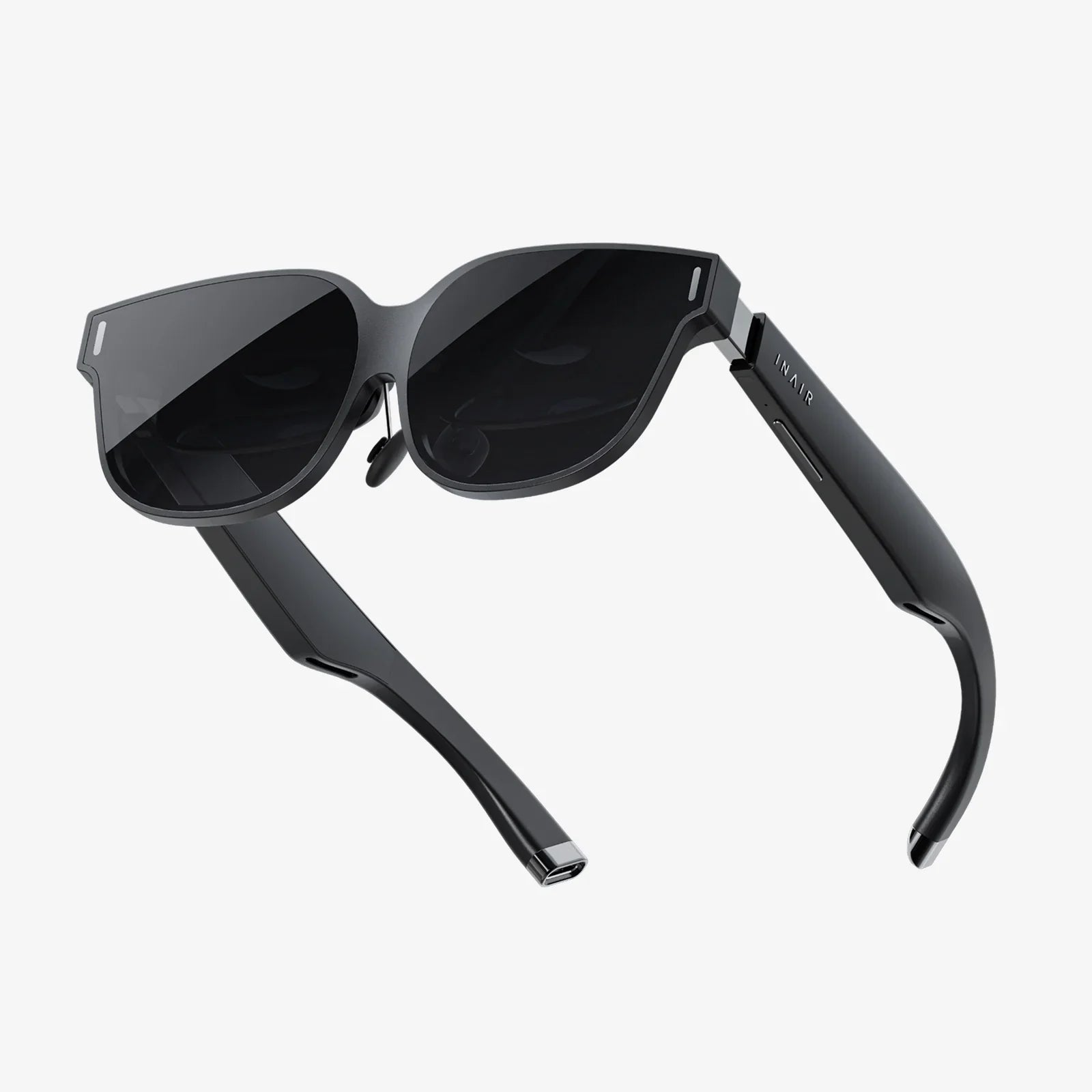
For AR, the hardware evolution is twofold. Consumer-grade AR remains dominated by smartphone applications, with updates to mobile operating systems continuously improving their AR capabilities, object recognition, and persistence. However, the true holy grail remains stylish, consumer-ready smart glasses. Updates in this sector often revolve around breakthroughs in waveguide technology, which projects images directly onto the lenses, and miniaturization of components to create a form factor people would actually want to wear all day. While true consumer AR glasses are still on the horizon, enterprise-focused models are seeing rapid iteration, with updates focusing on durability, battery life, and better field of view for industrial applications.
Software & Platform Evolution: Building the Metaverse's Foundation
Hardware is nothing without the software to bring it to life. The most impactful XR AR VR updates today are frequently found in platform-level software and development tools.
A major area of focus is cross-platform compatibility
Another key software update involves developer toolsets (SDKs). Companies are continuously releasing updated software development kits that make it easier and faster for developers to create high-fidelity XR experiences. These updates include pre-built environments, more sophisticated physics engines, improved hand-tracking APIs, and cloud-based resources for rendering complex scenes. By lowering the technical barrier, these updates empower a new wave of creators to innovate. Finally, social features are receiving massive investment. The understanding that shared experiences are the most compelling is driving updates that include more expressive avatars, spatial audio that mimics real-life conversation, and tools for user-generated content within virtual spaces. These aren't just games; they are the nascent public squares and collaboration studios of tomorrow. While consumer applications grab headlines, some of the most valuable XR AR VR updates today are squarely aimed at the enterprise sector. Businesses are seeing a clear return on investment from integrating immersive tech. Training and Simulation: From surgeons practicing complex procedures to mechanics learning to repair new engine models, VR provides a risk-free, highly scalable training environment. Updates here focus on hyper-realism, haptic feedback to simulate touch, and AI-driven instructors that can adapt the training scenario in real-time based on user performance. Remote Assistance and Design: AR is revolutionizing fields like manufacturing and architecture. A field technician wearing AR glasses can have a remote expert see their view and annotate the real world in front of them, highlighting which component to replace. Designers and engineers can collaborate on a full-scale 3D model of a car or building, walking around it and making changes in real-time, saving millions in prototyping costs. Updates are enhancing the stability of these annotations and the precision of model anchoring in physical space. Data Visualization: Imagine walking through a live, 3D graph of your company's financial data or network traffic. XR updates are making complex data sets intuitively understandable by giving them a physical, interactive form, enabling insights that are difficult to glean from a 2D spreadsheet. The engine of any platform is its content. The latest updates are empowering creators to tell stories and build worlds in ways previously confined to science fiction. In gaming, the evolution is toward more expansive, physically active, and socially connected experiences. Updates are enabling full-body tracking without extra sensors, allowing a player's real-world kick to be mirrored by their avatar in-game. Narrative-driven games are becoming more emotionally resonant as players don't just watch a character's journey but literally stand beside them. Beyond gaming, we are seeing an explosion in immersive art, live events, and educational content. Major musical artists are hosting virtual concerts where fans from across the globe can appear together in a fantastical venue. Museums are offering virtual tours where you can examine ancient artifacts from every angle. Updates in streaming technology and volumetric video capture are making these experiences more lifelike and accessible than ever before. Despite the breathtaking pace of innovation, the path forward for XR is not without its obstacles. The latest updates also bring these challenges into sharper focus. Privacy and Ethics: Headsets with eye-tracking can know exactly what you're looking at and for how long. Cameras and sensors are constantly mapping your personal environment. The industry's updates must be matched with robust, transparent policies on data collection, usage, and security to build and maintain user trust. Accessibility and Health: Making experiences comfortable for all users, including those susceptible to motion sickness or with physical disabilities, is a primary focus of user experience updates. Furthermore, understanding the long-term effects of prolonged headset use on vision and social development remains an area of active research. The Digital Divide: As these technologies become more integral to work and social life, ensuring equitable access is critical to prevent a new societal schism between those who can afford to step into these new realities and those who cannot. Every line of code committed, every spec sheet released, and every new application launched is a step toward a future that was unimaginable just a generation ago. The stream of XR AR VR updates today is the live commentary on this revolution, a real-time chronicle of humanity's audacious attempt to redefine reality itself. For developers, entrepreneurs, and early adopters, keeping a finger on the pulse of these changes isn't just interesting—it's essential. The next major update could drop at any moment, and it might just change everything.Enterprise Integration: Where Productivity Meets Immersion
The Content Revolution: New Experiences and Storytelling
Challenges and Considerations: The Path Forward
Share:
Google Android XR: The Future of Immersive Computing and How It Will Change Everything
Android XR Headset Price: A Comprehensive Guide to the Budget-Friendly VR/AR Market