


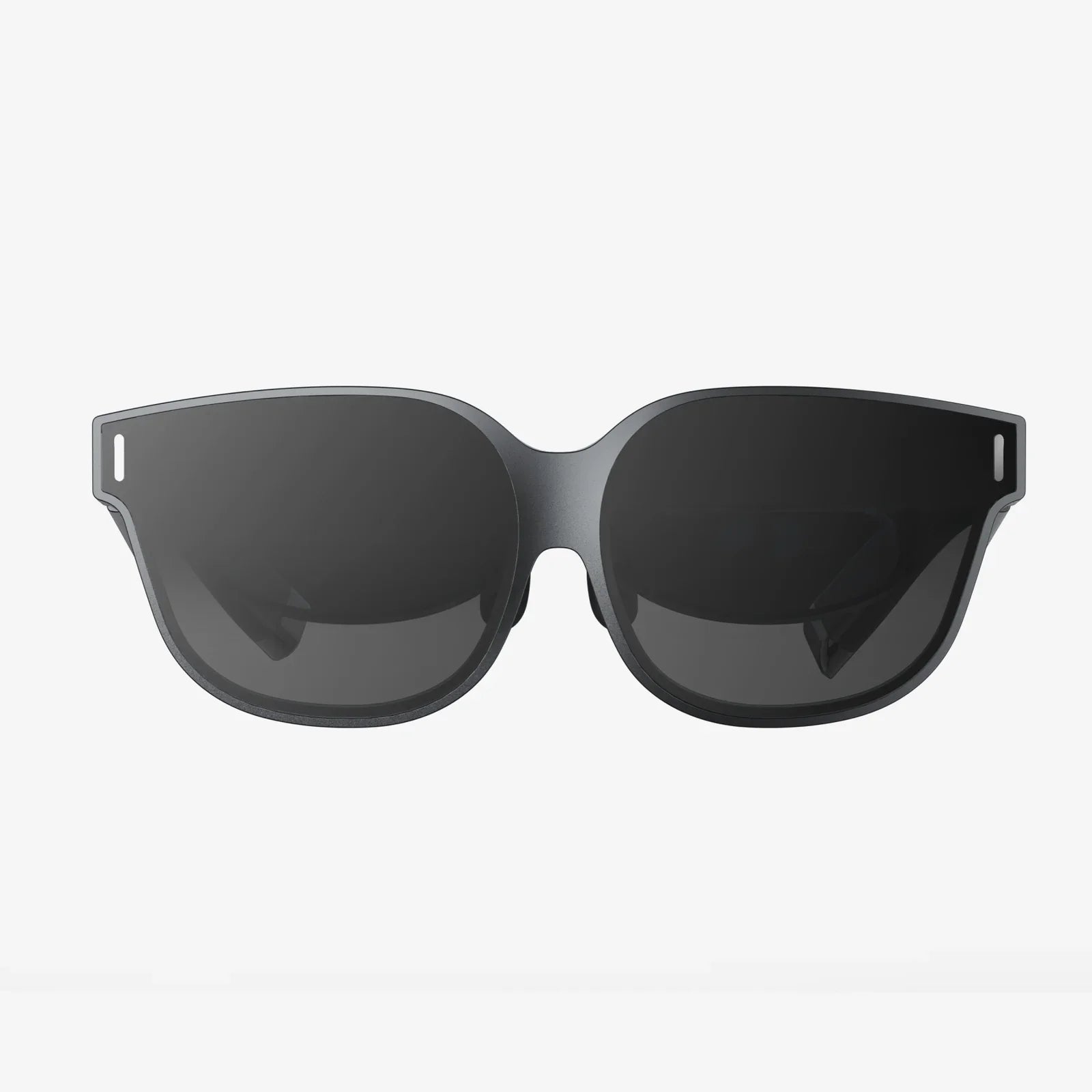
Imagine stepping into a virtual world not as a visitor fumbling with unfamiliar tools, but as a native. Your intentions become actions, your gaze directs the narrative, and your voice commands the environment. This is the promise of hands-free virtual reality—a technological paradigm shift that is dismantling the final barriers between our physical reality and the digital domains we create. It’s not just an upgrade; it’s a redefinition of immersion itself, poised to unlock applications we’ve only ever dreamed of and fundamentally change our relationship with technology.
The Limitations of the Handheld Era
For years, virtual reality has been a tale of two worlds: one of breathtaking visual and auditory immersion, and one of often clumsy, mechanical interaction. The standard controller, while a revolutionary tool in its own right, has always been a tangible reminder of the artifice. It functions as a symbolic translator, mapping our button presses and joystick movements to actions within the virtual space. We learn its language, but we never forget we're holding an instrument. This creates a inherent cognitive load—a constant, low-level awareness of the interface that subtly but surely limits the feeling of true presence. For complex tasks, from delicate surgical simulations to expressive artistic creation, the abstraction of a controller can feel limiting and imprecise. Hands-free VR seeks to eliminate this translator, allowing for a direct, intuitive, and profoundly more natural dialogue with the digital world.
The Technological Pillars of Unencumbered Immersion
The move to a controller-less future is not driven by a single invention, but by a convergence of several advanced technologies working in concert.
Advanced Inside-Out Tracking and Computer Vision
The foundation of any VR experience is understanding the user's position and movement. Hands-free systems rely on sophisticated inside-out tracking, where cameras and sensors mounted on the headset itself continuously map the environment and the user's body. Powered by complex machine learning algorithms, these systems can now track not just the headset's position, but the intricate movements of the user's hands, fingers, and even eyes with remarkable accuracy. This enables gesture-based control, where a simple pinch, a wave, or a pointed finger can be interpreted as a precise command, making digital interaction as simple as interacting with the physical world.
Eye-Tracking: The Window to Intent
Perhaps the most transformative input for hands-free VR is eye-tracking. Using invisible infrared lights and miniature cameras, the headset can precisely determine where the user is looking at any given moment. This serves multiple critical functions. Firstly, it enables foveated rendering, a technique that allocates the highest graphical processing power only to the specific area of the screen the user's fovea (the center of the eye responsible for sharp vision) is focused on, drastically reducing the computational load without any perceptible loss in quality. Secondly, and more importantly for interaction, gaze becomes a primary input method. Menus can be selected simply by looking at them, objects can be highlighted for interaction, and social experiences can be transformed as avatars gain the ability to make meaningful eye contact, conveying nuance and emotion previously impossible in digital spaces.
Natural Language Processing and Voice Control
Voice assistants have become commonplace in our homes and phones, and their integration into VR is a natural progression. Powered by natural language processing (NLP), headsets can understand and execute complex verbal commands. Instead of navigating nested menus with a controller, a user can simply say, "Launch the astronomy application and take me to Jupiter." Or during a creative session, "Change my brush to watercolor and select a deep blue." This not only enhances accessibility for those unable to use traditional controllers but also adds a powerful layer of efficiency and immersion, making the user feel like a conductor orchestrating the digital environment with their voice.
The Emerging Frontier: Brain-Computer Interfaces (BCIs)
While still in its relative infancy for consumer applications, BCI technology represents the ultimate horizon for hands-free control. Using non-invasive sensors (often in a headband or integrated into a headset strap), these systems can detect electrical signals from the brain. The goal is not to read specific thoughts, but to interpret intent from recognizable neural patterns. The potential is staggering: a user could think "select" to choose an object or imagine moving their arm to control a virtual limb without any physical movement. This would represent the final dissolution of the interface, creating a direct pathway from the human mind to the digital realm.
Transformative Applications Across Industries
The shift to hands-free interaction is not merely a convenience for gamers; it is a key that unlocks VR's potential across professional and therapeutic fields.
Enterprise and Industrial Training
In complex industrial and medical training, the fidelity of interaction is paramount. Surgeons can practice intricate procedures in a virtual operating room, using precise hand gestures to manipulate virtual tools without the cognitive disconnect of a controller. This builds genuine muscle memory. Similarly, engineers can assemble and disassemble complex machinery, mechanics can learn to repair engines, and warehouse workers can be trained on logistics systems—all using natural gestures, leading to faster learning, better retention, and a safer training environment.
Healthcare and Rehabilitation
Hands-free VR offers profound benefits in physical and cognitive rehabilitation. For patients recovering from strokes or spinal cord injuries, systems that track even minimal movement can be used for motivating motor therapy exercises. For individuals with limited mobility, gaze and voice control can provide a powerful portal to social connection, creative expression, and entertainment, restoring a sense of agency. Furthermore, VR exposure therapy for conditions like PTSD or phobias becomes significantly more potent when the patient can interact with the environment naturally, without the mediating presence of a controller, deepening the therapeutic simulation.
Design, Architecture, and Collaboration
Architects and designers can step inside their 3D models and manipulate them with their hands, scaling walls, changing materials, and rearranging furniture with intuitive gestures. In virtual collaboration spaces, meetings become more dynamic and natural. Participants can gesture to emphasize a point, make eye contact to signal agreement, and collectively manipulate 3D data models as if they were physical objects in the room, overcoming the limitations of traditional video conferencing and fostering a true sense of shared presence.
Accessibility and Inclusive Design
This is perhaps the most socially significant impact. Hands-free technology makes immersive computing accessible to a vast population previously excluded. Individuals with certain physical disabilities, amputations, or conditions like arthritis that make controller use difficult or impossible can now fully engage with virtual worlds through voice, gaze, and eventually neural commands. This democratization of experience ensures that the future of computing is built for everyone.
Navigating the Challenges and Ethical Considerations
This new frontier is not without its significant challenges and questions that society must address.
Technical Hurdles: Latency, Accuracy, and Fatigue
For the illusion to hold, the technology must be flawless. Any noticeable lag between a user's gesture and the system's response (latency) will instantly break immersion and can cause discomfort. Similarly, the accuracy of eye-tracking and hand-tracking must be exceptionally high to avoid frustration. Furthermore, a phenomenon known as the "gorilla arm effect" is a real concern—holding one's arms up to gesture for extended periods can be surprisingly fatiguing. Designing intuitive, low-effort interaction paradigms is a critical focus for developers.
The Data Privacy Paradigm
Hands-free VR systems, by their very nature, are biometric data collection powerhouses. They process incredibly intimate data: your gaze patterns, your voice recordings, your unique hand gestures, and in the case of BCIs, your neural signals. This data is a treasure trove for improving user experience, but it also represents a unprecedented privacy risk. Who owns this data? How is it stored and secured? Could it be used to infer cognitive state, emotional responses, or even unconscious biases? Robust, transparent, and user-centric data governance frameworks are not optional; they are an absolute prerequisite for the ethical development of this technology.
The Social and Psychological Impact
As these experiences become more seamless and compelling, questions about long-term usage and its effects on human psychology and social behavior will emerge. How do we maintain a healthy balance between our physical and digital lives when the digital becomes so effortless to inhabit? The industry must proactively engage with ethicists, psychologists, and sociologists to understand and mitigate potential negative consequences, ensuring that this powerful tool enhances humanity rather than fracturing it.
The journey into virtual reality is shedding its last physical tether. The era of hands-free virtual reality is dawning, moving us beyond simple simulation and toward genuine teleportation of the self. It’s a future where the digital world won’t just be something we see and hear, but something we will touch, command, and ultimately shape with nothing more than a thought, a glance, or a whispered word—ushering in a new age of human potential that is only just beginning to be imagined.
Share:
Virtual Artificial Intelligence: The Invisible Engine Reshaping Our Digital and Physical Worlds
Best Virtual Reality Headset for Virtual Travel: Your Ultimate Passport to Digital Destinations