


Have you ever stopped to marvel at the intuitive swipe of a smartphone, the effortless click of a mouse, or the satisfying response of a well-designed app? These moments of seamless digital interaction are no accident; they are the direct result of a sophisticated field of study dedicated to the very space where humans and machines meet. To truly understand the fabric of our modern digital existence, we must delve into the HCI meaning. This journey goes far beyond a simple acronym to explore a discipline that is fundamentally reshaping our world, one interaction at a time.
The Core of HCI: More Than Just an Acronym
HCI stands for Human-Computer Interaction. At its simplest, it is a multidisciplinary field of study focusing on the design of computer technology and, crucially, the interaction between humans (the users) and computers. But this definition, while accurate, barely scratches the surface. HCI is not merely about the ‘interface’—the screen, buttons, or menus. It is about the entire experience. It encompasses the psychology of the user, the capabilities of the technology, the methods for designing and implementing systems, and the study of the phenomena surrounding their use.
Think of it as a conversation. A conversation requires at least two participants who can understand each other's language, respond appropriately, and achieve a mutual goal. HCI is the art and science of designing that conversation to be as fluid, efficient, and pleasant as possible. It seeks to eliminate friction, confusion, and frustration, replacing them with clarity, empowerment, and even delight.
A Brief History: From Punch Cards to Pervasive Computing
The HCI meaning has evolved dramatically alongside the technology it seeks to perfect. In the early days of computing, the ‘computer’ was a room-sized machine, and the ‘human’ was a highly trained operator. Interaction was a technical chore, conducted through punch cards, complex command-line interfaces, and blinking lights. The user was expected to adapt to the machine's language and logic.
The paradigm shift began with visionaries like Douglas Engelbart, whose 1968 "Mother of All Demos" showcased the mouse, hypertext, and graphical user interfaces (GUIs)—concepts that would become the bedrock of modern computing. This work was commercialized and popularized by the rise of personal computers from various manufacturers in the 1970s and 80s. Suddenly, the computer was on the desk, and the user was no longer a specialist but an everyday person. The machine now had to adapt to the human.
This era cemented the core principles of HCI. The advent of the Graphical User Interface (GUI), with its familiar desktop metaphor, windows, icons, and pointers, made computers vastly more accessible. This was HCI in action: using visual metaphors from the physical world to make the abstract digital world understandable. The field grew into a formal area of academic research, pulling from computer science, cognitive psychology, human factors, ergonomics, and design.
The journey continued with the rise of the internet, which introduced new challenges of information architecture and navigation. Then came the mobile revolution, forcing designers to rethink interaction for small screens, touch inputs, and on-the-go contexts. Today, HCI has exploded beyond the screen altogether, encompassing voice assistants, virtual and augmented reality, wearable technology, and the vast Internet of Things (IoT). The conversation between human and computer is becoming omnipresent, ambient, and woven into the very fabric of our daily lives.
The Pillars of Human-Computer Interaction
To fully grasp the HCI meaning, one must understand its foundational pillars. These are the core areas that practitioners focus on to create successful interactions.
1. The User
The user is the absolute center of the HCI universe. Everything revolves around their needs, capabilities, and limitations. This involves a deep understanding of:
- Cognitive Psychology: How do users perceive information on a screen? How does memory work? How do they learn and develop mental models of how a system operates? Understanding cognition helps designers create interfaces that align with how people think.
- Ergonomics (Human Factors): This deals with the physical aspect of interaction. Is the chair comfortable? Is the screen at the right height? Is the touch target on a phone screen large enough for a finger? It ensures the physical well-being of the user.
- User Diversity: Users are not all the same. HCI must account for variations in age, culture, technical expertise, and physical abilities. This drives the critical sub-field of accessibility, ensuring technology is usable by people with a wide range of hearing, movement, sight, and cognitive abilities.
2. The Technology (The Computer)
This pillar refers to the hardware and software being designed. HCI is concerned with the technical constraints and possibilities of input devices (mice, keyboards, touchscreens, cameras, sensors), output devices (screens, speakers, haptic feedback), and the underlying software platforms. The goal is to leverage technology not for its own sake, but to serve human needs effectively.
3. The Interaction
This is the bridge between the user and the technology. It’s the dance they perform together. Studying interaction involves:
- Usability: Is the system effective, efficient, and satisfying to use? Can users achieve their goals with minimal error and effort? The core qualities of usability are often broken down into learnability, efficiency, memorability, error prevention/recovery, and satisfaction.
- User Experience (UX): While often used interchangeably with HCI, UX is a crucial component of it. If usability is about functional performance, UX is about the broader, subjective feeling a user has when interacting with a system. It encompasses emotions, beliefs, preferences, perceptions, and the overall journey. A product can be usable but offer a poor UX if it feels tedious or uninspiring.
4. The Context of Use
An interaction never happens in a vacuum. Is the user sitting quietly in an office, or juggling a phone while walking down a busy street? Are they trying to complete a complex financial transaction or just quickly checking the weather? HCI considers the environment, the social setting, the task at hand, and the user's emotional state. Designing for context is what separates a good product from a great one.
The HCI Design Process: From Idea to Implementation
Understanding the HCI meaning also involves knowing how its principles are applied. The process is iterative and human-centered, typically involving these key stages:
1. Research and Requirement Gathering
This initial phase is about empathy. Designers observe and interview potential users to understand their pain points, needs, and goals. What problems are they trying to solve? What does their current workflow look like? This foundational research ensures the team is solving the right problem.
2. Design and Prototyping
Based on the research, designers begin creating solutions. This starts with low-fidelity sketches and wireframes that outline structure and flow, then evolves into high-fidelity, interactive prototypes that look and feel like the real product. Prototypes are essential for making ideas tangible and testable before expensive code is written.
3. Evaluation and Testing
This is the heart of the HCI process. Prototypes are tested with real users to uncover issues and gather feedback. Methods range from formal lab-based usability testing to simple guerrilla testing. The mantra is "test early and test often." The findings from this evaluation are fed directly back into the design process, fueling iteration and refinement.
4. Implementation and Development
Once the design is validated, it is handed off to developers for implementation. However, in modern agile workflows, designers and developers work closely together throughout the process to ensure the final product remains true to the design vision and user needs.
The Expanding Frontiers of HCI
The core HCI meaning is constant, but its applications are exploding into new and exciting territories.
Voice User Interfaces (VUI) and Conversational AI
Interacting with technology through speech is a fundamentally different paradigm than using a GUI. It requires designing for a conversation without a screen, dealing with ambiguity of language, and providing clear feedback through sound and speech. This pushes HCI to consider the nuances of human dialogue.
Virtual and Augmented Reality (VR/AR)
VR and AR represent the ultimate step in immersive computing. HCI here is about designing entire worlds and overlaying digital information onto the physical one. It involves solving complex challenges like motion sickness, 3D interaction, spatial audio, and creating a sense of "presence."
Wearables and the Internet of Things (IoT)
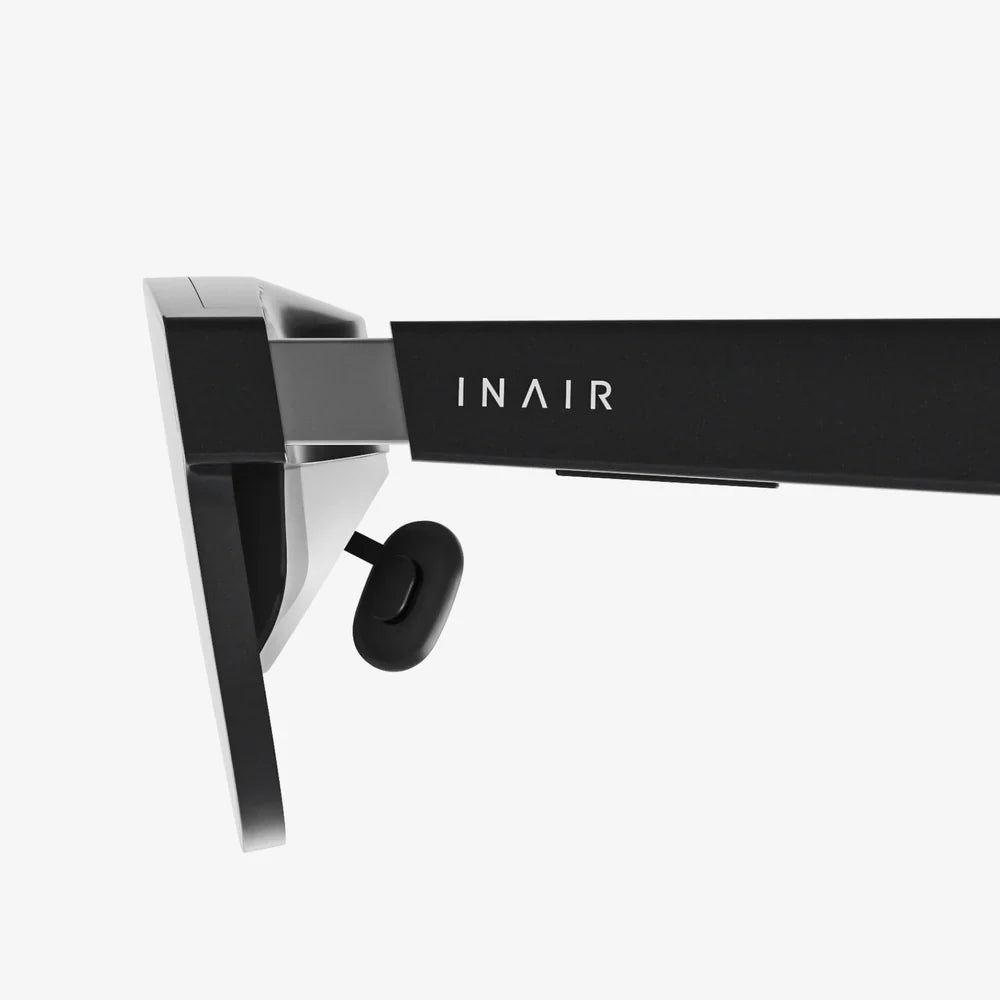
As computers shrink and disappear into our clothes, watches, glasses, and homes, HCI becomes about ambient interaction. How does a user control a smart home? How does a wearable device provide notifications without being intrusive? The interaction is often glanceable, haptic, and context-aware.
Human-AI Interaction
This is perhaps the most critical new frontier. As AI systems become more powerful, the challenge is designing interactions that are transparent, trustworthy, and controllable. How does a user understand what an AI is doing and why? How can they correct it when it's wrong? HCI is essential for building AI that is helpful and ethical, not opaque and frightening.
Why HCI Matters More Than Ever
In a world saturated with digital technology, the principles of HCI are not a luxury; they are a necessity. Poorly designed systems lead to frustration, lost productivity, security vulnerabilities, and even social exclusion. They can alienate users and cause businesses to fail. Excellent HCI, on the other hand, creates technology that empowers people, enhances creativity, breaks down barriers, and improves quality of life. It humanizes technology, ensuring it serves us, rather than the other way around.
From the smartphone in your pocket to the car you drive, from the medical equipment in a hospital to the website you use to file your taxes, HCI is the invisible hand guiding the experience. It is the difference between technology that feels like a frustrating obstacle and technology that feels like a natural extension of human capability.
So the next time you effortlessly tap an icon, ask a speaker to play a song, or get lost in a virtual world, remember the immense depth of thought and research behind that moment. The true HCI meaning is the relentless pursuit of a more intuitive, efficient, and humane future, proving that the most powerful technology is that which feels the simplest to use.
Share:
Android XR AI: The Invisible Revolution Reshaping Our Digital Reality
Virtual Spectacles: The Dawn of a New Digital Reality and Its Impact on Society