


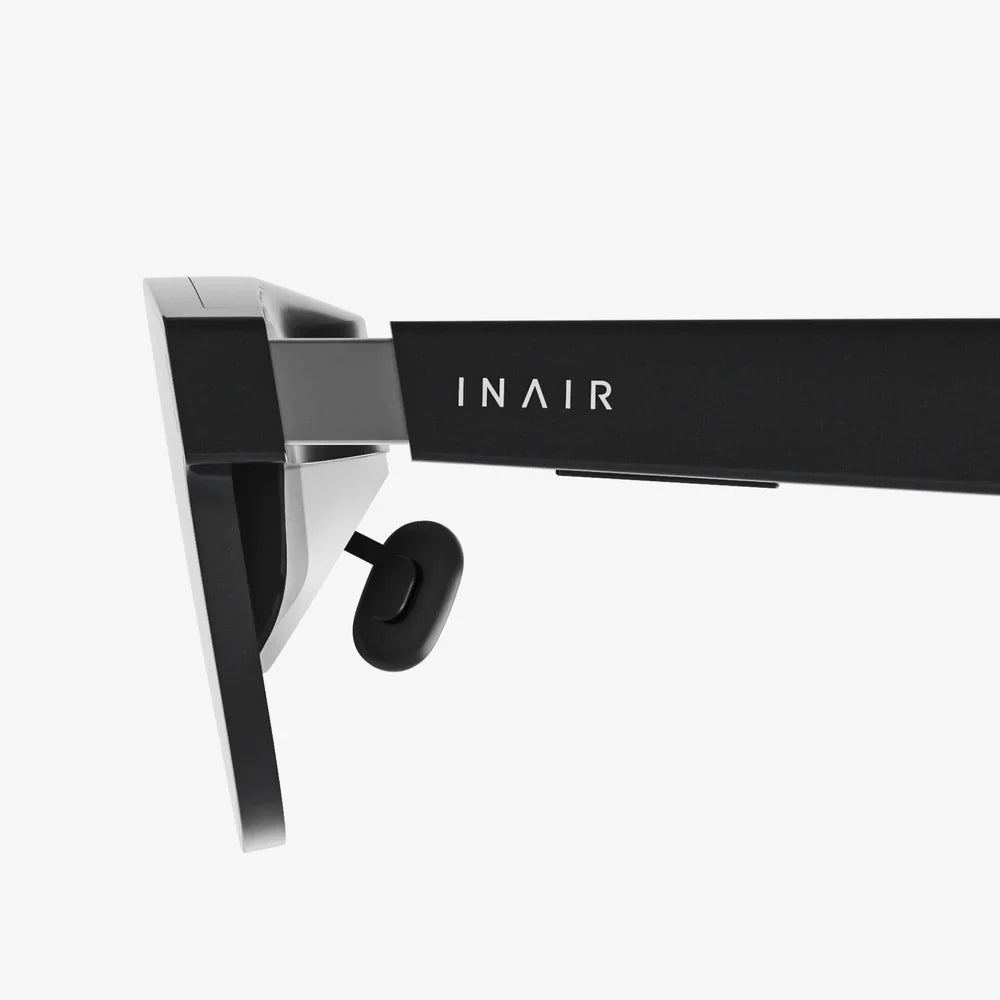
Imagine a world where your reality is not a fixed, immutable constant but a dynamic canvas, waiting to be painted with digital wonders, interactive information, and shared experiences that transcend physical boundaries. This is the promise, the allure, and the profound disruption of virtual spectacles, a technology poised not merely to change what we see, but to fundamentally redefine how we live, work, and connect. We stand at the precipice of a sensory revolution, where the very fabric of our daily perception is about to be interwoven with the digital realm, and the implications are as vast as they are thrilling.
The Architectural Pillars of Digital Sight
At their core, virtual spectacles are a symphony of advanced engineering, a convergence of multiple disciplines working in perfect harmony to trick the brain into accepting a synthetic world as real. The magic begins with ultra-high-resolution micro-displays, often employing advanced OLED or similar technologies, which project images directly in front of the user's eyes. These are not mere screens; they are windows, and their clarity is paramount to achieving the coveted state of 'presence'—the feeling of truly being in a virtual environment.
However, a crystal-clear image is useless if it remains static and disconnected from the user's movements. This is where a suite of sophisticated sensors takes over. Accelerometers, gyroscopes, and magnetometers work in concert as an Inertial Measurement Unit (IMU), tracking the precise rotation and orientation of the user's head with incredible speed and accuracy. For more complex positional tracking—moving forward, crouching, leaning sideways—technologies like inside-out tracking use integrated cameras to map the surrounding room, creating a real-time 3D mesh that allows the digital world to remain locked in place as the user physically navigates through it.
The final, crucial element is the computational brain. Powerful, miniaturized processors render complex, interactive environments in real-time, often assisted by sophisticated algorithms for spatial audio that match sound sources to their apparent location in 3D space. This trifecta of visual fidelity, precise tracking, and raw processing power forms the foundational architecture upon which all virtual experiences are built.
Beyond Gaming: A Spectrum of Revolutionary Applications
While immersive gaming and entertainment are the most visible applications, the true transformative potential of virtual spectacles lies far beyond. They are emerging as powerful tools for productivity, collaboration, and skill acquisition.
The Virtual Workspace
The concept of the office is being radically reimagined. Instead of being confined to the limited real estate of physical monitors, professionals can don a pair of spectacles to be surrounded by infinite, customizable virtual screens. Architects and engineers can walk clients through full-scale, interactive 3D models of unbuilt structures, identifying potential issues long before ground is broken. Remote collaboration ceases to be a grid of faces on a video call and transforms into a shared virtual conference room where colleagues from across the globe can manipulate 3D data, brainstorm on virtual whiteboards, and interact with a sense of shared presence that flat screens cannot replicate.
Transforming Education and Training
Virtual spectacles offer the ultimate pedagogical tool: experiential learning. Medical students can practice complex surgical procedures on detailed virtual anatomies, making mistakes without consequence. History classes can transport students to ancient Rome, walking through the Forum as it once was. Mechanics can learn to repair a complex engine by following interactive, holographic instructions overlaid onto the physical machinery. This learning-by-doing in a risk-free, highly engaging environment dramatically accelerates comprehension and retention.
A New Frontier for Social Connection
Social media is evolving from a primarily text and image-based medium into a embodied, spatial experience. Virtual spectacles enable a new form of social presence, where avatars representing friends and family can share a virtual space to watch a movie, attend a concert, or simply hang out. For those separated by vast distances or limited by mobility, this technology can foster a deeper sense of connection and togetherness than a traditional video call ever could, mitigating feelings of isolation and building community in a shared digital landscape.
The Societal Chasm: Navigating Challenges and Ethical Quandaries
This technological leap is not without its profound challenges. The widespread adoption of virtual spectacles will force us to confront a host of complex ethical, social, and psychological questions.
The Privacy Paradox
Devices that see what we see and hear what we hear represent an unprecedented data collection opportunity. The biometric data gathered—our eye movements, our emotional responses, our physical reactions—is incredibly sensitive. The environmental mapping required for AR functionality creates a detailed 3D scan of our homes and private spaces. Who owns this data? How is it stored, used, and potentially sold? Without robust, forward-thinking regulation and transparent corporate policies, the quest for immersive digital experiences could come at the cost of our fundamental right to privacy.
The Blurring of Realities
As the digital and physical layers become increasingly indistinguishable, new societal frictions will emerge. How do we establish etiquette for their use in public spaces? Will access to premium virtual experiences and information create a new digital divide, further stratifying society into those who can afford enhanced reality and those who cannot? Furthermore, the psychological impact of prolonged immersion is still not fully understood. Could a preference for a curated, perfect virtual world lead to increased dissatisfaction with imperfect physical reality, potentially exacerbating anxiety and depression?
Identity and Authenticity in a Digital World
Virtual spectacles will empower us to curate our appearance and environment with god-like control. We can present ourselves as idealized avatars, alter our surroundings, or filter out unpleasant aspects of reality. While empowering, this raises deep questions about authenticity and self-perception. If we can constantly escape or alter reality, do we risk losing our ability to cope with its challenges? The line between a useful tool for enhancement and a mechanism for avoidance is worryingly thin.
The Future Lens: What Lies on the Horizon
The current generation of devices is merely the prototype. The future trajectory points toward spectacles that are lighter, more powerful, and ultimately, indistinguishable from ordinary eyeglasses. Breakthroughs in areas like varifocal and light field displays will solve current issues with eye strain, allowing for natural focus at different depths. Neural interfaces may eventually allow us to control digital elements with our thoughts alone, moving beyond hand controllers and voice commands.
We are moving toward the concept of the Mirrorworld or the Metaverse—a persistent, shared, and interconnected digital layer over the entire physical planet. In this future, every street, building, and object could have a digital twin, rich with information and interactive potential. Virtual spectacles will be our lens to see and interact with this new layer of reality, transforming everything from navigation and tourism to urban planning and retail.
This is not a distant science fiction fantasy; it is the logical endpoint of the technological path we are already on. The question is no longer if this will happen, but how we will choose to build it, govern it, and integrate it into the human experience in a way that amplifies our humanity rather than diminishes it.
The journey into this augmented age is already underway, and virtual spectacles are your ticket to the front row. This is more than a new gadget; it's a new sense, a new frontier for human expression, and a challenge to our oldest assumptions about what is real. The world is about to get a lot bigger, a lot stranger, and infinitely more interesting. The only question that remains is: what will you choose to see?
Share:
HCI Meaning: A Deep Dive into Human-Computer Interaction and Its Future
Hologram Eyeball Glasses: The Future of Vision is Here and It's Transparent