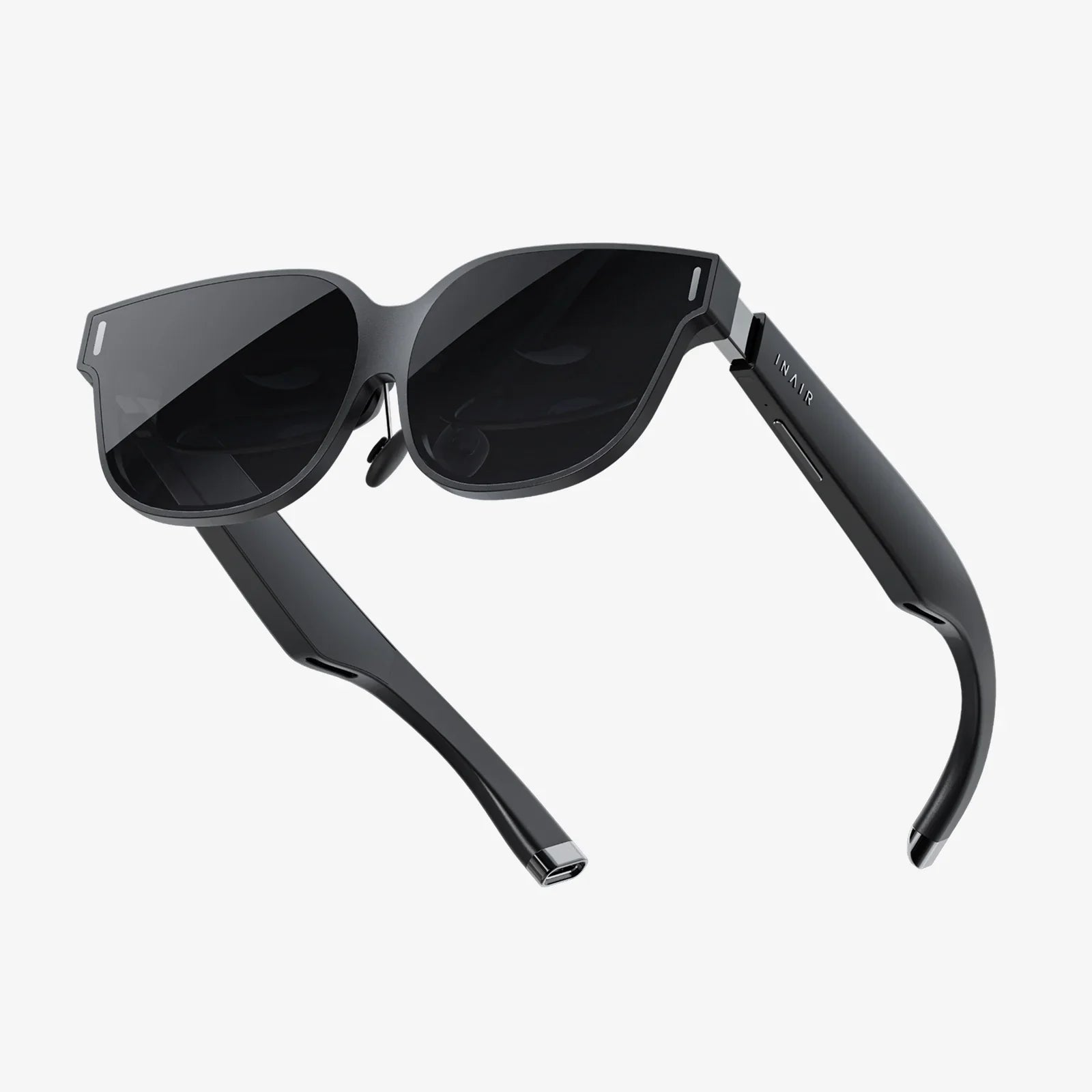
Imagine a screen that knows no bounds, a cinema that fits in your pocket, and a workspace that spans continents—all projected directly before your eyes. This is the promise, and increasingly the reality, of the head mounted video display, a technology poised to fundamentally alter our relationship with information, entertainment, and each other. It’s a portal to other worlds and a powerful lens through which to enhance our own, moving beyond science fiction into a tangible, and rapidly evolving, future of personal computing.
From Concept to Consumer: A Brief Historical Journey
The idea of placing a screen directly in front of the eyes is not a new one. The conceptual groundwork for head mounted video displays was laid decades ago, born from a combination of military necessity, academic curiosity, and the boundless imagination of science fiction writers. Early systems were monstrously heavy, prohibitively expensive, and offered resolution so low it was more of a proof of concept than a practical tool. They were the domain of research laboratories and specialized industrial applications, far removed from the consumer market.
The trajectory of this technology has followed a now-familiar pattern in the tech world: a slow, steady climb of incremental improvements followed by a period of explosive, disruptive innovation. Key advancements in miniaturization, display technology, processing power, and sensor accuracy converged to make the modern head mounted video display possible. The shift from cumbersome, tethered devices requiring external supercomputers to sleek, untethered units powered by mobile processors represents one of the most significant leaps. This evolution has transformed the technology from a niche curiosity into a platform with the potential to become as ubiquitous as the smartphone.
Demystifying the Technology: How It Actually Works
At its core, a head mounted video display is a sophisticated orchestration of optics, electronics, and software designed to trick the human brain into perceiving a digital image as part of its reality. The process can be broken down into several key components working in harmony.
The journey begins with the micro-displays, tiny high-resolution screens, often based on OLED or similar technology, that generate the initial image. These displays are prized for their deep blacks, high contrast ratios, and fast response times, which are crucial for creating a convincing and comfortable visual experience. The light from these micro-displays is then channeled through a series of specialized lenses. These lenses are the true workhorses of the device, performing the critical task of focusing the eye on the extremely close screen while simultaneously making the image appear to fill a vast field of view, anywhere from 90 degrees to beyond 120 degrees. This optical assembly is what creates the sensation of looking at a massive screen or being inside a virtual environment, rather than simply staring at a panel inches from your face.
This visual experience is grounded in reality by a suite of advanced sensors. An inertial measurement unit (IMU), comprising gyroscopes, accelerometers, and magnetometers, tracks the precise rotation of the user's head in real-time. This allows the virtual scene to remain locked in place as you look around, a fundamental requirement for immersion. More advanced systems incorporate inside-out or outside-in positional tracking, using cameras and lasers to map the physical environment and understand the user's movement through space, not just their rotation. This enables users to walk around a virtual room, duck under virtual obstacles, and interact with digital objects as if they had physical presence.
All of this data is processed by an onboard computer or a connected external unit, which renders the graphics, manages the software environment, and handles inputs from controllers or hand-tracking cameras. The result is a seamless, interactive experience that feels both magical and, increasingly, natural.
A Universe of Applications: Beyond Just Gaming
While often associated primarily with immersive gaming, the utility of head mounted video displays extends far beyond entertainment. They are proving to be transformative tools across a diverse range of professional and personal fields.
Revolutionizing Professional and Industrial Workflows
In sectors where visualization is key, head mounted displays are becoming indispensable. Architects and engineers are using them to walk clients through full-scale 3D models of unbuilt structures, identifying potential design flaws and making changes in real-time long before ground is broken. Medical professionals are utilizing them for advanced surgical planning, overlaying patient scans like MRI or CT data directly onto their field of view to guide complex procedures with unprecedented precision. Remote assistance is another powerful application; a field technician wearing a display can stream their perspective to a senior expert thousands of miles away, who can then annotate the real world with arrows, diagrams, and instructions, effectively guiding the technician's hands.
The New Frontier of Social Connection and Training
These devices are forging new paths for human interaction. Social platforms within virtual spaces allow people to meet, talk, and share experiences as embodied avatars, conveying body language and a sense of shared presence that flat video calls cannot match. This has profound implications for connecting geographically dispersed families and teams. In education and training, the ability to practice high-stakes tasks in a risk-free simulated environment is invaluable. Surgeons can rehearse operations, pilots can navigate emergency scenarios, and mechanics can learn to repair complex machinery—all within a perfectly replicated digital twin, saving costs and, crucially, improving safety and outcomes.
Personal Entertainment and Cinematic Experiences
Of course, the entertainment potential remains staggering. Gaming is elevated from a activity on a screen to an experience one inhabits. But beyond games, head mounted displays offer the ultimate personal cinema. Users can watch films on a virtual screen that mimics the scale and grandeur of a private IMAX theater, anywhere they choose. Live events, from concerts to sports, are being broadcast in immersive formats, giving viewers the best seat in the house from their living room. This represents a fundamental shift from consuming content to experiencing it.
Navigating the Challenges: The Roadblocks to Mass Adoption
Despite the exciting progress, significant hurdles remain before head mounted video displays can achieve true mainstream adoption. These challenges are both technical and social in nature.
On the technical front, the quest for visual fidelity continues. While resolution has improved dramatically, the "screen door effect"—where the lines between pixels are faintly visible—can still be an issue on some devices. Furthermore, rendering two high-resolution displays at a high, stable frame rate (often 90Hz or higher) requires immense processing power, creating a constant tension between visual quality, device weight, battery life, and cost. This also leads to the problem of "simulator sickness" or vertigo, which some users experience when there is a latency or mismatch between their physical movement and the visual feedback from the display.
Perhaps the most significant barrier is the social one. The form factor, while improving, can still be isolating and aesthetically unappealing to many. The concept of spending extended periods with a device strapped to your face, effectively shutting out the immediate physical world, raises questions about social etiquette and long-term psychological effects. Privacy concerns are also paramount, as these devices, equipped with cameras and microphones, have the potential to collect unprecedented amounts of personal and environmental data. Establishing clear ethical guidelines and robust security frameworks is not an option, but a necessity for the technology's future.
Glimpsing the Horizon: The Future of Seeing
The future of head mounted video displays is moving towards greater integration with our daily lives and our own biology. The next evolutionary step is the move towards augmented reality (AR) and mixed reality (MR), where digital information is seamlessly and convincingly layered onto the real world, rather than replacing it entirely. Imagine navigation arrows painted onto the street as you walk, virtual monitors extending your laptop desktop in mid-air, or historical facts popping up as you look at a landmark.
This will be enabled by advancements in photorealistic passthrough video, allowing users to see their surroundings in high fidelity through cameras on the device, and more sophisticated environmental understanding. Furthermore, the development of varifocal and light field displays will solve current issues with eye strain and depth perception, making long-term use more comfortable and the blending of real and virtual more believable.
Looking further out, the line between the device and the user may blur. Research into neural interfaces and direct retinal projection suggests a future where head mounted displays are replaced by smart contact lenses or even more integrated technologies, making the digital visual layer an imperceptible and instantaneous part of human perception. The head mounted video display, in its current form, is merely the first, crucial step on a much longer journey to augmenting human capability and experience.
The screen that once confined our digital worlds is dissolving before our eyes, replaced by an immersive canvas limited only by imagination. The head mounted video display is not just another gadget; it's the beginning of a new sensory layer for humanity, offering a glimpse into a future where the digital and physical are no longer separate realities, but a deeply intertwined and enhanced continuum of human experience.