


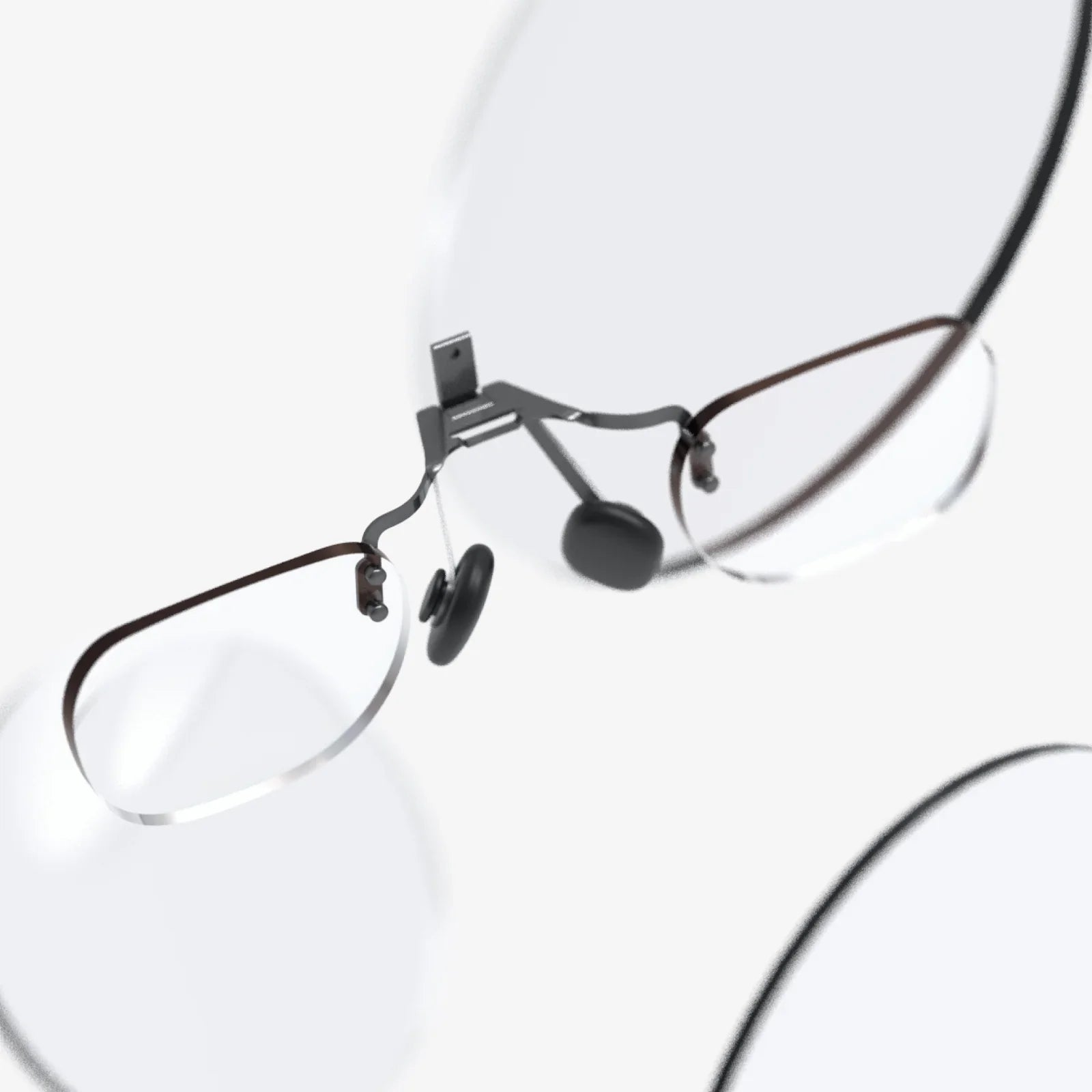
Imagine driving down a winding road at night, a sudden downpour obscuring your vision. Instead of glancing down at your dashboard, your speed, navigation, and even hazard warnings are projected directly onto the windshield, floating just above the road ahead. This isn't a scene from a science fiction movie; it's the reality made possible by Heads-Up Display technology, a innovation that is quietly revolutionizing how we perceive and interact with the world around us, turning every windshield and pair of glasses into a potential portal to a digital universe.
A Vision Born in the Clouds: The Military Origins
The story of the Heads-Up Display begins not on the road, but in the air. During the mid-20th century, fighter pilots faced a critical problem: during high-speed, high-stakes dogfights, the few seconds spent looking down at their cockpit instruments to check airspeed, altitude, or targeting information could mean the difference between life and death. They needed this vital data without ever having to divert their gaze from the enemy or the horizon.
The solution was elegantly simple in concept yet revolutionary in execution. The first primitive HUDs used a series of lenses and mirrors to project a collimated image—an image whose light rays are parallel, making it appear at optical infinity—onto a combiner glass, typically a clear piece of glass between the pilot and the windshield. This allowed the pilot to see the real world through the glass while simultaneously viewing the projected data overlaid upon it, all while keeping their head "up" and focused on the task at hand. This breakthrough dramatically enhanced situational awareness, reduced pilot workload, and became an indispensable tool in modern aviation, eventually trickling down to commercial airliners.
Deconstructing the Magic: How Does a HUD Actually Work?
While the user experience is one of seamless augmentation, the underlying mechanics of a Heads-Up Display are a fascinating interplay of optics, software, and engineering. At its core, every HUD system consists of three primary components:
- The Projector Unit (PGU): This is the engine of the HUD. It generates the image to be displayed. Modern systems typically use high-brightness liquid crystal displays (LCDs) or liquid crystal on silicon (LCoS) microdisplays, illuminated by powerful LEDs or lasers to ensure visibility even in bright sunlight.
- The Combiner: This is the surface onto which the image is projected. It's not a simple piece of glass; it's often coated with a special film that reflects the specific wavelengths of light from the projector while allowing all other light to pass through. This is why you see the bright HUD imagery but can still see the road perfectly. In some systems, like those in aviation, the combiner is a separate glass pane. In automotive applications, the windshield itself often serves as the combiner.
- The Computer: The brain of the operation. This processor takes data from the vehicle's network—speed, engine RPM, navigation instructions, driver assistance system alerts—and renders it into the graphical format and correct perspective for projection. It also handles alignment, ensuring the information appears stable and correctly positioned in the driver's field of view.
The process involves the projector creating an image, which is then reflected off a series of mirrors to fold the optical path, making the physical unit compact enough to fit inside a dashboard. This reflected image is finally beamed onto the combiner. The use of collimated optics is the final piece of the puzzle, making the symbols appear to be floating far ahead of the vehicle, typically at a distance of two to three meters, which allows the driver's eyes to focus quickly between the road and the data without strain.
From Cockpit to Dashboard: The Automotive Revolution
The transition of HUD technology from military and commercial aircraft to consumer automobiles marked a pivotal moment. Initially, they were a rare and exotic feature reserved for high-end luxury vehicles, a symbol of cutting-edge technology. Early automotive HUDs were simple, projecting little more than a digital speedometer onto a small, pop-up combiner glass.
Today, they have evolved into complex systems integrated directly into the windshield, capable of displaying a rich array of information. The benefits in the automotive context are profound:
- Enhanced Safety: This is the paramount advantage. By minimizing the need for drivers to look away from the road, HUDs significantly reduce distraction and decrease eye-off-road time. Critical information like collision warnings, lane departure alerts, and current speed is presented directly in the line of sight, allowing for faster reaction times.
- Improved Ergonomics: There's no more constant refocusing between the far-away road and the close-up dashboard. This reduces eye strain and cognitive load, making for a less fatiguing driving experience, especially on long journeys.
- Advanced Integration: Modern HUDs do far more than show speed. They integrate with navigation systems to project turn-by-turn arrows that appear to hover over the actual road junction. They can display data from advanced driver-assistance systems (ADAS), such as adaptive cruise control status, blind-spot monitoring icons, and even night vision indicators highlighting pedestrians or animals beyond the range of the headlights.
This technology is rapidly moving from a premium option to a mainstream safety and convenience feature, available in an increasing number of everyday vehicles.
Beyond the Windshield: The Next Frontier of Augmented Reality HUDs
The current generation of HUDs, often called 2D or monochrome HUDs, is merely the foundation for the next great leap: true Augmented Reality HUDs (AR-HUD). While standard HUDs project a flat image that appears to float at a fixed distance, AR-HUDs are something else entirely.
An AR-HUD uses advanced computational power and precise GPS and mapping data to anchor graphics directly to the real world. Instead of a simple arrow telling you to turn right, an AR-HUD would project a vivid, life-sized arrow that appears to be painted on the road itself, precisely pointing down the correct lane. It could highlight the exact vehicle it has identified as a potential collision risk or draw a glowing path on the road for you to follow in complex intersections.
The technical challenges are immense. AR-HUDs require a much larger field of view to project graphics across a wider portion of the windshield. They need incredibly accurate and low-latency tracking to ensure the virtual objects stay locked to their real-world counterparts despite the vehicle's movement. They also demand a much greater volume within the dashboard, posing significant design and engineering challenges for automakers. Despite these hurdles, the industry is charging forward, as the potential for safety and immersive navigation is too great to ignore.
A World Augmented: The Future of HUDs in Everyday Life
The ultimate evolution of HUD technology extends far beyond the vehicle. The logical endpoint is a personal, portable Heads-Up Display that we carry with us everywhere: smart glasses and eventually contact lenses. This represents the final decoupling of information from a fixed screen, weaving it directly into the fabric of our perception.
Imagine walking through a foreign city and seeing translated street signs overlaid in real-time. A technician could see repair instructions and schematics superimposed on the malfunctioning machinery they are fixing. A doctor could have a patient's vital stats and historical data visible during a procedure. The applications in fields like logistics, manufacturing, medicine, and tourism are boundless.
This always-available, contextual information layer, often referred to as the "metaverse" or "spatial computing," promises to be as disruptive as the internet itself. However, it also raises critical questions about privacy, data security, and digital addiction. When the digital world is permanently grafted onto our reality, the line between being informed and being overwhelmed, between augmentation and alienation, becomes very thin. The design of these systems will need to be intensely human-centric, prioritizing usefulness without intrusion and providing information only when it truly enhances the experience.
The journey of the Heads-Up Display, from a tool for elite pilots to a potential fixture in every pair of glasses, is a testament to our relentless drive to better integrate technology into our lives. It is a move away from isolated screens and towards a unified field of view, a world where data doesn't distract but enlightens, where our focus can remain on the people, places, and experiences that matter most, effortlessly enhanced by a stream of contextually perfect information. The future is not on a screen you hold in your hand; it's projected right before your eyes, waiting for you to look up and see it.
Share:
Best VR Headset: The Ultimate Guide to Immersive Technology in 2024
Affordable AR Headsets for Home Use: Your Portal to the Digital Future