Imagine a world where digital information doesn’t live on a screen in your hand or on your desk, but is seamlessly woven into the very fabric of your reality. Where instructions for repairing a complex engine hover over the machinery itself, where a navigational path is painted onto the street in front of you, and where a historical figure stands before you, recounting tales on the very ground they once walked. This is the breathtaking promise of high-end augmented reality smart goggles, a technological leap that is poised to fundamentally alter our perception of and interaction with the world around us. This isn't just an incremental upgrade; it's a paradigm shift towards a future where the line between the physical and the digital becomes beautifully, functionally blurred.
The Architectural Marvel: Deconstructing the Technology
To understand the revolutionary potential of these devices, one must first appreciate the symphony of cutting-edge technologies working in perfect harmony within their sleek frames. These are not simple displays; they are arguably the most complex consumer-grade computers ever created, worn on the face.
Advanced Optical Systems: The Windows to a New Reality
At the heart of the experience is the optical stack. Unlike virtual reality, which blocks out the world, AR requires users to see both the real environment and the digital overlay with perfect clarity. High-end solutions employ sophisticated solutions like waveguide optics, where light is channeled through incredibly thin, transparent glass or plastic plates. Microscopic gratings etched onto these waveguides bend light from micro-displays at the temples into the user’s eyes. The result is bright, high-resolution, and crucially, wide field-of-view digital imagery that appears to coexist naturally with the physical world, without the bulky, tunnel-vision effect of earlier technologies.
Spatial Computing and Environmental Understanding
For digital objects to feel real, they must understand and respect the environment. This is the domain of spatial computing. A suite of sophisticated sensors—including LiDAR scanners, depth sensors, high-resolution cameras, and inertial measurement units—constantly maps the user’s surroundings in real-time. These sensors create a millimetre-accurate 3D mesh of the room, understanding the geometry of walls, the shape of furniture, and even recognizing surfaces like tables and floors. This allows a digital character to convincingly walk behind your sofa or a virtual screen to remain locked on your wall. This persistent understanding is what transforms a neat trick into a useful tool.
Power and Performance: The Unseen Engine
Processing the immense amount of visual and spatial data requires immense computational power. High-end goggles often utilize a hybrid approach. The device itself contains custom-designed processors dedicated to the intense tasks of sensor fusion, hand-tracking, and passthrough video processing. For more complex rendering and AI-driven tasks, they can leverage a companion device or cloud computing, streaming photorealistic graphics with minimal latency. This distributed computing model is essential for delivering a powerful experience without strapping a overheating brick to the user’s face.
Beyond Novelty: Transformative Applications Across Industries
The true value of this technology is revealed not in demos, but in its practical, world-changing applications. We are moving from a period of potential to one of tangible impact.
Revolutionizing Enterprise and Industrial Workflows
The enterprise sector is currently the primary beneficiary. In manufacturing, technicians wearing smart goggles can see assembly instructions, torque specifications, and animated guides overlaid directly on the equipment they are servicing, drastically reducing errors and training time. Designers and architects can project full-scale 3D models of their creations into an empty space, walking through buildings before a single foundation is poured and making real-time collaborative changes with colleagues across the globe who see the same model. In logistics, warehouse workers are guided by visual cues to exact item locations, with information about inventory and orders displayed in their periphery, supercharging picking and packing efficiency.
The Future of Healthcare and Medicine
In medicine, the implications are profound. Surgeons can have vital patient statistics, MRI data, or ultrasound imagery projected directly into their field of view during procedures, allowing them to maintain focus without looking away from the operating table. Medical students can practice complex procedures on detailed, interactive holographic anatomies. Furthermore, these devices can serve as powerful assistive tools, providing real-time captions for the hearing impaired or enhancing vision for those with low sight by highlighting obstacles and amplifying contrast.
Redefining Social Connection and Remote Collaboration
The much-discussed "metaverse" finds its most compelling use-case in high-fidelity AR. Instead of video calls where participants are confined to a small rectangle, imagine sharing a space with photorealistic holograms of colleagues or loved ones. You can collaboratively review a physical prototype on a table, with remote participants able to point, annotate, and interact as if they were physically present. This sense of shared presence, or "teleporting" into someone else's environment, has the potential to make remote work more natural and meaningful and to bridge geographical gaps for families in a way flat screens never could.
Navigating the Uncharted: Challenges and Ethical Considerations
For all its promise, the path to an AR-ubiquitous future is fraught with significant technical, social, and ethical challenges that must be thoughtfully addressed.
The Form Factor Conundrum
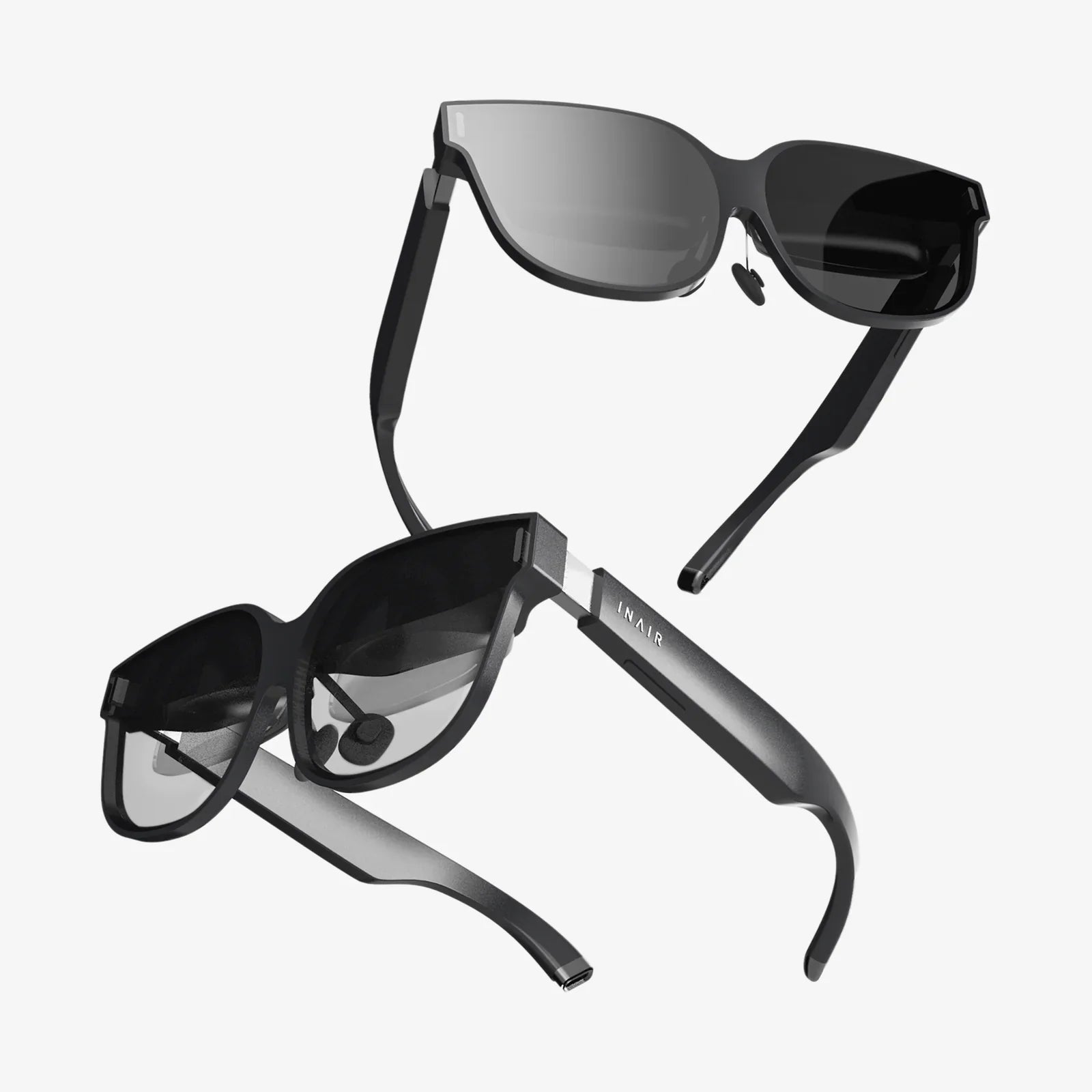
The ultimate goal is a device that is indistinguishable from a regular pair of glasses—socially acceptable, comfortable to wear all day, and aesthetically pleasing. Current high-end models, while advanced, are still heavier and more conspicuous than ideal. Achieving the desired sleek form factor while packing in sufficient battery life, processing power, and advanced optics remains the single greatest engineering hurdle. Breakthroughs in materials science, battery technology, and miniaturization are required to cross this final threshold into mainstream adoption.
The Privacy Paradox
A device that sees everything you see and hears everything you hear is a privacy advocate's nightmare. The constant capture of first-person video and audio data raises monumental questions. How is this data stored, processed, and protected? Who has access to it? Could it be used for unauthorized surveillance? Manufacturers must embrace a philosophy of "privacy by design," implementing features like local processing of sensitive data, clear user-controlled indicators when recording, and robust encryption. Without transparent and ironclad privacy protections, public trust will be impossible to earn.
The Social and Psychological Impact
We must also consider the societal ripple effects. Will constant digital augmentation enhance our experience of reality or diminish it? Could it lead to new forms of digital addiction or social isolation? There is a risk of creating a new digital divide between those who can afford these powerful tools and those who cannot. Furthermore, the potential for immersive advertising and misinformation, presented within a user's literal field of view, is a powerful and concerning prospect that demands preemptive ethical frameworks and potential regulation.
The Invisible Interface: A New Way of Interacting
These devices are also pioneering a shift beyond the touchscreen, towards what is being called the "invisible interface." Interaction is becoming more intuitive and natural.
High-precision hand-tracking allows users to manipulate digital objects with pinch and gesture controls, as if they were physically there. Eye-tracking enables interfaces that respond to where you are looking, making selection faster and more efficient. Voice commands offer a hands-free way to summon information or control apps. Some prototypes are even exploring neural interfaces, detecting faint neuromuscular signals from the wrist to interpret subtle finger movements without any physical motion. This evolution aims to make the technology itself fade into the background, putting the experience front and center.
The journey of high-end augmented reality smart goggles is just beginning. We are witnessing the awkward, yet awe-inspiring, first steps of a technology that will eventually become as ubiquitous and transformative as the smartphone. It is a catalyst for a new era of human potential, offering unprecedented tools for creativity, productivity, and connection. The digital world is stepping out of its confined screens and into our shared reality, ready to augment not just what we see, but what we are capable of achieving. The future is not something we will merely watch; it is something we will actively shape and inhabit through a new lens of possibility.


Share:
Augmented Reality Marketing Ideas: The Ultimate Guide to Captivating Your Audience
Most Advanced AI Glasses: Redefining Reality Through a Digital Lens