


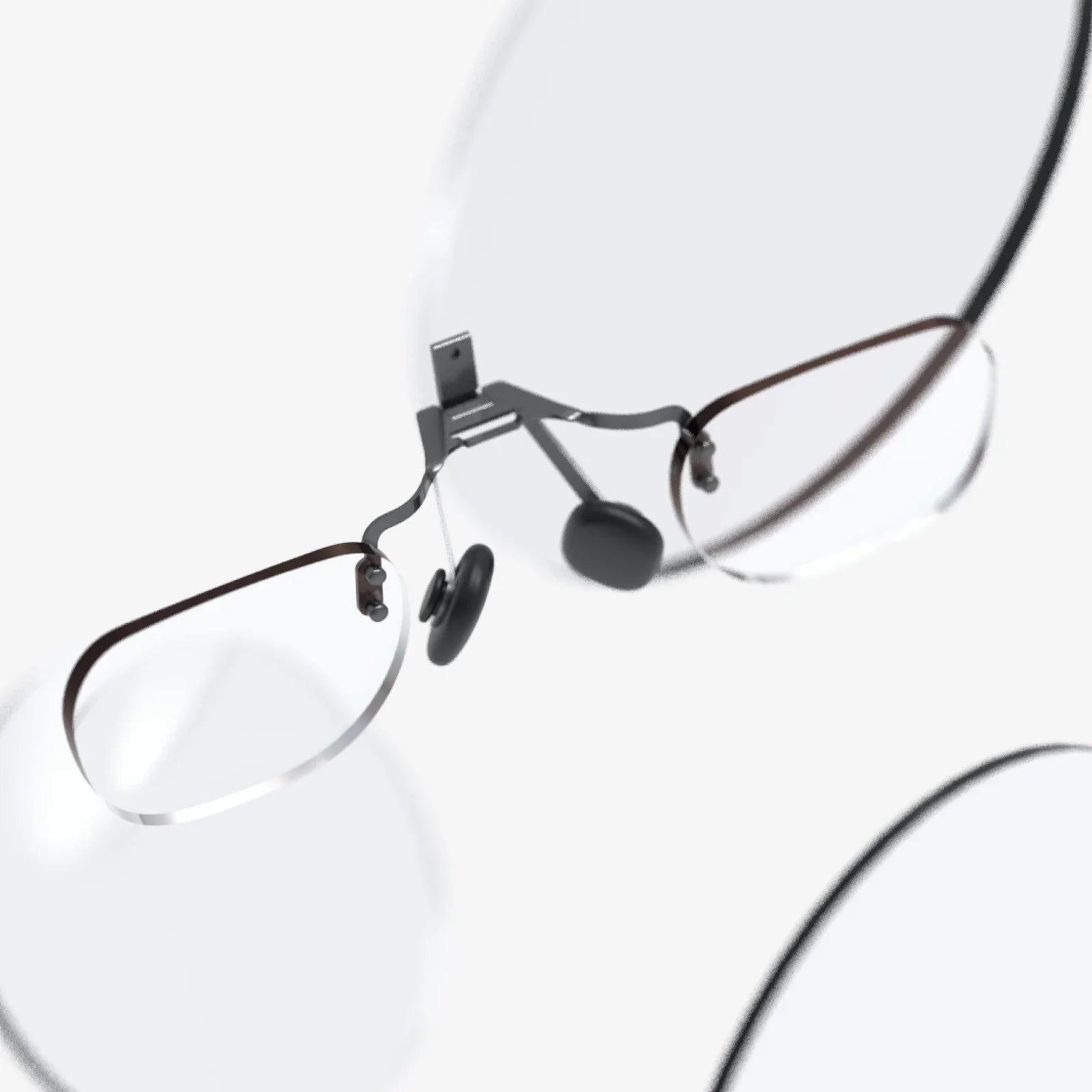
Imagine a world where your glasses do more than just help you see clearly. They translate foreign languages in real-time, highlight navigation paths on the street before you, monitor your vital signs, and even zoom in on distant objects like a pair of high-powered binoculars. This isn't a glimpse into a distant sci-fi future; it is the reality being built today in laboratories and design studios around the globe. High tech eye glasses are poised to become the next indispensable piece of personal technology, moving beyond vision correction to become a seamless window into a digitally augmented world, a guardian of our health, and a profoundly personal assistant that understands our environment better than we do.
The Convergence of Form and Function
For decades, eyeglasses were defined by a simple, singular purpose: to correct refractive errors and bring the world into focus. Their evolution was largely confined to changes in frame materials, lens thinness, and stylistic trends. The advent of high tech eye glasses shatters this paradigm, transforming a passive optical device into an active computational platform. This revolution is powered by the miniaturization of core technologies. Processors that once required room-sized cabinets are now smaller than a fingernail, batteries have become more efficient and compact, and micro-displays can project vibrant images onto lenses that are nearly indistinguishable from standard ones.
The true genius of this new wave of eyewear lies in its aspiration for subtlety. The goal is not to create bulky, obtrusive headgear that screams "technology," but to design elegant, lightweight frames that people would be proud to wear, regardless of their tech capabilities. Engineers and designers are engaged in a delicate dance, meticulously embedding sensors, microphones, speakers, and projection systems into the temples, hinges, and lenses without compromising comfort or style. This seamless integration is the key to mass adoption, ensuring the technology enhances the user's life without becoming a social distraction or a physical burden.
Augmented Reality: A New Layer of Perception
At the heart of the high tech eye glasses revolution is augmented reality (AR). Unlike Virtual Reality (VR), which seeks to replace your world with a simulated one, AR aims to overlay digital information onto your real-world view. High tech glasses are the perfect vehicle for this technology, placing contextual data directly in your line of sight, hands-free.
- Navigation and Exploration: Imagine walking through a foreign city while turn-by-turn directions are painted onto the sidewalk in front of you. Points of interest, historical facts, and restaurant ratings could appear floating next to the buildings themselves, transforming a simple stroll into an interactive tour.
- Professional and Industrial Applications: For field technicians, complex schematics and instruction manuals can be superimposed onto the machinery they are repairing. Surgeons could have vital signs and 3D anatomical guides visible during procedures. The potential for enhancing productivity and reducing error is immense.
- Social and Personal Connectivity: Notifications from your devices could appear subtly at the edge of your vision, allowing you to stay informed without constantly looking down at a phone. During a conversation, your glasses could discreetly display the name and key details of the person you're speaking with, a boon for anyone who struggles with remembering names.
This constant, contextual flow of information promises to deepen our understanding of and interaction with our environment, making us more efficient, knowledgeable, and connected.
Beyond Sight: The Rise of Health and Wellness Monitoring
Perhaps the most profound application of high tech eye glasses lies in the domain of health. The eye, as it turns out, is not just a window to the soul but a transparent window to the human body. By looking through it, sophisticated sensors can gather a remarkable amount of physiological data.
Photoplethysmography (PPG) sensors, which use light to detect blood volume changes, can be embedded in the nose pads or temples to measure heart rate and heart rate variability with clinical-grade accuracy. Tiny cameras pointed at the eye can track pupillary responses, which can indicate cognitive load, fatigue, or even the onset of certain neurological conditions. Some prototypes are exploring the potential of analyzing tear fluid for biomarkers that could signal glucose levels, offering a non-invasive method for diabetics to manage their condition.
This transforms high tech glasses from a convenience into a potentially life-saving tool. They could provide continuous, passive health monitoring, alerting the wearer to irregular heart rhythms, signs of extreme fatigue before driving, or sudden changes in blood pressure. For an aging global population, this capability offers a new layer of security and independence, allowing for early intervention and peace of mind for both individuals and their families.
Adaptive Vision: Lenses That Think
Another groundbreaking innovation is the development of adaptive lenses. Using technology like liquid crystal layers, these lenses can change their properties electronically based on external conditions or user command.
- Instant Transition: Gone are the days of separate prescription sunglasses. With a tap on a temple or an automated response to ambient light sensors, lenses can darken to precise levels of tint in milliseconds, transitioning from clear to sunglasses and back again seamlessly.
- Dynamic Focus: For those with presbyopia (age-related farsightedness), a major challenge is constantly switching between near and far vision. Adaptive lenses could auto-focus in real-time, using embedded sensors to determine where the user is looking and adjusting the optical power of the lens accordingly. This could effectively eliminate the need for progressive lenses or bifocals, offering seamless vision at all distances.
- Enhanced Control: Users could manually adjust contrast or filter specific wavelengths of light to reduce glare while driving at night or to mitigate computer vision syndrome caused by blue light from screens.
This represents a fundamental shift from static correction to dynamic, responsive vision optimization, customizing the viewing experience to the moment's specific needs.
Navigating the Challenges: Privacy, Power, and Perception
The path to ubiquitous high tech glasses is not without significant hurdles. The most pressing concern is privacy. A device that sees what you see and hears what you hear collects an unprecedented amount of personal and environmental data. The ethical implications are vast. Who has access to this data? How is it stored and used? Could it be used for unauthorized surveillance? Manufacturers must prioritize robust encryption, transparent data policies, and on-device processing where possible to build the essential trust required for users to embrace this technology fully.
Furthermore, the constant demand for processing power and display brightness places a heavy burden on battery life. Advancements in low-energy processors, efficient display technologies, and perhaps even innovative solutions like solar charging or kinetic energy harvesting from movement will be critical to achieving all-day battery life. Finally, there is the social hurdle. Early attempts at smart glasses were often met with skepticism and the social stigma of wearing a recording device on one's face. Overcoming this "cyborg" perception requires not only elegant design but also a clear demonstration of value and a cultural shift in how we perceive the integration of technology into our daily apparel.
The Future is Clear
Looking ahead, the trajectory of high tech eye glasses points toward even deeper integration with our lives and biology. We are moving towards interfaces controlled not by touch or voice, but by thought and gesture. Neural interfaces could allow us to control applications with subtle intentions. Holographic displays could create more immersive and realistic augmentations. The line between the device and the user will continue to blur, ultimately aiming for technology that feels less like a tool and more like a natural extension of human capability.
The ultimate goal is to create technology that amplifies our humanity without isolating us from the real world. The perfect pair of high tech glasses won't be something you stare into; they will be something you look through, enhancing your reality without replacing it. They will understand your context, protect your health, and connect you to information in an intuitive, effortless way. They will fade into the background until they are needed, and then work miracles before your eyes.
We stand on the brink of a new era of personal computing, one that is worn on the face and integrated into our very perception. The next time you see someone wearing a pair of stylish frames, look again. They might not just be seeing the world—they might be seeing a completely enhanced version of it, and that vision is closer than you think.
Share:
3D Holographic Projection: Bridging the Digital and Physical Realms
Android XR Glasses: The Next Frontier in Personal Computing and Immersive Experience