


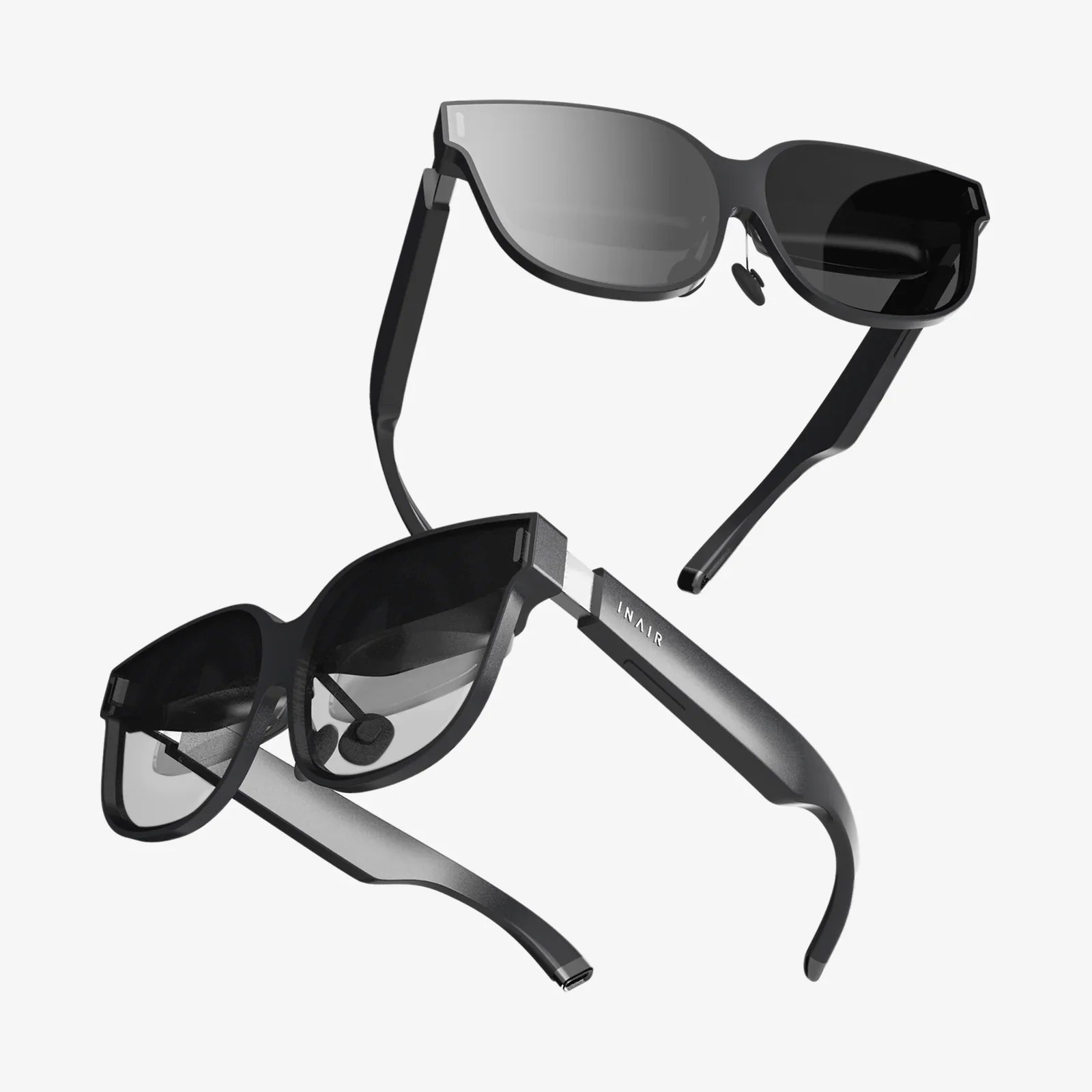
Imagine a world where digital information doesn’t live on a screen in your hand but is seamlessly woven into the fabric of your reality, where helpful data, immersive entertainment, and distant colleagues appear as naturally as the furniture in your room. This is the transformative promise held within the sleek, futuristic frames of Android XR glasses, a technology not on the distant horizon, but rapidly coming into focus, ready to redefine our very perception of computing and connection.
The Architectural Pillars of Immersive Technology
To understand the potential of Android XR glasses, one must first dissect the core technologies that enable them to blend the physical and digital worlds so convincingly. These devices are feats of miniaturization and optical engineering, packing a staggering amount of processing power and sophisticated components into a form factor designed for all-day wear.
Seeing the Unseeable: Advanced Display Systems
The primary interface between the user and the digital layer is the display system. Unlike traditional screens, these are not simply panels you look at. Instead, they are complex optical assemblies that project images directly onto the user's retinas. Two primary technologies dominate this space. Waveguide displays use microscopic gratings to bend light from a micro-LED source into the eye, allowing for a sleek, glasses-like design. Another approach utilizes Birdbath optics, where light from a micro-OLED panel is reflected into the user's eye, often offering richer colors and higher contrast. The ultimate goal is to achieve visual fidelity that rivals the real world—high resolution, a wide field of view, and the ability to render convincing digital objects that don’t appear translucent or ghostly.
Mapping the World: Sensors and Tracking
For digital content to interact believably with the physical environment, the glasses must possess a deep understanding of their surroundings. This is achieved through a suite of sophisticated sensors. High-resolution cameras continuously scan the environment, while depth sensors (like time-of-flight sensors) precisely map the geometry of a room, measuring distances to every surface. Inertial Measurement Units (IMUs) track the precise movement and rotation of the user's head with minimal latency to prevent motion sickness. Furthermore, eye-tracking cameras monitor where the user is looking, enabling intuitive gaze-based controls and allowing for advanced rendering techniques that focus processing power only on the area of highest visual acuity.
The Brain Behind the Beauty: Processing Power and Connectivity
All this data—visual, spatial, and sensory—requires immense computational power to process in real-time. Early prototypes often relied on a wired connection to a powerful external computer to handle the workload. The current generation, however, is trending towards a hybrid approach. Significant onboard processing, often via a dedicated chipset, handles the immediate tasks of tracking, rendering, and user interaction. For more complex computations, such as loading high-polygon 3D models or accessing cloud-based artificial intelligence services, the glasses seamlessly connect via high-speed wireless protocols to a companion device or directly to the cloud, ensuring a smooth and responsive experience without being tethered.
The Android Advantage: An Ecosystem of Innovation
While the hardware is impressive, the true catalyst for the widespread adoption of XR glasses is the software platform that powers them. The choice of the Android operating system is a strategic masterstroke, providing a foundation upon which a new era of spatial computing can be built.
The most immediate benefit is access to the vast ecosystem of developers. Millions of developers already familiar with Android development can, with relative ease, begin creating applications for this new medium. This instantly creates a potential library of spatial apps, from productivity tools and games to educational experiences and social platforms. The open-source nature of Android encourages innovation and customization, allowing different manufacturers to create unique user interfaces and experiences atop a stable, secure, and proven core.
Furthermore, Android provides a robust framework for managing the core functionalities essential to XR glasses. It handles device pairing, notifications, voice assistant integration, and security permissions—all familiar concepts to users, which drastically reduces the learning curve. Instead of learning a completely new operating system, users interact with a spatial extension of the ecosystem they already know and trust, creating a seamless bridge between their smartphone and their eyewear.
Transforming Industries and Redefining Daily Life
The applications for Android XR glasses extend far beyond novelty filters and immersive gaming. They are poised to become indispensable tools across a wide spectrum of professional and personal domains.
The Future of Work and Productivity
In the professional sphere, the potential for increased efficiency is staggering. Imagine an engineer performing complex repairs on machinery, with schematic diagrams and torque specifications visually overlaid onto the components they are working on. A surgeon could have a patient's vital signs and a 3D model of their anatomy visible within their field of view during a procedure. For remote collaboration, colleagues from across the globe could be represented as photorealistic avatars in your physical space, all examining and interacting with a 3D model of a new product design together, as if they were standing right next to you. This dissolves the barriers of distance and creates a new paradigm for teamwork.
Revolutionizing Learning and Exploration
Education will be fundamentally transformed. Instead of reading about ancient Rome, history students could take a virtual walking tour through a digitally reconstructed Forum. Medical students could practice anatomy by exploring a life-sized, interactive hologram of the human body. This shift from abstract learning to experiential, spatial learning has the potential to dramatically improve comprehension and retention, making complex subjects tangible and engaging.
New Dimensions of Entertainment and Social Connection
The entertainment industry is set for its biggest disruption since the advent of television. The concept of a "screen" will become obsolete. You could watch a movie with the action unfolding all around your living room, or attend a live concert from the best seat in the house, all from your home. Social media will evolve into a truly shared experience, where you and your friends can not only share photos but inhabit and decorate the same virtual space, playing games, watching videos, or simply chatting as if you were physically together.
Navigating the Uncharted Territory: Challenges and Considerations
For all their promise, the path to mainstream adoption of Android XR glasses is fraught with significant challenges that must be thoughtfully addressed.
Privacy and the Societal Lens: A device that has the potential to continuously record its environment raises profound privacy concerns. The ethical implications of always-on cameras and microphones, even with clear user indicators and controls, are immense. Societies will need to establish new norms and potentially new laws to prevent misuse and protect individuals from unwanted surveillance or data collection in public and private spaces.
The Battery Life Conundrum: The computational and visual demands of high-quality XR are immense, and current battery technology remains a limiting factor. Achieving all-day battery life in a comfortable, lightweight form factor is one of the single greatest engineering hurdles. Innovations in low-power displays, efficient processing, and perhaps new charging paradigms will be essential.
Designing for Humanity, Not Just Tech: The ultimate success of this technology hinges on its ability to integrate gracefully into human life. The hardware must be fashionable, comfortable, and unobtrusive. The user interface must be intuitive, minimizing gesture fatigue and avoiding social awkwardness. It must augment our reality without isolating us from the people right in front of us. Striking this balance between the digital and the physical is the ultimate design challenge.
The journey of Android XR glasses is just beginning. They represent not merely a new product category, but a fundamental shift in the paradigm of human-computer interaction. They promise to unlock new levels of productivity, creativity, and connection, blurring the lines between our digital and physical existences. As the technology matures and these challenges are met, we stand on the brink of an era where the world itself becomes the interface, and our Android XR glasses become the lens through which we see, shape, and understand a richer, more informed, and infinitely more fascinating reality.
Share:
High Tech Eye Glasses Are Revolutionizing How We See the World
VR Earphones: The Unseen Engine Powering True Virtual Reality Immersion