


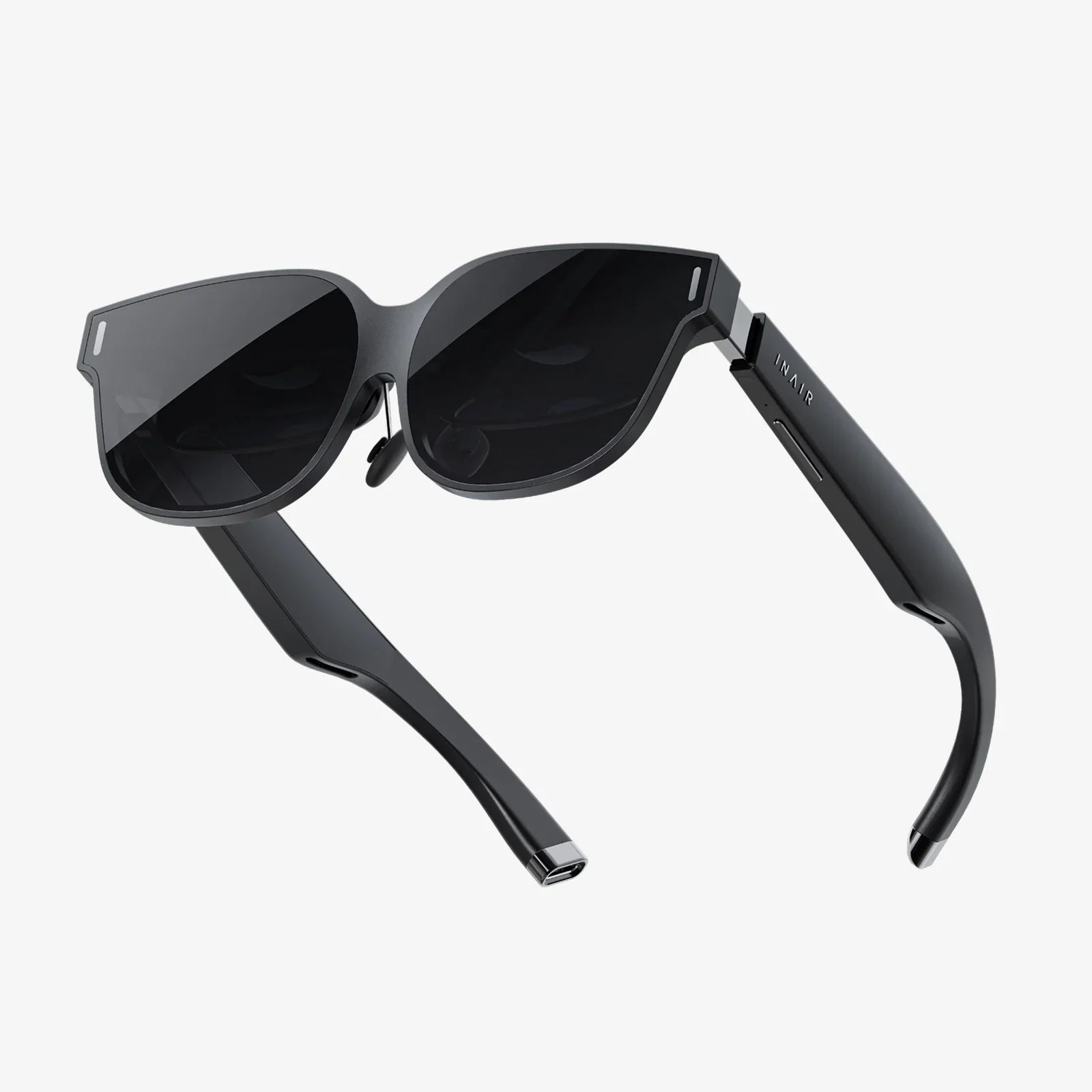
You’ve strapped on the headset. Your eyes widen as a breathtaking digital universe unfolds before you. You see a dragon soaring over a mythical castle, or perhaps you’re standing on the surface of Mars. The visual fidelity is stunning, the graphics hyper-realistic. But something feels… off. The experience is captivating, yet it remains just that—an experience you are observing, not a world you are inhabiting. The silent culprit? The sound. Or more precisely, the lack of truly immersive, spatially accurate audio. This is where the unsung hero of virtual reality enters the stage: the specialized VR earphone. This isn't just about hearing; it's about believing. It’s the final, crucial piece that tricks your brain into suspending disbelief entirely, transforming a visually impressive demo into a reality you feel in your bones.
The Illusion of Presence: More Than Meets the Eye
The ultimate goal of any virtual reality system is to achieve what technologists call "presence." Presence is the holy grail, the definitive moment when your perceptual system is completely fooled into accepting the virtual environment as real. It’s not merely acknowledging that the graphics are good; it’s a visceral, subconscious belief that you are there. For decades, the focus has been almost exclusively on the visual component—higher resolutions, wider fields of view, and faster refresh rates. These are undeniably important. However, the human brain uses a symphony of senses to understand its place in space. Our hearing is a primary navigational and situational tool. We can pinpoint a buzzing bee without seeing it, sense the vastness of a cathedral from its echo, and feel the approaching danger of a unseen car from the Doppler shift of its engine. When VR audio is an afterthought—delivered through generic, non-directional speakers—this critical sensory channel fails. The illusion shatters. Specialized VR earphones are designed specifically to rebuild this illusion, to feed the brain the precise auditory cues it needs to complete the picture.
Beyond Stereo: The Science of Spatial Audio
To understand why a standard pair of headphones falls short, we must move beyond the concept of stereo sound. Stereo, with its left and right channels, creates a pleasant sense of directionality on a flat plane in front of you, perfect for music and films. But virtual reality is a 360-degree, three-dimensional sphere. Sound doesn't just come from left and right; it comes from above, below, behind, and everywhere in between. It behaves differently in an open field than it does in a small metal room.
This is where spatial audio, also known as 3D audio, comes into play. Spatial audio is a complex computational technology that mimics how we perceive sound in the real world. It takes into account:
- Head-Related Transfer Function (HRTF): This is the secret sauce. HRTF is a set of filters that describes how sound waves from a source in space interact with your unique anatomy—your head shape, the pinnae (outer ears), and even your torso—before they reach your eardrums. These interactions create tiny timing and level differences between your two ears, and spectral changes that your brain uses to triangulate the exact location of a sound. VR systems use personalized or generalized HRTF models to process audio, making a whisper sound like it's directly behind your right ear or a bullet whiz past your left shoulder.
- Environmental Acoustics: Spatial audio engines also simulate the acoustic properties of the virtual environment. They calculate reverb, echo, and occlusion (how sound is muffled when passing through a virtual wall or door). The rustle of leaves will sound entirely different in a dense forest than it will in a vast, empty hangar.
Specialized VR earphones are the perfect physical conduit for this digital magic. Their design is optimized to deliver the precise frequency response and sonic clarity required for these subtle cues to be audible and effective.
Design Philosophies: Form Following Function
Unlike their music-focused counterparts, VR earphones are engineered with a single, unwavering purpose: to serve the VR headset and its spatial audio software. This dictates every aspect of their design.
Integration and Comfort
Most standalone VR systems are designed as all-in-one units. Therefore, their accompanying earphones are often not an afterthought but an integrated component. They frequently use:
- On-Ear and In-Ear Designs: You'll find both. Some systems use sleek on-ear speakers that hover just off the ear, allowing for ambient awareness and long-term comfort. Others utilize high-quality in-ear monitors (IEMs) that provide passive noise isolation, physically blocking out the real world to let the virtual one take over completely.
- Lightweight Materials and Ergonomic Shapes: A VR session can last for hours. The earphones must be incredibly lightweight and designed to avoid pressure points, especially when combined with the weight of the headset itself. They often feature soft, hypoallergenic silicone or memory foam tips for a perfect, comfortable seal.
- Built-in Connectivity: Forget long, dangling cables that get tangled with headset straps. VR earphones typically feature short, proprietary connectors that plug directly into the headset arms, creating a neat, integrated, and tangle-free experience. This also ensures a perfect, low-latency digital audio connection.
Sonic Performance for a Purpose
The sound signature of a VR earphone is tuned not for booming bass in music, but for accuracy and clarity in spatial replication.
- Flat Frequency Response: The goal is often a relatively flat or neutral frequency response. This means no part of the audio spectrum is artificially boosted or diminished. This accuracy is crucial for the HRTF processing to work correctly; a bass-heavy sound signature could muddy the subtle cues used for vertical localization.
- Low Distortion and High Clarity: To hear the faintest footsteps creeping up behind you or the subtle drip of water in a cave, the drivers in the earphones must be capable of producing sound with minimal distortion even at low volumes, preserving every detail.
- Critical Latency: This is perhaps the most important technical factor. Latency is the delay between an action occurring in the VR world and the corresponding sound reaching your ears. Even a delay of 20 milliseconds can cause a disconnect that breaks presence and, for some, induces simulator sickness. VR earphones are built and connected to minimize latency to imperceptible levels, keeping the audio perfectly in sync with the visual and motion tracking data.
The Impact on Experience: From Games to Therapy
The practical benefits of high-quality VR audio delivered through proper earphones extend far beyond simple enjoyment. They fundamentally change how we interact with virtual environments.
Gaming: A Tactical Advantage
In competitive VR gaming, audio is not an enhancement; it is a core gameplay mechanic. It provides essential situational awareness that visuals alone cannot. With accurate spatial audio, players can:
- Track enemy movements through walls based solely on sound.
- Listen for the specific audio cue of a weapon reloading, signaling a moment to attack.
- Distinguish between a threat above them on a staircase and one below them.
This auditory intelligence creates a deeper, more strategic, and intensely thrilling experience. A jump scare in a horror game is infinitely more effective when the monster's breath sounds like it's right over your shoulder.
Social VR and Communication
Platforms that create virtual meeting spaces or social hangouts rely on spatial audio to foster natural conversation. In a virtual room, with everyone represented by avatars, their voices should emanate from their avatar's position. This allows you to naturally turn your head to focus on who is speaking, have a private side conversation with the person virtually standing next to you, and experience the din of a crowded room just as you would in real life. This makes communication feel organic and authentic, reducing the fatigue associated with traditional conference calls.
Professional and Therapeutic Applications
The need for accurate audio is paramount in professional simulations. For a trainee surgeon in VR, the sound of a virtual heart monitor must be precisely located and clear. An architect walking a client through a virtual building design needs to accurately simulate the acoustics of the space. In therapeutic settings, VR is used for exposure therapy, meditation, and treating PTSD. The soundscape is a critical part of this healing process. The gentle, spatially accurate sounds of a peaceful forest or a calm beach are essential for guiding a patient into a state of relaxation and mindfulness, something generic audio could never achieve with the same efficacy.
The Future of Sonic Reality
The evolution of VR earphones is tightly coupled with the advancement of VR technology itself. We are moving towards even more sophisticated audio environments.
- Personalized HRTF: Future systems may use phone cameras or built-in sensors to scan a user's ears and create a perfectly personalized HRTF profile, making spatial audio even more precise and natural for each individual.
- Bone Conduction and Haptics: We may see the integration of bone conduction technology to transmit certain types of sound vibrations through the skull, or tiny haptic actuators in the earphones themselves to simulate the rumble of an explosion or the subtle vibration of a nearby engine.
- Integrated Biometrics: Future earphones could include heart rate sensors and other biometric monitors, allowing the VR experience to adapt in real-time to the user's emotional and physical state, heightening immersion even further.
- Pass-Through Audio and Augmented Reality: For mixed reality experiences, advanced microphones on the earphones will be able to sample real-world sounds and seamlessly blend them with the virtual audio stream, or even apply real-time occlusion and reverb to the real world, effectively "graphics-enhancing" reality with audio.
While visuals will always be the first thing to wow us in a VR demo, it is the sound that makes us stay. It is the whisper in the dark that raises the hairs on your neck, the rustle in the bushes that makes you turn, and the faint melody that guides you forward. Specialized VR earphones are the meticulous craftsmen of this auditory illusion. They are the critical, unseen engine that takes the raw data of a spatial audio engine and translates it into a language our primal brain understands and believes. They are the final, essential thread woven into the tapestry of virtual reality, completing the picture and convincing us, utterly and completely, that we are someplace else. The next time you step into a virtual world, take a moment to listen. The depth you hear is the sound of true immersion, and it’s the clearest sign that you’ve truly arrived.
Share:
Android XR Glasses: The Next Frontier in Personal Computing and Immersive Experience
VR Demo: Your Portal to Virtual Worlds and How to Experience It