


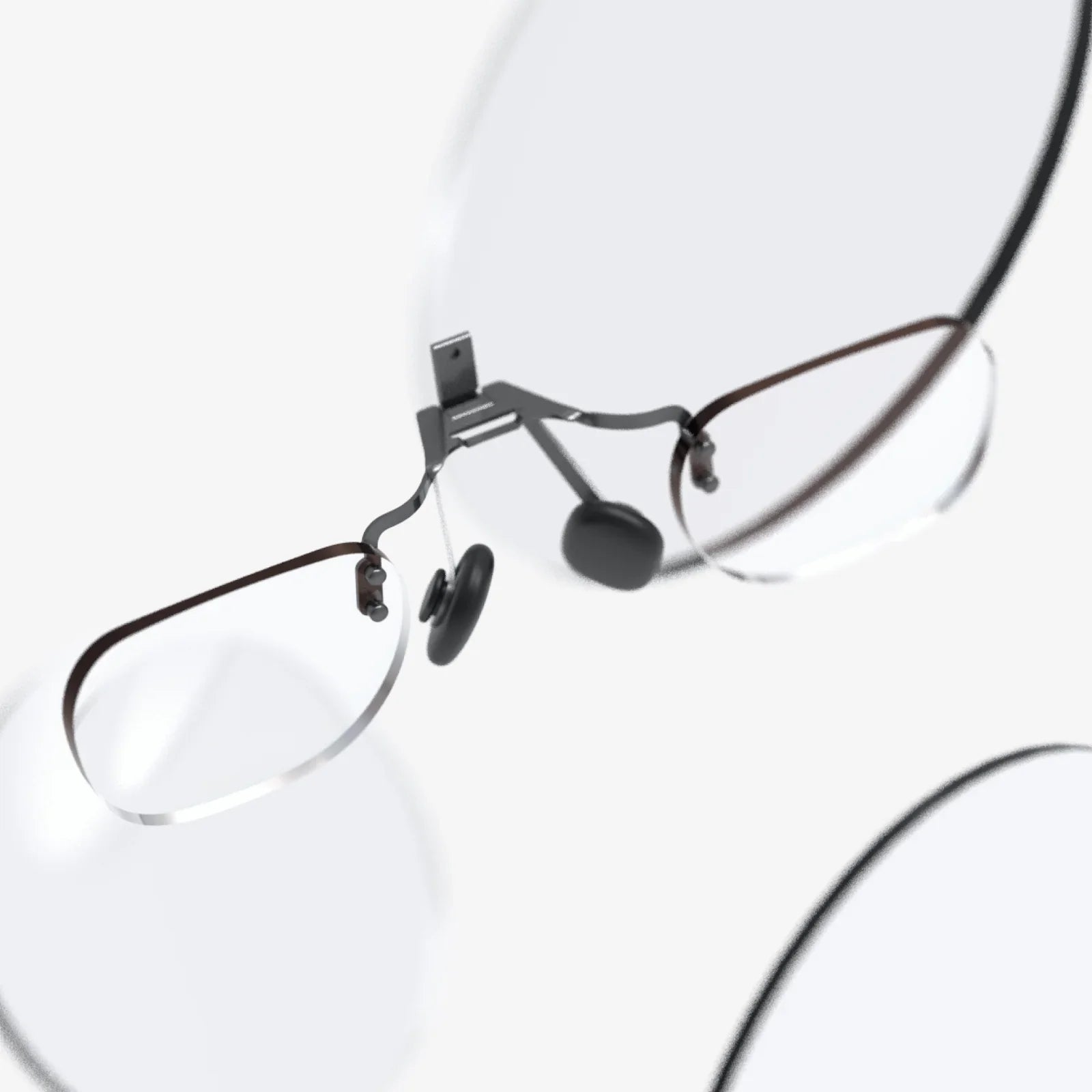
Imagine a world where the digital and physical seamlessly intertwine, where information is overlaid onto your field of vision, and where you can be transported to any reality imaginable with a simple blink. This is no longer the stuff of science fiction; it is the burgeoning reality being crafted by the rapid evolution of high tech goggles. These sophisticated devices are poised to become the next pivotal platform in human-computer interaction, moving beyond the screen and placing the user directly inside the experience. They promise to revolutionize everything from how we work and learn to how we connect and play, marking a paradigm shift as significant as the advent of the smartphone or the personal computer. The future is not something we will watch on a screen; we will step into it, and it will be viewed through a new lens of possibility.
Beyond the Hype: Defining the Modern High Tech Goggle
At their core, high tech goggles are wearable computer displays mounted on the head, typically in the form of eyeglasses or a visor. However, this simple definition belies their immense complexity and potential. They are not merely screens for the eyes; they are sophisticated systems comprising a symphony of advanced technologies. The most critical distinction lies in their two primary functions: Virtual Reality (VR) and Augmented Reality (AR), with a third category, Mixed Reality (MR), blending the two.
VR goggles are fully immersive, blocking out the physical world entirely and replacing it with a computer-generated environment. They act as a portal, transporting the user to a completely digital space. This is achieved through high-resolution displays for each eye, precise head-tracking sensors, and sophisticated optics that create a convincing stereoscopic 3D effect.
AR goggles, by contrast, are transparent. They allow the user to see their real-world environment while superimposing digital information, graphics, or holograms onto it. Think of navigation arrows painted onto the road in front of you, a recipe floating next to your mixing bowl, or a colleague's avatar joining your meeting from across the globe. This requires a different set of technologies, including see-through waveguides, cameras for understanding the environment (a process called simultaneous localization and mapping, or SLAM), and powerful processors to render graphics in real-time.
The Engine Room: The Core Technologies Powering the Vision
The magic of high tech goggles is made possible by a convergence of several cutting-edge technological domains. Understanding these components is key to appreciating their capabilities and limitations.
Advanced Optics and Displays
The window to these new worlds is arguably the most crucial component. Modern systems utilize micro-OLED or Fast-Switch LCD displays that are incredibly dense with pixels to prevent the "screen-door effect" where users can see the gaps between pixels. These tiny displays are then magnified by complex lens systems, such as Fresnel or pancake lenses, which focus the image across the user's field of view, creating a wide, immersive experience in a relatively compact form factor. For AR, technologies like holographic waveguides or birdbath optics are used to bounce light from miniature projectors into the user's eye while still allowing ambient light from the real world to pass through.
Precision Tracking and Sensing
To make a virtual world feel real, the goggles must understand your movements with incredible accuracy. This is achieved through a suite of sensors:
- Inside-Out Tracking: Cameras on the goggles themselves constantly scan the surrounding environment, tracking the position of the head in real space with six degrees of freedom (6DoF)—movement along the X, Y, and Z axes, plus rotation (pitch, yaw, and roll).
- Inertial Measurement Units (IMUs): These sensors, including gyroscopes and accelerometers, provide high-frequency data on rotation and acceleration, filling in the gaps between camera frames to prevent motion blur and lag.
- Eye-Tracking: Infrared cameras that monitor the position and pupil dilation of the user's eyes. This enables foveated rendering (where only the area you are directly looking at is rendered in full detail, saving processing power), more intuitive UI control, and profound social presence in multiplayer environments.
Computational Power and Connectivity
Rendering complex, photorealistic worlds at high frame rates (90Hz or higher to prevent motion sickness) is a monumental computational task. This processing can be handled in two ways: tethered to a powerful external computer or console, or via a self-contained system-on-a-chip (SoC) within the goggles themselves. The latter represents the holy grail of untethered freedom but demands a careful balance of performance, thermal management, and battery life. Furthermore, integration with 5G and Wi-Fi 6/6E is beginning to enable cloud streaming of high-fidelity experiences and robust multi-user connectivity, reducing the local computational burden.
Transforming Industries: The Professional and Enterprise Revolution
While consumer entertainment grabs headlines, the most immediate and impactful applications of high tech goggles are occurring in professional and industrial settings, where they are solving real-world problems and delivering tangible returns on investment.
Healthcare and Surgery
The medical field is being revolutionized. Surgeons are using AR goggles to overlay patient data, such as MRI or CT scans, directly onto their field of view during procedures. This provides X-ray vision, allowing for more precise incisions and navigation of complex anatomy. Medical students can practice complex surgeries in risk-free VR simulations, and remote experts can guide local practitioners through procedures by drawing annotations into their visual field from thousands of miles away.
Manufacturing, Design, and Engineering
From automotive to aerospace, engineers are using high tech goggles for collaborative design reviews, examining 3D holographic prototypes at life-size scale before a single physical part is manufactured. On the factory floor, assembly line workers receive AR instructions overlaid onto machinery, reducing errors and training time. Technicians performing maintenance can see the internal components of a machine and receive step-by-step guided instructions, hands-free, drastically improving efficiency and safety.
Education and Training
Immersive learning is arguably one of the most powerful applications. Imagine history students walking through ancient Rome, medical students exploring the human body from the inside, or mechanics trainees practicing on a virtual engine. This experiential learning leads to significantly higher retention rates and engagement compared to traditional textbooks or videos. It also allows for the safe simulation of dangerous scenarios, from firefighting to public speaking.
The Social and Experiential Frontier: Redefining Connection and Play
For consumers, high tech goggles are unlocking new forms of entertainment and social interaction that were previously unimaginable.
The Metaverse and Social Presence
High tech goggles are the primary gateway to the much-discussed metaverse—a persistent network of shared 3D virtual spaces. Unlike traditional video calls or games, VR social platforms allow users to inhabit avatars and interact with others in a shared space with a profound sense of "co-presence." Body language, spatial audio, and eye contact are translated, making conversations feel startlingly natural. This has the potential to revolutionize remote work, making virtual meetings feel like gathering in a real conference room, and to create new forms of global, shared experiences like concerts, museums, and theaters.
Gaming and Immersive Entertainment
Gaming is the obvious application, and it remains a massive driver of innovation. VR gaming places you inside the game world, making you an active participant rather than a passive observer holding a controller. The sense of scale, depth, and physicality is unparalleled. Beyond gaming, filmmakers and artists are exploring immersive storytelling, creating 360-degree narratives where the viewer controls their perspective. Live events, from sports games to music festivals, are beginning to be broadcast in VR, offering the best seat in the house to anyone, anywhere.
Navigating the Challenges: The Roadblocks to Ubiquity
Despite the incredible promise, the path to mainstream adoption is not without significant hurdles that engineers and designers are racing to overcome.
The Form Factor Conundrum
For many, current high tech goggles are still too bulky, heavy, and uncomfortable for prolonged use. The ideal form factor—something akin to a regular pair of eyeglasses—requires major breakthroughs in miniaturizing batteries, displays, and processing units without sacrificing performance. This remains the single biggest barrier to all-day, everyday use.
Battery Life and Thermal Management
High-performance computing and bright displays are power-hungry. Current systems often offer only two to three hours of use on a single charge, which is insufficient for professional workdays or long entertainment sessions. This also generates heat, which must be dissipated effectively for user comfort, adding to the design challenges.
The Social and Ethical Dimension
Wearing a device that can record video and audio raises profound privacy concerns. The concept of "gaze data"—information on where and for how long a user looks—is incredibly valuable and sensitive. Establishing clear ethical guidelines and robust privacy protections is paramount. Furthermore, the potential for addiction, reality-blurring, and new forms of social isolation are psychological challenges that society will need to address as the technology becomes more pervasive.
The Future Lens: What Lies on the Horizon
The evolution of high tech goggles is accelerating. In the coming years, we can expect to see devices that are lighter, more powerful, and more socially acceptable. Key areas of development include varifocal displays that naturally adjust to where the eye is focusing, eliminating eye strain, and integration with Artificial Intelligence to create context-aware assistants that understand your environment and intentions. Ultimately, the goal is for the technology to become so seamless and intuitive that it fades into the background, becoming an invisible layer of intelligence enhancing our perception of reality, rather than a device we are consciously aware of wearing.
The true potential of high tech goggles lies not in replacing our reality, but in enhancing it. They are poised to become the most intimate and powerful tool we have ever created for expanding human knowledge, capability, and connection. As the boundary between our physical and digital lives continues to dissolve, these devices will serve as our guide, our canvas, and our window into a future limited only by our imagination. The next time you look at a pair of ordinary glasses, remember—their high-tech successors are being designed to show you not just what is, but what could be.
Share:
Big Screen VR: The Ultimate Escape into Expansive Digital Realms
What Does a Virtual Headset Do? A Deep Dive Into Immersive Digital Realities